
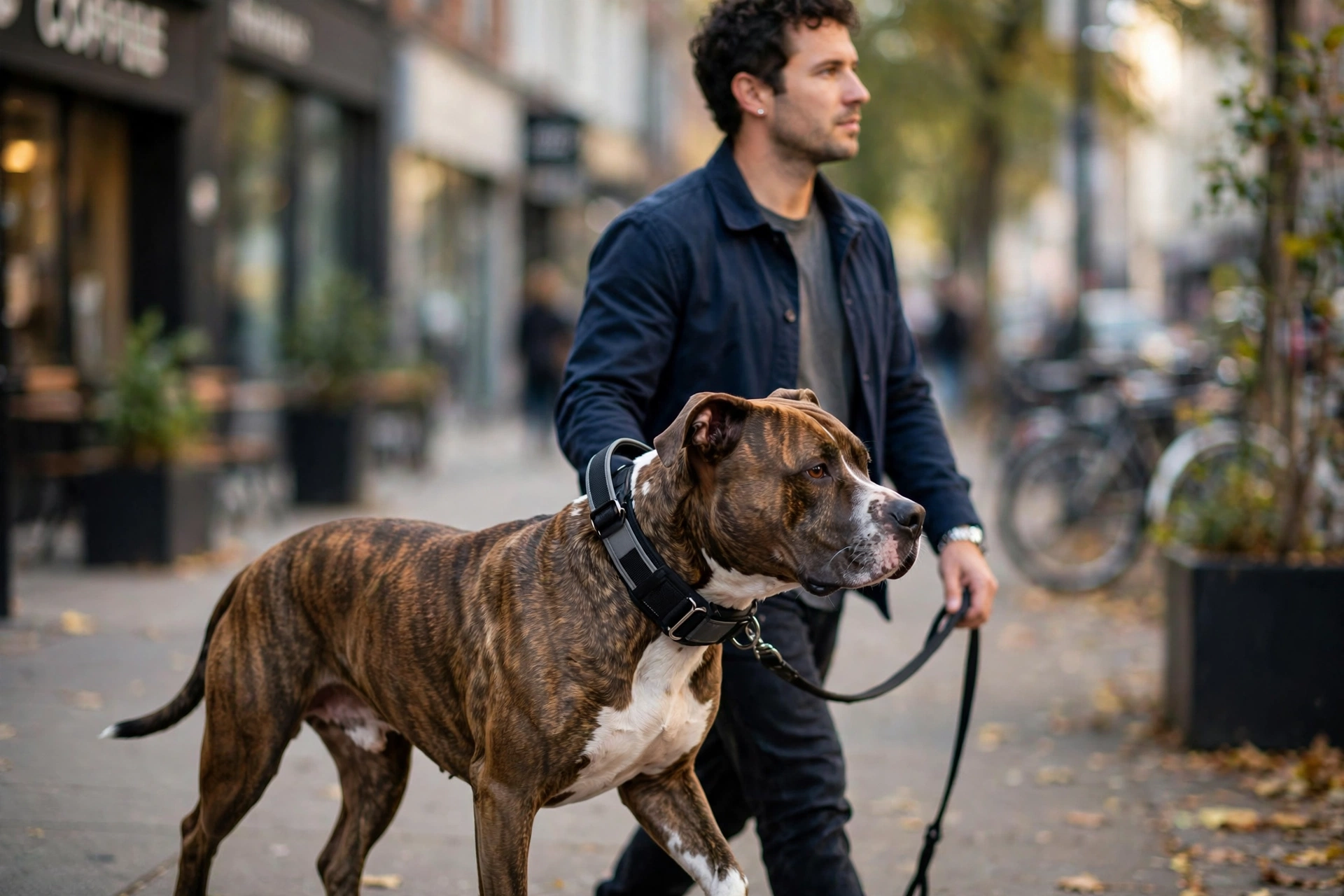
If your walks feel like waterskiing behind your dog, you’re searching for the best no-pull dog collars for good reason. I want to set expectations honestly first: no collar magically stops pulling — pulling is a training issue, and collars are management tools that make training easier and walks safer. That said, the right design genuinely helps: martingale-style limited-slip collars prevent escape and give clear feedback, padded wide collars protect the trachea during the learning phase, and head halters redirect pulling biomechanically. I researched the most relevant no-pull collar options on Amazon, focusing on what actually helps owners of pullers from Labradors to Huskies.
Affiliate disclosure
As an Amazon Associate, Dogslifelearning earns from qualifying purchases. If you buy through links on this page, I may earn a commission at no extra cost to you.
⚡ The short answer
🥇ComfortFlex Martingale CollarOverall pick→🥈Seyezo No-Pull Dog CollarEveryday training→🥉Mayerzon 1.5″ Padded MartingaleTrachea protection→
The ComfortFlex Martingale is the top pick for most owners, and the Mayerzon padded martingale is the choice for strong pullers needing throat protection. The collar manages, training fixes — commit to a month of consistent loose-leash work.
Quick Picks
| Product | Best For | Standout Feature |
|---|---|---|
| ComfortFlex Martingale | Overall pick | Sporty limited-slip design |
| Seyezo No-Pull Collar | Everyday training | Padded comfort fit |
| Mayerzon 1.5″ Padded Martingale | Trachea protection | Wide neoprene padding |
| CHENHELL Chain Martingale | Classic correction | Metal chain control loop |
| EupHHonycs No-Pull Collar | Budget pick | Simple effective design |
| EupHHonycs Large No-Pull | Big strong pullers | Heavy-duty large sizing |
Prices checked 2026-10-16; re-check before buying.
ComfortFlex Martingale Collar
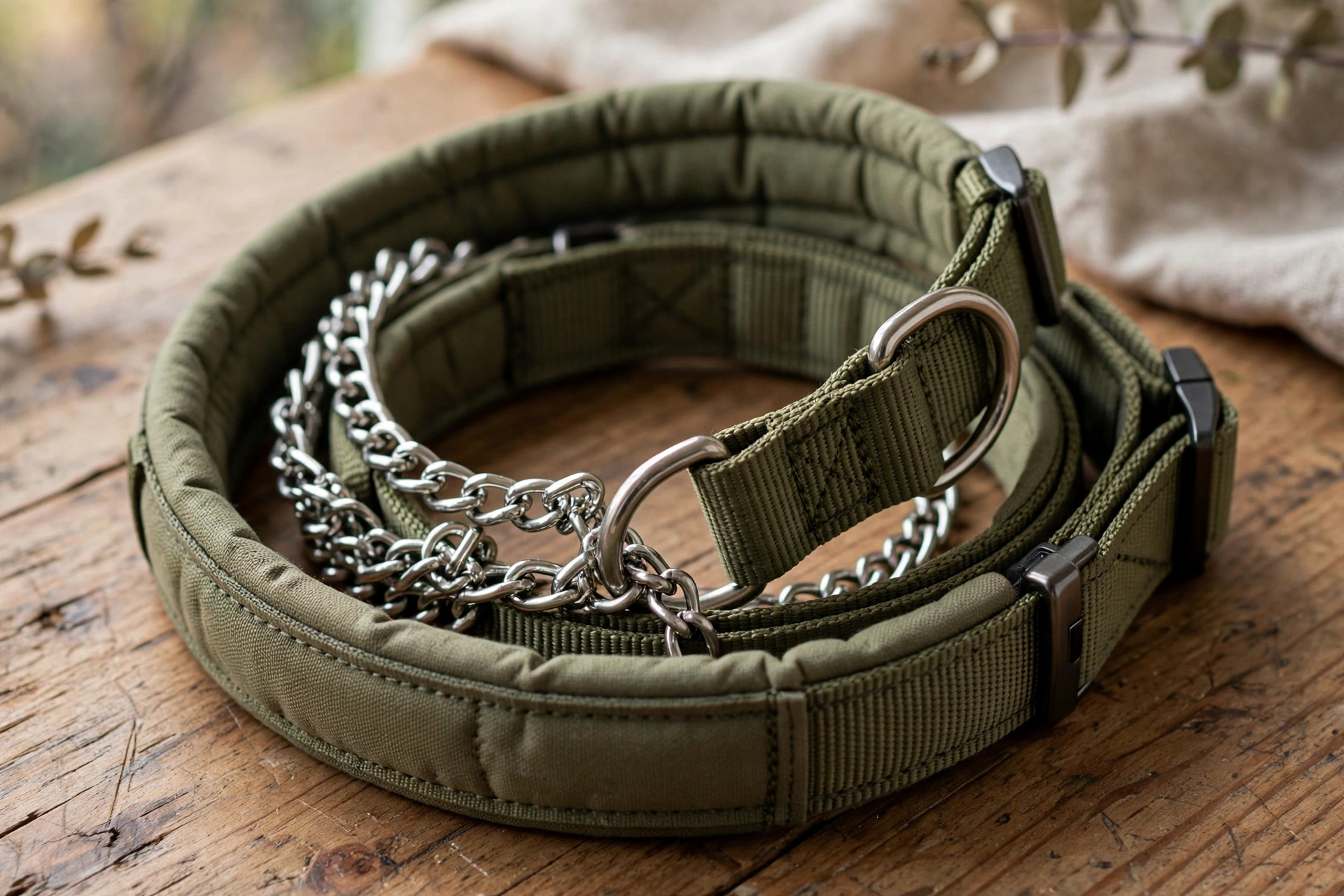
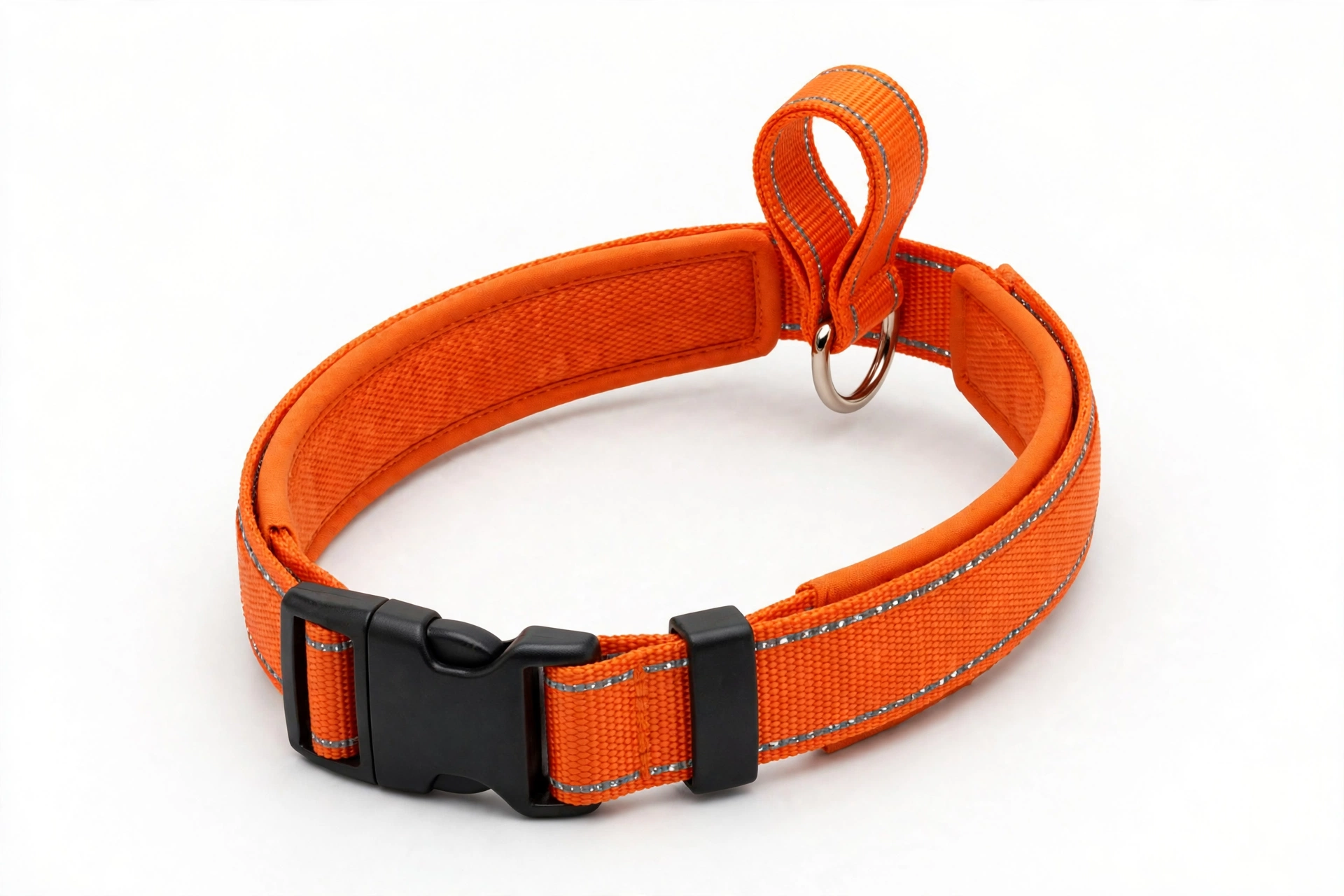
The ComfortFlex is my overall pick because it nails the martingale fundamentals: the limited-slip loop tightens just enough to prevent escape and deliver clear leash feedback, then releases — no choking, no constant pressure. The sporty design suits active breeds like Labradors and Goldens, and the construction quality is a step above typical Amazon martingales. I recommend martingales as the default no-pull collar for most owners because they’re humane, escape-proof, and trainer-approved. Fit it so the control loop closes with about
two fingers of slack at full tighten.
Pros & cons
- Limited-slip loop tightens just enough to prevent escape, then releases
- No constant pressure or choking when fitted correctly
- Sporty design suits active breeds, with construction a step above typical Amazon martingales
- Gives feedback but does not stop pulling on its own — training still required
- Fit must be checked: too loose slips, too tight chokes
- Limited-slip still tightens on the neck, so throat-sensitive dogs should walk on a harness instead
Seyezo No-Pull Dog Collar
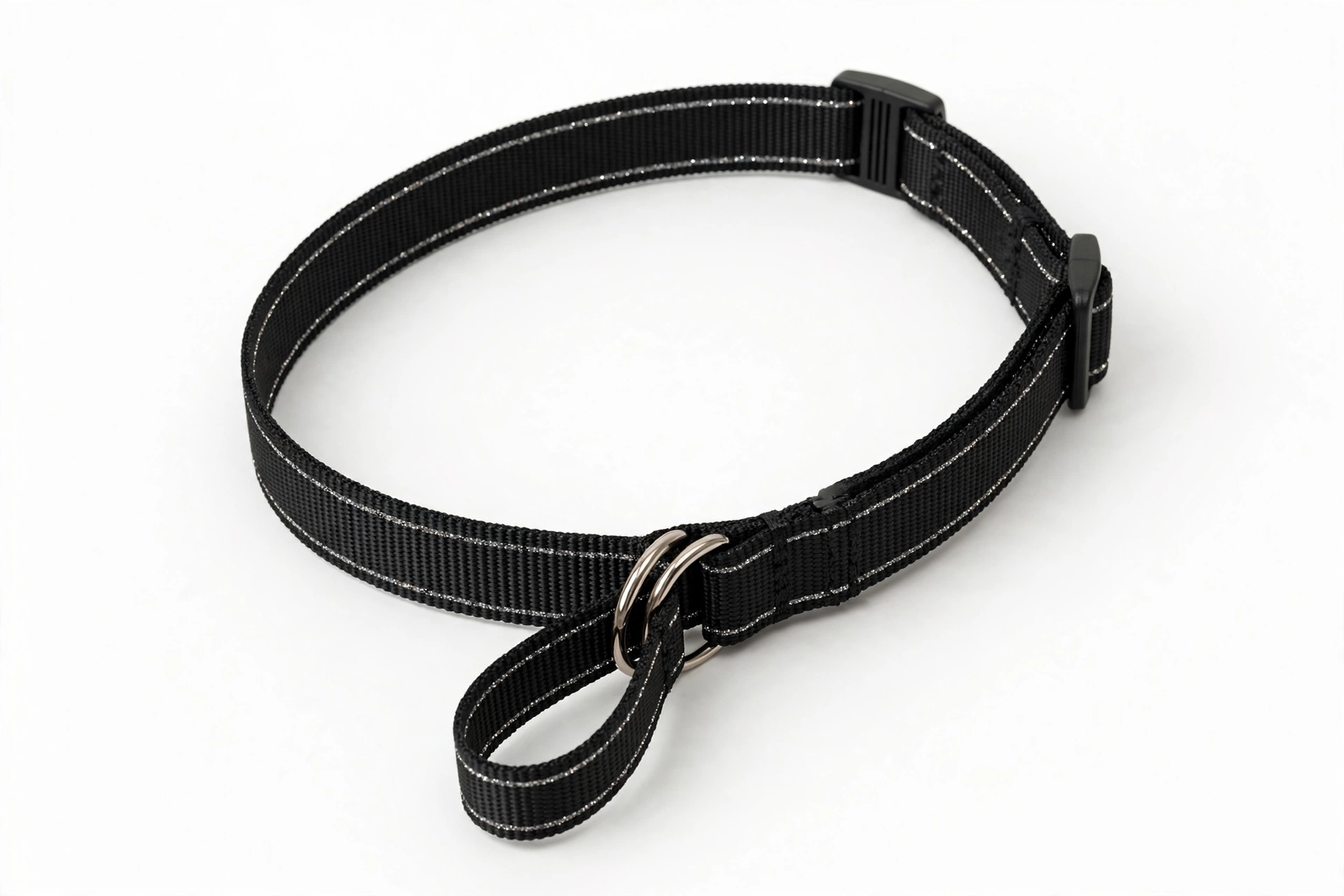
Seyezo’s no-pull collar leans into comfort with padding that cushions the neck during pulling episodes — and let’s be honest, there will be pulling episodes while you train. I like this for owners in the early stages of loose-leash work, where the dog hasn’t learned yet and the collar needs to be forgiving. The padding reduces the coughing and gagging
that narrow collars cause in enthusiastic pullers. Pair it with a stop-and-go or turn-around training method and you’ll feel the difference within weeks.
Pros & cons
- Padding cushions the neck during pulling episodes
- Forgiving for early loose-leash training stages
- Reduces coughing and gagging that narrow collars cause in pullers
- Padding cushions pulling rather than actively discouraging it
- Works only when paired with a stop-and-go or turn-around method
- Collar alone does not teach loose-leash walking
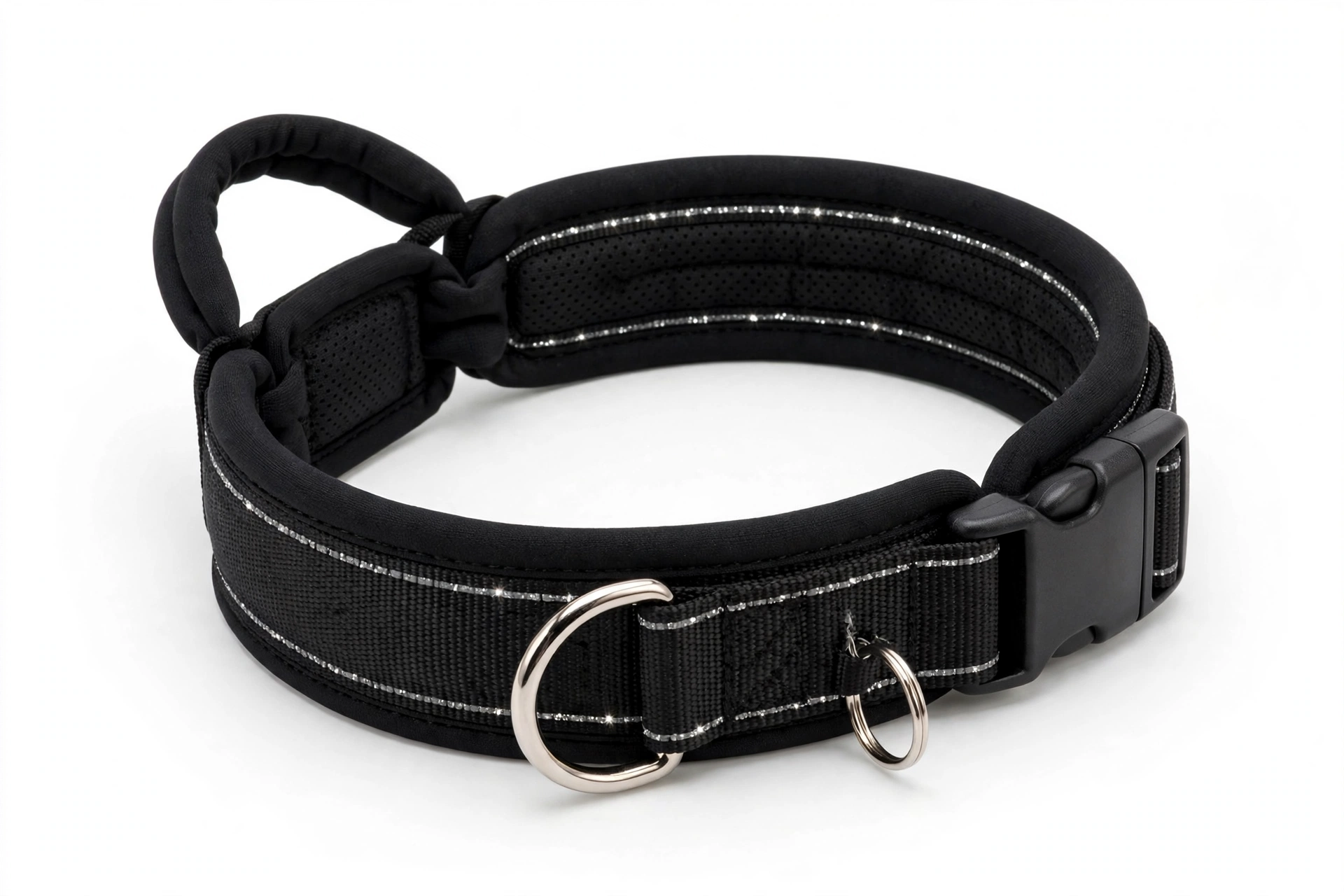
Mayerzon 1.5″ Padded Martingale
The Mayerzon combines the two features I value most for pullers: martingale limited-slip action and 1.5 inches of neoprene-padded width. Wide plus padded means leash pressure spreads across the neck instead of knifing into the trachea — critical for breeds like Huskies and Malamutes that pull with their whole body. The neoprene lining also resists the sweat and rain saturation that makes plain nylon uncomfortable. For strong pullers with sensitive throats, this is the design I’d buy first.
Pros & cons
- Combines martingale limited-slip action with 1.5 inches of width
- Neoprene padding spreads leash pressure across the neck
- Neoprene resists sweat and rain saturation
- Still needs exact martingale fit — too loose slips, too tight functions as a choke
- Does not stop pulling without training
- Dogs showing coughing or gagging should switch to a harness
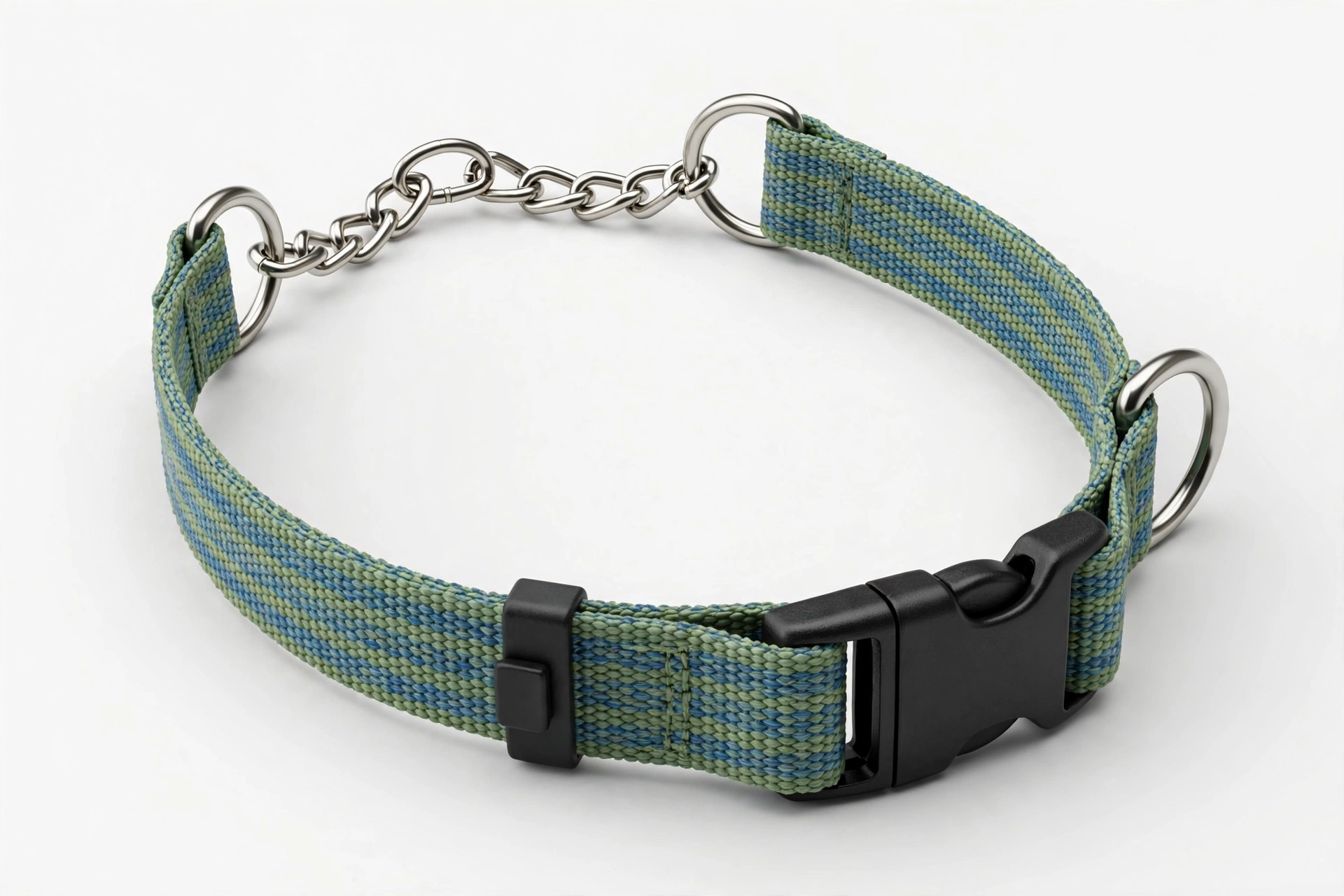
CHENHELL Chain Martingale Collar
The CHENHELL is a traditional chain martingale — nylon collar body with a metal chain control loop that provides an audible “check” sound when it tightens. Some trainers value that sound as a marker signal; I consider it a matter of training philosophy. The chain loop is durable and the design is escape-proof for narrow-headed breeds like Greyhounds and Whippets that slip flat collars. One caution: the chain can catch long fur, so it’s better suited to short-coated pullers like Pit Bulls and Boxers.
Pros & cons
- Traditional chain martingale with durable metal chain control loop
- Audible check sound when it tightens, valued by some trainers
- Escape-proof for narrow-headed breeds
- Chain can catch long fur, so better for short-coated pullers
- Chain-loop design suits a particular training philosophy, not every owner
- Misfitting can turn it into a choke chain
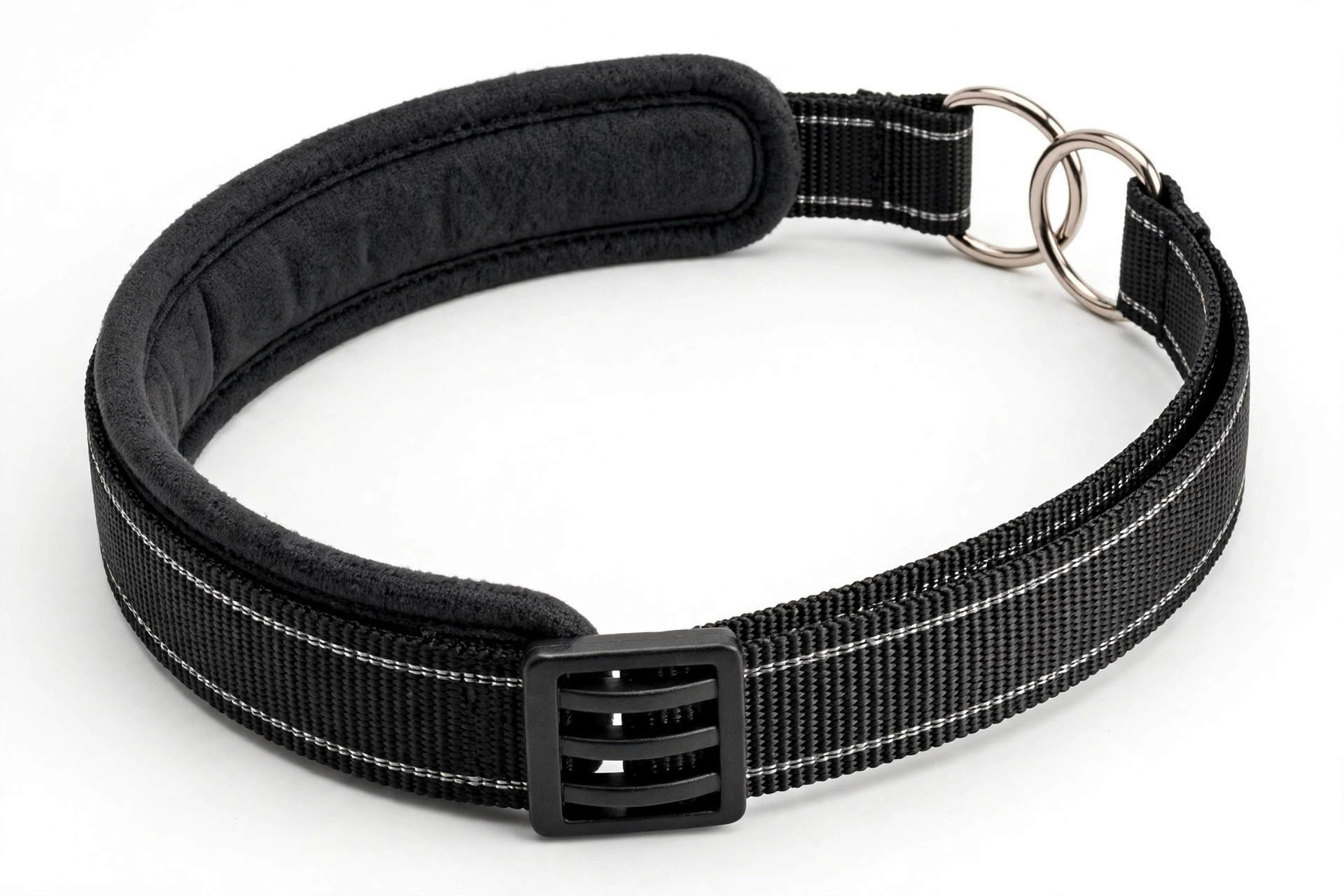
EupHHonycs No-Pull Collar
EupHHonycs offers a straightforward no-pull design at a budget price, and sometimes straightforward is exactly right. The collar provides gentle corrective feedback without complicated hardware, making it approachable for first-time owners. I recommend it as a
starter collar while you work through a loose-leash training program — the money you save can go toward a few sessions with a certified trainer, which will do more for pulling than any collar. Check sizing carefully against the chart; budget collars vary more in true fit.
Pros & cons
- Straightforward no-pull design at a budget price
- Gentle corrective feedback without complicated hardware
- Approachable for first-time owners
- Budget collars vary more in true fit, so check sizing against the chart
- Simple design gives less feedback than a martingale’s limited-slip loop
- Savings matter only if paired with real training
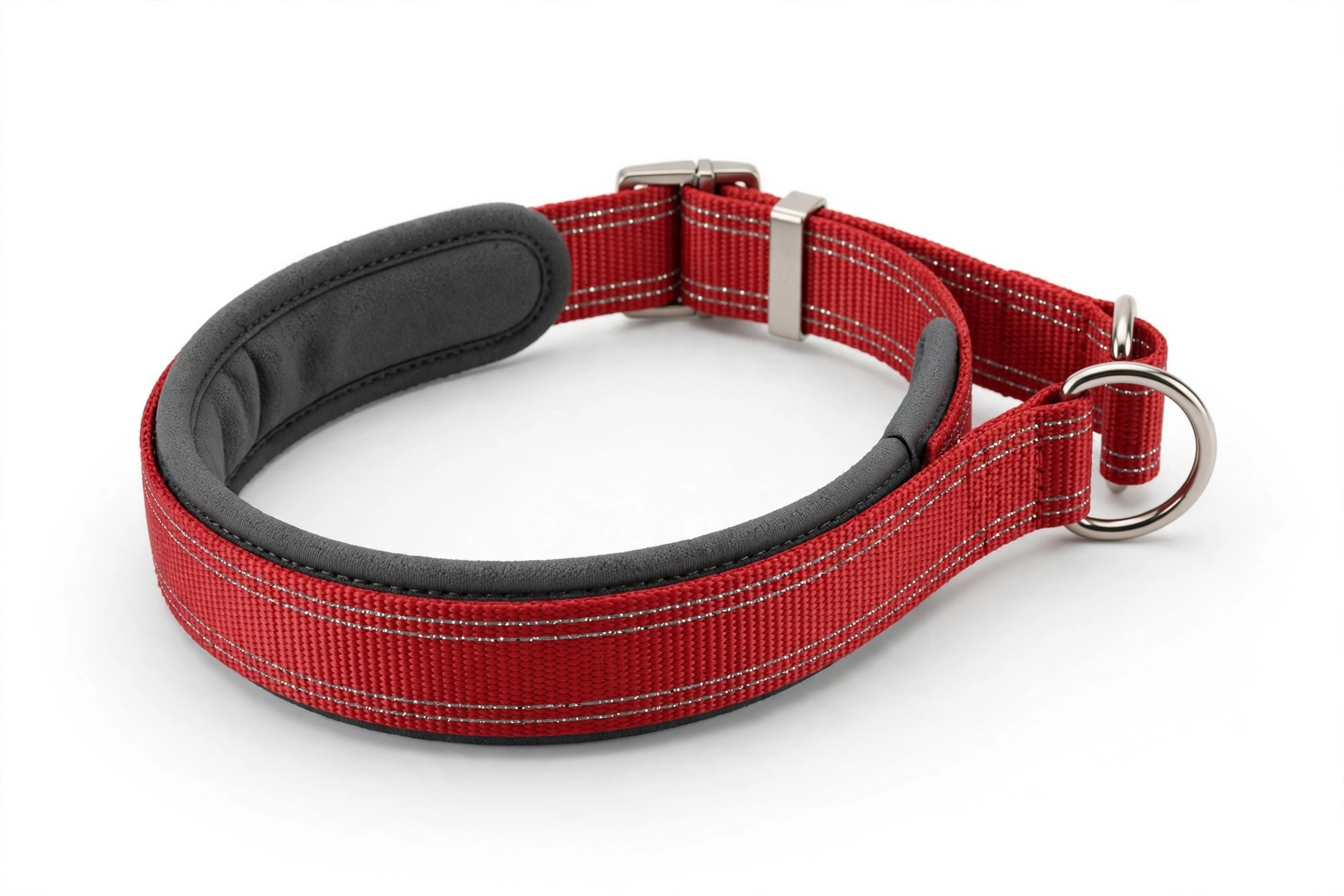
EupHHonycs Large No-Pull Collar
The large-size EupHHonycs scales the no-pull concept for big, powerful breeds — German Shepherds, Rottweilers, Great Danes — where hardware strength genuinely matters. The wider cut and reinforced stitching handle the forces a 100-pound dog generates when they lunge. My advice for giant-breed pullers: combine a sturdy collar like this with a front-clip harness for walks (the harness does the steering, the collar carries the tags), and prioritize training — a pulling Great Dane is a safety issue, not just an annoyance.
Pros & cons
- Scaled for big, powerful breeds
- Wider cut and reinforced stitching handle lunging forces
- Sturdy collar for giant-breed walks
- Collar alone is not enough for a lunging giant breed — pair with a front-clip harness
- A pulling giant breed is a safety issue, not just an annoyance
- Still requires training to fix pulling
Buying Guide: Stopping the Pull for Real
Why dogs pull (and what collars can and can’t do)
Dogs pull because it works — every step forward while pulling is rewarded with getting where they want to go. It’s the most self-reinforcing behavior in dog ownership. A no-pull collar can’t unteach that equation; only training can, by making pulling unproductive (you stop or turn) and loose-leash walking rewarding (treats, praise, forward motion). What the right collar does: prevents escape, protects the trachea during the learning curve, and gives clearer feedback so your training communicates better. Buy the collar for management and safety, then do the training — that’s the honest formula.
Martingale vs flat vs head halter vs harness
Here’s my breakdown of the four approaches. Martingale collars are my default recommendation: escape-proof, humane limited-slip, suitable for most pullers.
A martingale is a two-loop collar that tightens slightly under tension to prevent escape without the choking effect of a slip collar. (Source: Wikipedia, Martingale (collar)) The AKC likewise describes the martingale’s second loop as tightening slightly when the dog pulls without obstructing the airway. (Source: AKC, Choosing the Right Dog Collar)
Wide padded flat collars protect the throat but don’t actively discourage pulling — good for mild pullers. Head halters (like Gentle Leader) give the most mechanical control by steering the head, excellent for strong pullers, but require conditioning so the dog accepts face gear. Front-clip harnesses redirect pulling sideways without any neck pressure — my top pick for brachycephalic breeds, trachea-sensitive dogs, and anyone prioritizing neck safety. Many owners end up with a martingale for tags plus a front-clip harness for walks.
Fitting a martingale correctly
Martingale fit is specific and worth getting right: with the control loop fully tightened, the two D-rings should nearly touch but not quite — about two fingers of space. Too loose and the dog slips it; too tight and it functions as a choke chain, which defeats the purpose. The collar should sit high on the neck, just behind the ears and jaw, where you have the most leverage with the least pressure. Check the fit every few weeks — fur, weight changes, and stretched webbing all alter it. If you’re unsure, have a trainer check it once; proper fit is a five-minute lesson that pays off for years.
The training method that actually works
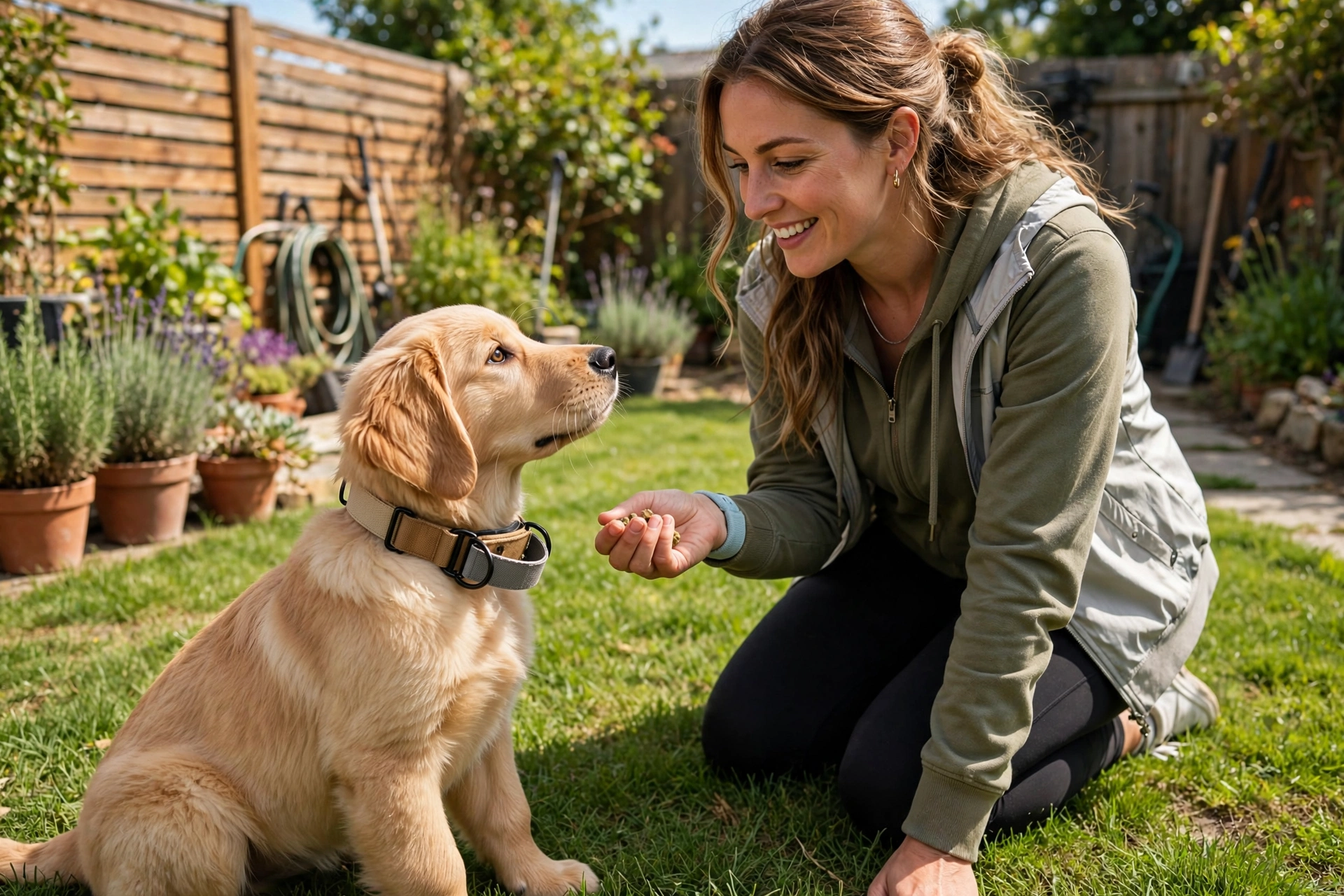
I recommend the “be a tree” method as the foundation: the instant the leash goes tight, stop dead. When the dog releases tension (even accidentally), mark and reward, then move forward. Tight leash = no progress; loose leash = forward motion and treats. Add direction changes — when the dog surges ahead, turn 180 degrees and walk the other way — to teach attention. Most owners see real improvement in two to four weeks of consistent daily practice. High-value treats (real meat, cheese) outperform kibble for competing with squirrel-level distractions. If you’re stuck after a month, a few sessions with a CPDT-KA certified trainer will diagnose what’s going wrong faster than any gear swap.
Safety: protecting the trachea
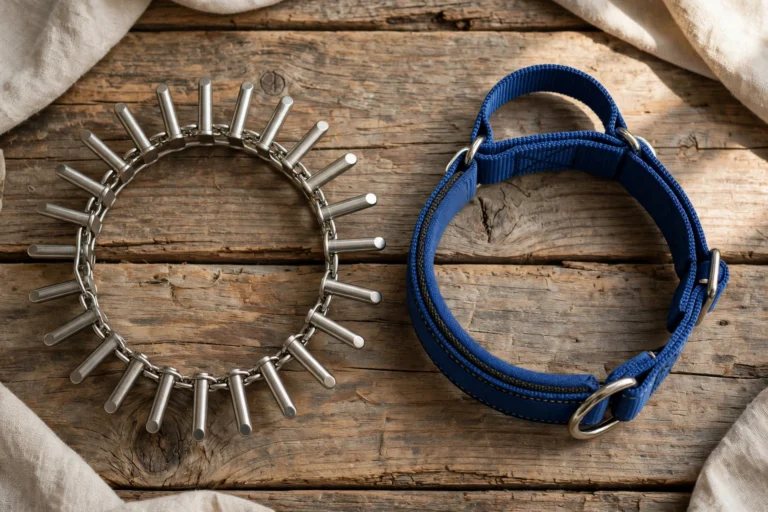
Chronic pulling on narrow collars can contribute to tracheal irritation, coughing, and in small breeds, tracheal collapse — a serious condition. During the training phase, when pulling is at its worst, throat protection matters most: that’s when I most strongly recommend wide padded collars or front-clip harnesses. Warning signs to watch for include honking coughs, gagging on walks, and reluctance to walk. If you see these, switch to a harness immediately and consult your vet. Never use choke chains or prong collars as a first resort for pulling — they’re aversive tools that require professional guidance, not starter solutions.
Frequently Asked Questions
Do no-pull collars really stop pulling?
Not by themselves — and I’d distrust any product claiming otherwise. They manage pulling (prevent escape, reduce choking, give clearer feedback) while you train the actual behavior. Owners who combine a good martingale or front-clip harness with consistent loose-leash training typically see major improvement within a month. Owners who buy the collar and skip the training usually report it “didn’t work.” The collar is half the equation; your consistency is the other half.
Are martingale collars cruel?
Properly fitted martingales are considered humane by most professional trainers — the limited-slip design prevents the continuous choking of a slip chain while stopping escape. The key is the fit: adjusted so it only tightens slightly, it delivers mild, momentary feedback. Problems arise only from misfitting (too tight = choke chain) or misuse (constant leash yanking). Compared to choke chains and prong collars, martingales are the gentler, trainer-preferred option.
What’s better for a puller: collar or harness?
For neck safety, a front-clip harness wins — zero throat pressure by design. For training feedback and escape prevention, a martingale collar wins. My practical answer: use both. Walk on the front-clip harness (it does the steering), keep a martingale or flat collar for ID tags as backup. This combo is what I recommend most for strong pullers, brachycephalic breeds like Bulldogs and Pugs, and small breeds prone to tracheal collapse.
Will a no-pull collar hurt my dog’s neck?
A well-fitted martingale or padded collar used with normal leash handling shouldn’t injure a healthy dog — but “normal handling” is doing real work in that sentence. Constant hard yanking on any collar can cause harm, The collar should be a communication tool, not a source of pain.
How long does loose-leash training take?
With daily 10–15 minute practice sessions, most owners see reliable loose-leash walking in two to three months. Young, excitable dogs and strong scent-driven breeds (Beagles, Huskies) may take longer. Consistency across all family members matters enormously — if one person lets the dog pull, the dog learns pulling sometimes works, which is the hardest pattern to extinguish. When in doubt, consult a certified trainer early rather than after months of frustration.
Can puppies use no-pull collars?
Lightweight martingales are fine for puppies over about four months for supervised walks, but the real focus at puppy age should be foundation training: rewarding attention, teaching leash pressure cues, and making walks fun. Avoid head halters on very young puppies (face gear needs maturity to accept) and never use aversive collars on puppies. Start loose-leash habits early and you’ll rarely need serious no-pull gear later.
Related Buying Guides
The verdict
My top pick among the best no-pull dog collars is the ComfortFlex Martingale for its trainer-approved limited-slip design, with the Mayerzon padded martingale as the choice for strong pullers needing trachea protection. But the real verdict is this: the collar manages, training fixes. Commit to a month of consistent loose-leash work — stop when the leash tightens, reward the slack, consider a front-clip harness for walks — and you’ll transform your walks more than any product alone could. If pulling involves lunging, reactivity, or aggression, skip the DIY route and consult a certified trainer; some pulling problems have roots that need professional eyes.

14 Comments