
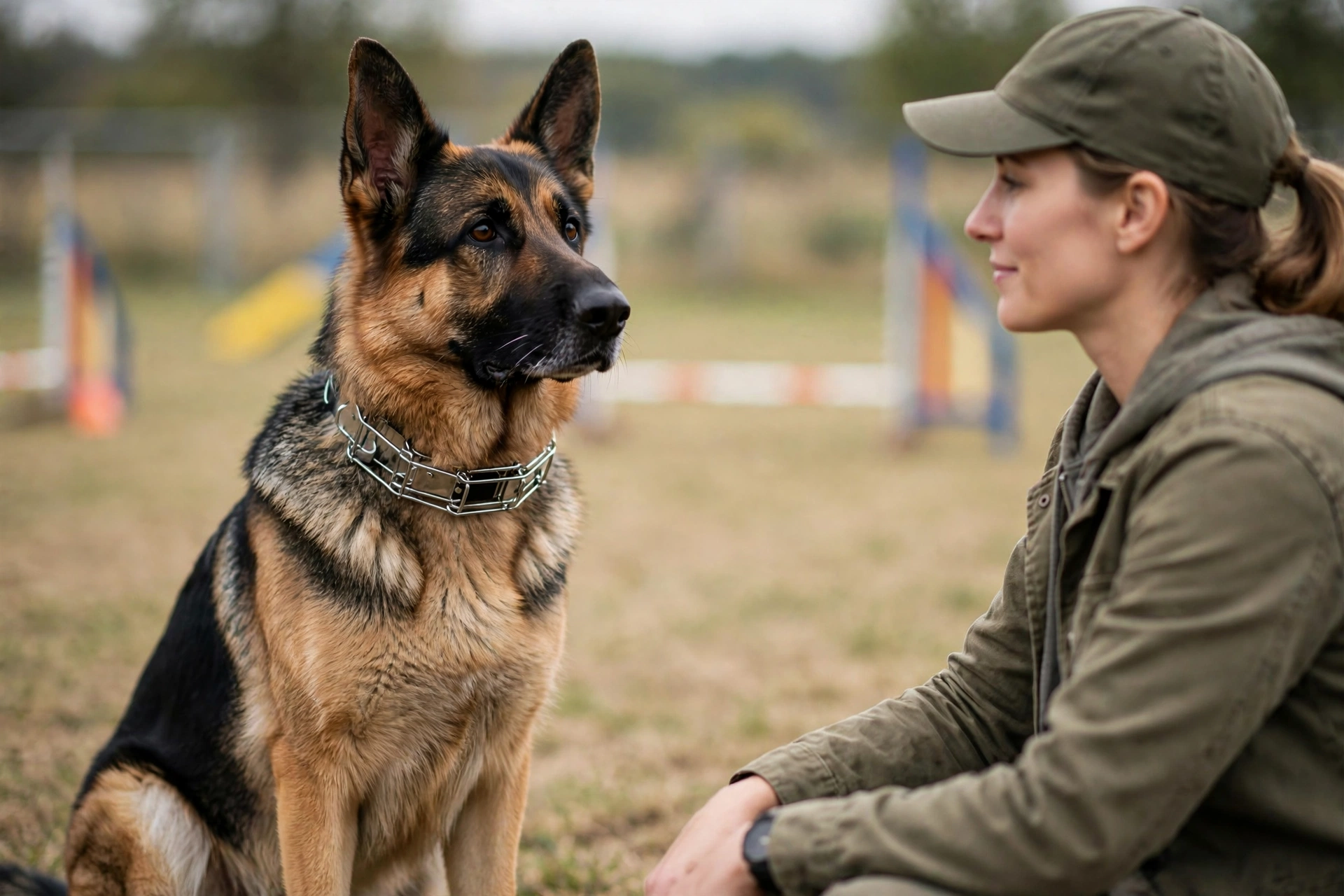
Writing about the best prong collars for dogs requires honesty from the first sentence: prong (pinch) collars are among the most controversial tools in dog training, and I don’t recommend them casually. They work by distributing pressure through blunt prongs around the neck when the dog pulls — and in the hands of an educated trainer, for specific strong dogs, they’re considered a clearer communication tool than a choking slip chain. In uneducated hands, they’re simply painful. I cover them here because owners deserve truthful guidance, not because I think most dogs need one. Every product below is Herm Sprenger — the German maker whose quality and humane design details (rounded prong tips, even pressure) make it the only brand I discuss in this category. And my standing advice: consult a vet or certified trainer before using one.
Affiliate disclosure
As an Amazon Associate, Dogslifelearning earns from qualifying purchases. If you buy through links on this page, I may earn a commission at no extra cost to you.
⚡ The short answer
🥇Herm Sprenger Chrome 2.25mmThe classic standard→🥈Herm Sprenger Black Stainless SwivelBlack finish, swivel→🥉Herm Sprenger Chrome Quick-ReleaseQuick-release buckle→
Quick Picks
| Product | Best For | Standout Feature |
|---|---|---|
| Herm Sprenger Chrome 2.25mm | Medium dogs, training | The classic standard |
| Herm Sprenger Black Stainless Swivel | Discreet + strong | Black finish, swivel |
| Herm Sprenger Chrome Quick-Release | Easy on/off | Quick-release buckle |
| Herm Sprenger 3.0mm O-Ring QR | Large breeds | Heavier gauge, O-ring + QR buckle |
| Herm Sprenger Chrome 3.0mm Swivel | Powerful pullers | Max control, swivel |
| Herm Sprenger Black 3.2mm Easy-On | Large, discreet | Black heavy gauge, Easy-On chain |
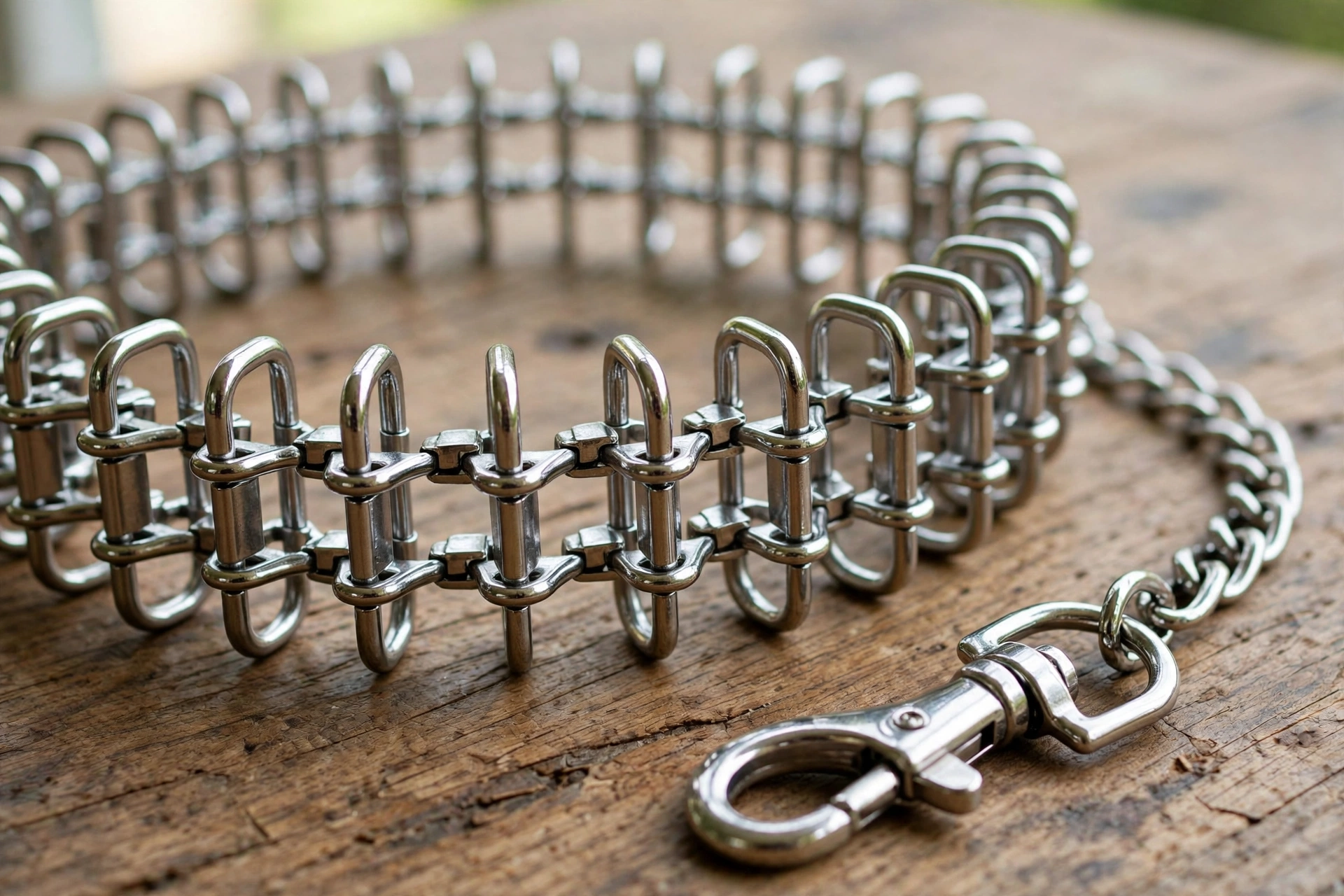
The 6 collars, reviewed
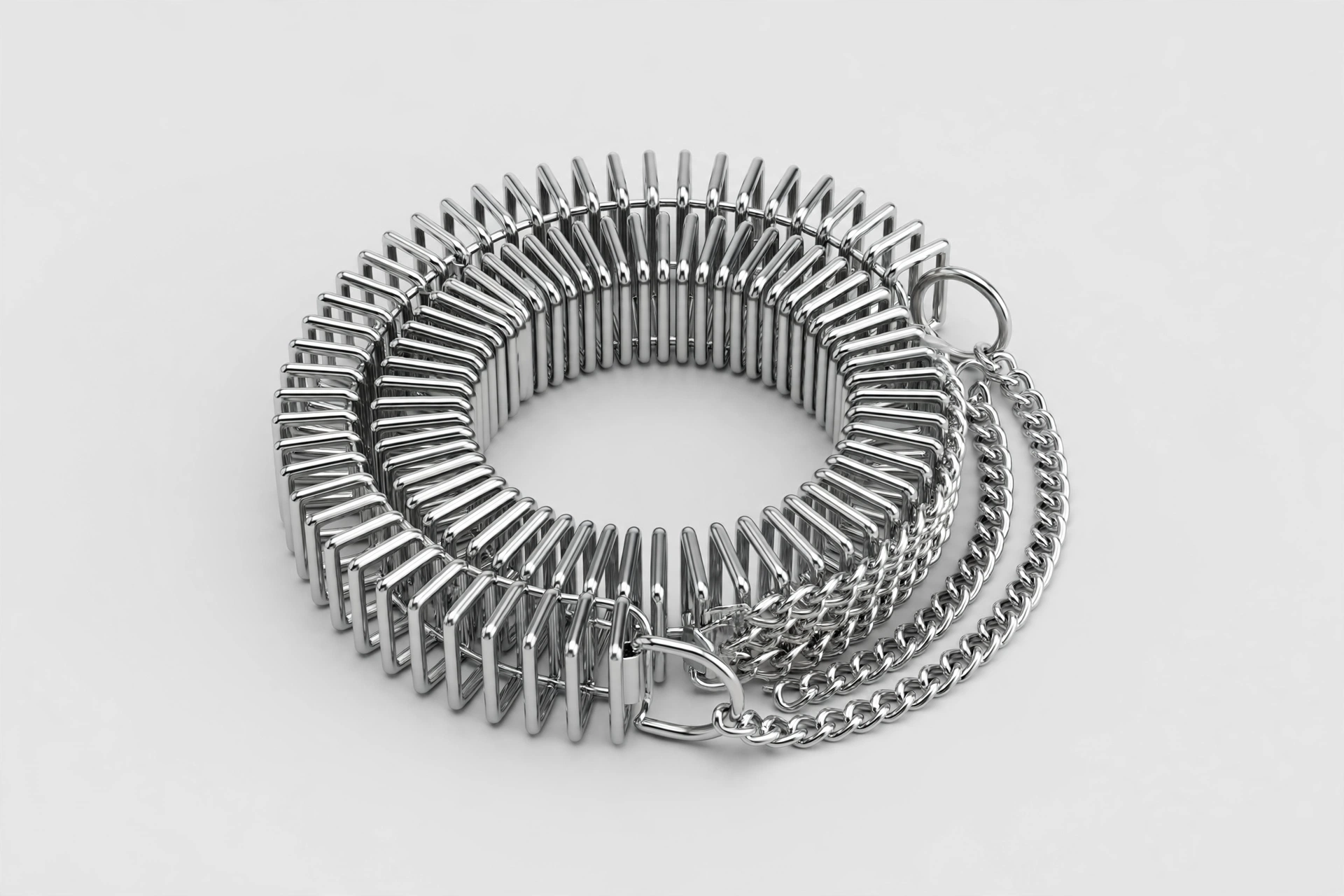
Herm Sprenger Chrome Prong Collar (2.25mm)
The 2.25mm chrome is the classic Herm Sprenger — the size most trainers recommend for medium dogs (roughly 30–60 pounds) because smaller prongs distribute pressure across more contact points, which is counterintuitively gentler than fewer large prongs. The chrome plating over German steel is the quality benchmark: smooth, rounded prong tips, even link action, no sharp edges. If a trainer fits your dog for a prong collar, this is very likely the size they reach for. Buy from reputable sellers — counterfeit Sprengers with sharp, dangerous prongs are a real problem on marketplaces.
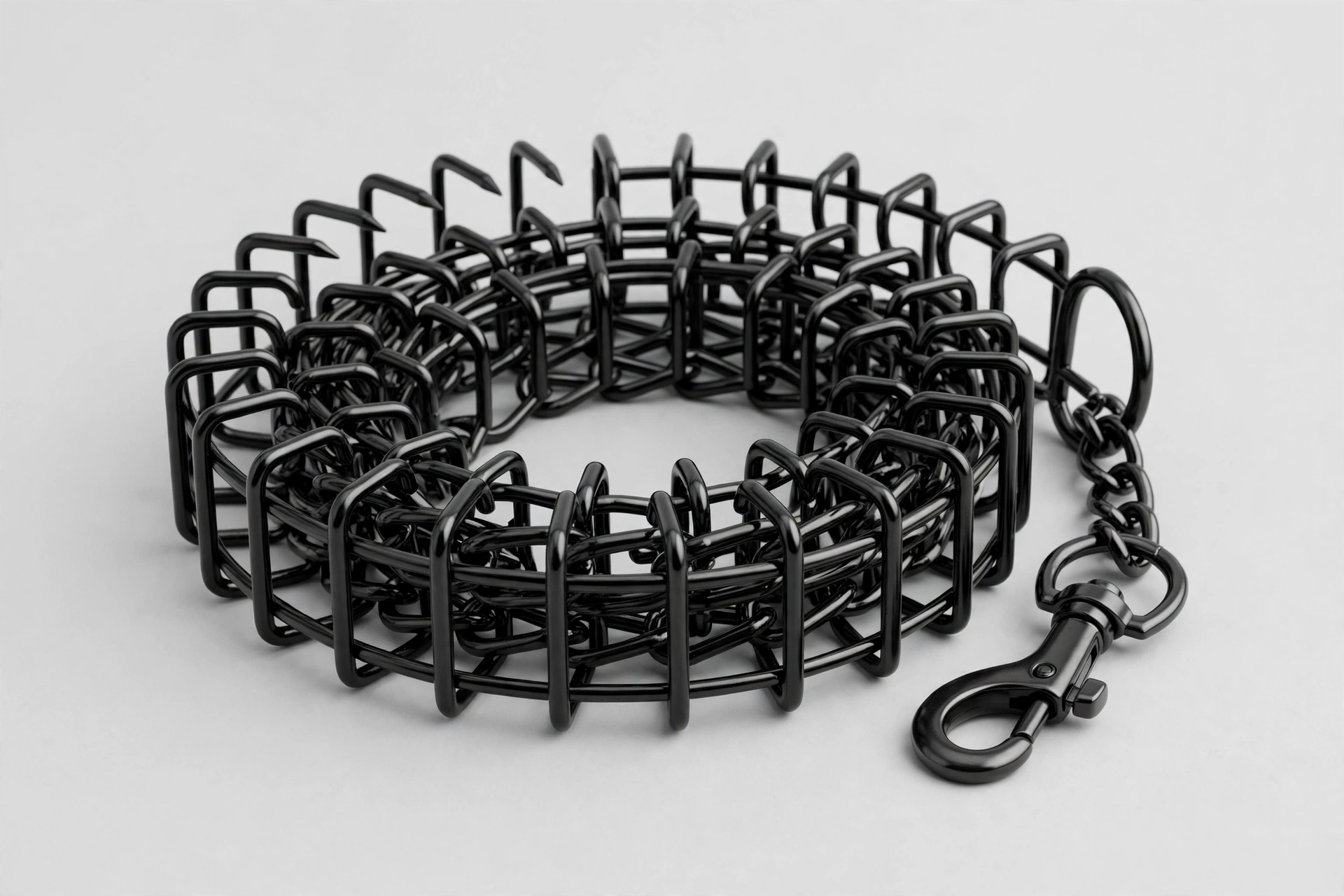
Herm Sprenger Black Stainless Prong (Swivel)
The black stainless version serves owners who want the Sprenger mechanics without the visual controversy — the dark finish is dramatically less conspicuous than bright chrome, which matters for owners tired of public judgment. Functionally it’s the same quality: rounded tips, even pressure, with a swivel that prevents leash twisting. The black coating also adds corrosion resistance. I mention the discretion factor honestly: prong collars attract strong opinions from strangers, and the black version simply draws less attention during the training process.
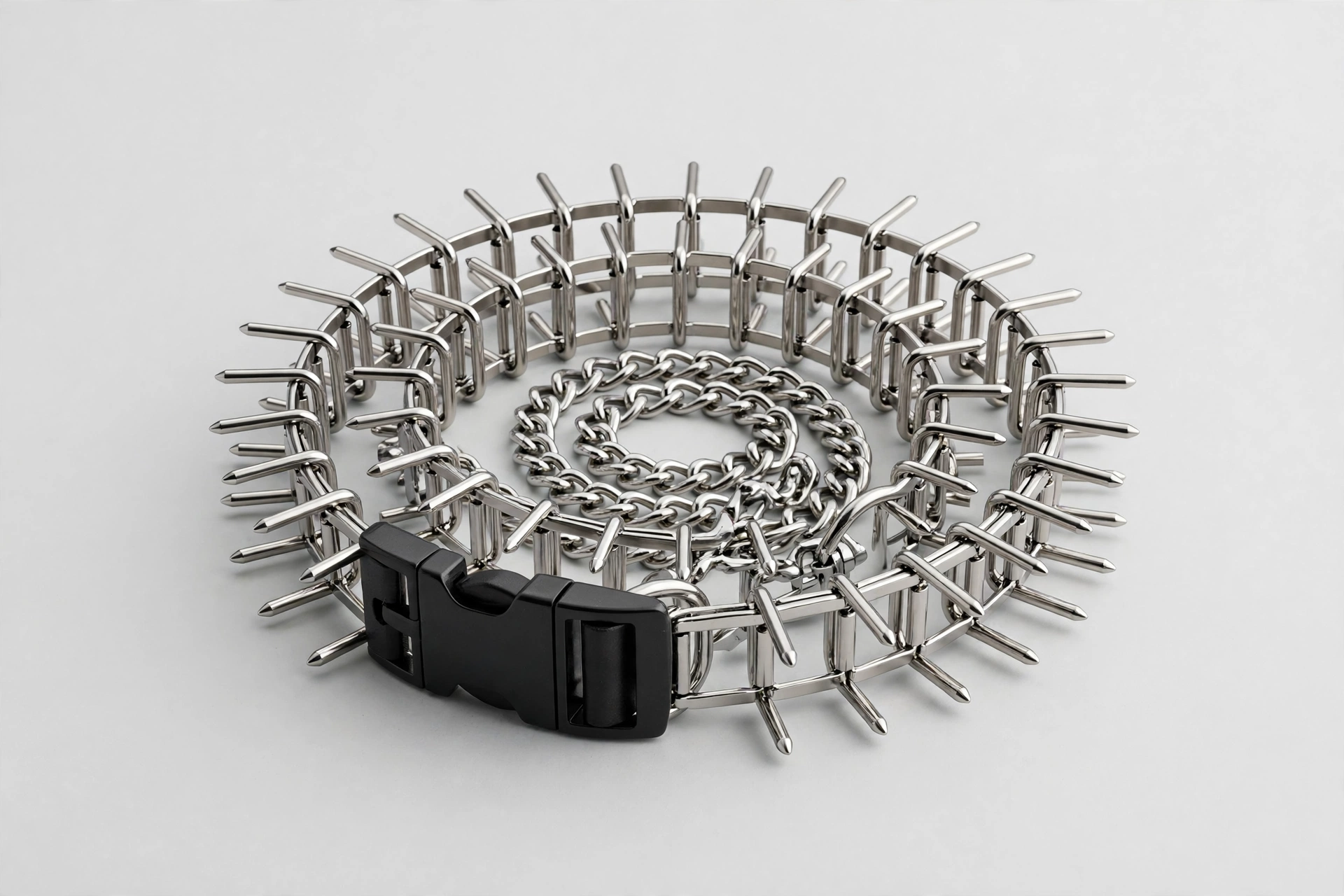
Herm Sprenger Chrome Prong (Quick-Release)
The quick-release (snap buckle) version solves prong collars’ practical annoyance — standard prongs require squeezing link plates to open, which is fiddly with a wiggly dog. The buckle makes on/off instant while preserving the Sprenger link mechanics during wear. I particularly recommend this for owners with hand-strength or dexterity limitations, and for multi-dog households where collars go on and off frequently. Verify the buckle’s security on arrival; a quality QR buckle clicks decisively and holds under load.
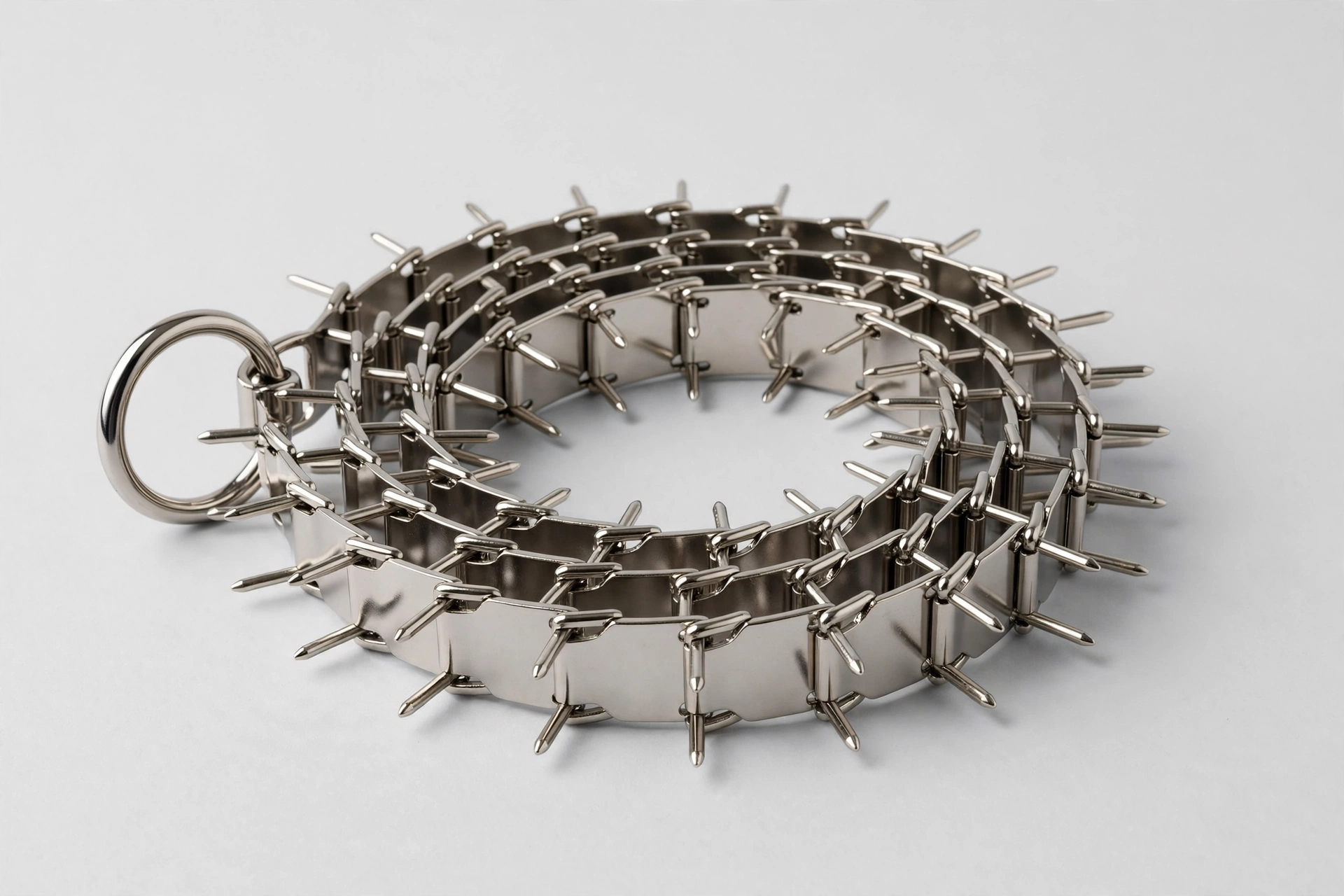
Herm Sprenger Prong Collar (3.0mm, O-Ring, Quick-Release)
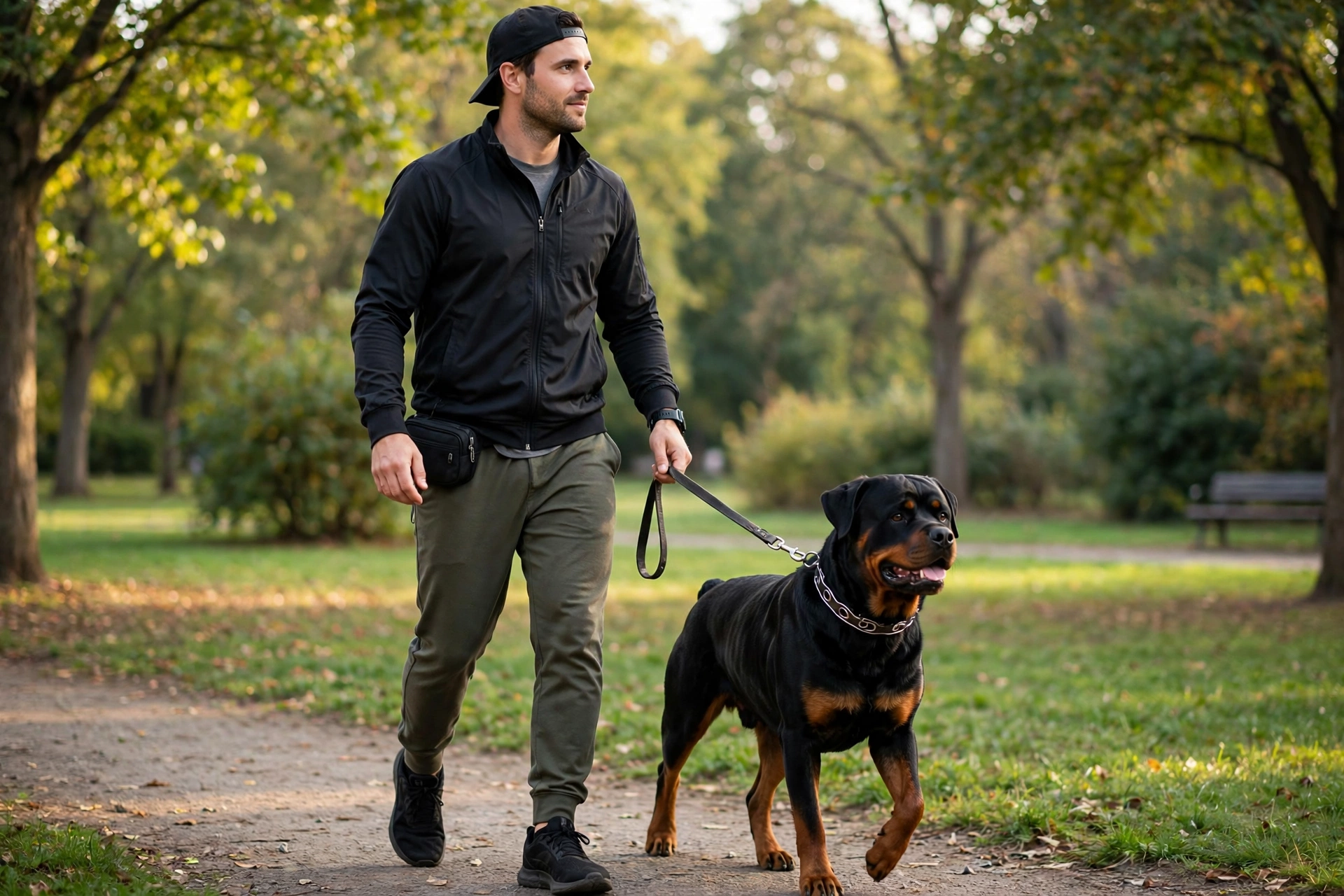
The 3.0mm gauge steps up for large breeds (60+ pounds) — Rottweilers, German Shepherds, Mastiffs — where the collar must handle serious force without link deformation. The O-ring (dead ring) configuration provides steady, even pressure rather than the martingale-style tightening of swivel models; trainers choose O-ring for dogs that need consistent communication without the “check” action. This version adds an easy quick-release buckle for on/off convenience, and fits necks of about 20–25 inches. Heavier gauge means fewer prongs for the neck circumference — fit becomes even more critical, as each prong carries more of the load. Professional fitting recommended.
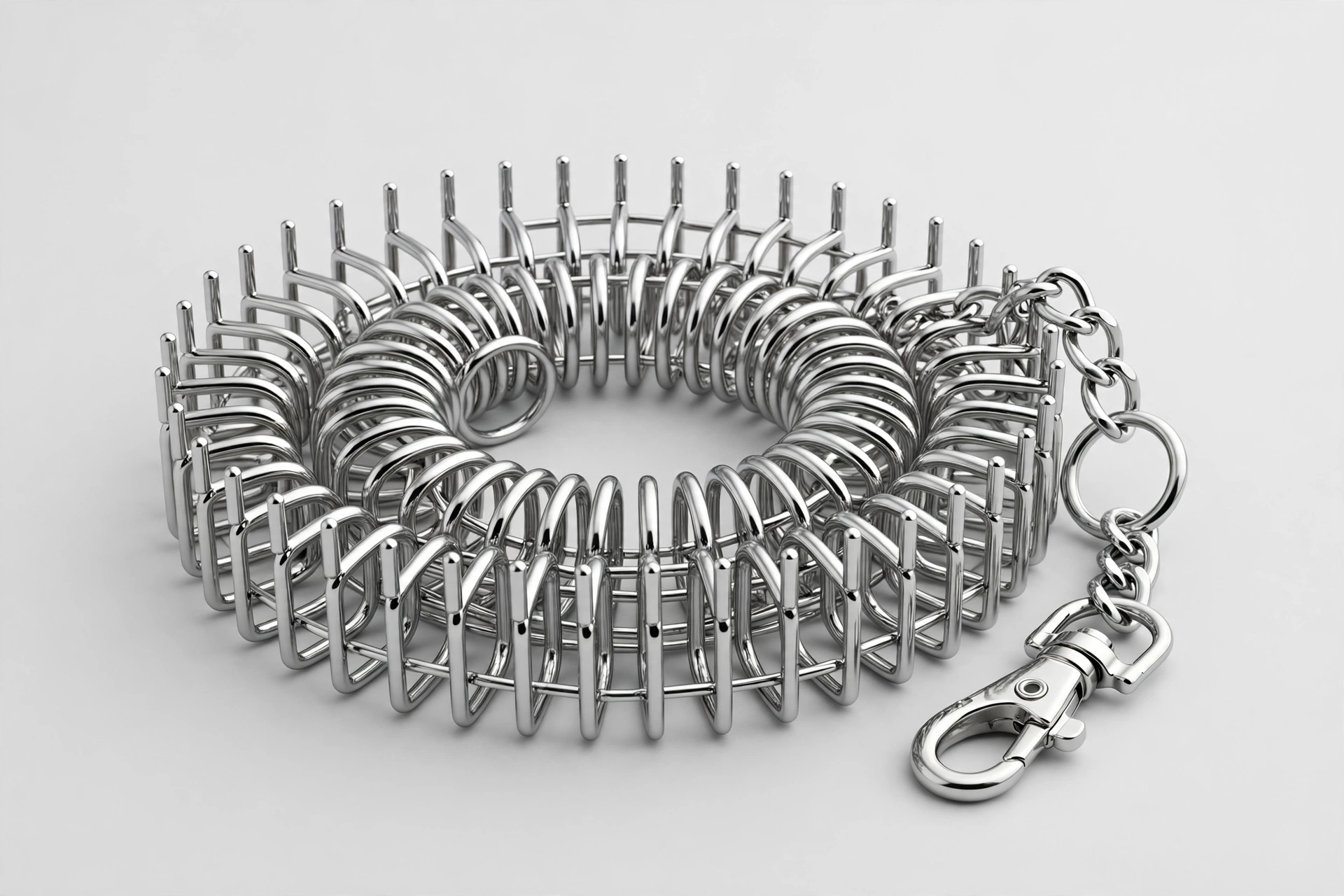
Herm Sprenger Chrome Prong (3.0mm, Swivel)
The 3.0mm swivel is the maximum-control configuration for powerful pullers — heavy gauge plus the martingale-style swivel action that tightens slightly with leash pressure. This is the tool for the 100-pound dog whose pulling is a genuine safety issue, used as a transitional training aid under professional guidance. I want to be explicit: this level of equipment demands education. The swivel action must be understood (it amplifies corrections), the fit must be precise, and the training plan must aim toward weaning off the tool — not permanent dependence.
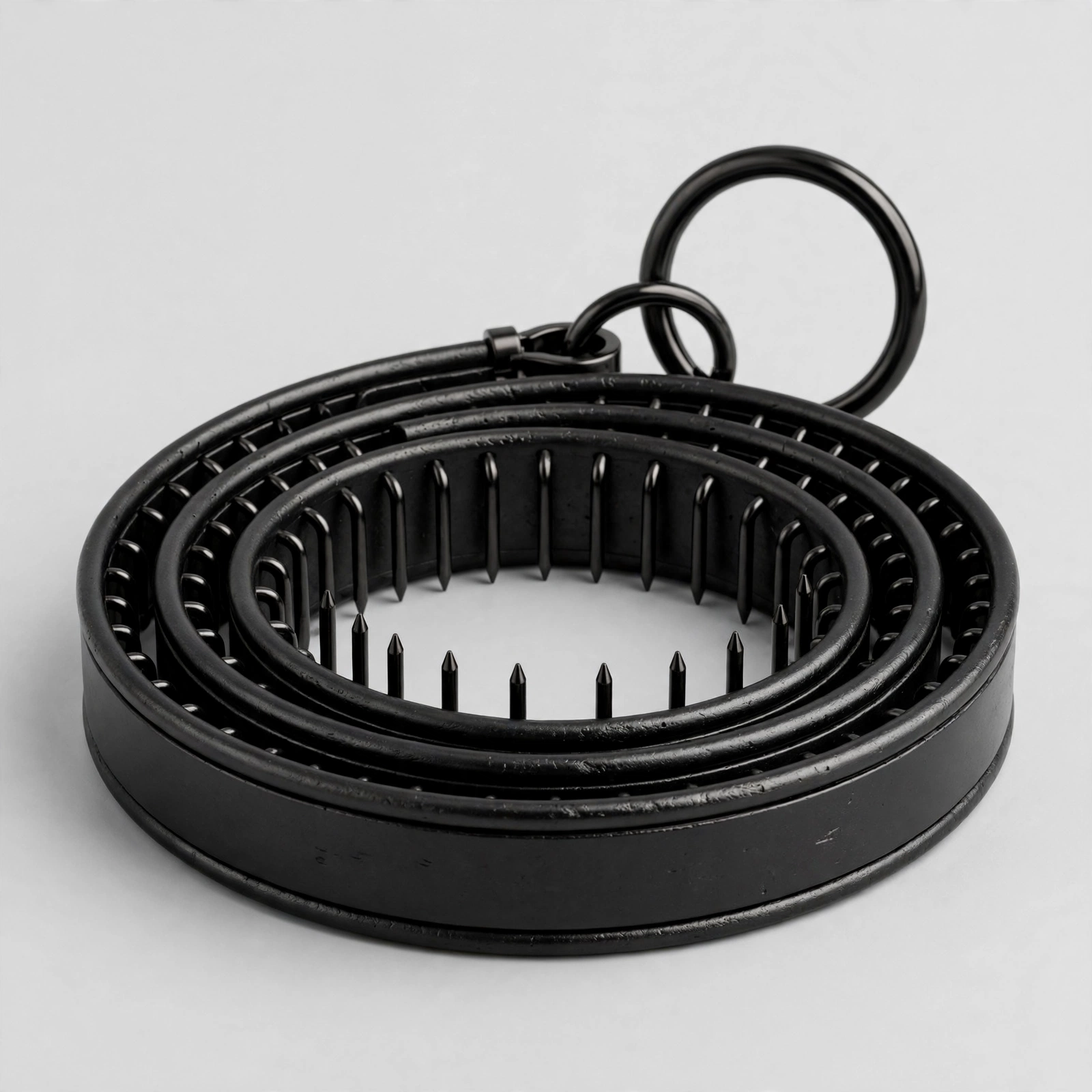
Herm Sprenger Black Stainless Prong (3.2mm, Easy-On)
The black 3.2mm Easy-On combines the heavy gauge large breeds need with the discreet finish and an Easy-On assembly chain with two O-rings — the most understated serious prong in the lineup. Correct gauge note: Herm Sprenger’s black stainless prong line comes in 2.25 / 3.2 / 4.0 mm, so this is 3.2 mm, not 3.0 mm. The 24-inch chain fits necks up to about 19 inches. For the owner working through a professional training program with a large, powerful dog, this minimizes both physical and social friction. Same Sprenger quality standards: rounded tips, German steel, even action. As with all prong use, the goal is a trained dog that graduates to a flat collar — the tool is a bridge, not a destination.
Buying Guide: Prong Collars, Responsibly
How prong collars actually work
A prong collar’s links create blunt pressure points around the entire neck; when the dog pulls (or the handler checks), the links tighten slightly and the prongs press evenly — mimicking, in theory, the corrective nip of a mother dog or the pressure of canine play corrections. The key design insight: pressure distributed across many blunt points is clearer and less injurious than the concentrated strangling of a slip chain. Herm Sprenger’s rounded prong tips are central to this — sharp-tipped imitations puncture and scratch, which is why brand matters enormously here. It’s a communication tool based on pressure, and like all pressure tools, its humaneness lives in the technique. Prong collars sit within the wider dog collar category on Wikipedia. Before choosing any aversive tool, compare the best e-collars for dogs guide and the force-free-first best no-pull dog collars guide.
Why Herm Sprenger exclusively
I recommend only Herm Sprenger in this category for concrete reasons: rounded, polished prong tips (the humane detail); consistent German steel that doesn’t bend or develop sharp edges; precise link geometry for even pressure; and a century of manufacturing refinement. Cheap prong collars — and the market is flooded with them — have sharp stamped prongs, uneven links, weak clasps, and plating that flakes into the skin. A bad prong collar isn’t a milder version of a good one; it’s a different, dangerous product. The price difference buys safety engineering. And buy from authorized sellers: counterfeit “Sprengers” with razor edges are documented on marketplaces — if the price seems too good, it is.
Fitting: the most critical five minutes
Prong fit is exacting and non-negotiable: the collar sits HIGH on the neck, right behind the ears and jaw — not hanging low like a necklace. It should be snug enough not to rotate (a rotating prong collar is a useless and irritating one), fitted by adding or removing individual links. The two-finger rule doesn’t quite apply; instead, you should barely fit a finger under the links at rest. An improperly fitted prong — too loose, too low — doesn’t communicate; it just annoys and can injure. I strongly recommend having a trainer fit it the first time; watching proper fitting once teaches you for life. Re-check fit as coat changes with seasons.
The training framework that justifies the tool
In my view, prong collars are only defensible within a framework: (1) the dog is a strong puller where pulling is a safety issue; (2) positive-reinforcement foundations are in place or in progress; (3) a qualified trainer guides the introduction and technique; (4) the goal is transitioning to a flat collar, with the prong as a temporary communication bridge; (5) corrections are quick “checks,” never sustained pressure or anger-driven yanks. Outside this framework — bought in frustration, used without education, left on as a permanent crutch — it’s misuse. Be honest with yourself about which scenario you’re in before purchasing.
When NOT to use a prong collar
Do not use prong collars on: puppies under six months; fearful, anxious, or shy dogs (pressure worsens fear); aggressive dogs (suppressing signals without addressing causes risks worse outcomes — see a veterinary behaviorist); dogs with neck injuries, tracheal issues, or skin conditions; brachycephalic breeds with breathing compromise; or any dog without prior trainer guidance. They’re also wrong for: barking problems (wrong tool entirely), off-leash reliability (that’s e-collar/long-line territory), and owners unwilling to learn technique. When in doubt, the default should be a martingale or front-clip harness plus training — effective for the vast majority of pulling cases without any controversy.
Frequently Asked Questions
Do prong collars hurt dogs?
They apply uncomfortable pressure — that’s their mechanism, and denying it would be dishonest. The meaningful questions are: how much, compared to what, and to what end. Properly fitted quality prongs distribute blunt pressure; many trainers argue this is clearer and less harmful than a dog strangling itself on a flat collar or slip chain. Critics argue any aversive pressure is unacceptable when positive methods exist. I present both views because the honest landscape includes both — and I land here: for most dogs, start with humane alternatives; for the specific strong-dog cases, use quality tools with professional guidance.
What’s the difference between prong and choke collars?
Mechanics and safety margin. Prong collars distribute pressure across multiple blunt points with limited tightening; choke (slip) chains concentrate force on the trachea with unlimited tightening — a dog that panics on a choke chain can seriously injure itself, while a prong’s design limits constriction. Most professional trainers who accept either tool prefer prongs over chokes for this reason. Neither belongs in uneducated hands, but the prong’s engineering is the more forgiving of the two.
Can prong collars damage a dog’s neck?
Poorly made, poorly fitted, or misused prongs can cause puncture wounds, skin irritation, and neck injury — the horror stories are real and usually involve cheap sharp-pronged collars or sustained harsh corrections. Quality Herm Sprenger prongs, properly fitted and used with check-and-release technique, have a strong safety record in professional use. The variables that determine outcome: product quality, fit, technique, and supervision. Get all four right or don’t use the tool.
Are prong collars legal?
Regulations vary by jurisdiction — some European countries restrict or ban them, while they’re generally legal in the US. Beyond law, many training facilities, dog sports, and daycares prohibit them on their premises. I recommend checking local regulations and the policies of any facility you use. The regulatory trend in several countries is toward restriction, which is worth knowing as context for your decision.
How do I transition off a prong collar?
The goal from day one: use the prong to establish clear leash communication, then systematically transfer that understanding to a flat collar or martingale. The method: once the dog walks reliably on the prong, begin sessions on the flat collar, returning to the prong only when needed; gradually increase flat-collar time as reliability holds. Most dogs transition within weeks to months. A prong worn indefinitely isn’t a training success — it’s a management dependency. Plan the exit from the entrance.
What should I try before a prong collar?
In order: (1) consistent loose-leash training (stop-and-go, direction changes, high-value rewards); (2) a front-clip harness, which manages pulling mechanically without neck pressure; (3) a martingale collar for escape-proof gentle feedback; (4) a head halter for strong dogs, with conditioning; (5) professional training sessions to diagnose what’s really happening. Most pulling problems resolve within these steps. The prong is for the remainder — the powerful, practiced pullers where safety demands more — and even then, with a trainer’s guidance.
Verdict
My product verdict on the best prong collars for dogs: Herm Sprenger exclusively — the 2.25mm chrome for medium dogs, 3.0mm for large breeds, black stainless for discretion, quick-release for convenience. But the real verdict is the framework: try the humane alternatives first, get professional guidance before buying, fit it precisely, use it as a temporary bridge — and transition off. A prong collar in educated hands, for the right dog, for a limited time, is a defensible tool. Anything less than that framework is a purchase I can’t endorse. Consult a vet or certified trainer before you decide; that conversation matters more than any product on this page.





4 Comments