
The best stainless steel chain dog collars span two worlds that rarely meet: the training world of fur-saver chains and martingale chains, and the fashion world of Cuban-link statement collars. What unites them is the material — 304 or 316 stainless steel, chosen for corrosion resistance, strength, and a polish that doesn’t quit. I evaluated both sides honestly: the legitimate training applications where chain designs excel, the fashion pieces that turn heads, and the safety knowledge you need before putting metal on your dog’s neck.
Affiliate disclosure
As an Amazon Associate, Dogslifelearning earns from qualifying purchases. If you buy through links on this page, I may earn a commission at no extra cost to you.
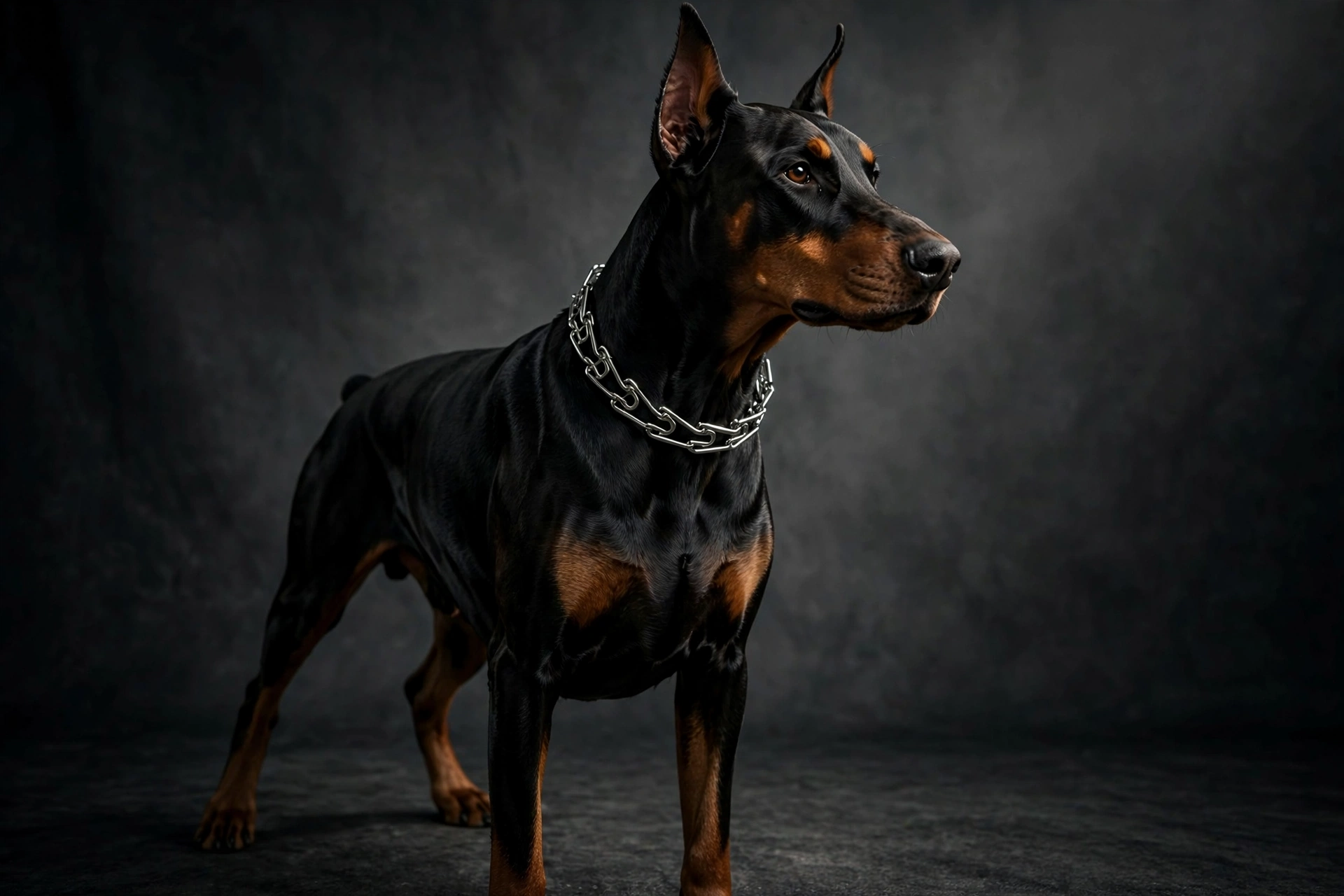
⚡ The short answer
🥇Herm Sprenger Fur Saver (Black)The professional’s chain→🥈Silver Phantom Cuban LinkBold Cuban links→🥉Cymiler Chain MartingaleNylon + chain combo→
Quick Picks
| Product | Best For | Standout Feature |
|---|---|---|
| Herm Sprenger Fur Saver (Black) | Training standard | The professional’s chain |
| Silver Phantom Cuban Link | Statement style | Bold Cuban links |
| Cymiler Chain Martingale | Hybrid design | Nylon + chain combo |
| HACRAHO Gold Chain | Small-dog fashion | 18K gold-plated, decorative |
| Youlehui Cuban Link | Value fashion | Affordable Cuban style |
| W/W Lifetime Chain | Durability pick | Heavy-duty welded links |
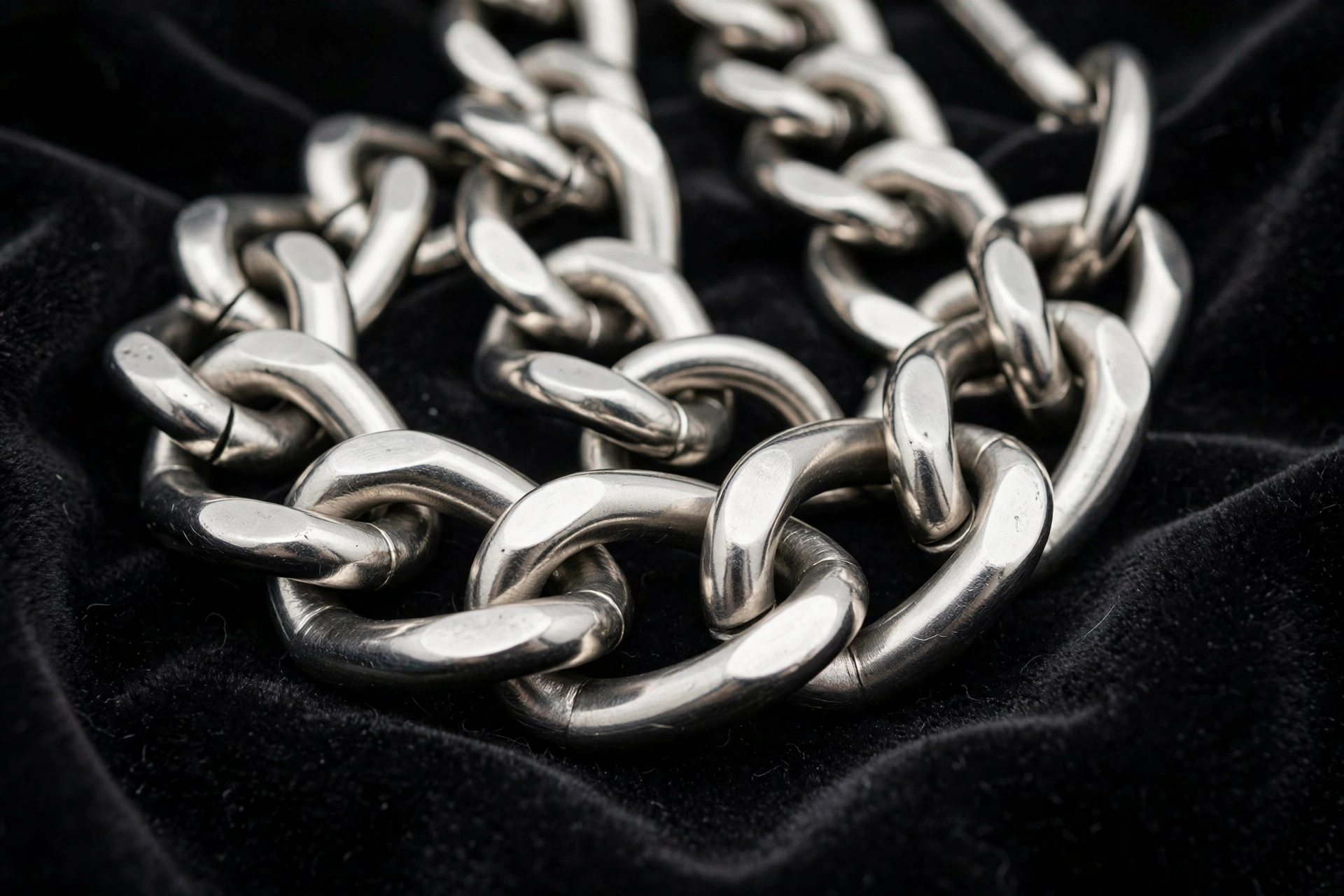
The 6 collars, reviewed
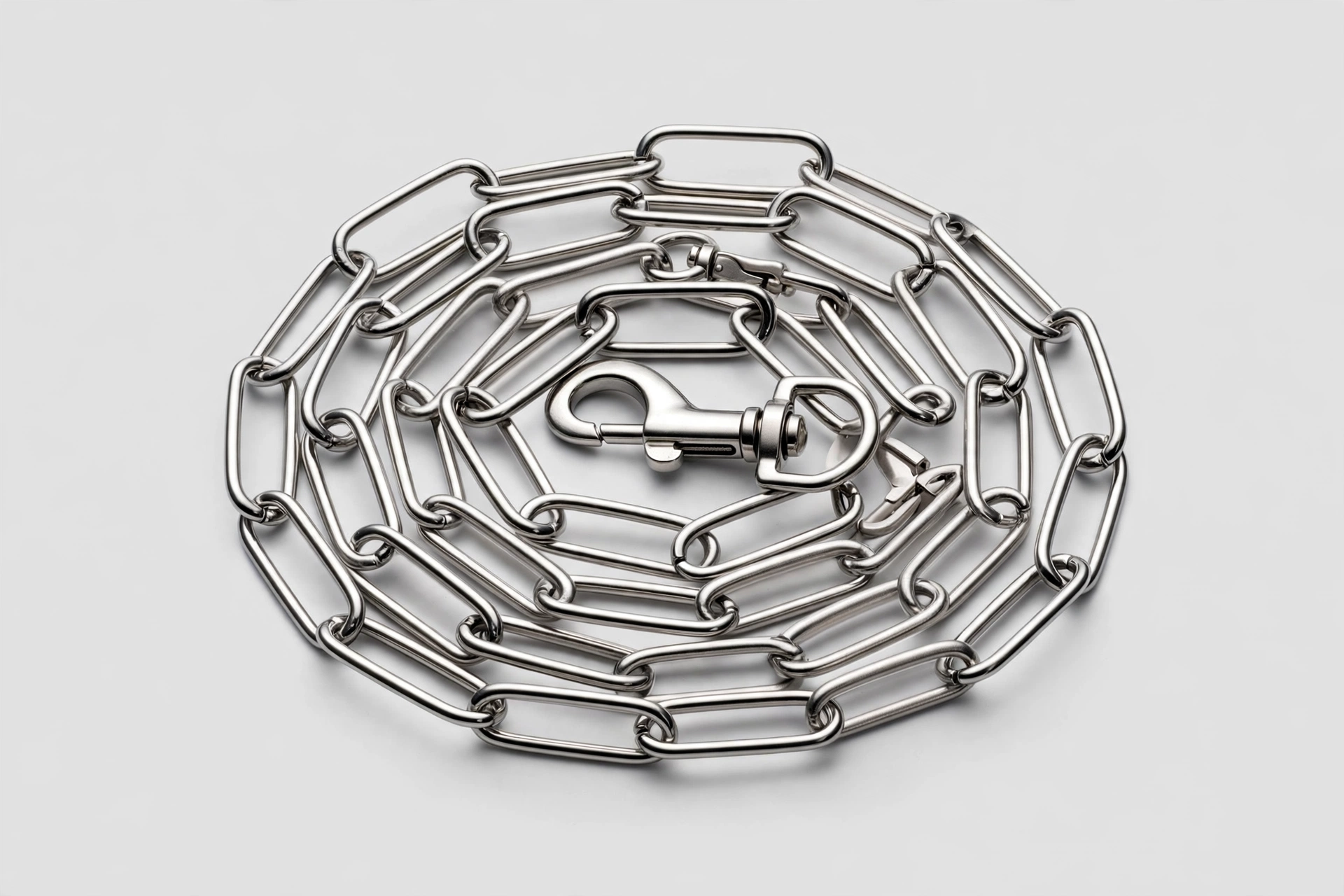
Herm Sprenger Black Stainless Fur Saver Chain
Herm Sprenger is the German standard — the fur saver’s long, smooth links are designed to distribute pressure and slide through coat without the grabbing and breaking that cheap choke chains cause. This is the chain collar that professional trainers actually use, and the distinction matters: it’s a precision training tool, not a punishment device. The black stainless steel is genuinely corrosion-proof, and the craftsmanship (welded links, smooth finish) is visibly superior to imitations. If a trainer recommends a chain collar, this is the one they mean.
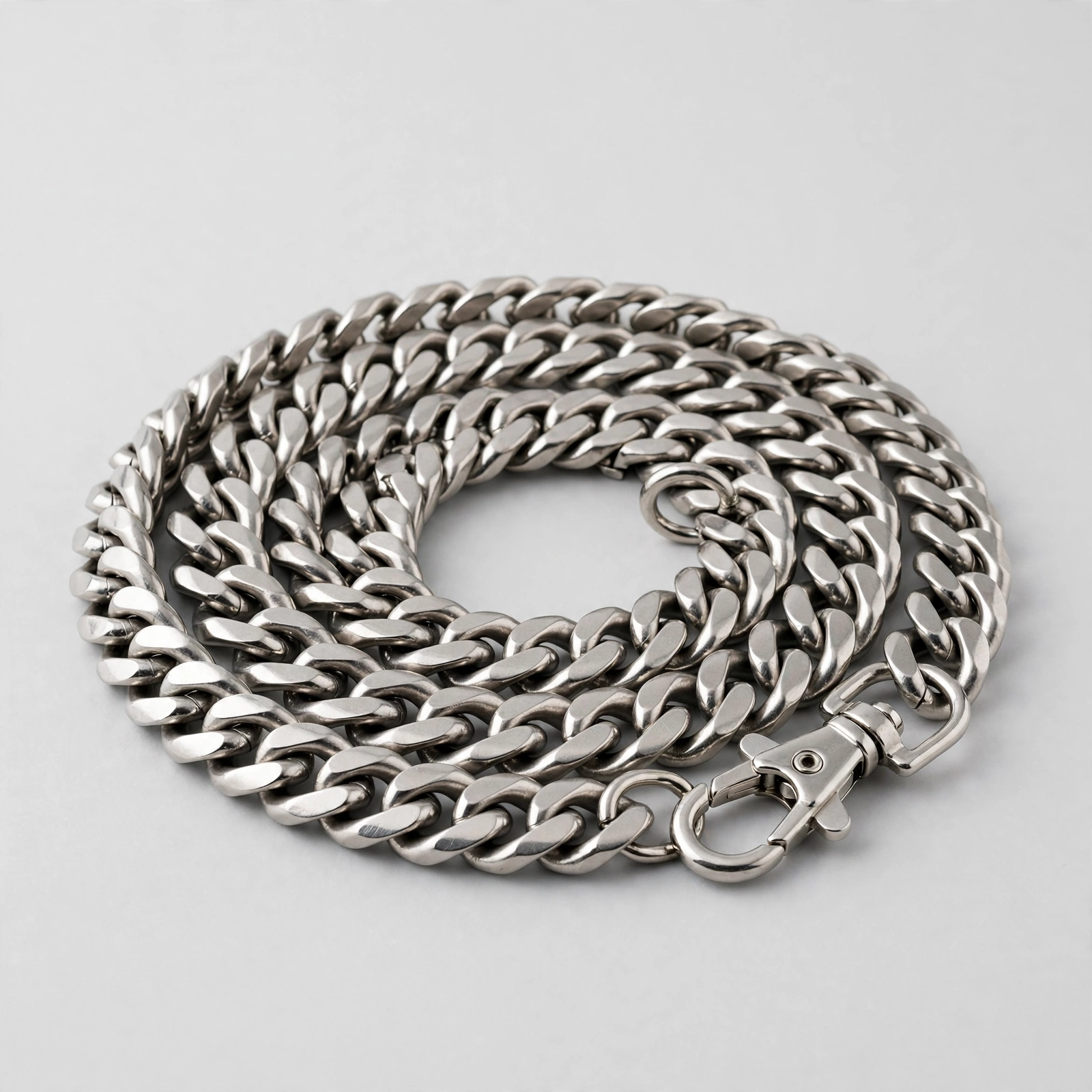
Silver Phantom Cuban Link Chain Collar
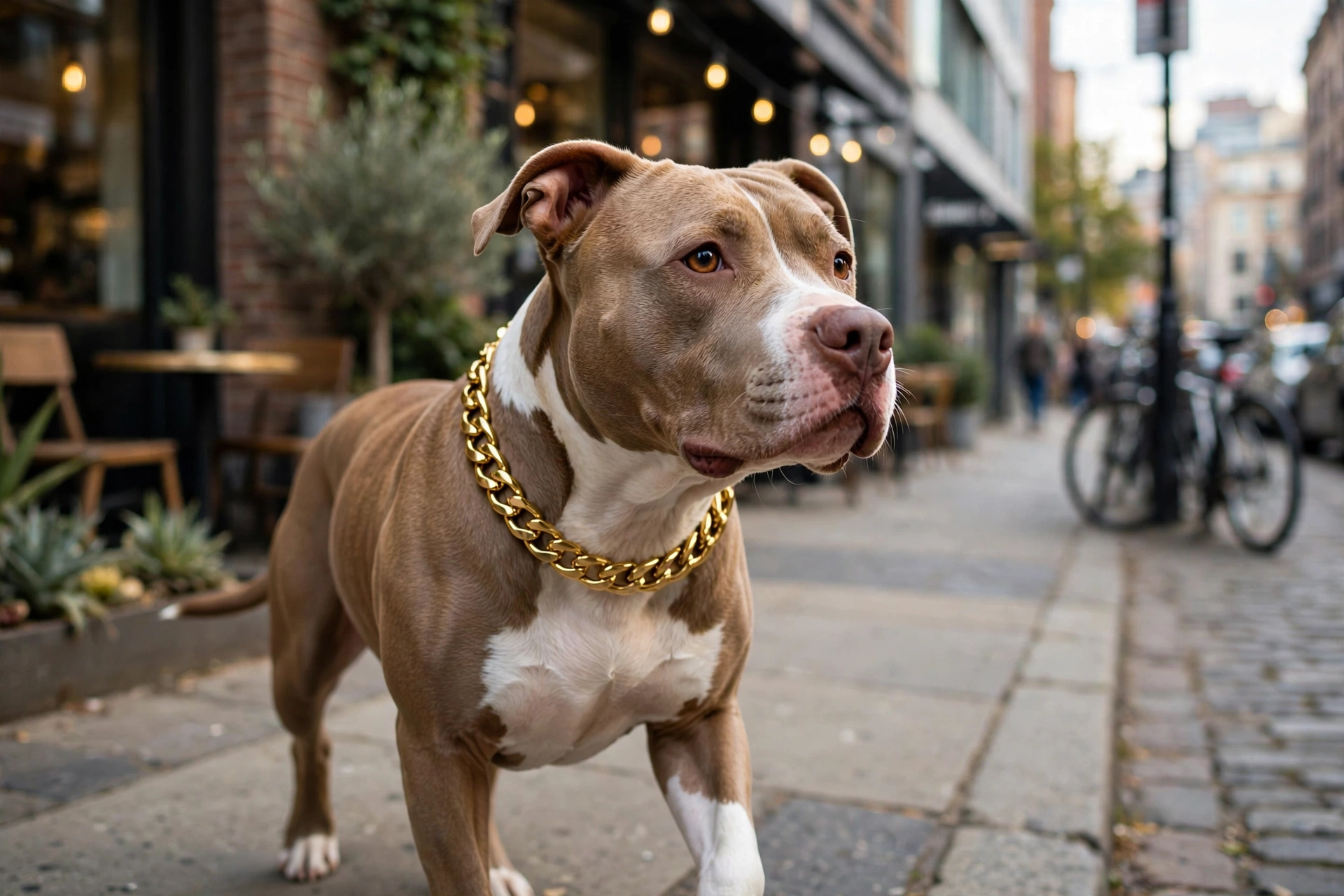
The Silver Phantom is pure presence — a thick Cuban-link chain that makes a Doberman, Cane Corso, or Pit Bull look like canine royalty. The flat interlocking links sit smoothly and catch light beautifully. I’ll be direct about the category: fashion chains are jewelry, not training equipment — buy for the look, walk on proper gear if your dog pulls. The stainless construction means it won’t tarnish or stain the coat green (a real problem with cheap plated chains). For the photo, the event, the statement: unmatched.
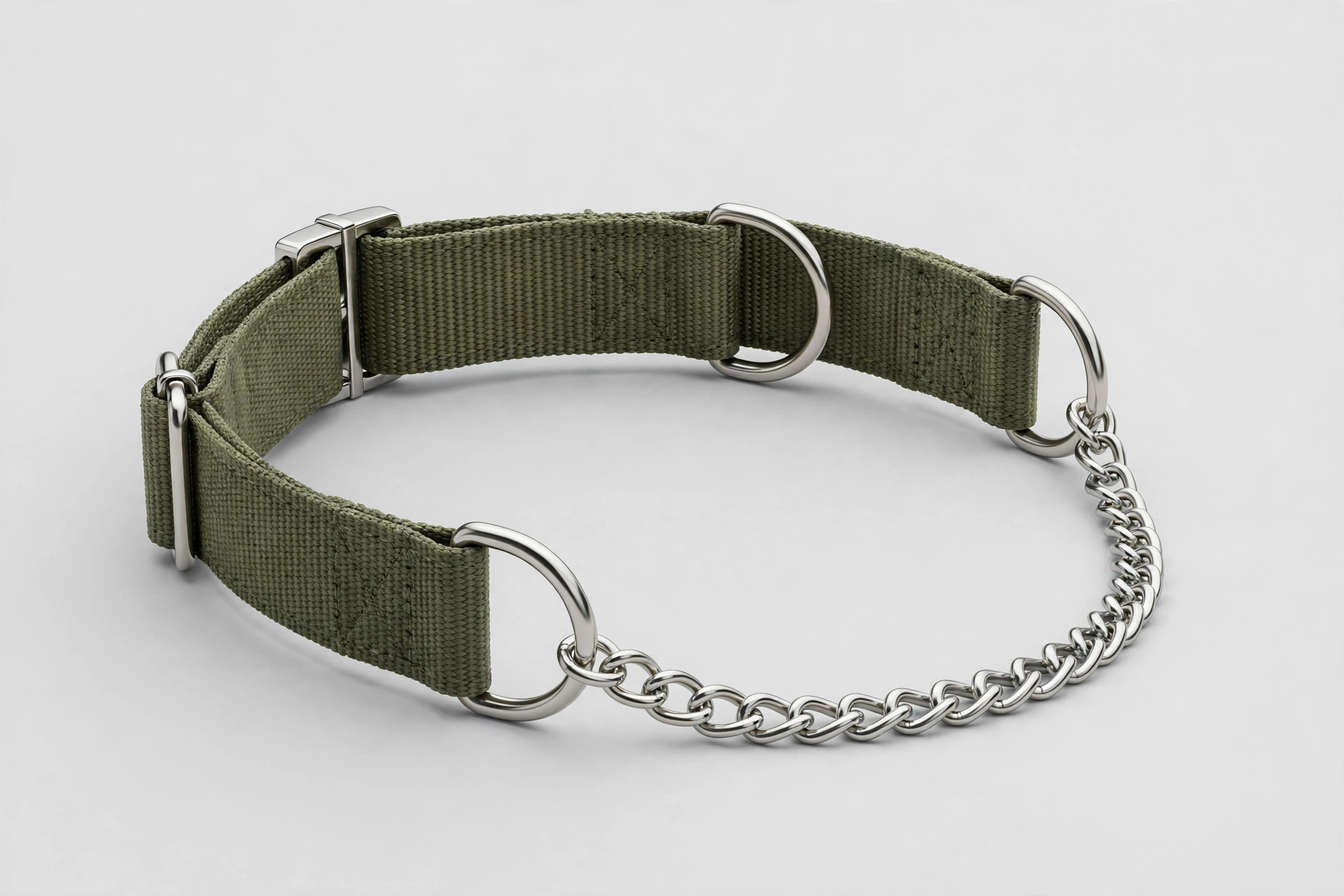
Cymiler Chain Martingale Collar
The Cymiler hybrid pairs a nylon collar body with a stainless chain martingale loop — combining the comfort of webbing with the precise feedback and distinctive sound of chain. This is a thoughtful middle ground: the chain section provides the martingale’s limited-slip function with smoother action than fabric loops, while the nylon body is gentler for all-day wear. I like hybrids for owners curious about chain martingales but wary of full-chain designs. The chain’s audible check is a feature trainers either love or skip — know your philosophy.
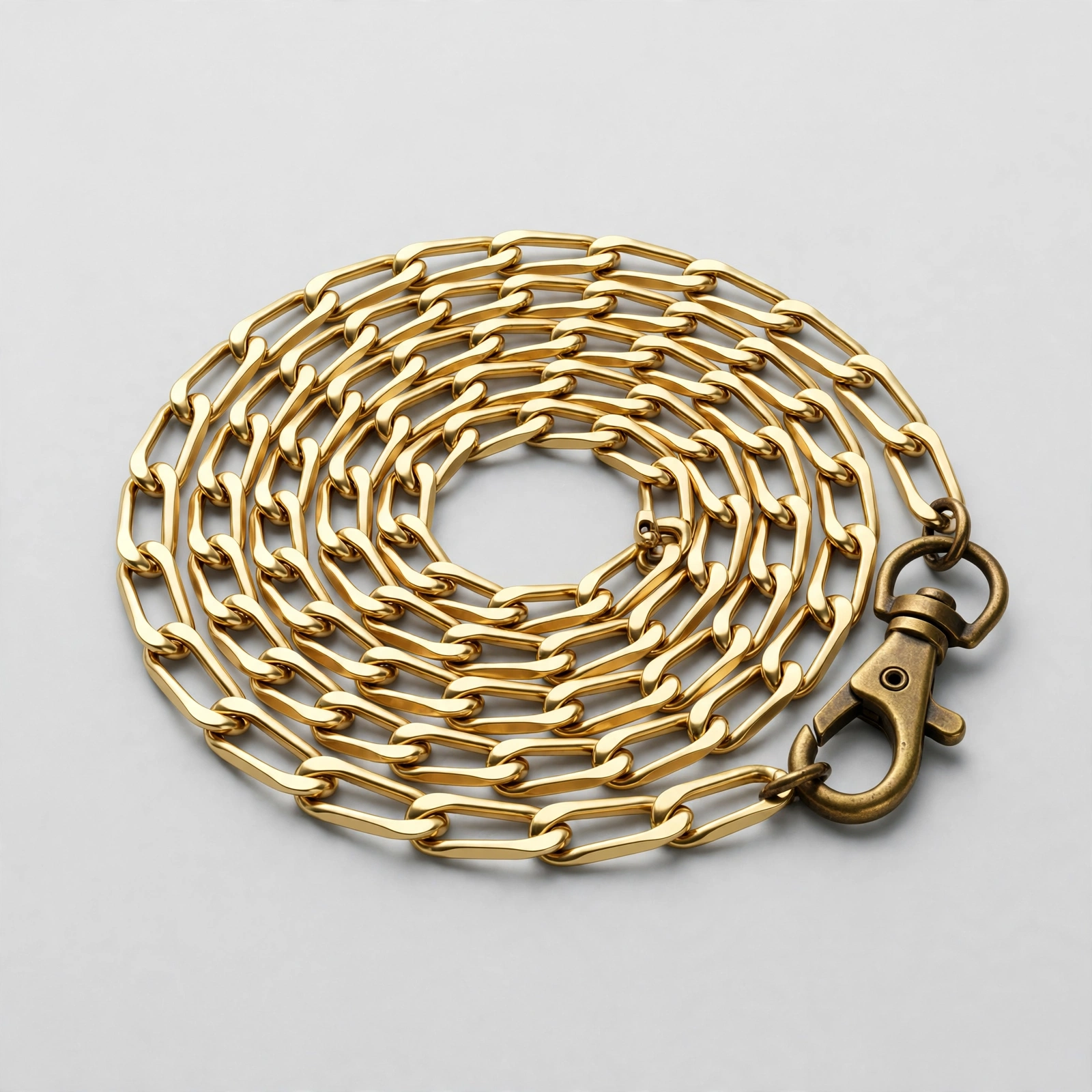
HACRAHO Gold Chain Dog Collar
HACRAHO’s gold chain is the decorative entry in this list — an 18K gold-plated 304 stainless steel necklace with rhinestone and paw detailing, made for small pets (size S, about 12.2 inches). It passes the stainless-underneath test, but be clear about what it is: jewelry for photos and supervised style occasions on a small dog, not a training chain and not for large or pulling dogs. The gold finish over stainless gives the look without solid-gold absurdity. Verify the plating quality on arrival (good plating is even and lustrous; cheap plating looks brassy and wears fast), and keep training gear separate. For the small dog whose owner wants glamour shots, this delivers the look.
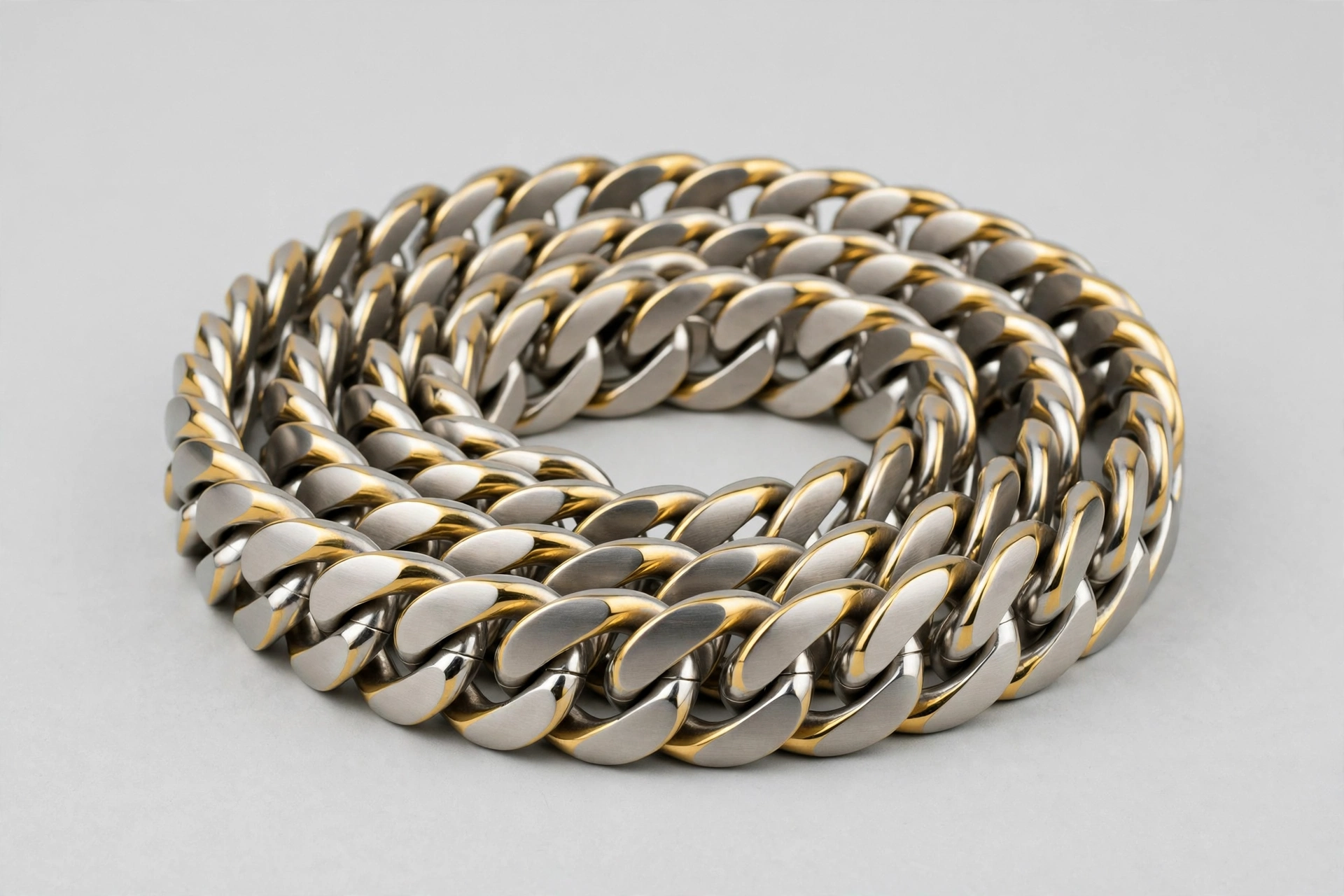
Youlehui Cuban Link Chain Collar
Youlehui offers the Cuban-link look at an accessible price — the entry point to the statement-chain aesthetic. The design borrows the flat-link geometry that makes Cuban chains drape well, with a gold finish for extra flash. Expectations should match the price: inspect link welding and clasp strength on arrival, as budget chains vary. For trying the look before investing in a premium piece, or as the beater fashion collar, the value is fair. Size carefully — heavy chains that are too loose swing uncomfortably.
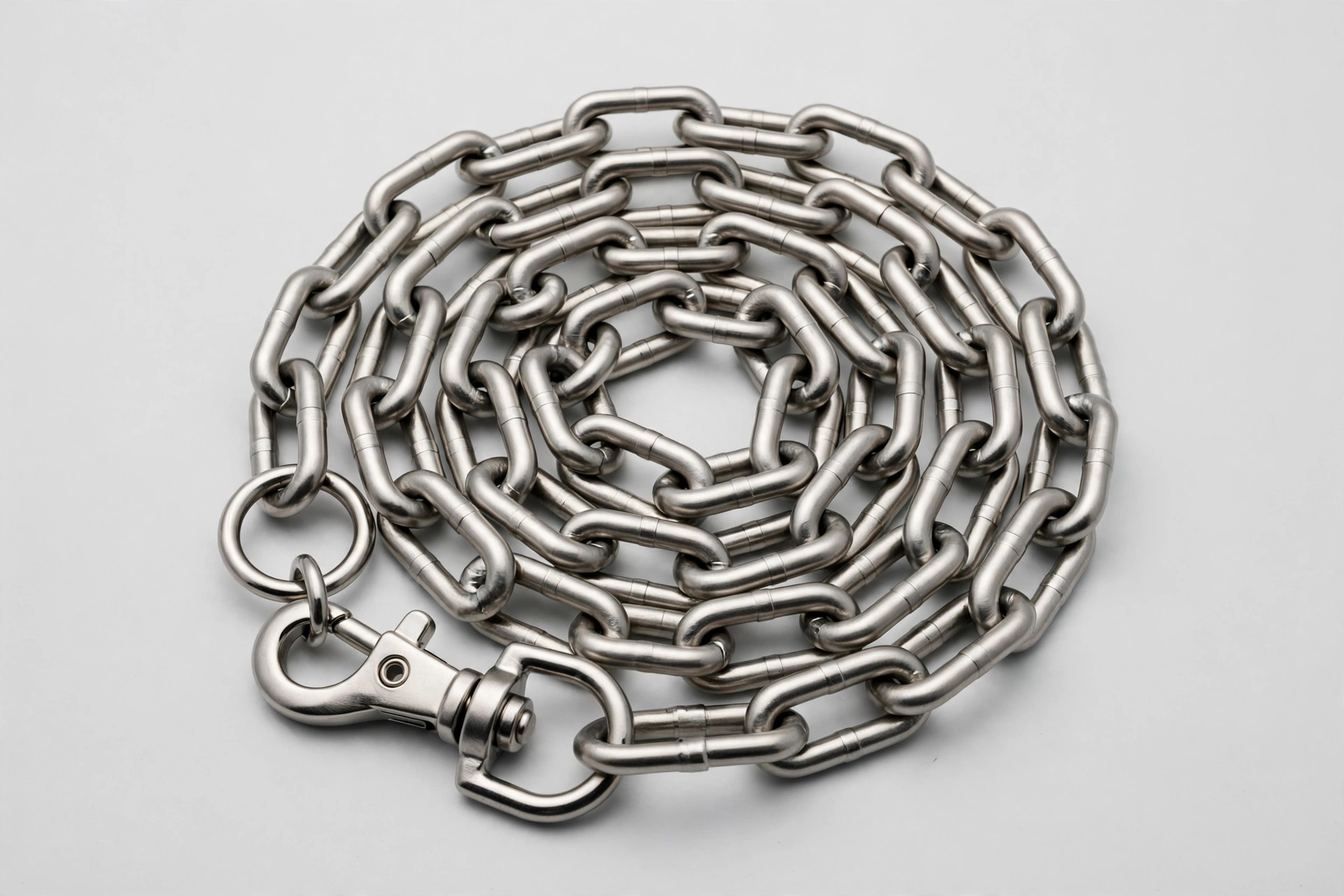
W/W Lifetime Stainless Chain Collar
The W/W “lifetime” chain emphasizes what stainless does best — enduring. Heavy-duty welded links, corrosion-proof construction, and a build meant to outlast the dog’s collar-wearing years. This is the practical stainless choice: less about fashion, more about buying chain hardware once. I recommend it for owners who’ve settled on chain designs for training or daily wear and want the last one they’ll buy. The weight is substantial — appropriate for medium-large dogs, overkill for toy breeds.
Buying Guide: Chain Collars, Used Right
Training chains vs fashion chains: know which you’re buying
These are fundamentally different products sharing a material. Training chains (fur savers, chain martingales, slip chains) are working tools with specific mechanics — limited-slip or slip action that communicates leash pressure. They belong in educated hands, ideally under trainer guidance, and they’re sized and fitted precisely. Fashion chains (Cuban links, gold chains) are jewelry — decorative, often heavy, with no training function. The danger is confusing them: using a fashion chain as a training collar (poor mechanics, weak clasps) or a training chain as unsupervised jewelry (strangulation risk). Buy for the actual job, and never leave any chain collar on an unsupervised dog. The grades I mention are explained in Wikipedia’s stainless steel article. For non-chain control options, see the best no-pull dog collars guide, and for electronic training tools, the best e-collars for dogs guide.
How to fit and use a fur saver correctly
The fur saver is worn like a martingale — and fitting is specific: it should sit high on the neck, just behind the ears, and the “live ring” configuration determines whether it functions as a limited-slip or slip chain. The long links are the design’s genius: they distribute pressure more evenly than standard choke chains and slide through fur without the coat damage that gives choke chains their reputation. Used with the quick “check and release” technique (never sustained pressure), it’s a communication tool. Used as a constant-tight leash, it’s just a choke chain with better PR. The difference is entirely in the hands — which is why I recommend learning from a trainer, not from the product page.
Stainless grades and what they mean
Not all “stainless” is equal: 304 stainless (the standard) resists rust and corrosion in normal use; 316 (marine grade) adds molybdenum for salt-water resistance — relevant for beach dogs. Cheap chains may use plated steel marketed loosely as “stainless-style” — plating wears, exposes base metal, rusts, and can stain light coats green or brown. How to assess: genuine stainless is non-magnetic (or weakly magnetic), evenly polished, and consistently finished inside the links; plated chain often shows color variation at link joints. When a listing specifies the grade, that’s a quality signal; when it just says “metal chain,” be skeptical.
Safety: the non-negotiable rules
Chain collars demand strict safety discipline: never leave any chain collar on an unsupervised dog — chains snag on crates, fences, and branches with lethal efficiency; never attach a tie-out to a chain collar; remove for multi-dog play (jaw entanglement in chain is an emergency); and inspect links regularly for spreading or cracking (a failed link under load means a loose dog). Slip-chain designs should never be left on as ID collars — use a flat collar for tags. These aren’t suggestions; they’re the rules that separate tools from tragedies. If the discipline sounds like too much, choose a different collar type — there’s no shame in it.
Coat, skin, and the metal question
Stainless chain affects coats in specific ways: smooth, polished links (fur savers) minimize damage; rough or poorly-finished links break coat and irritate skin. White and light coats can pick up gray “chain staining” from metal oxidation on lower-quality chains — genuine stainless minimizes this. Dogs with nickel sensitivity (rare but real) may react to stainless; watch for redness or itching under the collar in the first weeks. For long-coated breeds, fur savers genuinely earn their name versus standard chains; for short-coated breeds, any smooth chain works. Keep the chain clean — grime in the links abrades both metal and coat.
Frequently Asked Questions
Are chain collars cruel?
The honest answer depends on design and use. A fur saver or chain martingale, properly fitted and used with check-and-release technique under knowledgeable guidance, is a communication tool most trainers consider acceptable. A choke chain left to tighten continuously, or any chain used with harsh yanking, is cruel by any measure. The controversy around chains is really about misuse prevalence — they’re widely misused by owners who were never taught. My position: legitimate tools requiring education; if you won’t get the education, don’t buy the tool.
What’s the difference between a fur saver and a choke chain?
Link geometry and intent. Fur saver links are long and smooth, designed to distribute pressure and slide through coat without damage; standard choke chains use short round links that concentrate pressure and grab fur. Functionally, both are slip designs, but the fur saver’s mechanics are gentler and it’s the version professional trainers choose. If someone recommends “a choke chain,” what the knowledgeable ones mean is a fur saver used correctly — the terminology just hasn’t caught up.
Can my dog wear a chain collar all day?
I don’t recommend it. Chain collars are working/session gear: on for training and walks, off for house, crate, and unsupervised time. All-day chain wear risks snagging, coat damage, and skin irritation, with no benefit over a flat collar for ID purposes. The safe system: flat collar (or breakaway) with tags for daily wear, chain for the training session, chain off afterward. This discipline is part of responsible chain ownership.
Will a stainless chain collar rust?
Genuine 304/316 stainless steel won’t rust under normal conditions — that’s the material’s defining virtue and why it’s worth the premium over plated chain. It can develop surface discoloration in harsh environments (salt water, chemicals), which polishes off. Plated “stainless-look” chains will eventually rust when the plating wears — another reason to verify the actual material. Rinse after salt-water exposure regardless; even stainless appreciates the courtesy.
Are Cuban link collars safe for dogs?
As supervised fashion wear, yes — they’re essentially heavy jewelry. The concerns are practical: weight (don’t put a heavy chain on a small dog), clasp strength (verify it — a popped clasp means a loose dog), and supervision (no unsupervised wear, no crate wear, no rough play). They’re not training collars and shouldn’t be used as such. Enjoy the aesthetic responsibly: on for the outing, off at home, like any statement piece.
How do I clean a stainless chain collar?
Soak in warm soapy water, scrub with a soft brush (an old toothbrush works for link interiors), rinse, dry thoroughly. For tarnish or dullness on genuine stainless, a metal polish restores the shine. Ultrasonic jewelry cleaners work beautifully on chains if you have access to one. Regular cleaning isn’t just cosmetic — grit in the links accelerates both metal wear and coat damage. A clean chain is a kinder chain.
Will a chain collar damage my dog’s coat?
It can — metal links trap and break coat, particularly on long or fine hair, and light-colored dogs can develop grayish staining from metal oxides (less with quality stainless, more with chrome plate). The mitigation: reserve chain collars for training sessions and walks rather than 24/7 wear, keep the coat clean and conditioned, and choose smooth, well-finished links. For coated breeds where coat condition matters (show dogs, doodles), I strongly prefer fabric collars for daily wear and chains only for specific training purposes. The coat damage is cumulative — occasional use is negligible, constant use is visible.
How do I clean a chain collar?
Simple: warm soapy water and a brush for routine grime, rinse thoroughly, and dry completely (even stainless benefits from drying). For tarnish or buildup, a paste of baking soda and water with a soft cloth restores shine; avoid abrasive pads on plated chains, which strip plating. Inspect the welds and link joints during cleaning — it’s the natural maintenance moment. A clean, inspected chain is a safe chain; most chain failures I hear about involved neglected, corroded links that would have been caught by routine cleaning.
Verdict
Among the best stainless steel chain dog collars, my recommendations split by mission: the Herm Sprenger fur saver for legitimate training use (with proper education), the Silver Phantom Cuban for statement fashion, and the Cymiler hybrid for the curious middle ground. The unifying advice: know which world you’re buying into, follow the safety discipline strictly, and never confuse jewelry with training equipment. Stainless chain is a material that rewards knowledge and punishes carelessness — bring the knowledge, and it’s among the most enduring gear you can own.



2 Comments