
When I started researching training collars, the prong collar vs martingale collar debate was everywhere — forums, trainers, even fellow dog owners at the park. Both are designed to give you more control when a dog pulls, but they work through completely different mechanisms and come with very different risk profiles. I’ve used martingales for years and talked at length with certified trainers about prongs, so here’s an honest, welfare-first breakdown of how they compare.
A quick note on where I stand: any tool that works through pain or fear deserves serious scrutiny. My goal here isn’t to sell you on either collar — it’s to give you the facts so you can make a considered decision, ideally with a qualified, humane trainer in the loop.

How Each Collar Works
Prong collars
A prong collar (sometimes called a pinch collar) is a series of interlocking metal links, each with blunt-ended prongs that point inward toward the dog’s neck. When the leash tightens, the links contract and the prongs press into the neck. The intended mechanism is aversive: pulling becomes uncomfortable, so the dog stops pulling to avoid the sensation. Modern prong collars sold by reputable makers use rounded, blunt prong tips — sharp or homemade versions are dangerous and should never be used.
Martingale collars
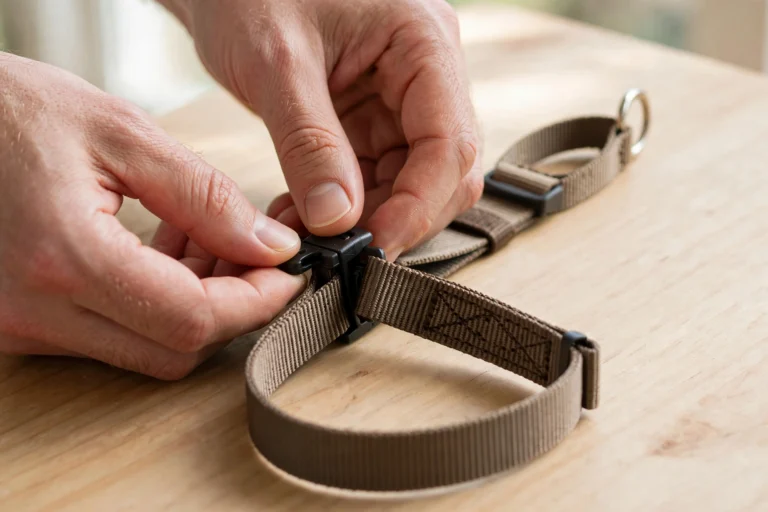
A martingale (limited-slip) collar has two fabric or chain loops. When the leash tightens, the smaller control loop pulls the larger neck loop snug — evenly distributing pressure around the neck rather than concentrating it at points. When the dog stops pulling, the collar loosens back to its resting fit. The mechanism is escape prevention and gentle feedback, not discomfort as a training method.
Effectiveness for Pulling: What the Evidence Says
Both collars can reduce pulling in the short term, but for different reasons. Prong collars often suppress pulling quickly because the dog learns that pulling hurts. Martingales reduce pulling mainly by preventing the self-rewarding escape of lunging to the end of a flat collar — combined with actual training, not instead of it.
The animal behavior science is worth knowing here: multiple peer-reviewed studies have found that aversive training methods are associated with increased stress behaviors, fear, and in some dogs, aggression. Positive-reinforcement methods achieve comparable or better long-term results without those welfare costs. Major veterinary behavior organizations — including the American Veterinary Society of Animal Behavior — recommend against aversive tools as a first choice.
Safety and Injury Risk
This is where the two collars differ most. A martingale, fitted correctly, distributes force evenly and has a built-in stop: the control loop can only tighten so far. Injuries from martingales are rare and usually involve improper fit or leaving the collar on unsupervised.
Prong collars concentrate force at the prong tips. Documented risks include skin punctures (especially with cheap or damaged prongs), neck bruising, tracheal irritation, and eye injuries from a collar that’s fitted too low or pops off. They must sit high on the neck, be precisely fitted by removing/adding links, and should never be left on an unsupervised dog. There’s also a handler-safety angle: a dog that panics in a prong collar can redirect.
Which Dogs Each Collar Is Marketed For
Martingales were originally designed for sighthounds — Greyhounds, Whippets, Salukis — whose heads are narrower than their necks, letting them back out of flat collars. Today they’re used for any dog that slips collars, including puppies learning leash manners and nervous rescue dogs.
Prong collars are marketed for strong, persistent pullers — large breeds whose owners feel overpowered. In practice, I believe a front-clip harness or head halter usually solves the “I can’t hold my dog” problem more safely, because they manage the dog’s body mechanics rather than punishing the pulling.
The Trainer Question
If a trainer recommends a prong collar, ask questions: What’s their certification? Do they use it as a first resort or a last resort? What does the exit plan look like — how does the dog get off the prong? Trainers who rely on prongs indefinitely, or who can’t explain the learning theory behind their recommendation, are a red flag. A good trainer should be able to get results with a flat collar, martingale, or harness — tools are the last 10%, not the method.

My Take: When a Martingale Makes Sense
For most owners, a well-fitted martingale plus consistent loose-leash training covers everything a prong promises, without the welfare baggage. It’s an escape-prevention device, not a punishment device — and that distinction matters. If your dog’s pulling feels unmanageable, I’d suggest a front-clip harness and a session or two with a certified force-free trainer before considering anything aversive. In my experience, the pulling problem is almost always a training gap, not a hardware gap.
If a Trainer Recommends a Prong Collar: Reducing Harm
I won’t pretend prong collars don’t exist in professional training — some balanced trainers use them as a transitional tool for specific cases. If you and a qualified trainer decide one is appropriate, harm reduction matters enormously. First, buy quality: reputable prong collars have smoothly rounded, blunt prong tips and evenly finished links. Cheap knockoffs with sharp edges or rough plating are the ones most associated with skin injuries.
Fit is critical and unintuitive: a prong collar should sit high on the neck, right behind the ears and jaw, and fit snugly enough that it doesn’t slide down or rotate — a loose prong collar is both less effective and more dangerous, since it can catch skin. Sizing is done by adding or removing individual links, not by leaving it loose. It should come off the moment the walk or session ends — never leave it on in the crate, the yard, or during play. And there should always be a weaning plan: the goal is training the dog to walk politely on flat equipment, not a lifetime subscription to the prong.
Watch your dog’s body language honestly during use. Lip licking, yawning, cowering, shutting down, or increased reactivity after prong sessions are stress signals worth reporting to your trainer — they may mean the tool is suppressing behavior through fear rather than teaching anything.
Frequently Asked Questions
Are prong collars cruel?
Opinions differ, but the welfare concern is real: prong collars are designed to cause discomfort, and studies link aversive tools to stress and fear in dogs. Many countries and training organizations restrict or discourage them. Whether you consider that “cruel” is a judgment call, but it’s worth knowing the science leans against them.
Can a martingale collar hurt my dog?
A correctly fitted martingale is one of the gentlest control collars available — it distributes pressure evenly and has a built-in tightening limit. Problems arise from poor fit (too tight at rest), leaving it on unsupervised, or using a chain martingale with sharp edges. Fit it right and supervise, and risk is minimal.
Do I need a prong collar for a large strong dog?
Usually not. Strength mismatches are better solved with mechanical advantage — a front-clip harness redirects the dog’s forward momentum toward you — plus training. If you’re being dragged, that’s a training emergency worth professional help, not a hardware shopping trip.
Is it okay to use a prong collar just for walks?
Even part-time use carries the same risks: improper fit, skin damage, and stress. If a trainer has recommended one for a specific, time-limited purpose with a clear weaning plan, follow their fitting guidance exactly and never leave it on the dog unsupervised.
What’s the gentlest collar for a dog that pulls?
A front-clip harness is generally the gentlest effective option for pullers, followed by a well-fitted martingale. Both avoid concentrating pressure on the trachea. Pair either with reward-based loose-leash training for lasting results.
Related Buying Guides
Related Reading
- How to Adjust a Martingale Collar — fitting your martingale correctly from day one
- What Is a Limited Slip Dog Collar? — the martingale mechanism explained





2 Comments