
Giant breeds — Great Danes, Mastiffs, Saint Bernards, Newfoundlands, Great Pyrenees, and their 100-plus-pound cousins — break standard dog collars the way toddlers break standard toys: not from malice, but from sheer scale. The best dog collars for giant breeds start at 2 inches wide, use hardware rated for triple-digit pulling forces, and fit necks that run 24 to 36 inches — dimensions where most “large” collars simply run out of strap. This guide covers five collars engineered for that reality, from XXL tactical designs to wide leather classics, and explains the sizing, width, and hardware rules that keep a giant dog’s collar a safety device rather than a decoration.
Affiliate disclosure
As an Amazon Associate, I earn from qualifying purchases. If you buy through a link on this page, I may earn a commission at no extra cost to you.
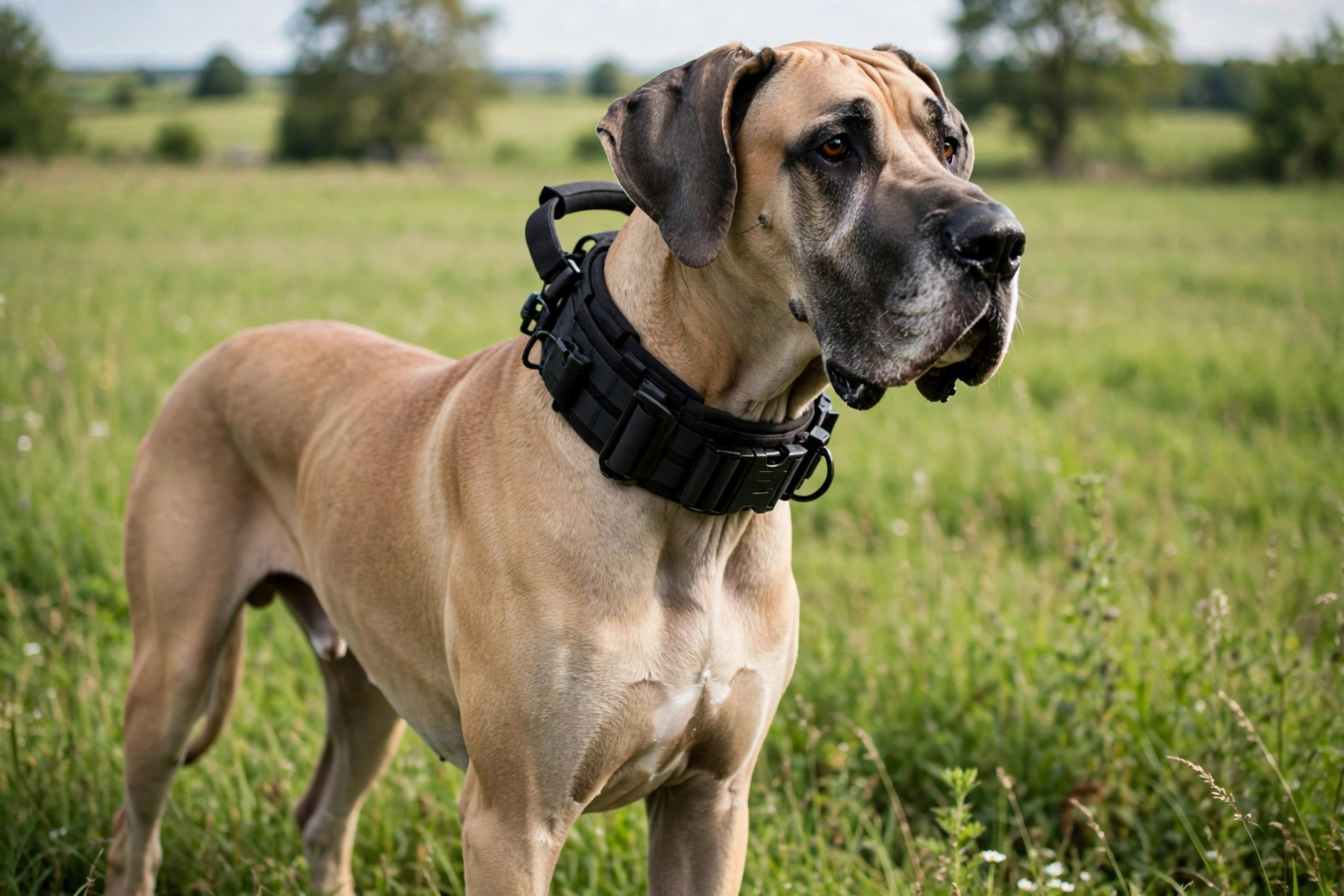
⚡ The short answer
🥇ADITYNA Giant Collar with Handle (XXL)Best overall→
🥈LOIIHEII Premium Leather 2″Best leather→
🥉Guiding Star Studded Leather 2″Style + strength→
Quick Picks: Best Dog Collars for Giant Breeds at a Glance
| Product | Best For | Standout Feature |
|---|---|---|
| ADITYNA Giant Collar with Handle (XXL) | Best overall | 30–36″ fit, grab handle, double metal buckle |
| LOIIHEII Premium Leather 2″ | Best leather | Premium leather, handmade, 2-inch |
| Guiding Star Studded Leather 2″ | Style + strength | Studded cowhide, stainless hardware |
| Mayerzon 2″ Martingale (XL) | Escape-proofing | Limited-slip, no-pull, wide |
| PawsPassion Heavy Duty Tactical (XL) | Maximum durability | All-metal hardware, COBRA-style buckle |
5 Collars Built for Giant Breeds
Giant-breed collars fail in predictable ways: straps too short, buckles too weak, widths too narrow to distribute force. Each pick below is sized and built past those failure points.
Best Overall
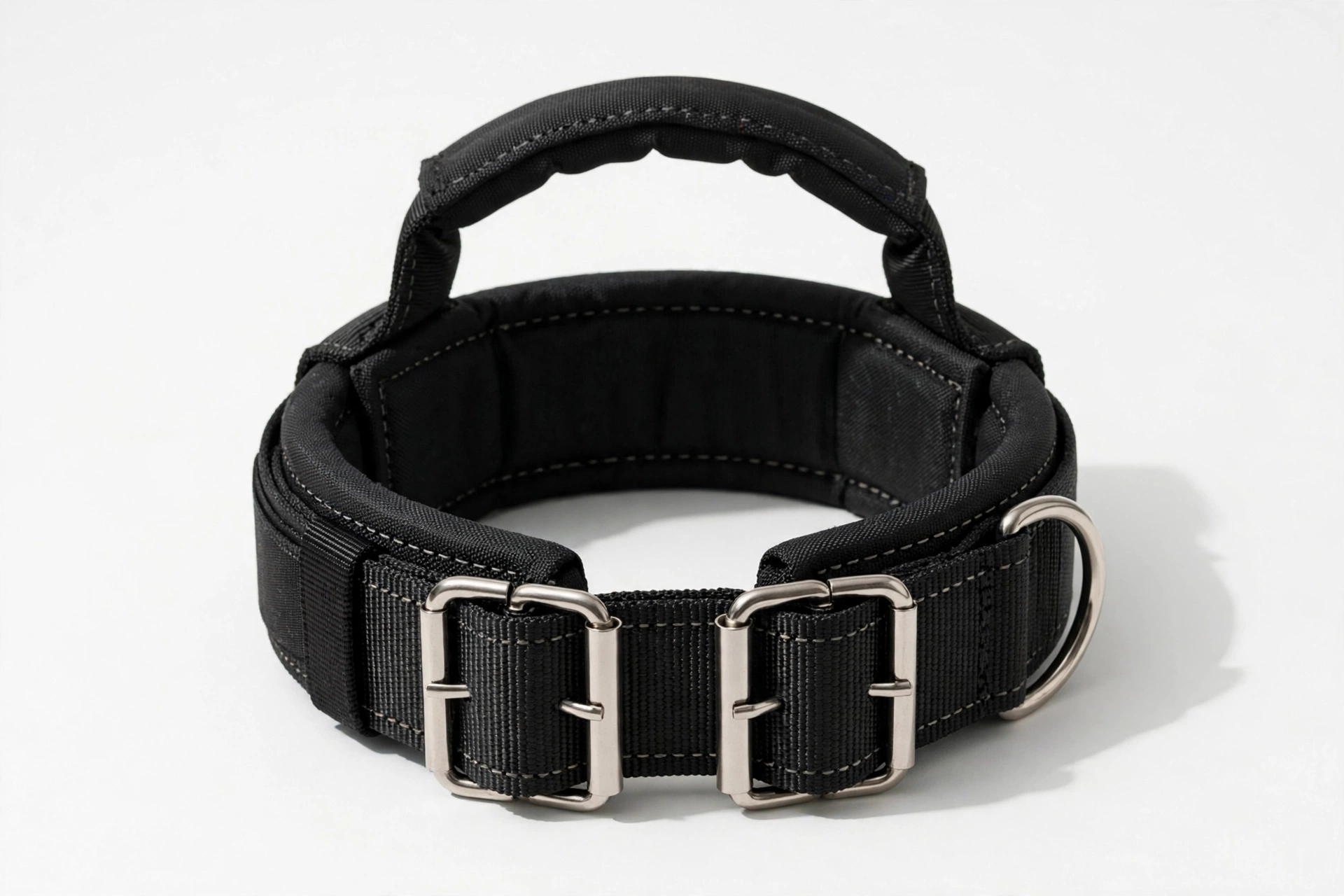
ADITYNA Giant Dogs Collar with Handle (XXL)
The ADITYNA XXL is one of the few collars designed from the ground up for true giants rather than scaled up from a large: a full 2 inches wide, adjustable from 30 to 36 inches to fit Mastiffs, Saint Bernards, Newfoundlands, and Kangals, with a heavy-duty double metal buckle and a sewn-in grab handle for close control. The military-grade nylon construction handles the pulling forces giant breeds generate without drama. If your dog’s neck measures over 28 inches, start here — most “XL” collars from general brands will not reach.
Best Leather
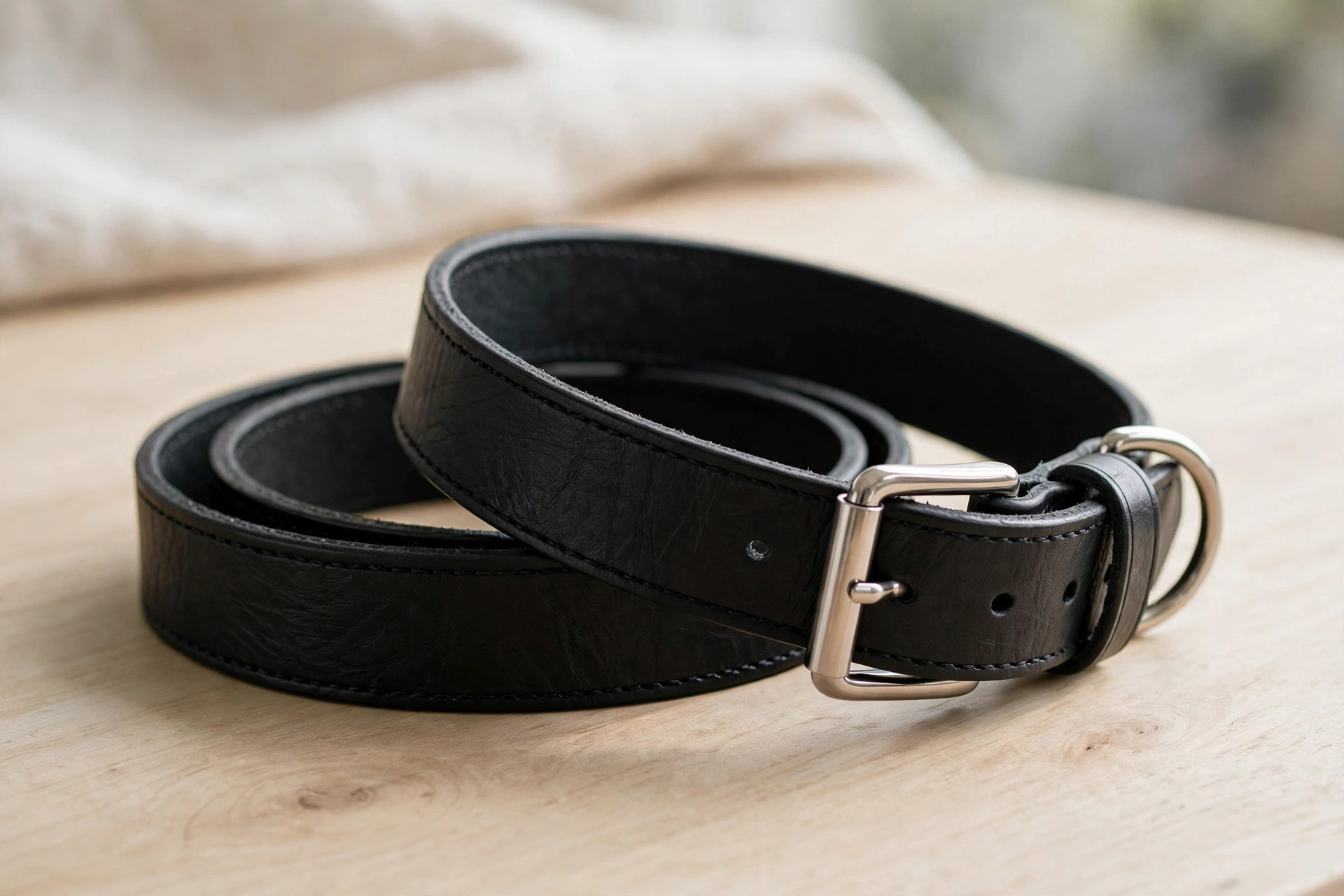
LOIIHEII Premium Leather Dog Collar, 2″
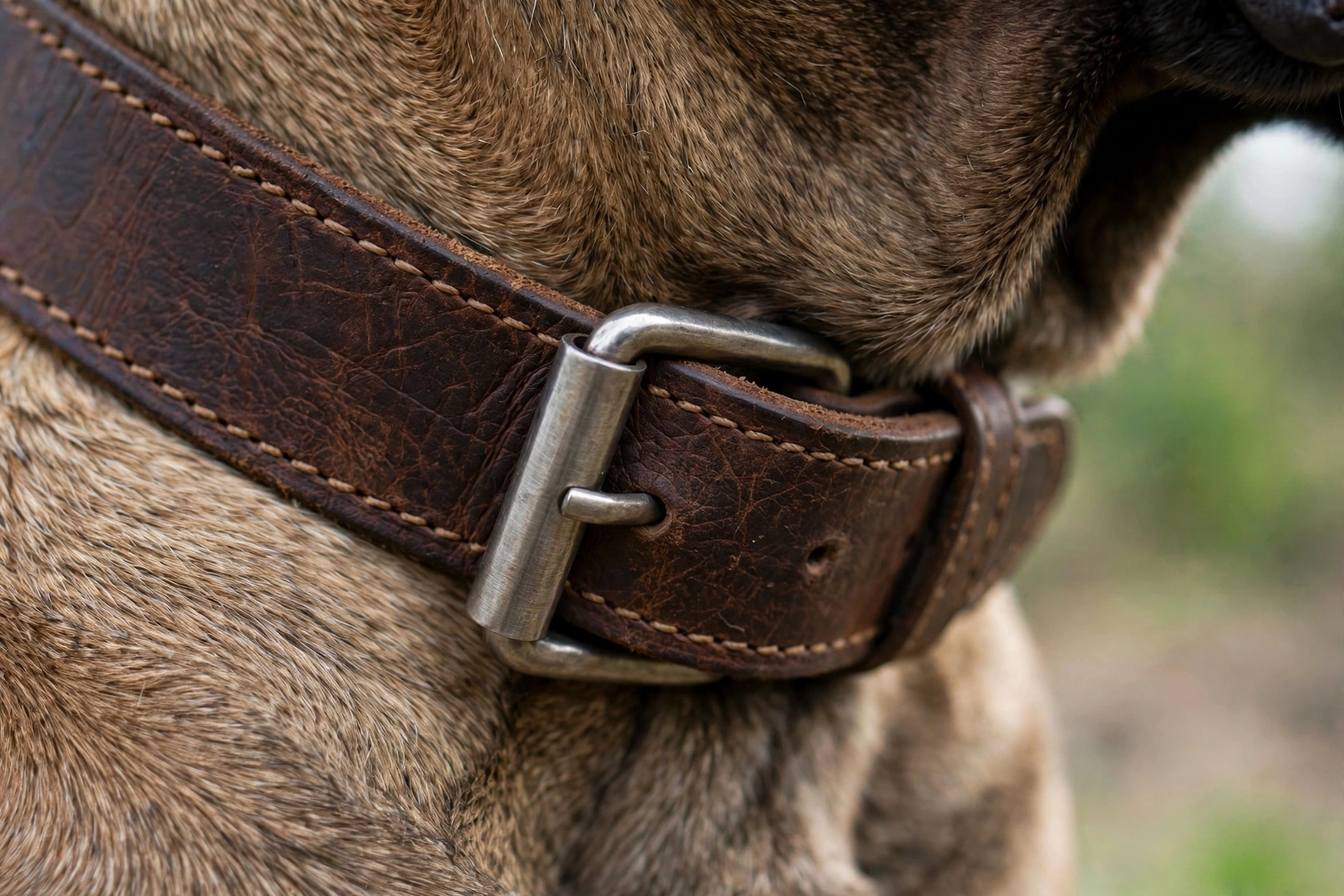
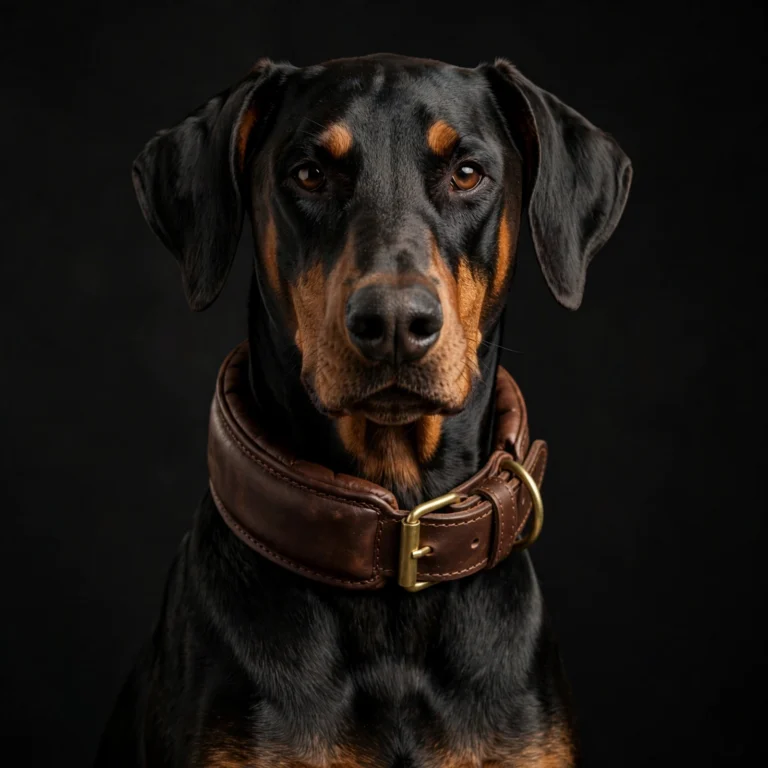
For owners who prefer leather’s classic look and break-in feel, the LOIIHEII 2-inch collar is built to giant standards: premium leather that softens with use, double-stitched seams, and polished metal hardware. The 2-inch width distributes leash pressure across the broad necks of Shepherds, Rottweilers, and Mastiffs, and the XL size fits the upper end of the giant range. Leather demands occasional conditioning to stay supple, but for a daily-wear collar with timeless style, it remains hard to beat.
Best Style + Strength
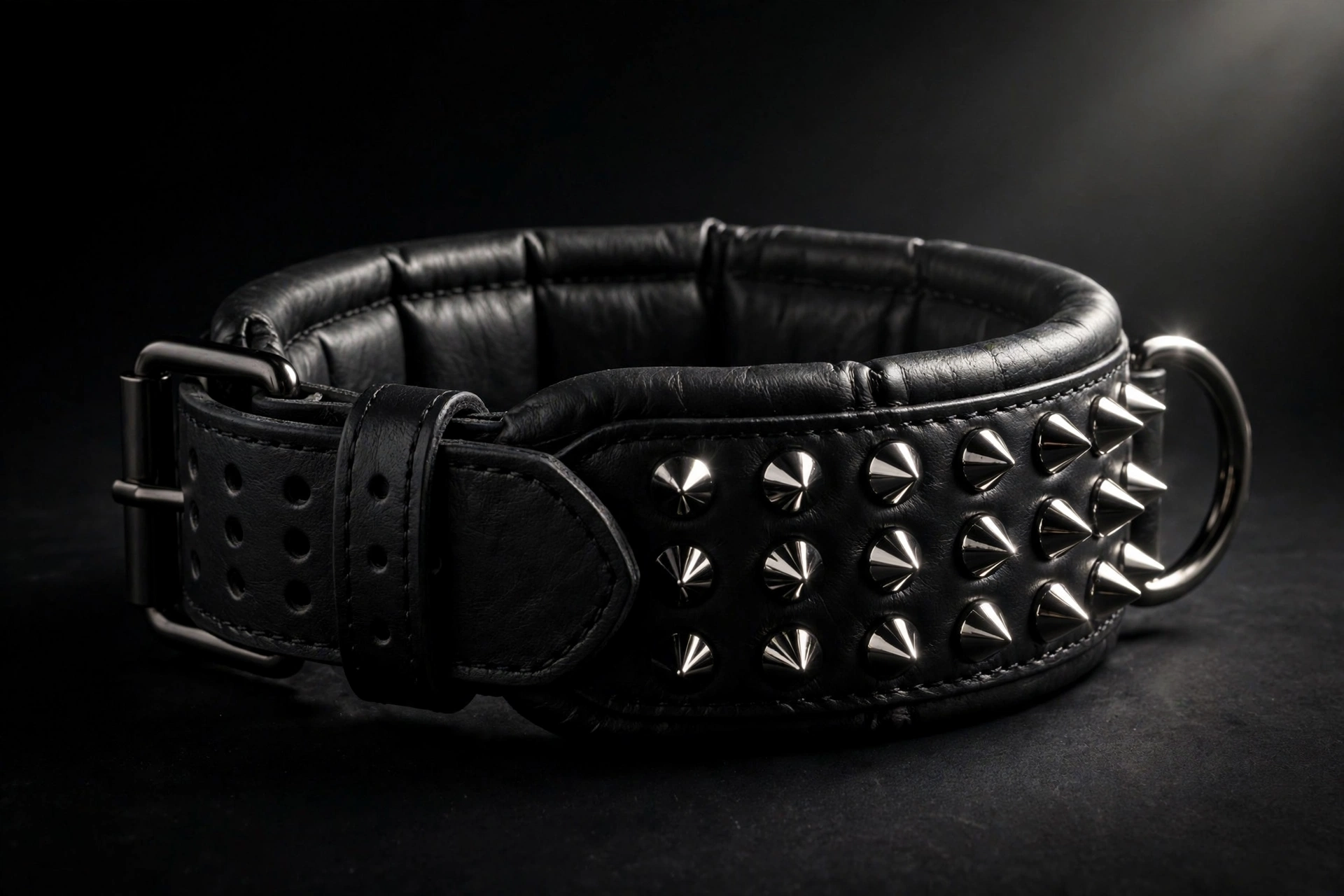
Guiding Star Studded Leather Collar, 2″
The Guiding Star collar proves a statement collar can still be structural: 2 inches of pure cowhide leather with stainless steel buckle and D-ring hardware that will not rust or deform, and classic studded decoration. The Black variant fits 19.5–23.5 inches, covering large through giant breeds (Great Danes, Boxers, Cane Corsos, and similar) — check the listing for other size variants. Handcrafted construction makes it the dress-up pick that does not compromise on the fundamentals.
Best Escape-Proofing
Mayerzon 2″ Martingale (XL)
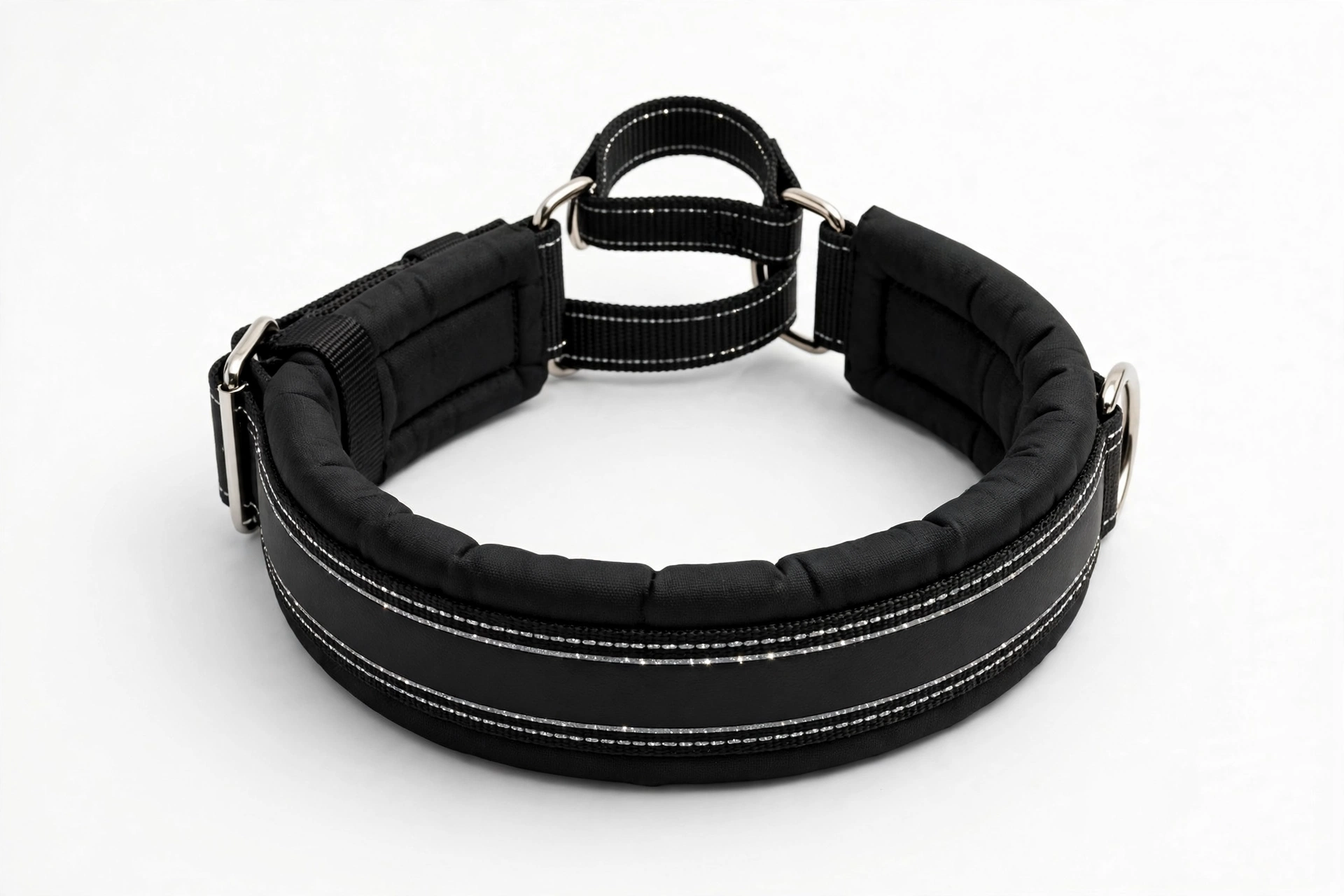
Giant sighthound crosses and narrow-headed giants (Great Dane types, lurchers) can back out of flat collars with alarming ease — the Mayerzon 2-inch martingale in XL closes that escape route with a limited-slip cinch while the 2-inch width handles the breed’s power. The quick-release buckle plus stainless D-rings round out the hardware. For giants that pull backward as well as forward, the martingale action is the right safety architecture.
Maximum Durability
PawsPassion Heavy Duty Tactical (XL)
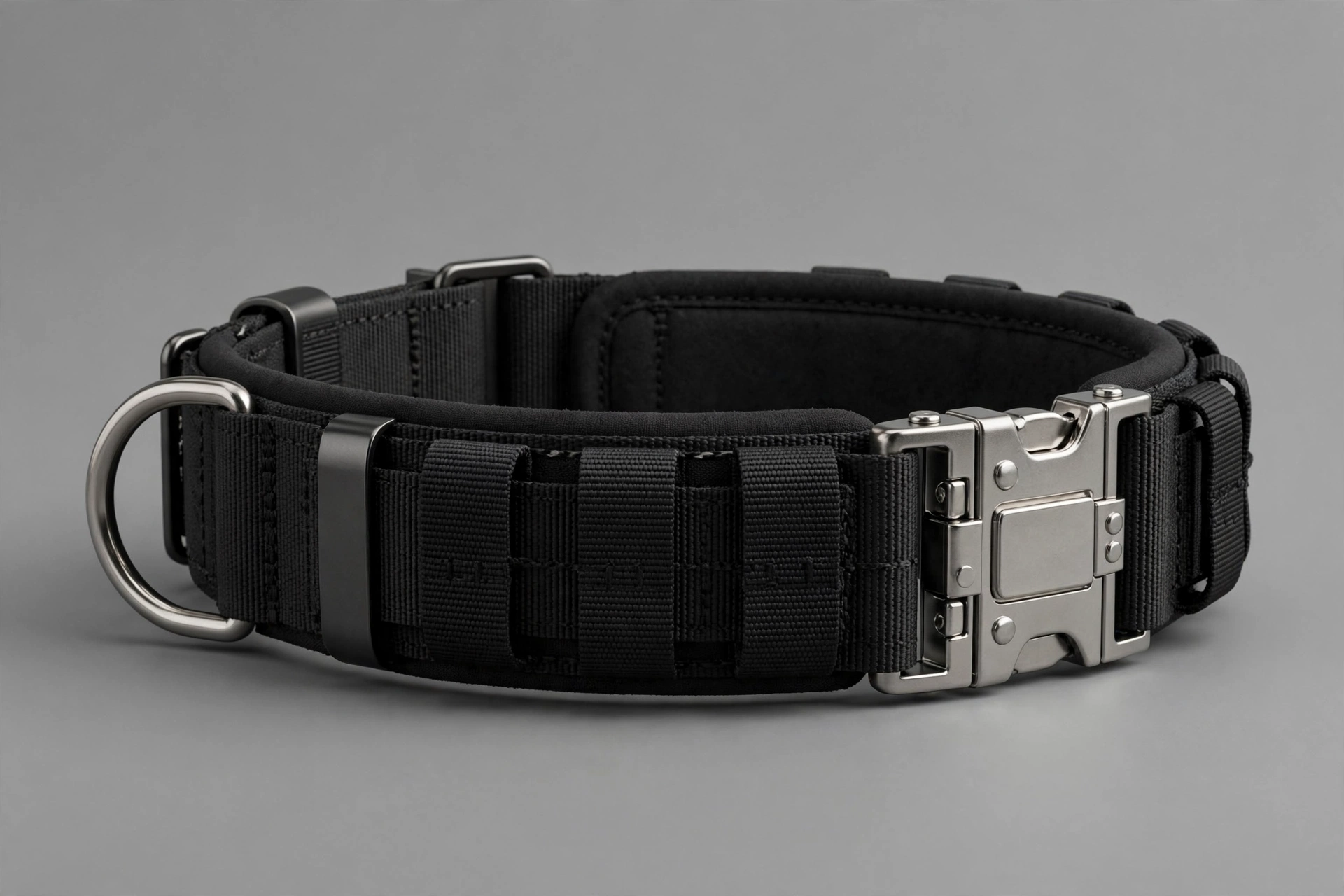
When the priority is pure indestructibility, the PawsPassion tactical collar in XL brings double-layered 1000D nylon, all-metal hardware including a COBRA-style quick-release buckle, and reinforced stitching — no plastic anywhere for giant jaws or giant lunges to defeat. The adjustment locks to prevent loosening under load, and the extra D-ring carries tags. It is the working-dog end of this guide: less elegant than leather, more reassuring when a 150-pound dog decides the squirrel across the street is worth investigating.
Buying Guide: Collars for Giant Breeds
Everything about giant-breed collars scales up — and the mistakes scale up with it. A collar failure on a 30-pound dog is an inconvenience; on a 150-pound dog, it is a loose giant in traffic. These are the rules.
Width: 2 inches is the starting point
On giant necks, narrow collars are not just less comfortable — they are mechanically wrong. A 1-inch collar on a 180-pound Mastiff concentrates the entire force of a lunge onto a one-inch band of trachea and cervical spine. Two inches is the minimum sensible width for true giants; it distributes pressure, resists rolling and twisting on thick necks, and gives hardware room to be properly proportioned. The only exception is giant puppies, where a lighter 1.5-inch collar suits the growing neck until adulthood.
Sizing: measure, then distrust the labels
Giant necks run 24 to 36 inches, and size labels are chaos — one brand’s XL is 20 to 26 inches, another’s is 26 to 34. Ignore the letter and read the inch range: measure the neck where the collar will sit, apply the two-finger rule, and choose the size whose adjustment range centers on your measurement. For growing giant puppies (which can gain 10 pounds a month), buy for the current measurement with room to grow, and expect to size up two or three times before adulthood — budget for it rather than buying oversized and unsafe.
Hardware must match the dog
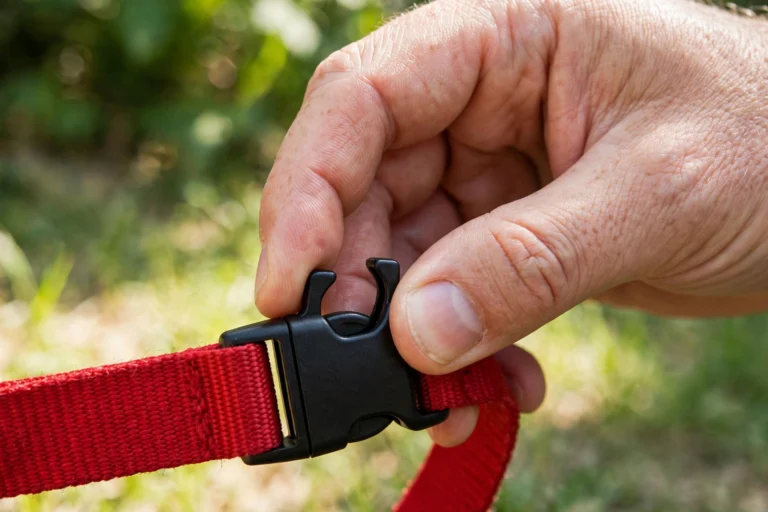
Plastic buckles have no place on giant-breed collars. Look for metal side-release buckles, double buckles, or traditional belt-style pin buckles; welded (not butted) D-rings; and bar-tack or box stitching at every stress point. Test the buckle the way the dog will: yank it hard. If the release tabs flex or the webbing slips through the triglide under a sharp tug, it will fail under a real lunge. Giant breeds generate forces that expose every corner cut in manufacturing.
The grab handle: genuinely useful
A sewn-in handle on the collar (like ADITYNA’s) is one of the best giant-breed features: it lets you take immediate close control — at doorways, around other dogs, loading into cars — without grabbing the collar itself or fumbling for the leash. Use it as an emergency brake and for guidance, not for dragging the dog. Note the trade-off: handles add a snag point, so handle-equipped collars are for supervised wear, not all-day or crate time.
Giant puppies: the sizing treadmill
Giant-breed puppies are the hardest collar customers in dog ownership: a Great Dane puppy can go from a 14-inch neck at four months to a 24-inch neck at fourteen months, outgrowing three collars along the way. Do not try to beat this by buying oversized — a loose collar on a clumsy giant puppy is a snag and escape hazard. Instead, buy inexpensive adjustable nylon collars in the puppy phases (the ADITYNA line’s adjustability helps here) and invest in the quality leather or tactical collar once growth plateaus around 18 to 24 months. Measure monthly during the fast-growth window; giant puppies routinely jump a full size between measurements, and a collar that fit three weeks ago may be tight today.
ID for the dog nobody can miss — except everyone does
Giant dogs are paradoxically easy to lose track of as strays: finders assume a loose Mastiff “must belong to someone nearby” and do not always check for ID promptly. Keep a flat collar with current tags on your giant at all times outside the crate — not just the walking collar, which may be a martingale or training collar that comes off indoors. Engraved buckle collars or embroidered name panels work well on wide giant collars where hanging tags get lost in dewlap folds. And microchip registration must be current: collars come off, chips do not.
Breaking in and maintaining giant collars
New leather collars are stiff — flex the collar gently by hand and apply a light leather conditioner before first wear to prevent edge rubbing on the dog’s neck. Nylon tactical collars need no break-in but collect grit faster on giant dogs that drool and swim; rinse monthly and check stitching at the handle and buckle quarterly. For any giant collar, make buckle inspection a habit: the forces involved mean small wear becomes big failure faster than on smaller dogs’ gear.
Leather vs. nylon for giants
Leather (LOIIHEII, Guiding Star) offers classic style, molds to the dog’s neck over time, and is quiet — no nylon squeak. It needs occasional conditioning and should not stay wet. Heavy nylon (ADITYNA, PawsPassion) is washable, weatherproof, and stronger per dollar, at the cost of a more utilitarian look. Many giant owners keep both: leather for daily wear and occasions, tactical nylon for hiking, swimming, and mud season.
Large Breed Dog Collars vs Giant Breed Collars: What’s the Difference?
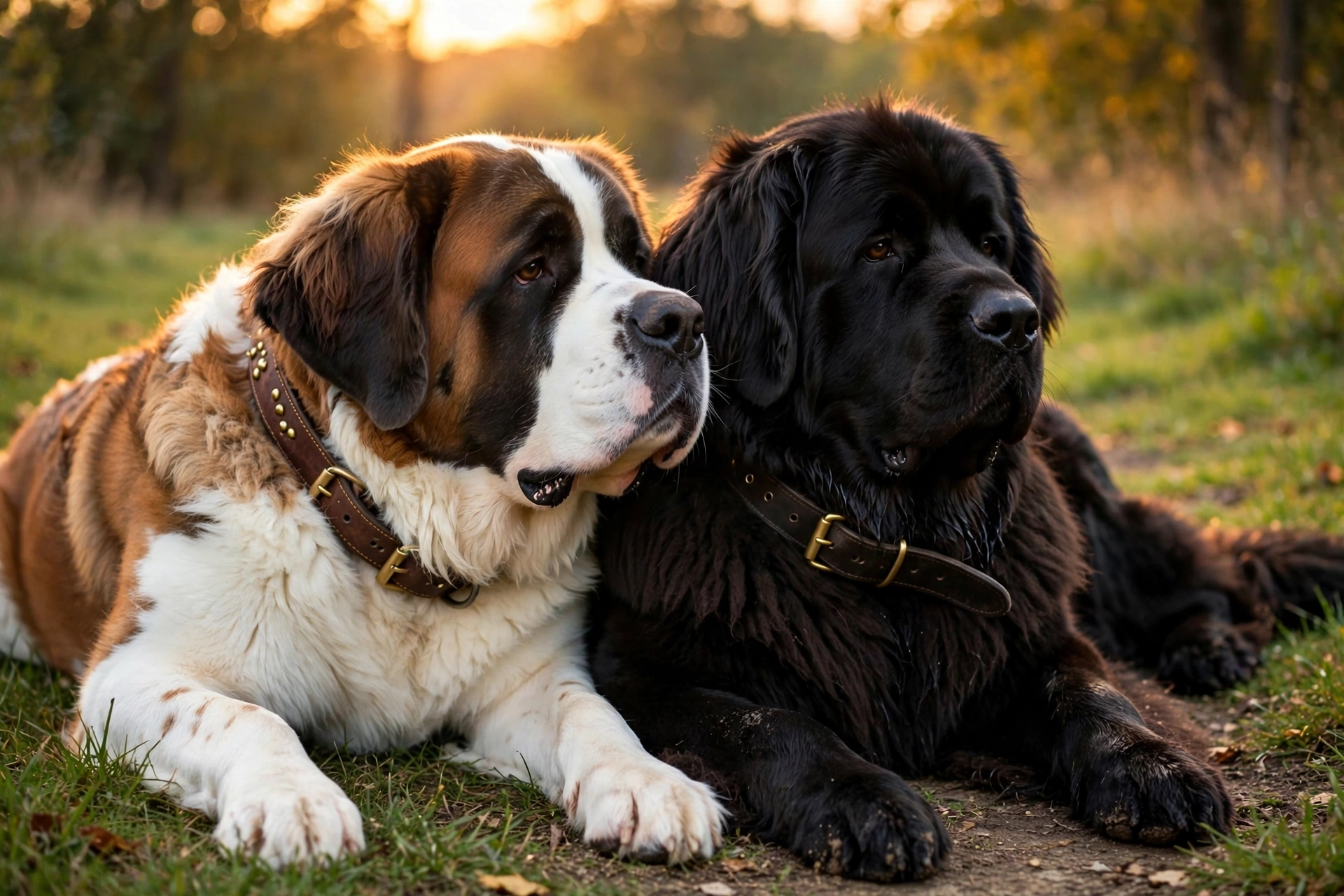
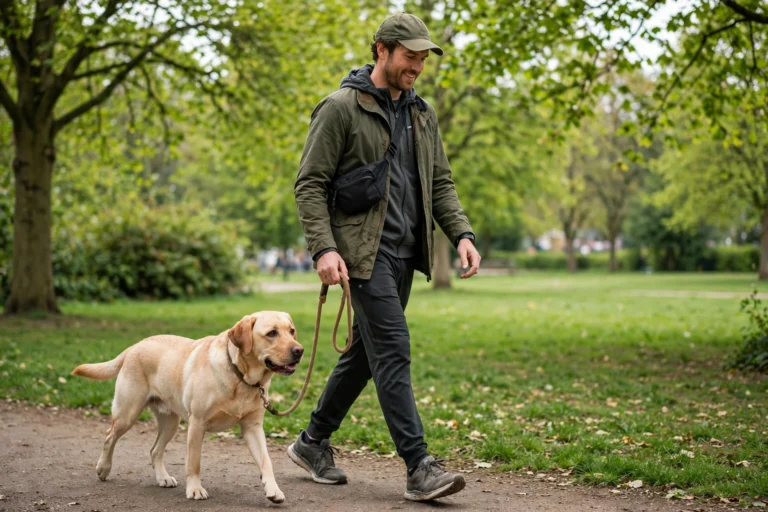
Large breed dog collars and giant dog collars are often sold side by side, but the dogs wearing them are not the same size. Large breeds generally weigh roughly 50–90 lb — think Labs, Golden Retrievers, and German Shepherds — while giant breeds weigh 100+ lb, including Great Danes, Mastiffs, Saint Bernards, and Newfoundlands. That weight gap is why a collar that works for a large dog can fail on a giant one.
The good news is that the 2-inch-wide, heavy-duty construction in this guide suits both groups — dog collars for large breeds and giant breeds alike benefit from wide straps and metal hardware. The difference is where each dog sits in the size range: giants need the top end of the size range, the strongest hardware, and a grab handle for close control, while large breed collars for a 60–80 lb dog can often use a 1.5-inch width. If your dog is a strong puller, consider no-pull dog collars designed for control — the right collar plus training beats hardware alone.
When shopping for the largest dog collar, measure your dog’s neck with a soft tape, then buy a collar whose adjustment range sits in its middle, not at its max. A collar at full extension has no room for a growing puppy or a thick-coated dog, and it is weaker and less comfortable than the right size worn mid-range. Size by inches, not by S/M/L labels, and re-measure as your dog grows.
Frequently Asked Questions
What size collar does a Great Dane need?
Most adult Great Danes need collars fitting 22-to-30-inch necks, but measure your individual dog — Danes vary enormously. Choose the size whose inch range centers on your measurement, in 2-inch width, with metal hardware. Puppies will need two to three size upgrades before adulthood.
Are wide collars better for giant breeds?
Yes — 2-inch width is the sensible minimum for true giants. Wide collars distribute leash pressure across more neck surface, reducing peak force on the trachea during lunges, and they resist the twisting that narrow collars suffer on thick necks.
Can giant breeds wear regular large collars?
Sometimes, at the upper end of a “large” — a 100-pound dog with a 24-inch neck may fit a large collar. But true giants (120+ pounds, 28-inch-plus necks) need collars designed for the XXL range. A collar at the extreme end of its adjustment is weaker and less comfortable than the right size worn mid-range.
Should giant dogs wear harnesses instead of collars?
Many giant-breed owners use both: a harness for walking control (it moves force off the neck entirely, which matters at 150 pounds) and a wide collar for ID tags and backup. Front-clip harnesses are particularly popular for giant pullers. The collar remains essential as the always-on ID carrier.
How do I stop my giant dog pulling on the leash?
The same way as any dog — consistent loose-leash training with high-value rewards — but start early, because a 40-pound puppy is trainable in ways a 140-pound adolescent is not. Equipment helps manage the problem (front-clip harness, wide collar) but does not solve it; invest in training while your dog is small enough to handle safely.
Are prong collars recommended for giant breeds?
Some traditional trainers use them for very large, powerful dogs, but they are controversial and require expert fitting and handling to avoid injury and fear. Most modern trainers recommend starting with a front-clip harness and training; consider aversive tools only under direct professional guidance, if at all.
How tight should a giant dog’s collar be?
The two-finger rule applies at every size: slide two fingers flat between collar and neck. On giants, check the fit with the dog standing normally — not sitting, when neck folds loosen, and not panting hard after exercise, when the neck is temporarily expanded. Thick coats and dewlap folds can hide a too-tight collar, so part the fur and check skin contact directly.
What is the largest dog collar size?
Typical giant-breed collars run up to about 26–30 inches of neck size in 2-inch widths, and the guide’s XXL picks cover that range. The ADITYNA XXL, for example, fits 30–36-inch necks, so even the biggest Mastiffs and Great Danes are covered.
Always measure your dog’s neck with a soft tape and check the specific product’s size chart rather than trusting S/M/L labels — one brand’s XL is another’s 2XL. Buy the size whose adjustment range centers on your measurement, so the collar sits mid-range with room to adjust.
Related Buying Guides
The verdict
The ADITYNA XXL collar with handle is the best purpose-built answer for true giant breeds: the 30-to-36-inch range actually fits, the 2-inch width and metal hardware match giant strength, and the grab handle solves the daily reality of managing 150 pounds of dog. Choose the LOIIHEII leather for classic daily wear, the Mayerzon martingale for escape-proof giants, or the PawsPassion tactical for maximum durability. Whatever you buy, size by inches not letters, demand metal hardware, inspect the buckle the way your dog will test it, and remember that the collar is the last line of defense — training is the first.
4 Comments