
Let me be honest up front: no collar is truly chew proof. A determined dog with unsupervised time and strong jaws can destroy nearly anything made of fabric, plastic, or leather. What the best chew proof dog collars actually offer is chew resistance — metal hardware instead of plastic buckles, dense ballistic nylon instead of thin webbing, and chain instead of cloth — so the collar survives the chewing phase and, more importantly, stays on the dog instead of breaking at the worst moment. This guide covers five genuinely tough collars built around that philosophy, plus the management habits that matter more than any product: because the real solution to a collar-chewer is supervision and training, not just tougher gear.
Affiliate disclosure
As an Amazon Associate, I earn from qualifying purchases. If you buy through a link on this page, I may earn a commission at no extra cost to you.
⚡ The short answer
🥇PawsPassion Heavy Duty TacticalBest overall chew resistance→
🥈KCUCOP Tactical Collar with HandleMaximum control→
🥉TSPRO Tactical 1.5″ CollarBest value→
Quick Picks: Best Chew Proof Dog Collars at a Glance
| Product | Best For | Standout Feature |
|---|---|---|
| PawsPassion Heavy Duty Tactical | Best overall chew resistance | All-metal hardware, COBRA-style buckle |
| KCUCOP Tactical Collar with Handle | Maximum control | Grab handle + metal buckle |
| TSPRO Tactical 1.5″ Collar | Best value | 3-layer nylon, padded, metal buckle |
| Heavy Duty Pin-Buckle Tactical | Comfort + toughness | Neoprene padding, rustproof pin buckle |
| W/W Lifetime Cuban Link Chain | Chew-immune material | Stainless chain, nothing to gnaw through |
5 Tough Collars for Determined Chewers
Chew resistance comes from eliminating weak points: plastic buckles become metal, thin webbing becomes layered ballistic nylon, and in the extreme case, fabric becomes chain. Each pick below removes at least one failure point that chewers exploit.
PawsPassion Heavy Duty Tactical Collar
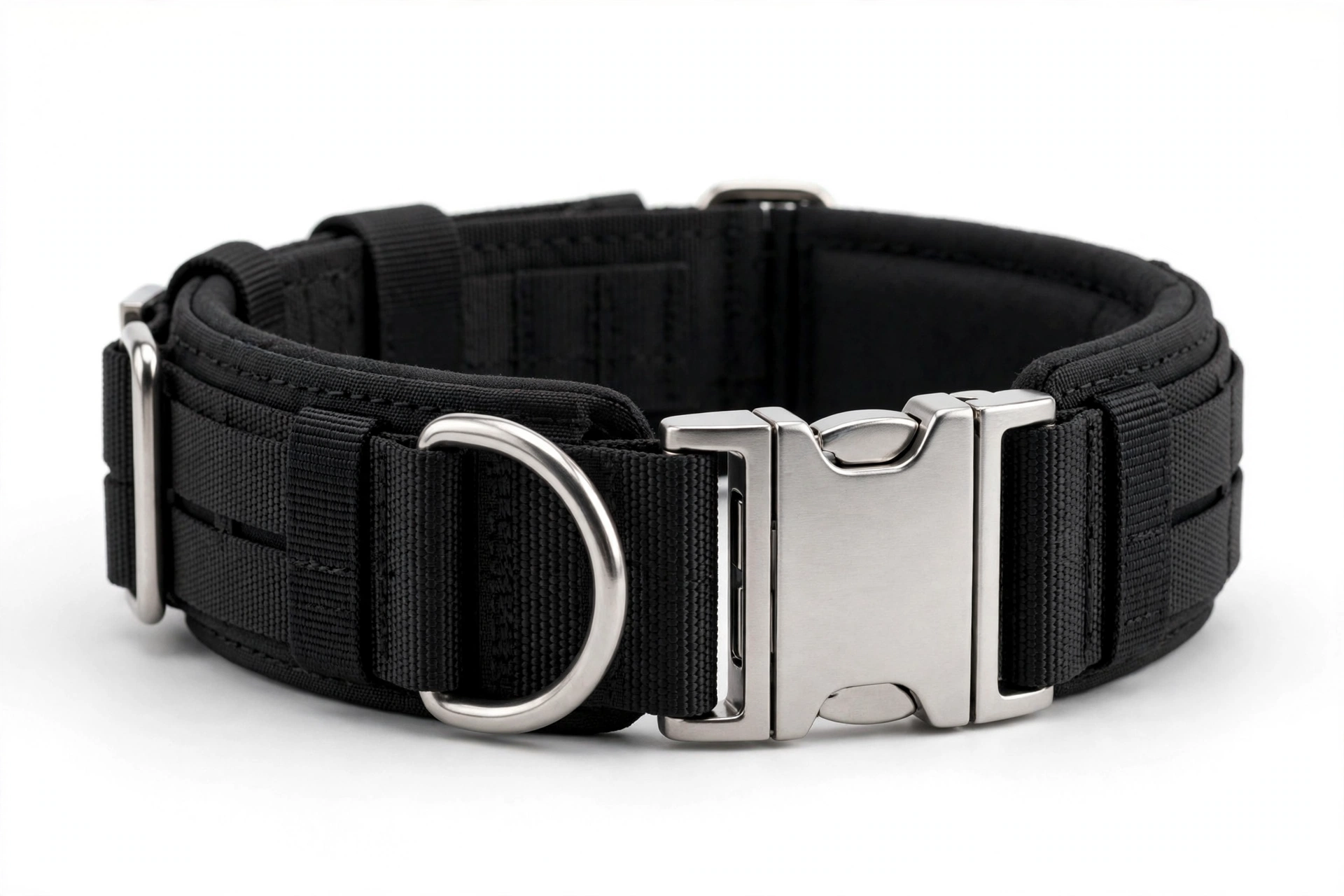
The PawsPassion tactical collar is built around a simple insight: chewers destroy plastic first, so there is none here. It uses double-layered 1000D nylon webbing with reinforced stitching and all-metal hardware — including a COBRA-style quick-release metal buckle — which removes the two components dogs most commonly chew through. An extra D-ring accommodates tags, and the adjustment system locks to prevent the collar loosening under pulling. Sized up to XL for powerful breeds, it is the closest thing to a fit-and-forget collar for dogs in their destructive chewing phase.
KCUCOP Tactical Collar with Handle
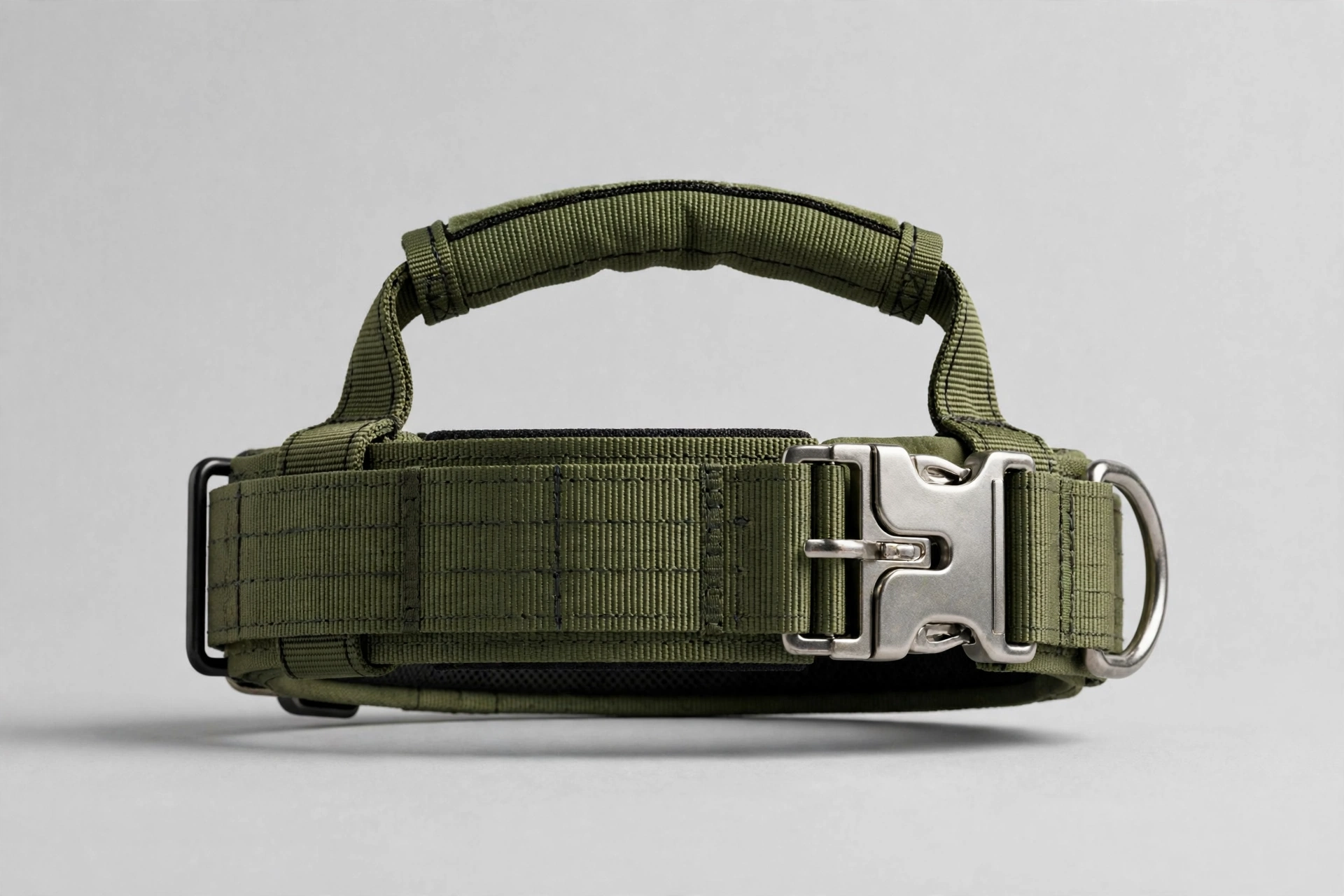
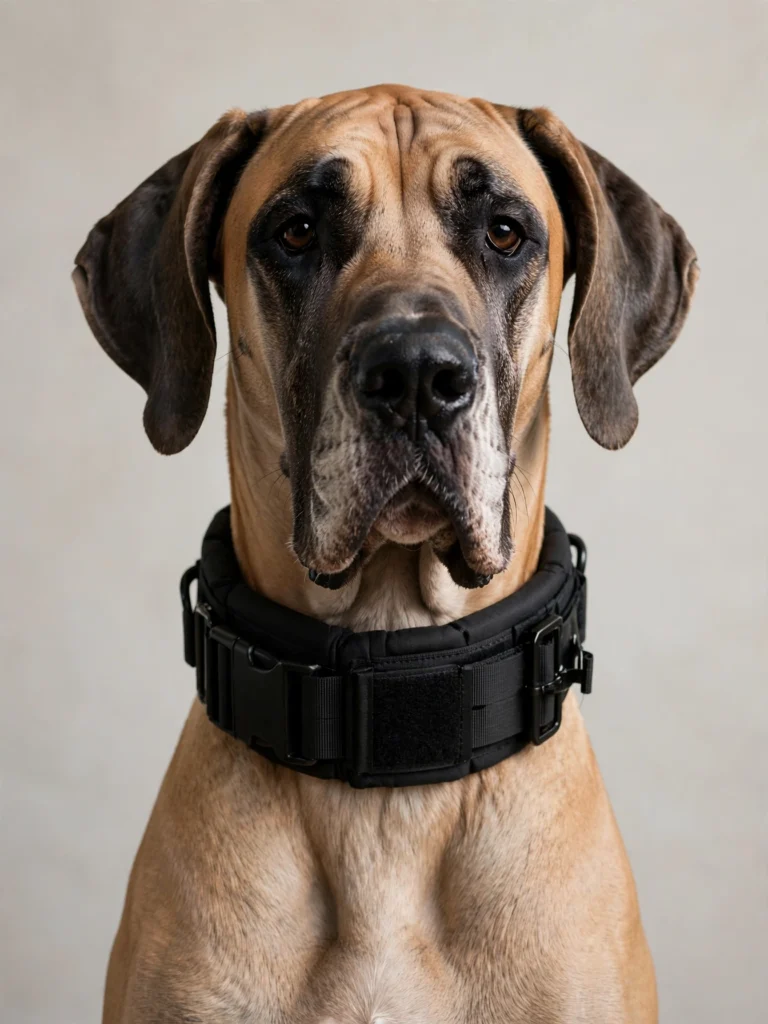
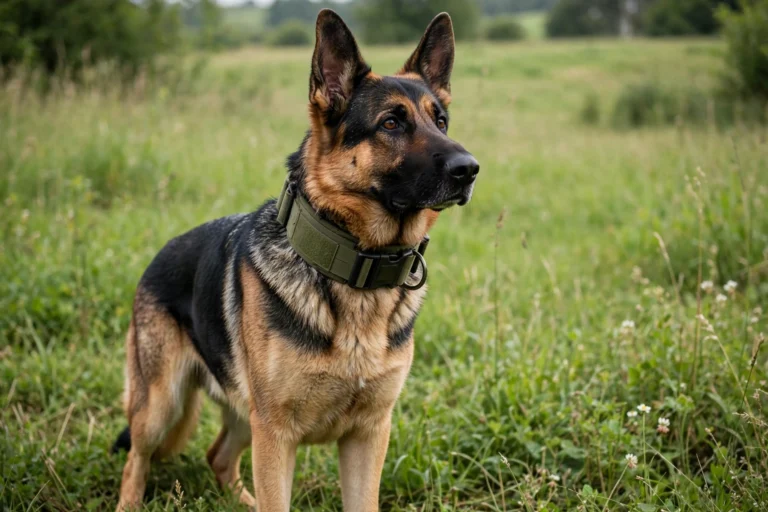
The KCUCOP tactical collar adds something the others lack: a grab handle sewn into the collar, letting you take direct physical control of a strong dog without grabbing the collar itself — useful on busy sidewalks and around other dogs. The base is 1680D nylon with a soft padded lining to prevent chafing, closed by a quick-release metal buckle the listing rates for very high pulling forces. It suits medium and large breeds (German Shepherds, Rottweilers, Huskies, and similar), and hook-and-loop panels accept patches. The handle is genuinely practical for strong, excitable dogs; just remember it adds a snag point, so this is a supervised-wear collar.
TSPRO Tactical 1.5″ Collar
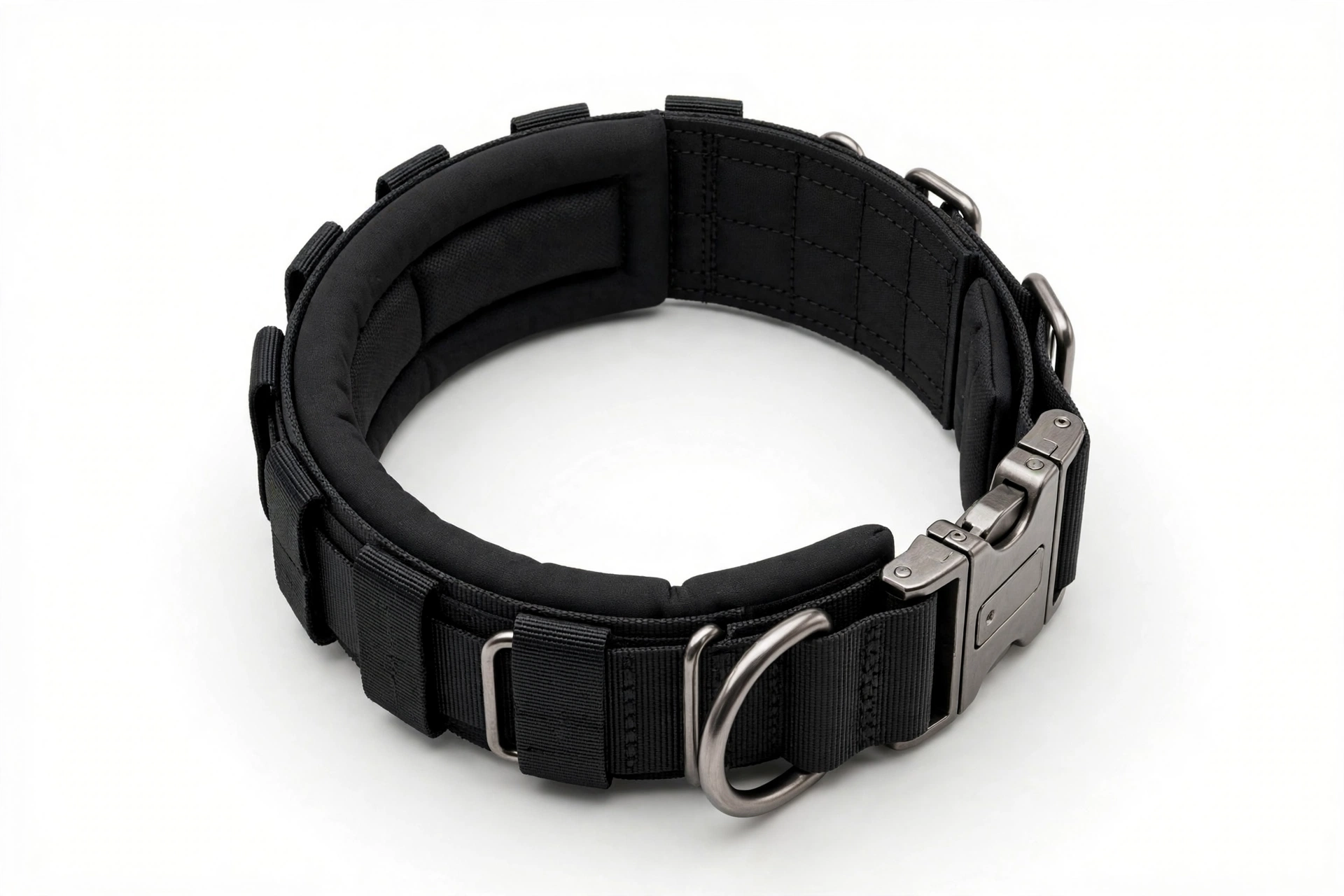
TSPRO’s tactical collar stacks three layers of reinforced nylon with a heavy-duty metal buckle the brand rates to very high pull forces, plus a plush padded lining so the toughness does not come at the cost of comfort. The four-point adjustment fits a wide range of medium-to-large dogs, and the machine-washable construction suits dogs that swim, hike, and roll in everything. It is the value play in this guide: near-premium materials and metal hardware at a price that stings less if your dog does eventually defeat it.
Heavy Duty Pin-Buckle Tactical Collar
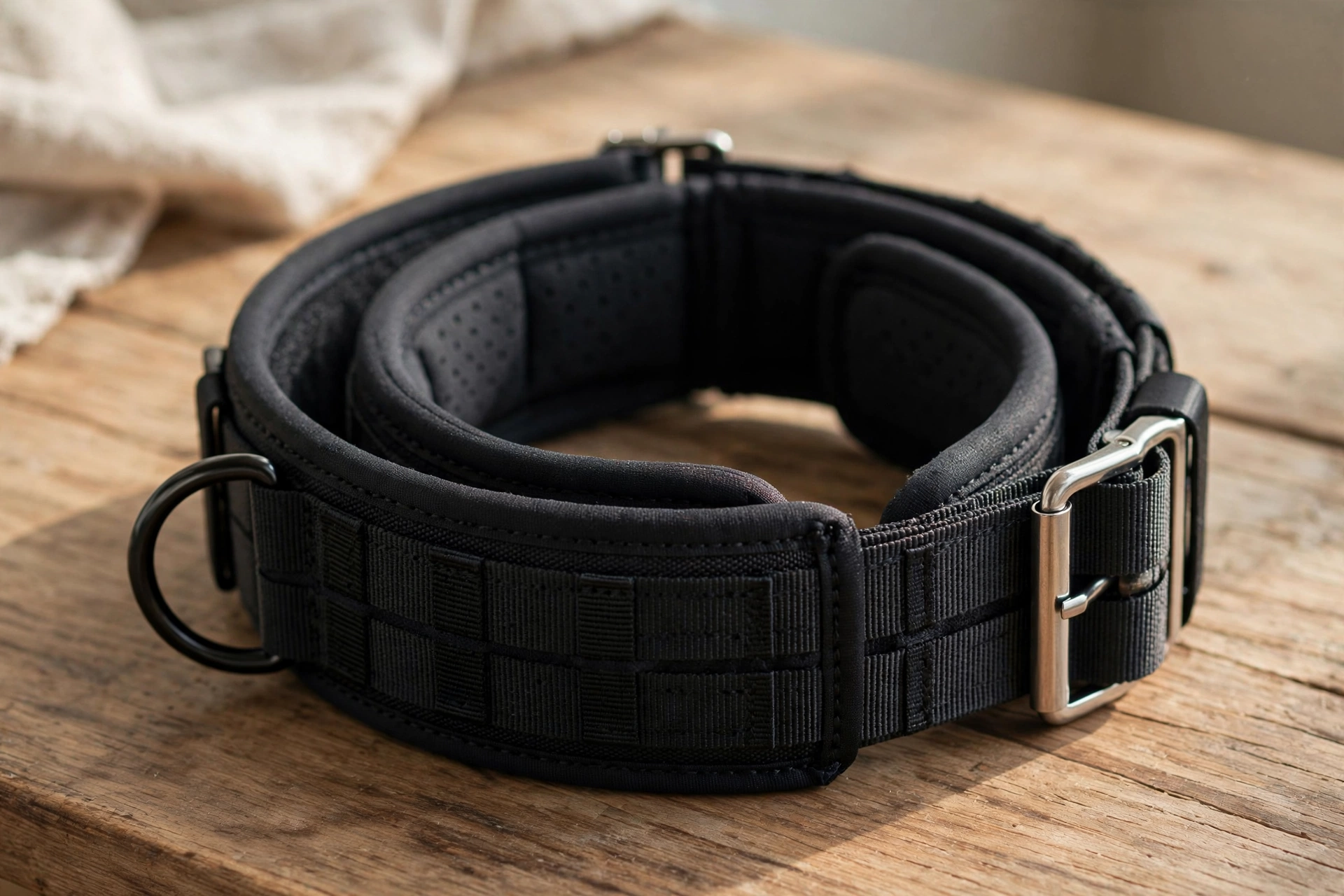
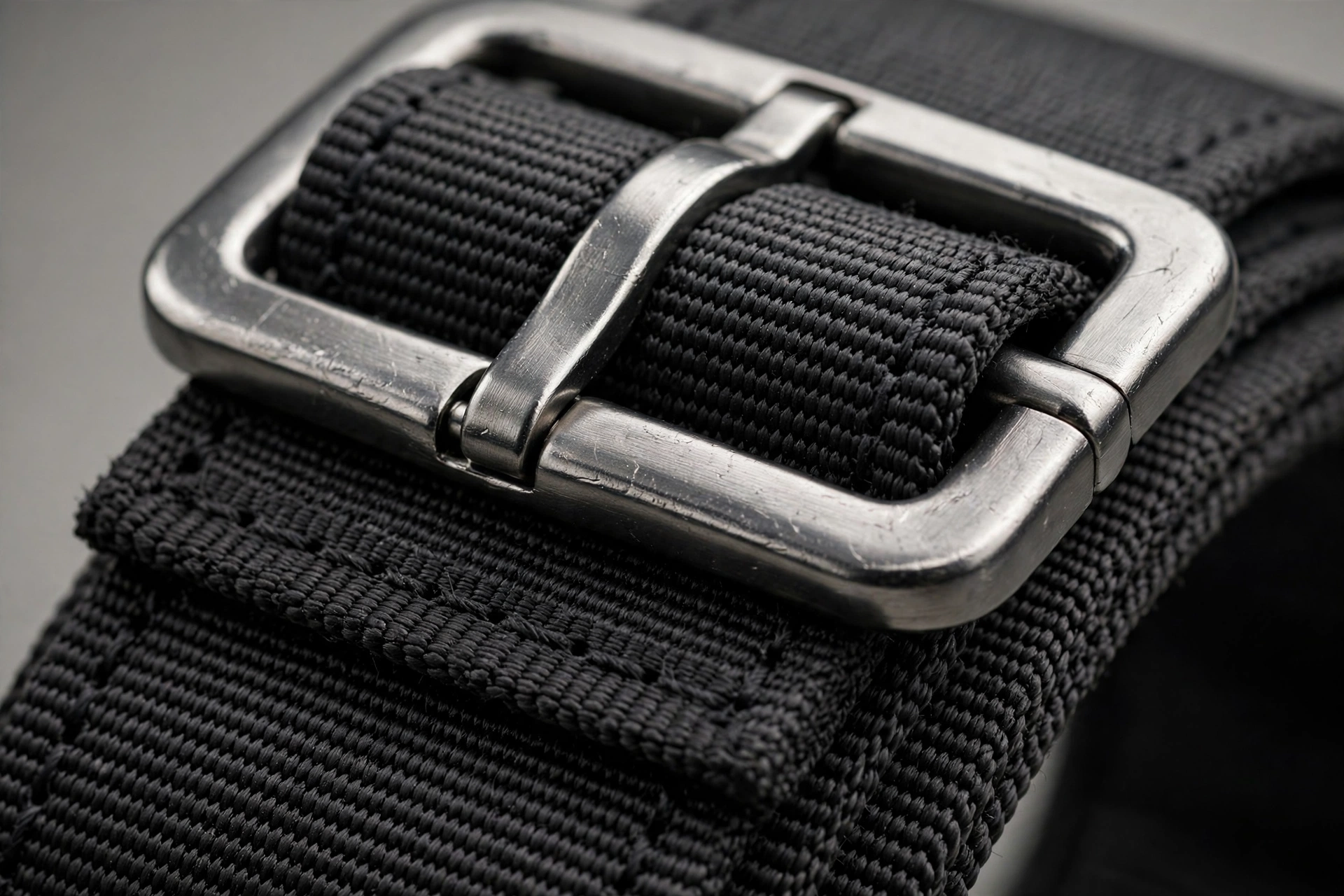
This tactical collar takes a different approach to the buckle: a rustproof metal pin (belt-style) buckle with multiple adjustment holes instead of a squeeze buckle. Pin buckles have no plastic tabs to chew and no spring mechanism to jam with grit — there is simply less to break. The collar itself is double-layer nylon with triple stitching and a soft neoprene-padded lining that resists odor and washes clean. Dogs that chew buckles specifically, rather than webbing, often do best with this simpler hardware.
W/W Lifetime Cuban Link Chain Collar
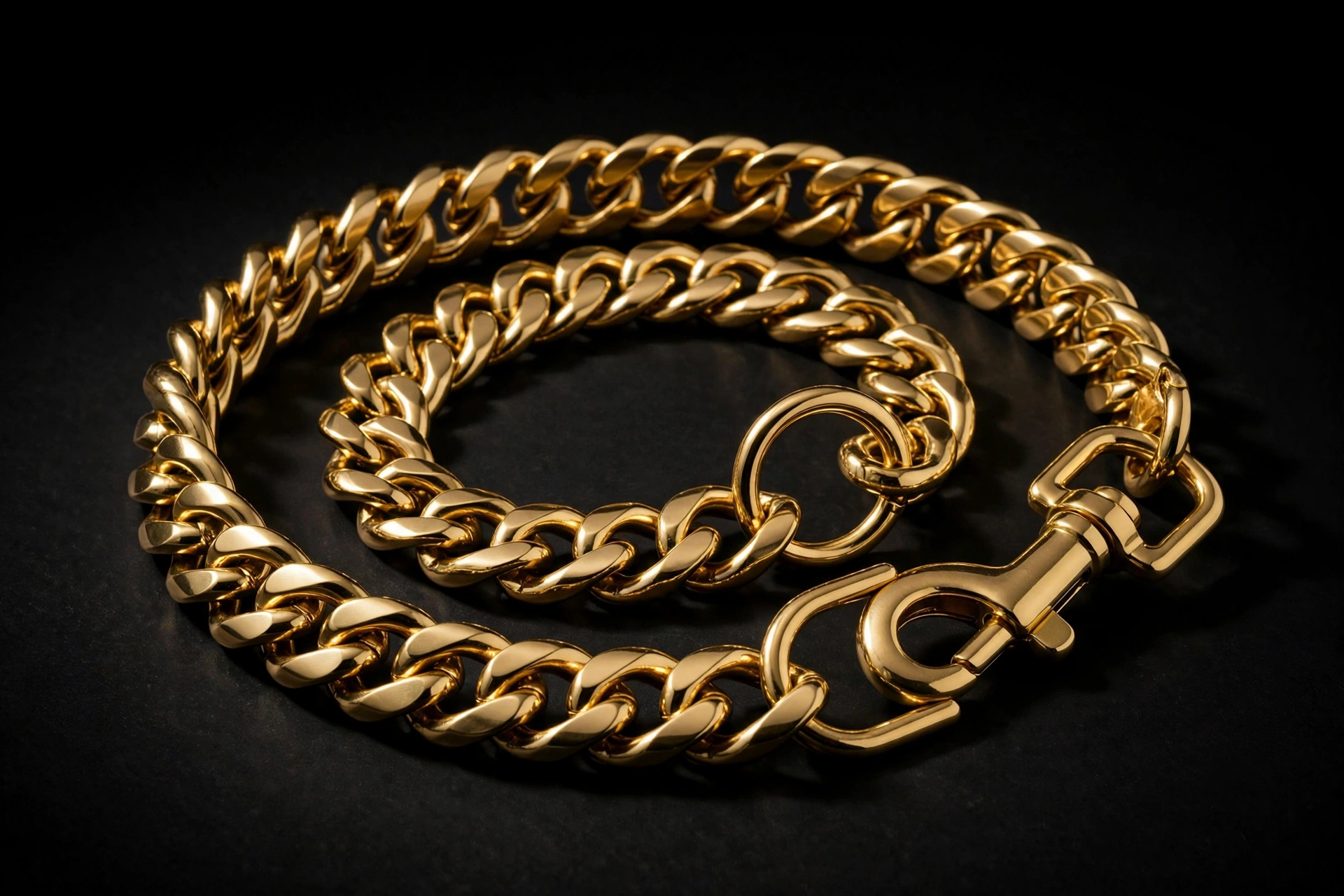
The ultimate answer to a fabric chewer is to remove fabric from the equation. This cuban-link chain collar is 316L stainless steel (plated, in this gold version) — there is simply nothing for teeth to purchase on. The solid, non-hollow links are polished smooth for comfort, a welded D-ring takes the leash and tags, and the snap clasp is rated to very high pull forces. Note the trade-offs: chain collars are not adjustable, so measure the neck carefully and add an inch or two per the listing’s guidance; they are heavy; and they are a style statement as much as gear. For the dedicated collar-destroyer, though, steel wins every argument with teeth.
Buying Guide: What Actually Makes a Collar Chew-Resistant
Dogs chew collars for reasons — boredom, anxiety, teething, or simply because the collar is there and accessible. Gear can buy you time and safety, but lasting results come from addressing the chewing itself. Here is how to think about both.
Metal hardware is the single biggest upgrade
Across every destroyed-collar story, the failure point is almost always the buckle or the D-ring: a plastic side-release buckle gnawed through, or a thin D-ring bent open. Moving to all-metal hardware — aluminum or steel buckles, welded D-rings — eliminates the most common break point in one step. This is why four of the five picks above lead with their hardware: for chewers, the buckle matters more than the webbing.
Webbing density and layered construction
After hardware, webbing is the next target. Look for high-denier nylon (1000D and up), multiple layers, and reinforced or triple stitching at stress points. Ballistic and tactical weaves resist the initial tooth penetration that starts most unraveling — a dog that cannot get purchase on the edge usually gives up faster. Avoid thin single-layer fashion collars for chewers entirely; they are chew toys with buckles.
Why dogs chew their collars (and what to do about it)
A dog that chews its own collar is usually under-stimulated, anxious, or teething. Puppies chew collars during teething (roughly 3 to 7 months) and mostly outgrow it; adult dogs that chew often need more exercise, more mental work, or treatment for separation anxiety. Provide appropriate chew outlets — durable rubber toys, long-lasting chews — and make sure the dog is tired before expecting it to ignore its collar. If the chewing is compulsive or paired with other anxiety signs, talk to your vet or a certified trainer rather than just buying tougher gear.
The supervision rule
Here is the uncomfortable truth the product listings skip: the most chew-proof strategy is removing the collar when the dog is unsupervised. Dogs chew collars in crates, yards, and empty houses — exactly when no one is watching. Use the tough collar for walks, training, and supervised time, and take it off (or switch to a lightweight house collar) for crate time and alone time. No collar survives a bored dog with eight unsupervised hours, and a half-chewed collar with a weakened buckle is a safety hazard, not a solution.
Sizing a tactical collar for a chewer
Fit matters even more on a tough collar, because an ill-fitting heavy collar causes the rubbing and pressure that make dogs chew at it in the first place. Measure the neck where the collar will sit and apply the two-finger rule, but pay special attention to tactical collars’ wider webbing: a 1.5-inch collar that is even slightly loose will rotate and chafe, inviting the dog to mouth the edge. For strong-necked breeds, choose the width proportional to the dog — narrow collars concentrate force on thick necks, while overly wide collars overwhelm smaller dogs. When between sizes on an adjustable tactical collar, pick the size where your dog’s measurement falls near the middle of the adjustment range, not at either extreme.
When to retire a chewed collar
A chew-resistant collar is not immortal, and a partially defeated one is dangerous. Retire any collar immediately if the webbing is frayed through more than a surface layer, if stitching at the buckle or D-ring is broken, if a metal buckle is bent or its release tabs no longer snap crisply, or if a chain link is stretched or cracked. A weakened collar fails exactly when load is highest — the lunge at a squirrel, the bolt toward another dog — which is when you need it most. Inspect weekly for chewers, and keep a spare: replacing a collar on your schedule beats replacing it on the dog’s.
Chain collars: the nuclear option
For dogs that defeat every fabric collar, a stainless chain collar removes the chewable material entirely. They are heavy, non-adjustable, and conspicuous — and they can catch on crate wires and fencing, so they are strictly supervised-wear. Think of chain as a bridge solution while you work on the underlying chewing behavior, not a permanent lifestyle.
Frequently Asked Questions
Is there really a 100% chew proof dog collar?
No. Any collar can be destroyed by a sufficiently determined dog given enough unsupervised time — including metal and chain, which can be bent or broken at connection points. “Chew proof” in practice means “chew resistant enough to survive normal wear and the occasional chewing session.” Manage expectations and supervise.
Why does my dog keep chewing his collar?
The most common causes are teething (puppies), boredom or under-exercise, anxiety (especially separation anxiety), and simple opportunity — the collar is always there. Address the cause with exercise, enrichment, appropriate chew toys, and training; upgrade the hardware in parallel, not instead.
Are metal buckles safe for dogs?
Yes — aluminum and steel buckles are standard on working-dog gear and pose no chemical or mechanical risk beyond their weight. Look for buckles with smoothed or curved edges that will not pinch skin or catch fur, and check that the buckle size suits your dog’s neck.
Should I leave the collar on my dog in the crate?
Generally no, especially for chewers. Collars can catch on crate wires, and a dog that chews its collar in the crate can ingest webbing or break teeth on metal. Crate time is collar-off time for most dogs; keep ID on a lightweight breakaway house collar if tags must stay on.
Will a tactical collar stop my dog from pulling?
No — “tactical” describes durability and styling, not training function. A tough collar holds up to a puller without breaking, but it does not teach loose-leash walking. Pair durable gear with actual leash training (or a front-clip harness) if pulling is the problem.
How do I stop my puppy chewing her collar?
Redirect to appropriate chews, keep the puppy tired and mentally engaged, and remove the collar during unsupervised time. Most puppies outgrow collar-chewing as teething ends around six to seven months. Bitter-tasting deterrent sprays help some puppies; others ignore them completely.
Are chain collars uncomfortable for everyday wear?
They can be. Chain is heavy, does not breathe, and can pinch or pull coat hair if poorly finished — which is why polished, smooth-link designs matter. Most owners use chain collars as supervised-wear tools for dedicated chewers rather than all-day collars, switching to a lightweight flat collar with tags for downtime around the house.
Related Buying Guides
The verdict
The PawsPassion Heavy Duty Tactical Collar is the best all-around answer for chewers: all-metal hardware removes the most common failure point, and the layered ballistic nylon handles the rest. Add the KCUCOP if you want a grab handle for control, the TSPRO for value, or the chain collar if your dog treats fabric collars as appetizers. But budget equal attention for the behavior side — exercise, enrichment, proper chew outlets, and collar-off crate time — because the toughest collar in the world is still just buying time while you solve the chewing.
One Comment