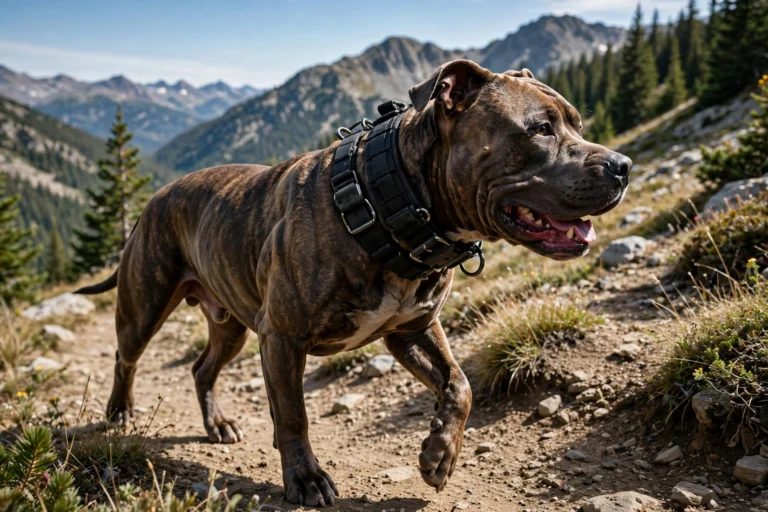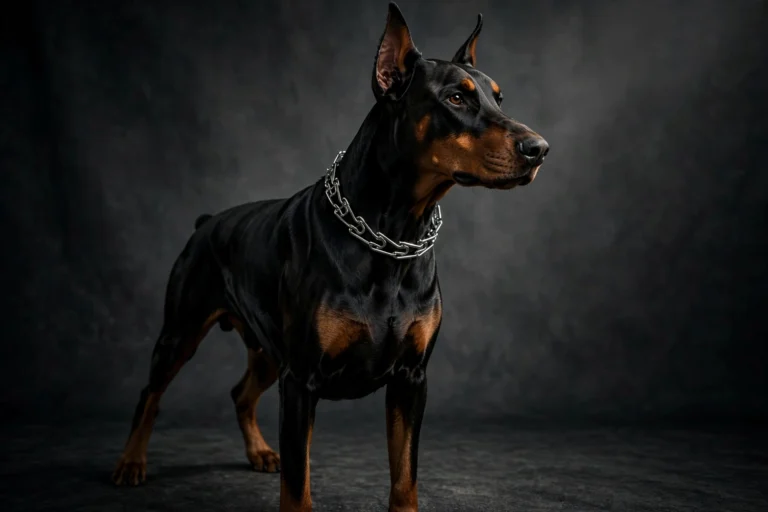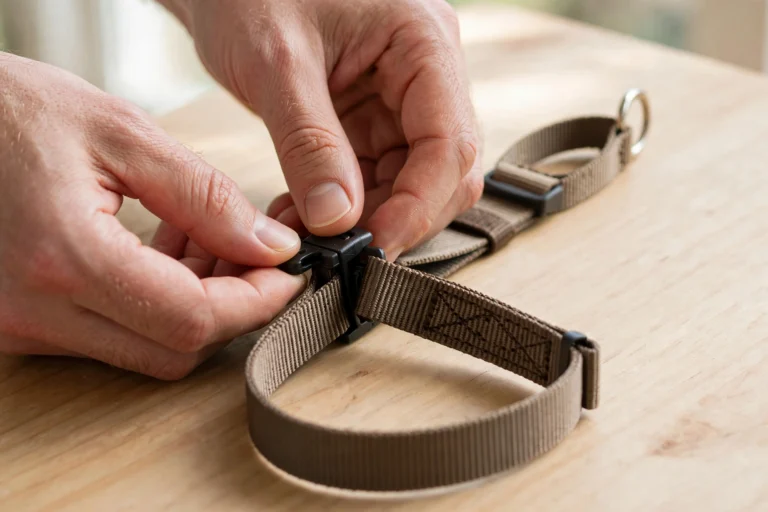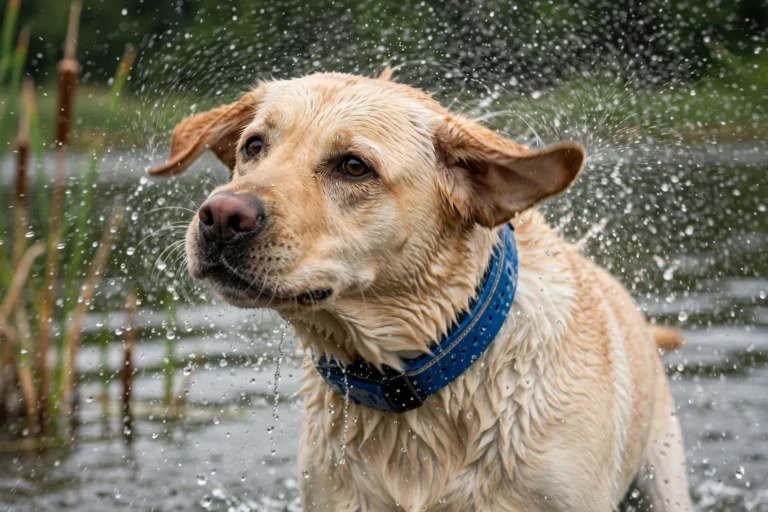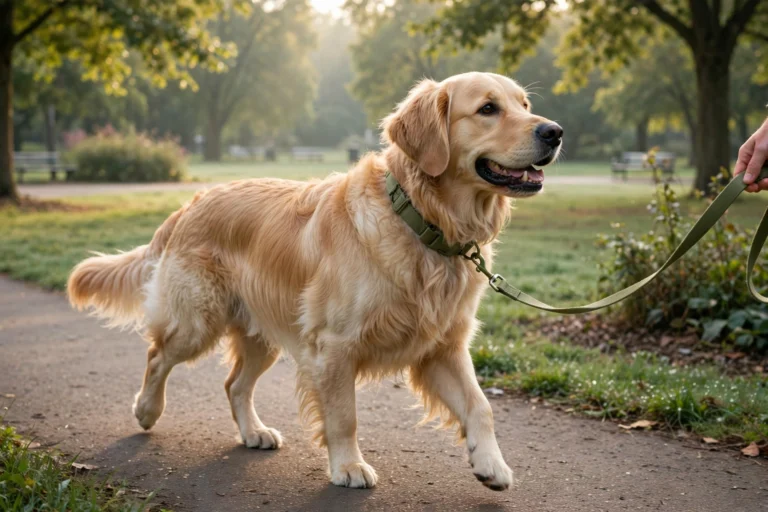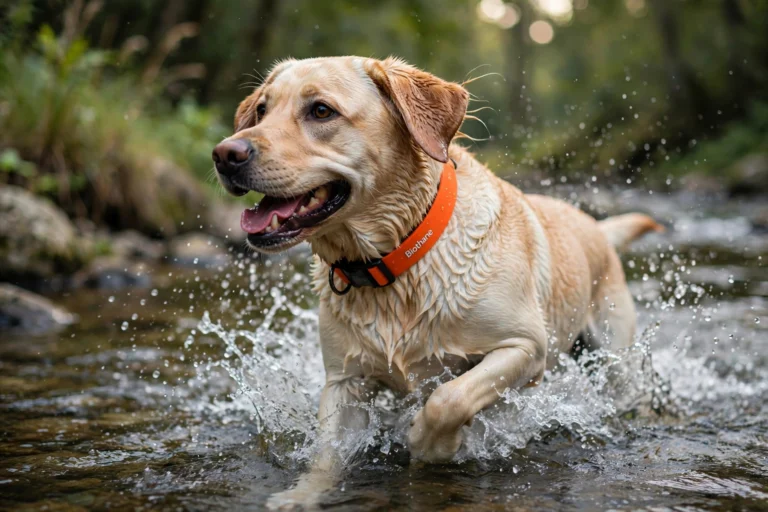
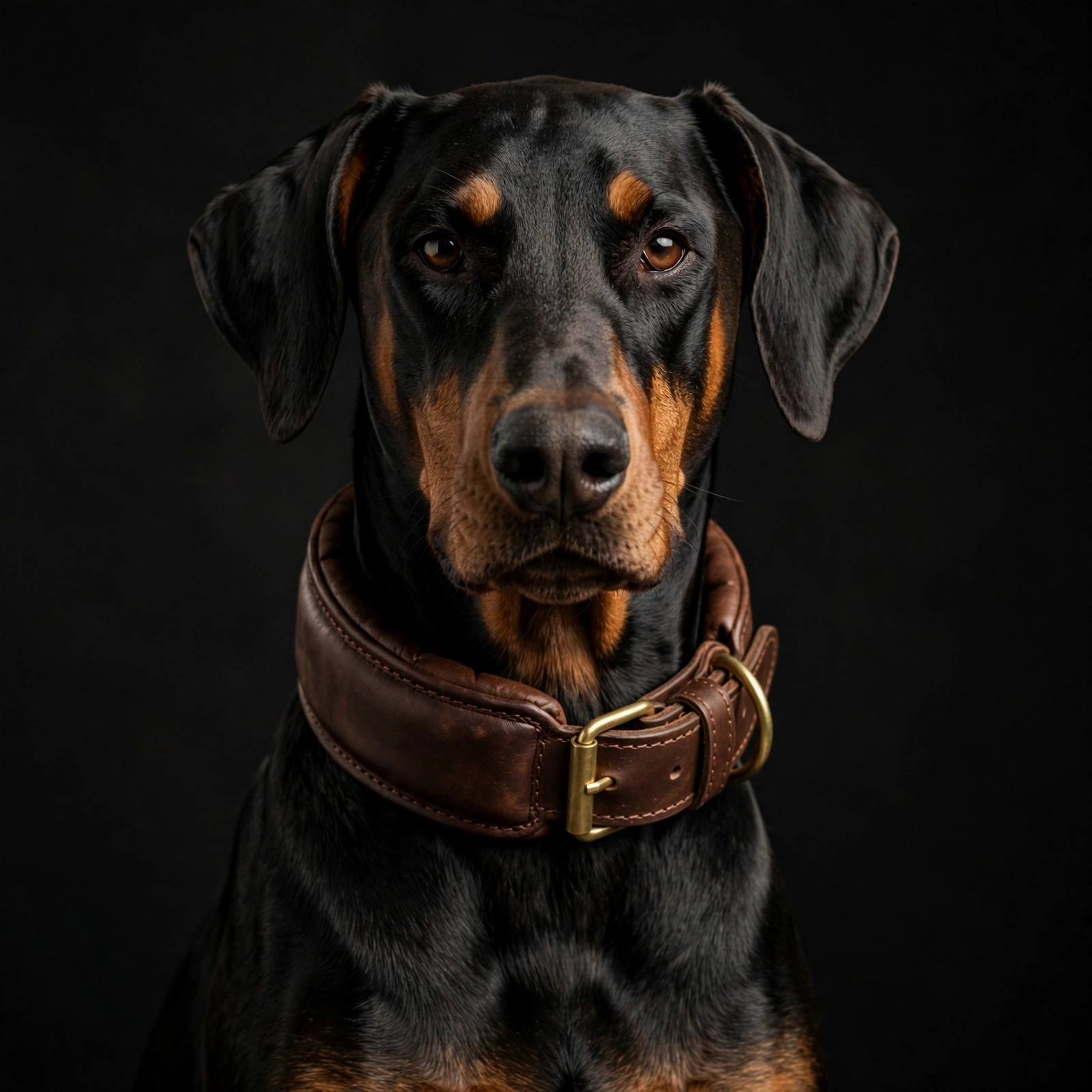
The best collars for Dobermans balance two things this breed demands: elegance and neck protection. A Doberman’s long, sculpted neck and short, thin coat look stunning in a well-chosen collar, but that same thin coat offers little padding — the wrong collar rubs the fur off and presses on a sensitive trachea. The right pick looks sharp, distributes pressure, and holds a powerful dog securely. Below are eight collars that suit the Doberman’s build and temperament, from padded leather classics to escape-proof martingales, plus a buying guide covering fit, trachea safety, and coat care.
Affiliate disclosure
As an Amazon Associate, Dogslifelearning earns from qualifying purchases. I researched the products below using manufacturer and retailer information; I did not hands-on test them.
⚡ The short answer
🥇Soft Touch Collars Leather Padded CollarOverall elegance + comfort→🥈Blueberry Pet Padded Dog CollarSensitive skin→🥉PetSafe Martingale CollarNo-slip gentle control→
Quick Picks
| Product | Best For | Standout Feature |
|---|---|---|
| Soft Touch Collars Leather Padded Collar | Overall elegance + comfort | Padded leather, classic look |
| Blueberry Pet Padded Dog Collar | Sensitive skin | Soft padding, many colors |
| PetSafe Martingale Collar | No-slip gentle control | Tightens only enough to prevent escape |
| Max and Neo Chain Martingale Collar | Classic show look | Chain + nylon martingale combo |
| Mendota Rolled Leather Collar | Slim elegant profile | Rolled leather, brass hardware |
| BRONZEDOG Rolled Leather Collar | Premium leather feel | Soft rolled leather construction |
| Black Rhino Comfort Collar | Active daily wear | Neoprene padding, reflective stitching |
| LupinePet Basic Dog Collar | Everyday durability | Lifetime guarantee, strong webbing |
The 8 Best Collars for Dobermans
Soft Touch Collars Leather Padded Collar
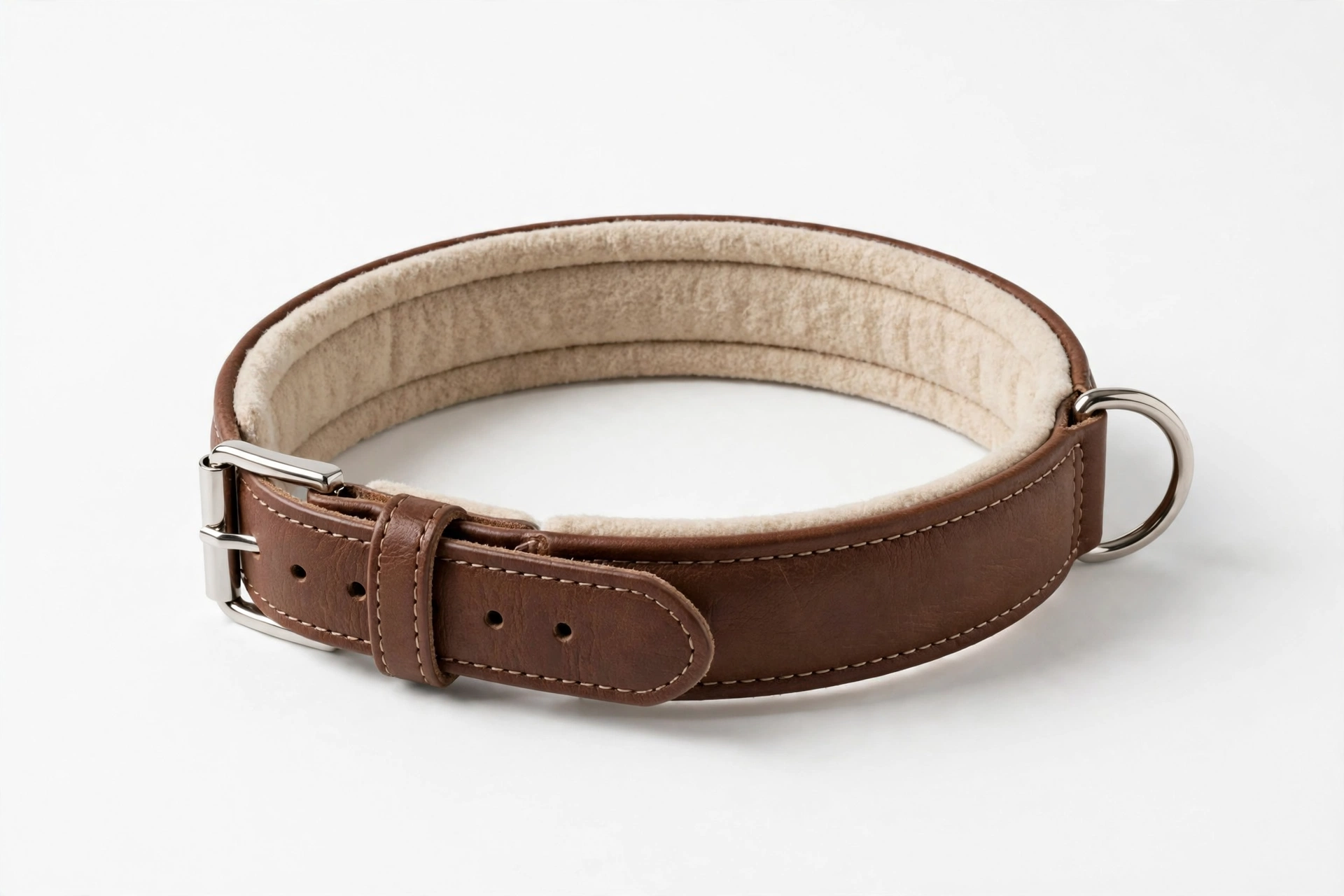
Soft Touch Collars pairs genuine leather with a soft padded lining, which solves the Doberman’s core problem: a beautiful leather look without the rubbing that strips hair from a thin-coated neck. The leather is supple rather than stiff, the padding cushions the throat, and the overall look suits the breed’s elegant lines. It’s the closest thing to a collar designed specifically for this breed’s needs. The leather breaks in beautifully over the first weeks, molding to your dog’s neck.
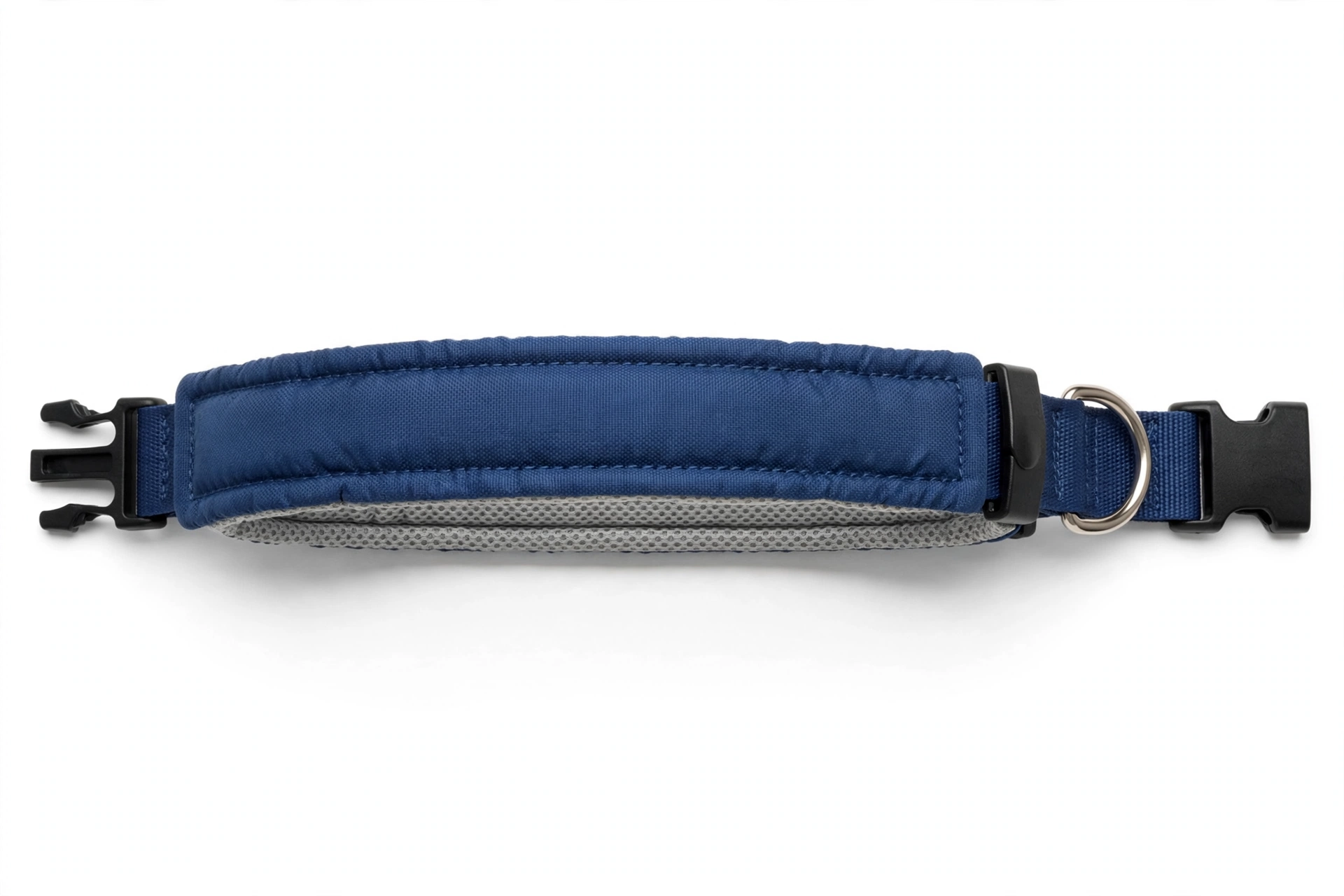
Blueberry Pet Padded Dog Collar
Dobermans with sensitive skin or a history of collar rub do well in a padded nylon collar, and Blueberry Pet’s padded version is a popular, affordable choice. The soft lining distributes pressure across the neck instead of concentrating it on the throat, and the wide range of colors lets you match the collar to your dog’s markings. It’s machine-washable, which matters for a collar worn every day. The price makes it practical to own two and rotate them while one is in the wash.
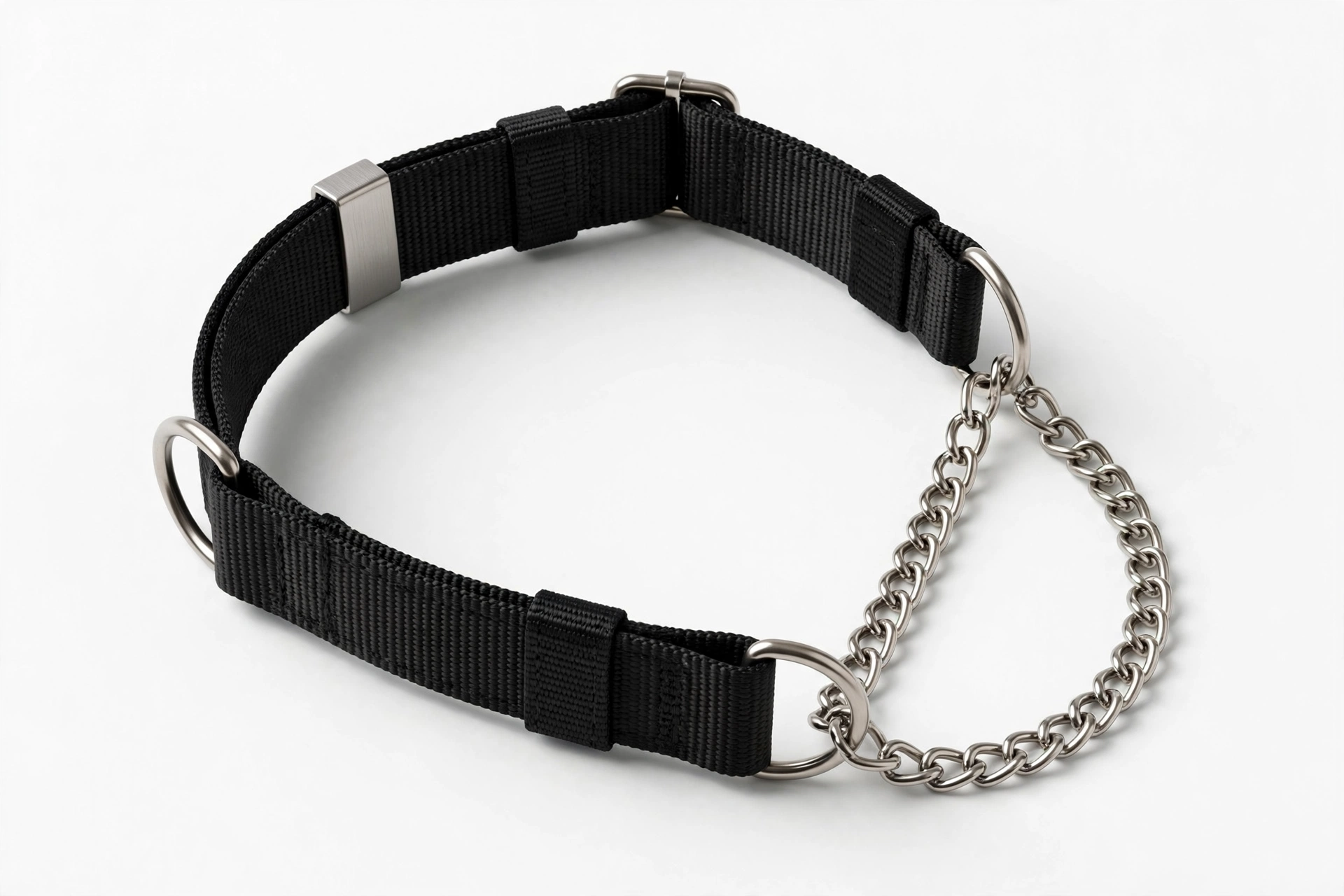
PetSafe Martingale Collar
Dobermans have deep chests and heads that can be narrower than their muscular necks, which makes backing out of a flat collar a real risk. A martingale tightens just enough to prevent escape without choking. PetSafe’s version is a long-standing favorite: durable nylon webbing, a smooth chain loop, and reliable stitching. It’s a humane everyday training collar for a strong, smart breed. It’s also a smart pick for adolescent Dobermans going through the flighty teenage phase.
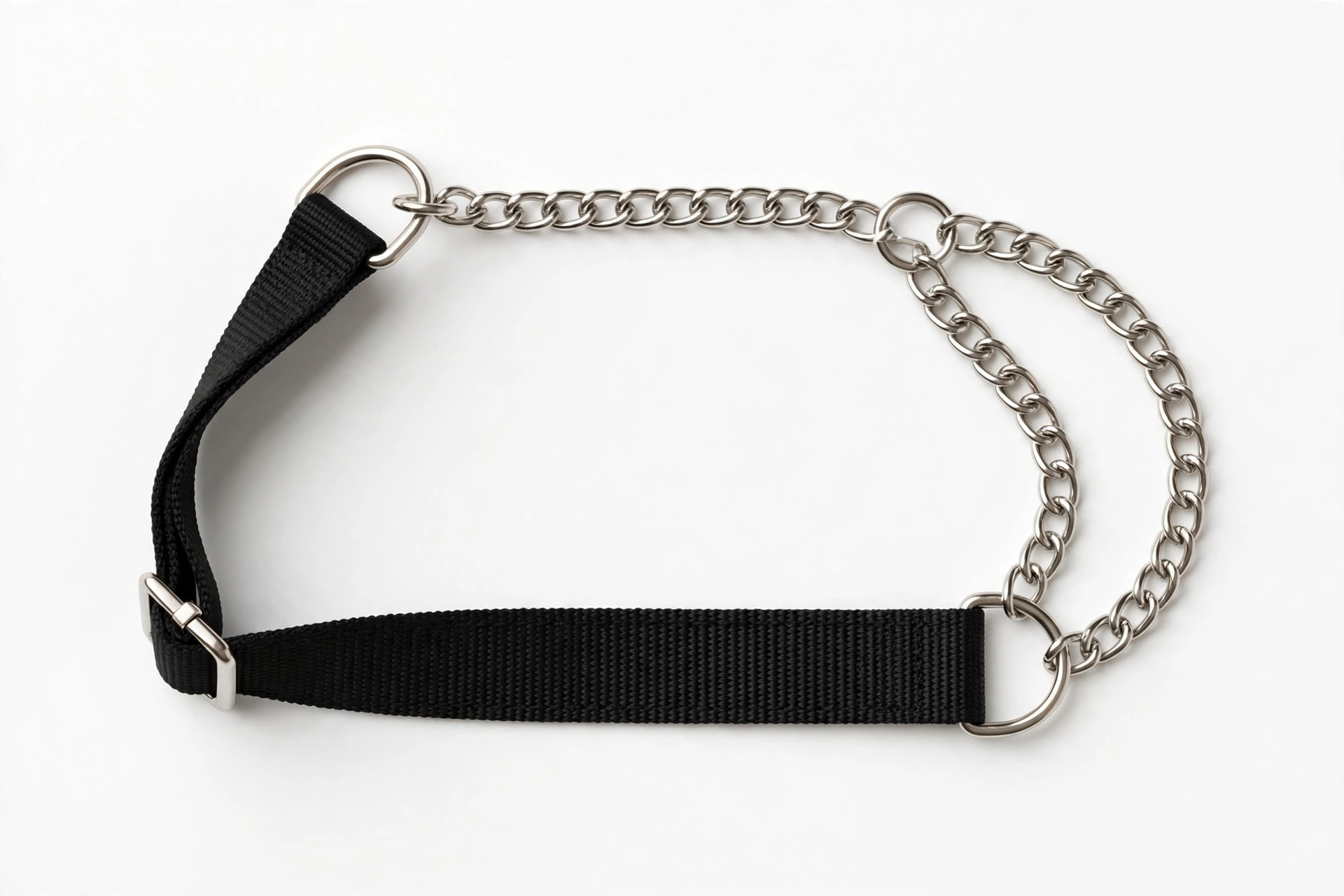
Max and Neo Chain Martingale Collar
The chain martingale is the classic Doberman look — it’s what you see in the show ring, and it flatters the breed’s long neck. Max and Neo’s version combines a reflective nylon strap with a metal chain loop for that traditional appearance with modern visibility. As with any martingale, fit the loop so it can tighten only to the size of the neck, never smaller. The company also donates a collar to a rescue with every purchase. The chain section is removable on some versions, converting it to a flat collar for ID-only wear.
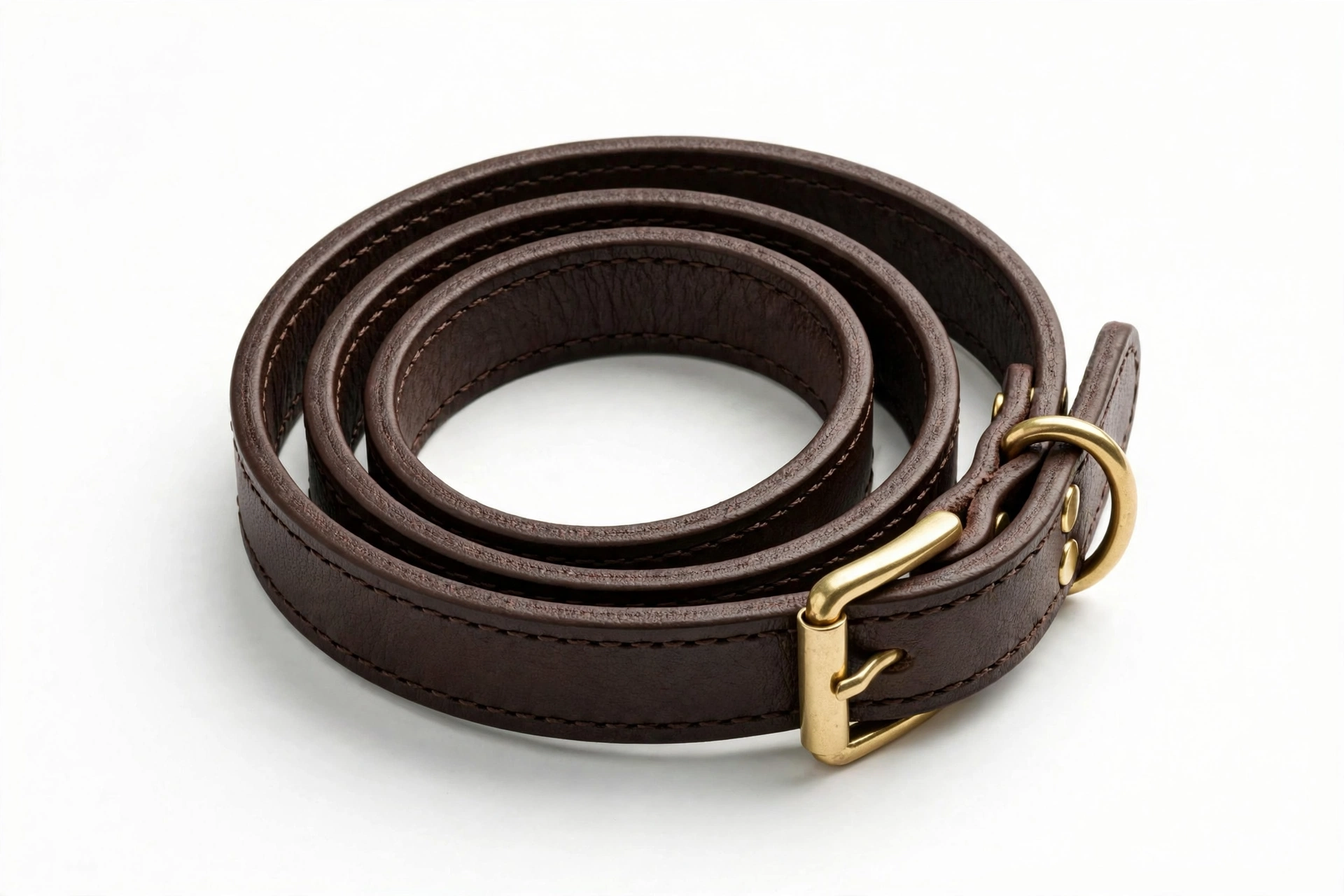
Mendota Rolled Leather Collar
A slim rolled leather collar follows the Doberman’s neck like it was made for it — because visually, it was. Mendota’s rolled leather collar uses quality leather with solid brass hardware, and the rounded profile minimizes contact area and friction against the coat. It’s a dress collar in the best sense: understated, elegant, and kind to the fur. Reserve it for dry days and condition the leather occasionally. The brass hardware develops an attractive patina that suits the breed’s classic look.
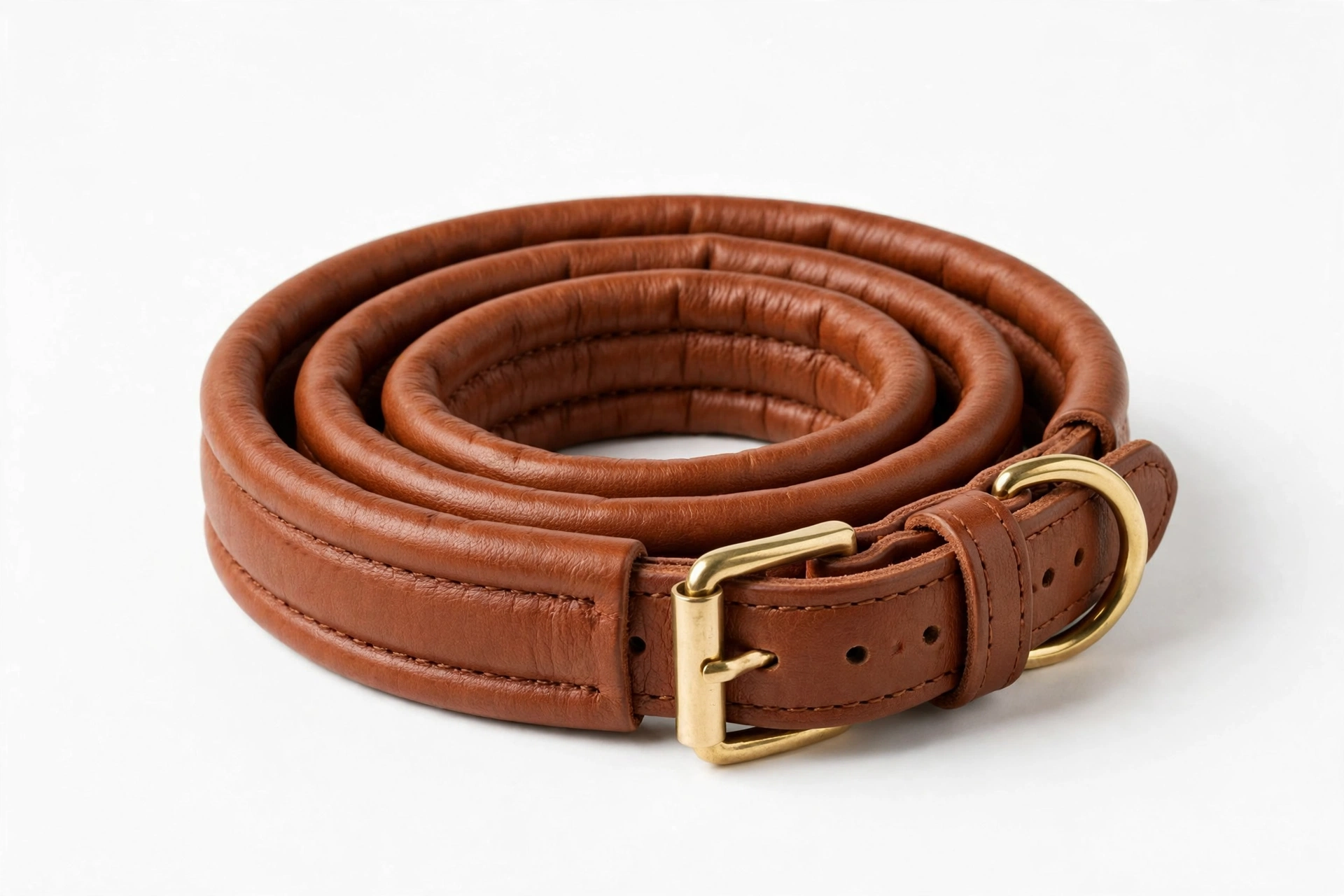
BRONZEDOG Rolled Leather Collar
BRONZEDOG’s rolled leather collar offers a soft, broken-in feel from the start, with the same coat-friendly rounded profile that suits thin-coated breeds. The leather is smooth against the skin and the hardware is sturdy enough for a strong dog. It’s a good step-up pick for owners who want the leather look with a slightly more refined finish. Conditioning it twice a year keeps the leather supple and extends its life well beyond cheaper straps.
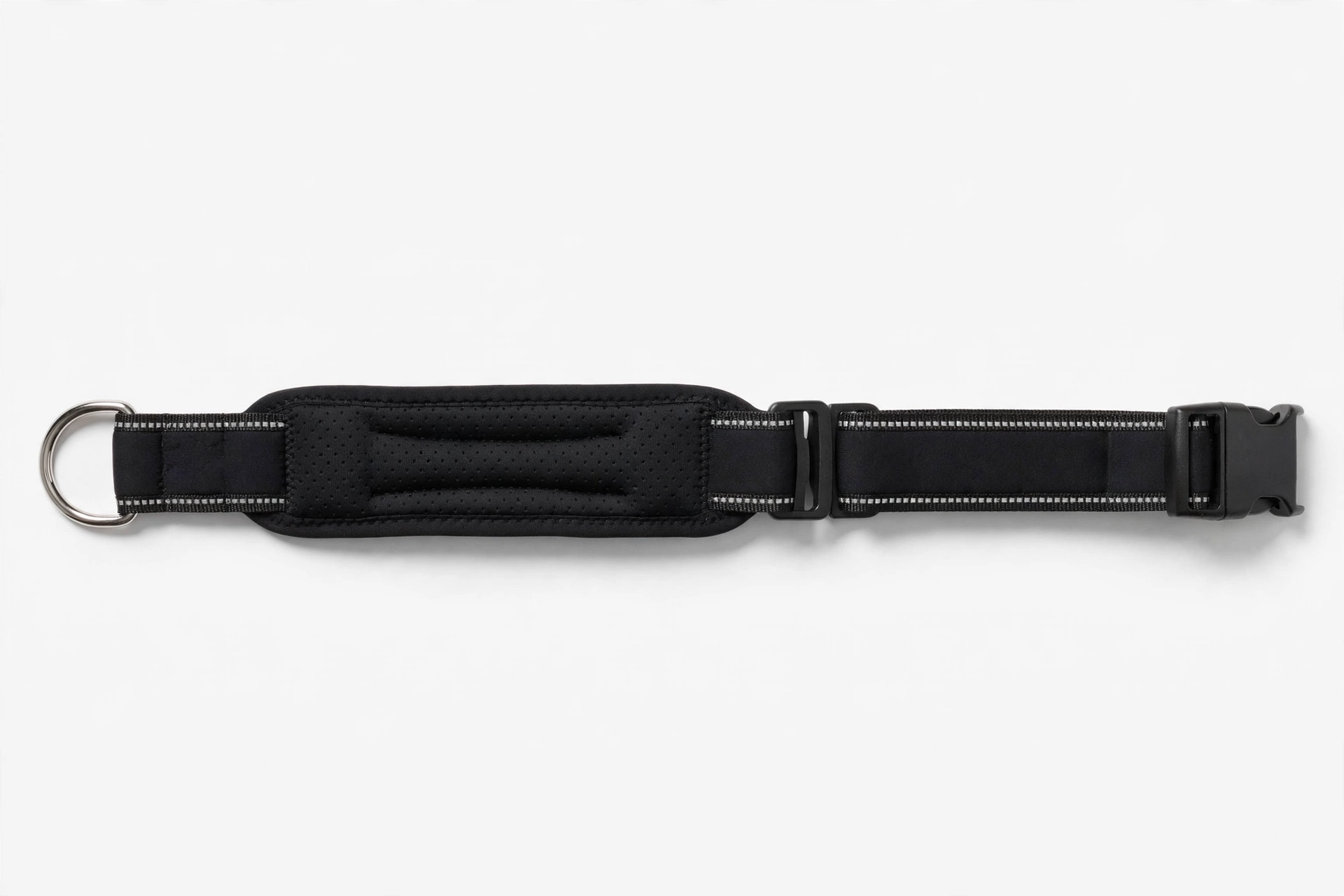
Black Rhino Comfort Collar
Not every day is a leather-collar day. For hikes, training sessions, and bad weather, the Black Rhino Comfort Collar gives your Doberman a padded, sporty option. The neoprene lining cushions the neck during activity, reflective stitching helps at dusk, and the heavy-duty buckle holds a powerful dog. It dries faster than leather after rain, making it a practical second collar. Hand-washing the neoprene occasionally keeps it from developing the funk that plagues sport collars.
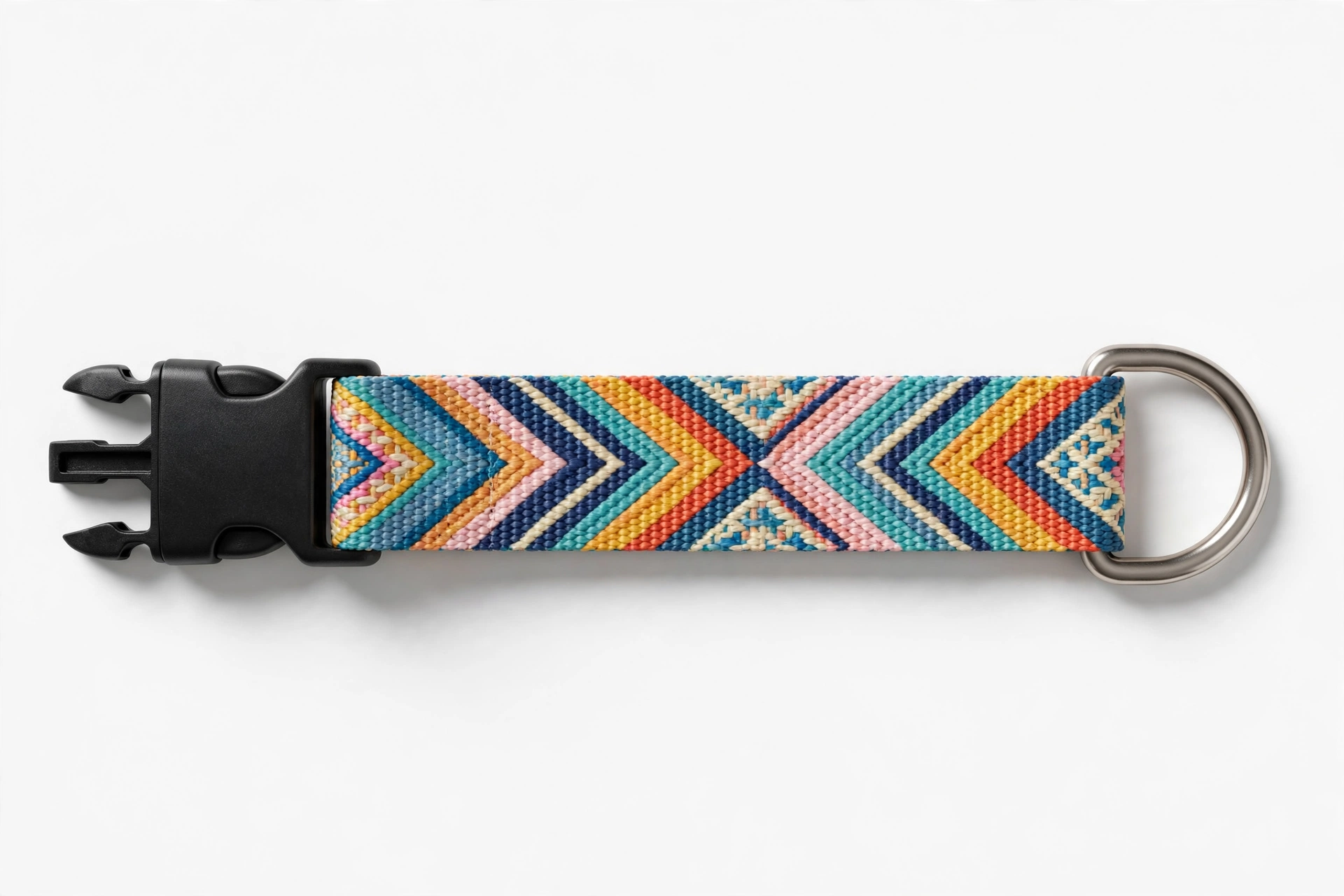
LupinePet Basic Dog Collar
LupinePet’s basic collar is famous for one thing: a lifetime guarantee, even if chewed. The webbing is strong, the patterns are distinctive, and the construction holds up to daily wear on big dogs. For a Doberman that lives an active outdoor life, it’s a dependable everyday collar at a fair price — and the guarantee means you’ll never buy a replacement for a manufacturing failure. The company’s chew-replacement guarantee is genuinely honored, which is rare in this price range.
Buying Guide: Choosing a Collar for a Doberman
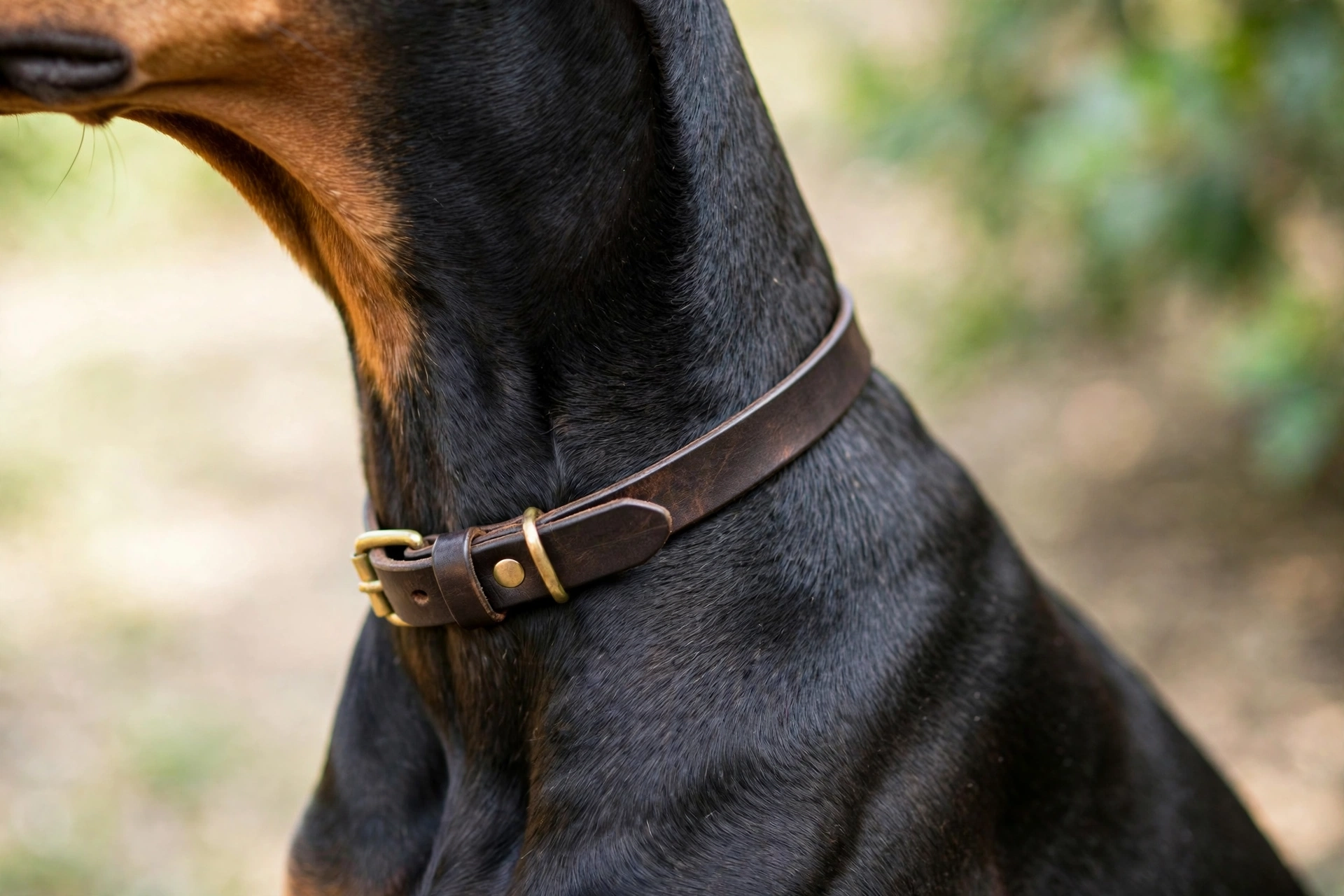
Protect the thin coat
A Doberman’s short, single coat shows every rub mark. Stiff, rough, or poorly finished collars can wear the hair right off the neck, leaving a visible bald band. Look for smooth materials — rolled leather, padded linings, or soft webbing — and avoid anything with rough edges or exposed hardware that contacts the skin. If you see thinning fur under the collar, switch styles before it becomes a bald spot.
Go wide to distribute pressure
A narrow collar concentrates all leash force on a thin band of the throat; a wider collar spreads it. For Dobermans, a 1.5-inch width is a good everyday choice for adults, and it also looks proportional on the breed’s long neck. Wide, padded collars are the most comfortable option for dogs that pull, and they read as elegant rather than bulky on this breed.
No pressure on the trachea
Dobermans can be prone to tracheal sensitivity, and a collar that presses the throat during pulling can cause coughing or gagging. If your Doberman pulls hard, the kindest setup is a front-clip harness for leash attachment with the collar reserved for ID tags. Martingales are a good compromise for control, but they’re still neck-worn — for true pullers, let the harness take the load. If your dog coughs on leash, mention it to your vet.
Escape-proofing matters
The Doberman’s deep chest and tapered head mean some individuals can slip a flat collar. A martingale is the classic solution — it closes just enough to stay on without choking. When fitting, adjust the loop so that when fully tightened, the two slides of the chain meet with the collar snug on the neck, not compressing it.
Doberman Pinscher collars: flat, martingale, or chain?
Shopping for dog collars for a Doberman Pinscher comes down to three styles. A flat collar is fine for a calm dog that walks politely on leash and just needs ID. A martingale is the best all-rounder for Dobermans: it tightens just enough to prevent slip-outs without choking, which suits the breed’s deep chest and ta so the loop closes to neck size and never tighter.pered head. A chain martingale adds the classic show-ring look and a little extra feedback on leash. Whichever style you choose, keep it wide and smooth to protect the thin coat, and check the fit monthly — a Doberman’s neck changes with conditioning. If you pick a martingale, learn how to adjust a martingale collar
Match the collar to the occasion
Many Doberman owners keep two or three collars: a handsome leather or martingale for everyday wear and outings, a padded sport collar for training and hiking, and a simple backup. Rotating collars also lets the skin and coat breathe, which helps prevent the rub marks this breed is prone to.
Sizing and fit
Measure around the middle of the neck and add two inches for a flat collar; you should fit two fingers underneath. Most adult Dobermans take a large, but deep-chested males may need an extra-large. Check the fit monthly — Dobermans are athletic dogs whose weight and muscle can shift with training seasons.
Hardware and buckle strength
A Doberman is a powerful dog, and collar hardware is the failure point most owners underestimate. Look for welded (not split) D-rings, solid buckles, and reinforced stitching where the strap meets the ring — that junction takes the entire force of a lunge. Metal buckles outlast plastic side-release clips for strong dogs, though quality plastic is fine for calm walkers. Inspect the hardware every few weeks: bent D-rings, cracked buckles, and fraying stitching are all retirement signals. A collar is a safety device first and a fashion item second.
Reflectivity for night walks
Dobermans are dark dogs — a black or blue Doberman is nearly invisible on an unlit road at night. Reflective stitching, reflective webbing, or a reflective overlay on the collar makes an enormous difference to driver visibility. It costs nothing in comfort and can be the difference between a safe evening walk and a scare. Pair a reflective collar with a clip-on LED light in winter for full coverage.
Frequently Asked Questions
What is the best type of collar for a Doberman?
A wide, padded leather collar or a martingale suits most Dobermans best. Padded leather protects the thin coat while looking elegant, and martingales prevent escape without choking. For hard pullers, pair any collar with a front-clip harness so the neck doesn’t take the force.
Are martingale collars good for Dobermans?
Yes. The martingale is arguably the signature Doberman collar — it prevents the breed’s occasional slip-outs, gives gentle control, and the chain version looks classic on their long necks. Fit it so the loop closes to neck size, never tighter.
Why is my Doberman losing hair under the collar?
Friction. The Doberman’s short coat wears away under rough or constantly shifting collars. Switch to a smooth, well-fitted collar — rolled leather or padded — make sure it isn’t too loose (sliding causes more friction), and give the neck collar-free time indoors.
Should Dobermans wear prong collars?
Prong collars are a training tool, not an everyday collar, and they should only be used under the guidance of a certified professional trainer. For daily wear and most training, a martingale or flat collar plus consistent training is safer and kinder. Consult a vet or certified trainer before using any aversive tool.
What size collar does a Doberman need?
Most adult Dobermans wear a large collar (roughly 18–26 inches adjustable), with large males sometimes needing extra-large. Females may fit a medium-large. Always measure the individual dog rather than going by breed charts, and remember that a growing adolescent may size up twice before reaching their adult fit.
Can Dobermans wear collars all the time?
They can, but their thin coat benefits from breaks. A lightweight, smooth collar for ID is fine around the clock, but remove it during grooming and consider collar-free time indoors to let the coat recover. Never leave a martingale or slip collar on an unsupervised dog.
Are wide collars better for Dobermans?
Generally, yes. A 1.5-inch wide collar distributes leash pressure over more of the neck, which is kinder to the trachea and looks proportional on the breed’s long neck. Narrow collars concentrate force on a thin band and can dig in when a strong Doberman pulls. For small Doberman puppies, start narrower and move up as they grow.
How tight should a Doberman’s collar be?
Use the two-finger rule: you should be able to slide two fingers flat between the collar and the neck. Because Dobermans have muscular necks that change with conditioning, recheck the fit monthly. A collar that was perfect in winter may be snug after a summer of swimming and muscle gain.
Do Dobermans need a special collar?
Not a breed-specific model, but Dobermans do need specific features: a wide, smooth strap that will not rub their thin coat, strong hardware that holds a powerful dog, and — for escape artists — a martingale loop. Any collar with those qualities works, whether or not it is marketed for Dobermans.
What is the best collar for a Doberman that pulls?
For a Doberman that pulls, pair a wide, padded collar with a front-clip harness and let the harness take the leash load, so the neck and trachea are spared the force. For leash days, choose a wide dog collar
Related Buying Guides
The verdict
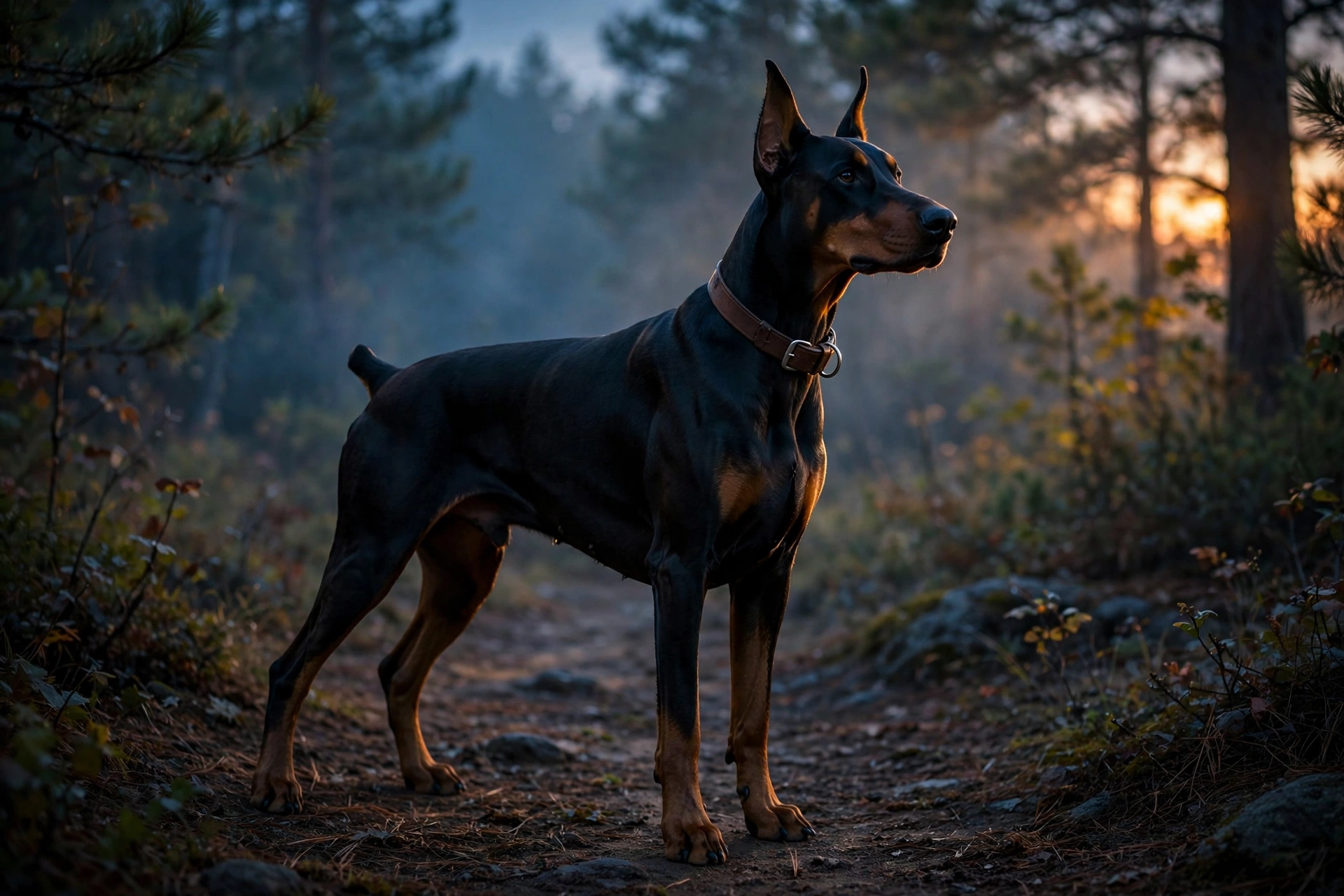
The best collar for a Doberman honors the breed’s elegance while protecting its vulnerable neck. The Soft Touch Padded Leather Collar is my top pick for combining classic looks with coat-saving padding, the PetSafe Martingale is the smart choice for escape-prone dogs, and the Max and Neo Chain Martingale delivers the traditional show-ring look. Fit it wide, keep it smooth, and let a harness handle the pulling — your Doberman’s neck will thank you.
And remember the rotation rule: one handsome collar for outings, one padded sport collar for training and bad weather. Alternating gives the coat a break, extends the life of the leather, and means you always have a dry collar ready. For a breed that shows every rub mark, that small habit pays off vis