
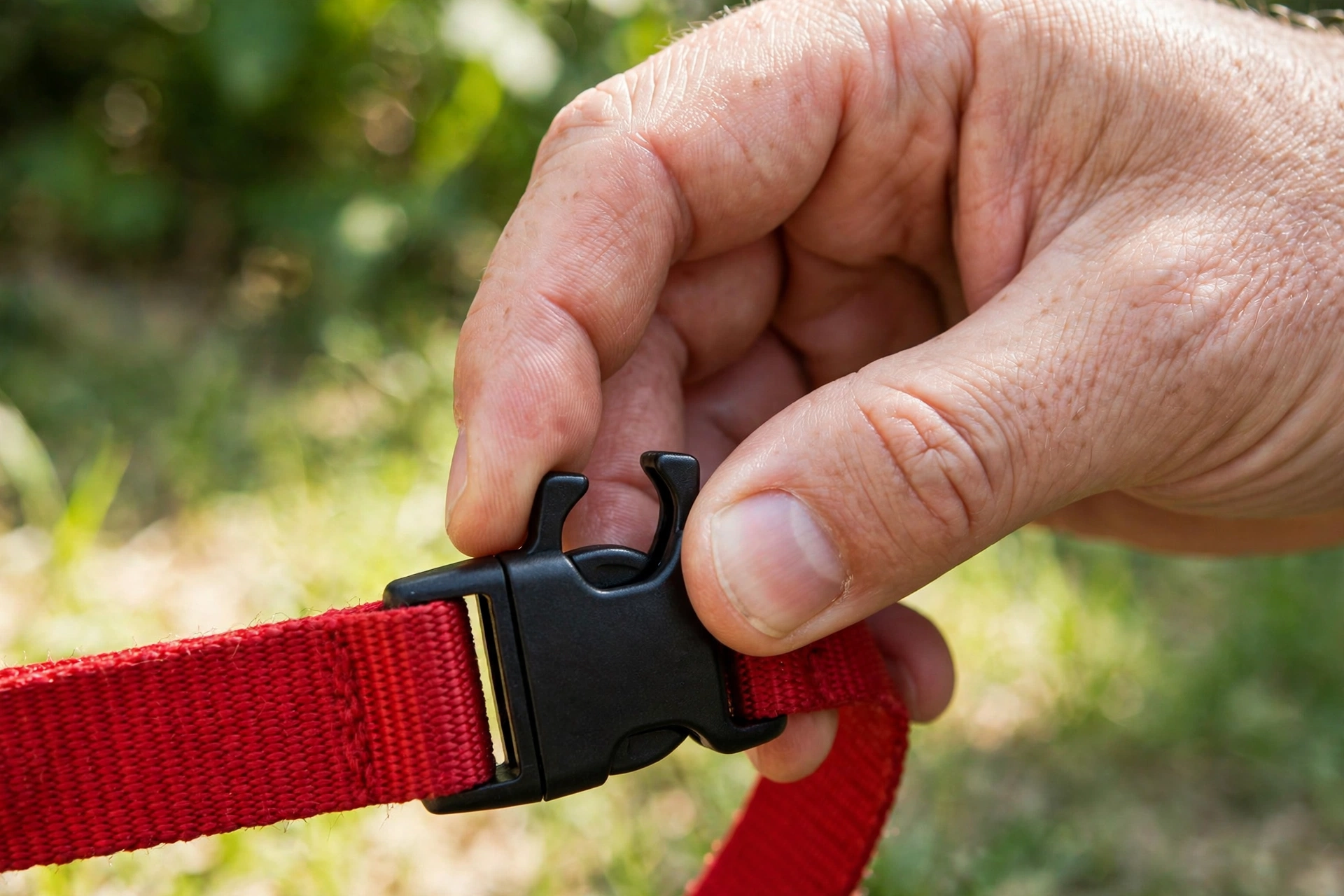
The best quick release dog collars solve one of the oldest annoyances in dog gear: the buckle. Traditional belt-style buckles demand two hands, good light, and a cooperative dog — three things rarely present at the same time on a rainy evening walk. A quick-release (side-release) buckle opens with a simple squeeze of two tabs and snaps shut one-handed, which is why it has become the default closure on modern everyday collars. But not all quick-release buckles are equal: cheap plastic buckles can crack in cold weather or pop open under a lunging dog, while metal side-release buckles trade convenience for near-belt-buckle strength. This guide compares five quick-release collars across both buckle types, explains the real safety trade-offs, and shows you what to check before trusting a squeeze-buckle with your dog.
Affiliate disclosure
As an Amazon Associate, I earn from qualifying purchases. If you buy through a link on this page, I may earn a commission at no extra cost to you.
⚡ The short answer
🥇Country Brook Petz Nylon (Metal Buckle)Best overall→
🥈Country Brook Petz Small 3/4″Small dogs→
🥉If It Barks Martingale (Quick Snap)Training + quick release→
Quick Picks: Best Quick Release Dog Collars at a Glance
| Product | Best For | Standout Feature |
|---|---|---|
| Country Brook Petz Nylon (Metal Buckle) | Best overall | Aluminum side-release buckle, USA made |
| Country Brook Petz Small 3/4″ | Small dogs | Same metal buckle in a lighter width |
| If It Barks Martingale (Quick Snap) | Training + quick release | Limited-slip martingale with snap buckle |
| Blueberry Pet Essentials | Eco-friendly pick | Recycled plastic buckle, award-winning brand |
| Tuff Pupper Tactical Dog Collar | Strong pullers | 1.5 in ballistic nylon, metal quick-release buckle, control handle |
5 Quick Release Dog Collars Worth Buying
“Quick release” covers two different buckle materials with very different strength profiles. The picks below span both, so you can match the buckle to your dog’s size and pulling power rather than discovering the difference mid-walk.
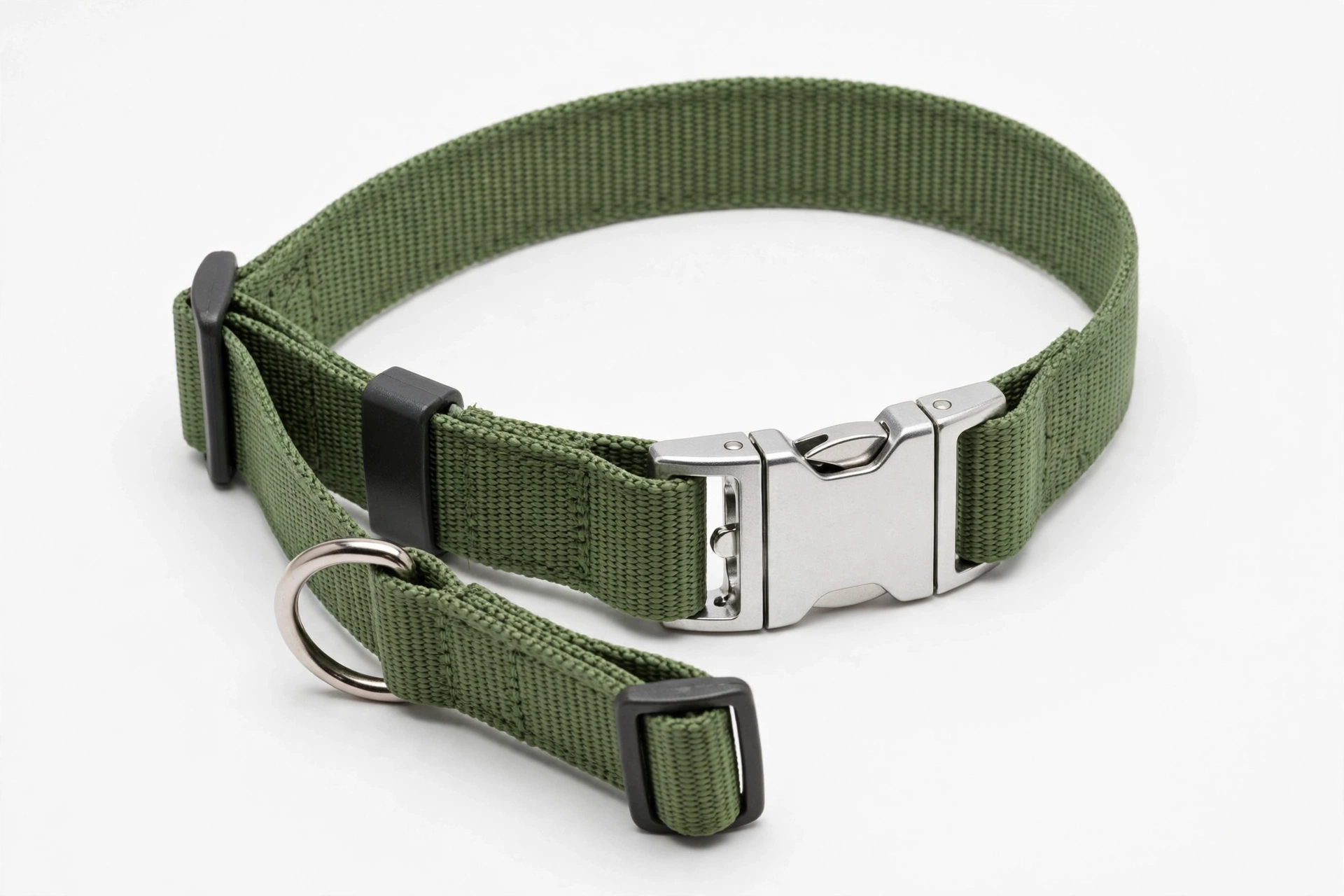
Country Brook Petz Premium Nylon Dog Collar (Metal Buckle)
Country Brook Petz answers the main objection to quick-release collars — buckle strength — by using an aluminum side-release buckle with a mirror finish instead of plastic. The collar itself is high-density nylon webbing, handcrafted and sewn in the USA, with welded metal D-rings for tags and leash and curved buckle edges shaped for the dog’s comfort. It comes in a wide range of colors and sizes (the large is a full 1 inch wide), and matching leashes and harnesses are available separately. For owners who want one-handed convenience without giving up buckle confidence, the metal quick-release design is the sweet spot of this entire category.
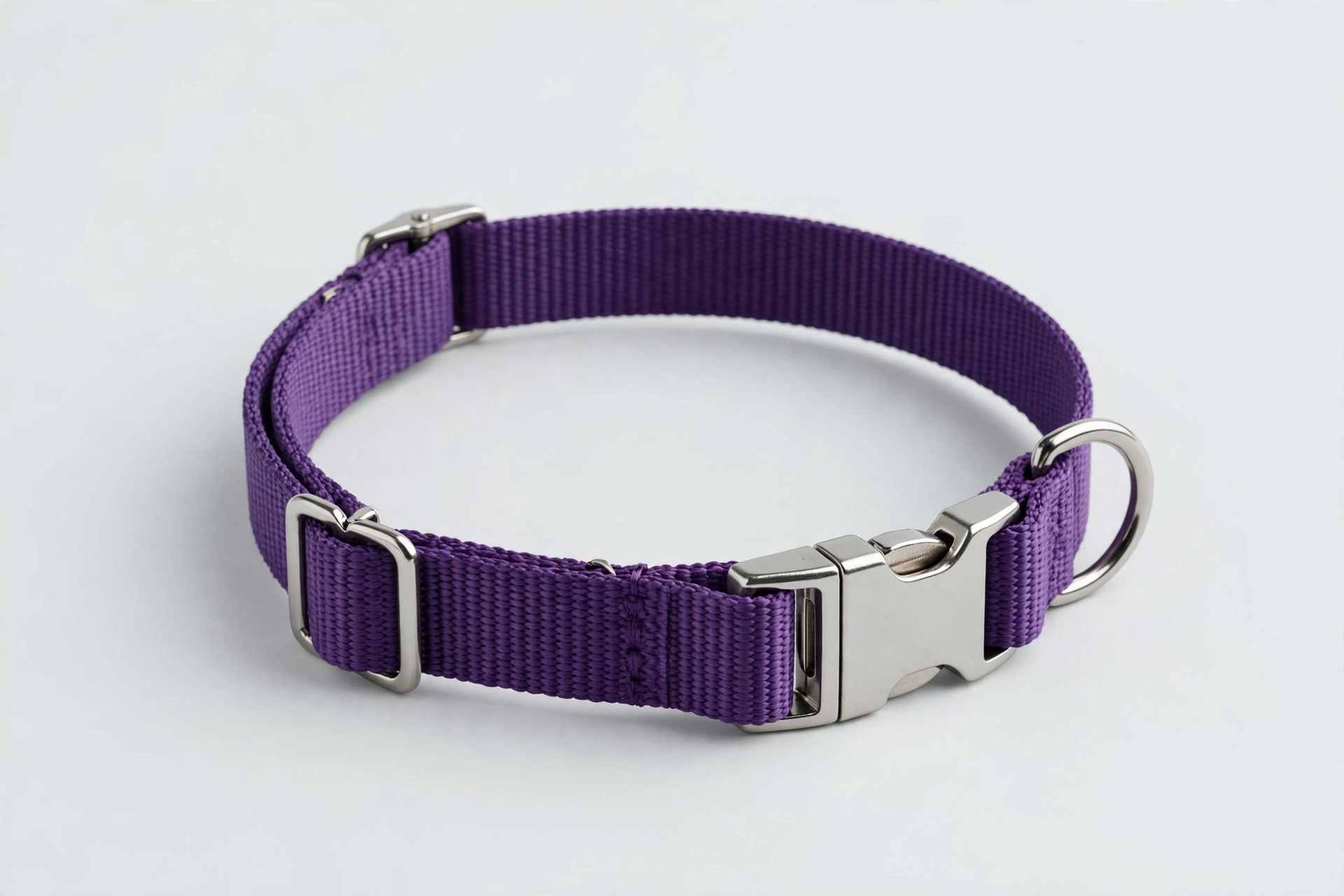
Country Brook Petz Small 3/4″ Collar
The small-dog version of the Country Brook design keeps the same aluminum quick-release buckle and welded D-rings but scales the webbing to 3/4 inch, adjustable for necks around 11 to 13 inches. That matters because a full-width collar with a chunky buckle overwhelms a small dog’s neck and adds weight where it is least welcome. The same USA-made construction, the same broad color palette, and the same two-finger fit guidance apply. If your dog is under about 25 pounds, this is the size to buy rather than trimming down the large.
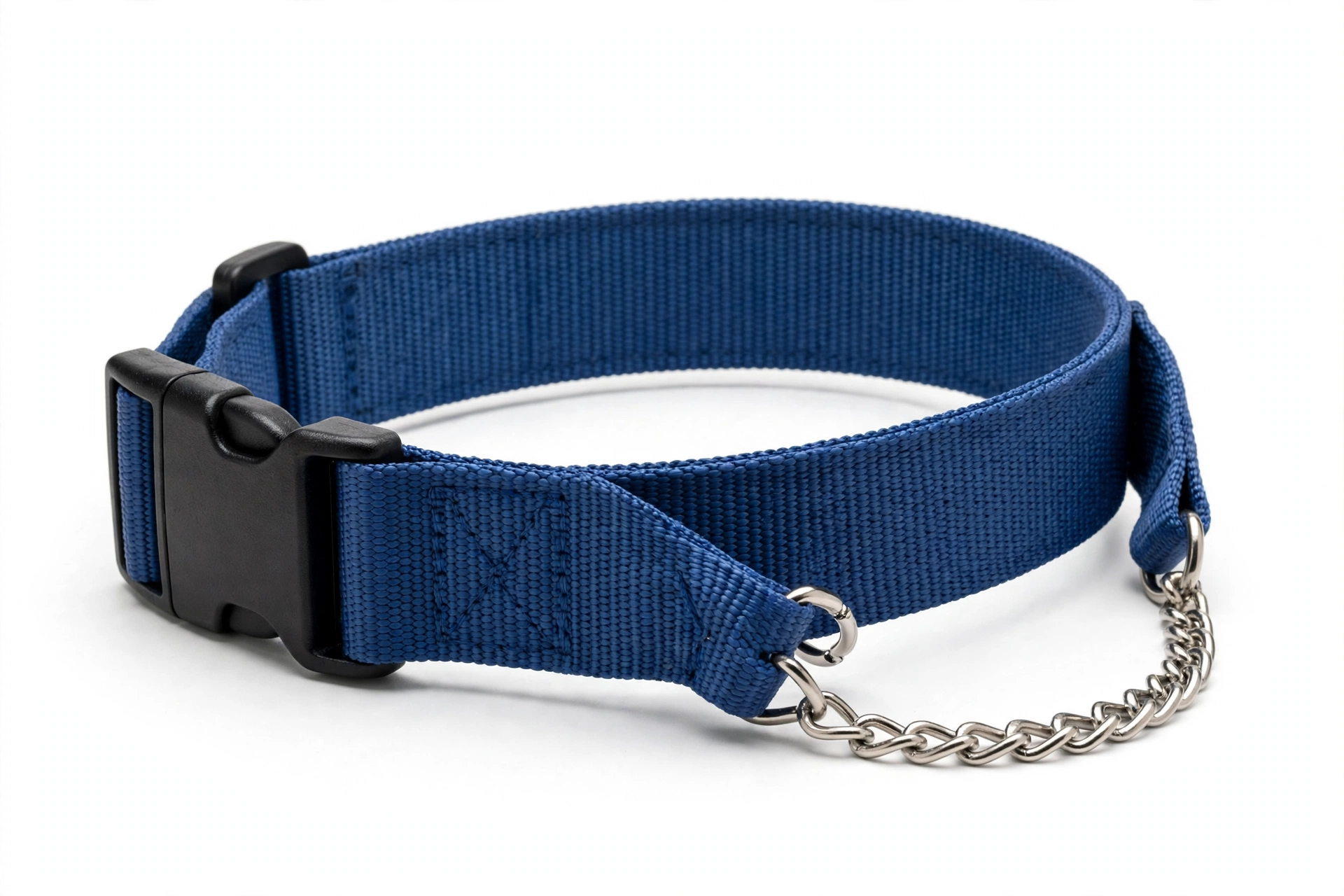
If It Barks 1.5″ Martingale Collar
Martingales traditionally slip over the head, which is awkward with a wiggly dog — the If It Barks 1.5-inch martingale solves that with a heavy-duty plastic quick-snap buckle, giving you limited-slip training action with clip-on convenience. The wide 1.5-inch webbing spreads pressure across the neck, the martingale loop prevents backing out, and the brand (making collars since 2002) backs the stitching and hardware with a replacement promise. It is a thoughtful hybrid: the no-choke control of a martingale for training walks, with the on-off speed of an everyday collar.
Blueberry Pet Essentials Collar
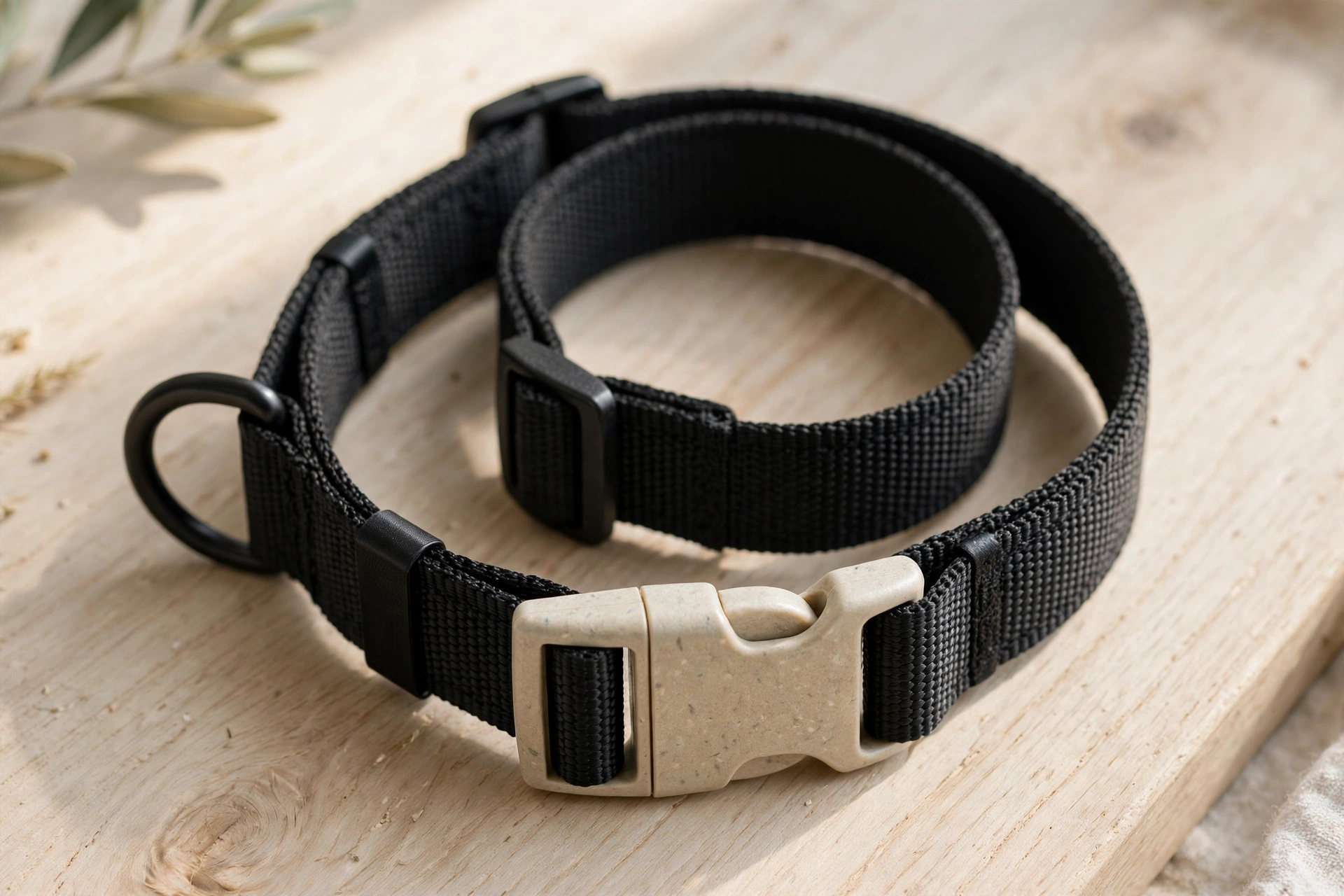
Blueberry Pet’s Essentials line pairs high-density nylon webbing with buckles made from eco-friendly plastic, aimed at owners who want to reduce the footprint of everyday gear. The collar is adjustable (the small fits necks 12 to 16 inches), includes the brand’s signature secure quick-release closure, and comes from an award-winning pet brand with a long track record on Amazon. Plastic buckles are the lightest option and perfectly adequate for calm, smaller dogs — just match the buckle honestly to your dog’s strength, and size up to a metal-buckle design if your dog is a serious puller.
Tuff Pupper Tactical Dog Collar
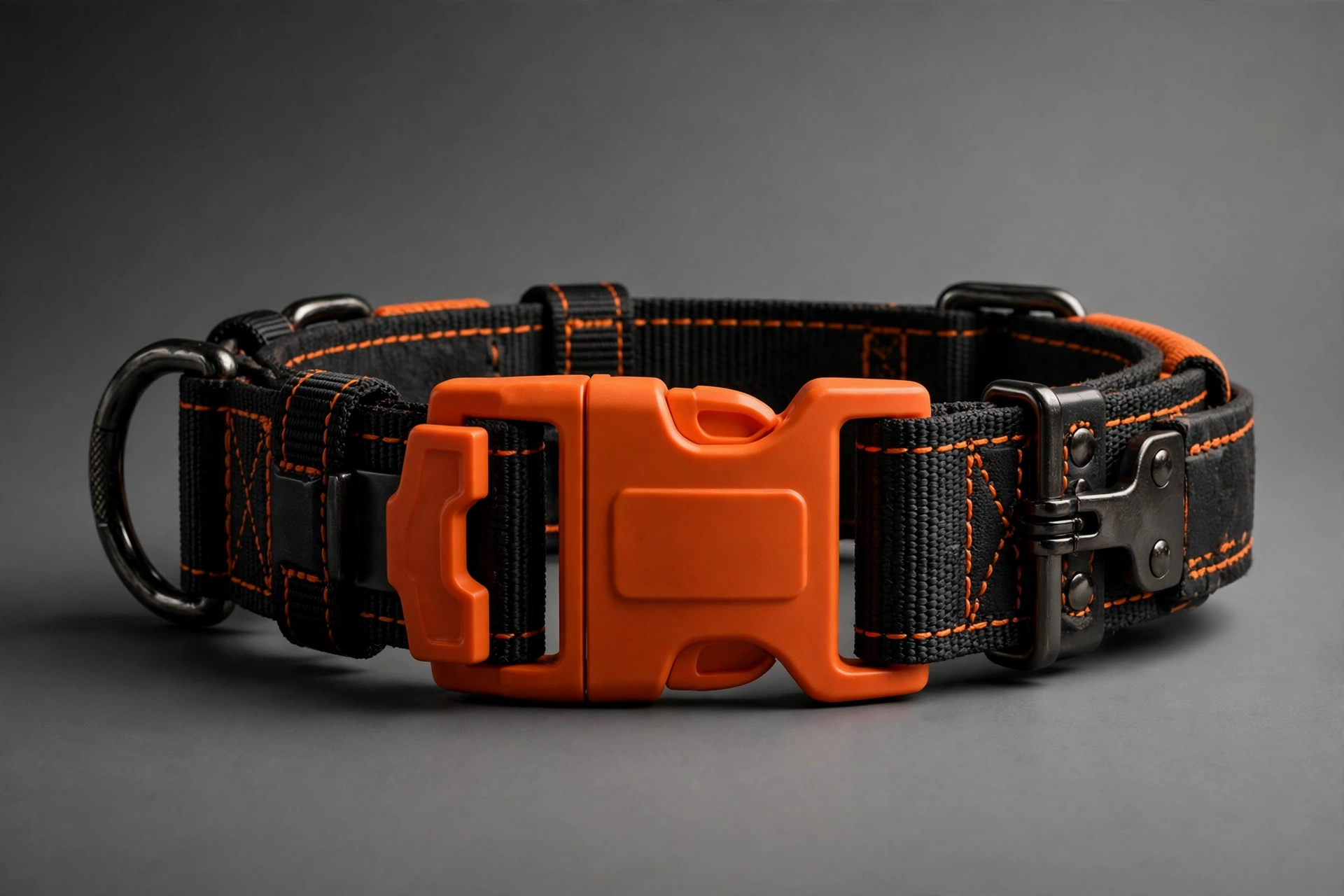
For powerful dogs that test hardware, the Tuff Pupper Tactical Dog Collar pairs 1.5-inch-wide ballistic nylon with a quick-release metal buckle, a training control handle, reflective bands, an ID tag holder, and a padded inner lining. The heavy-duty design keeps the convenience of a squeeze buckle while sizing every component — webbing, buckle, and D-ring — for dogs that pull hard. The Medium fits necks 14.5–18 inches. If your dog has ever popped a standard plastic buckle or you simply do not trust lightweight hardware on a 90-pound athlete, this is the category pick built for that job.
Buying Guide: Quick Release Buckles Explained
The buckle is the whole point of this category, so it deserves more scrutiny than it usually gets. A quick-release collar fails in exactly one place — the buckle — and understanding the failure modes is what separates a good purchase from a lost dog.
Plastic vs. metal side-release buckles
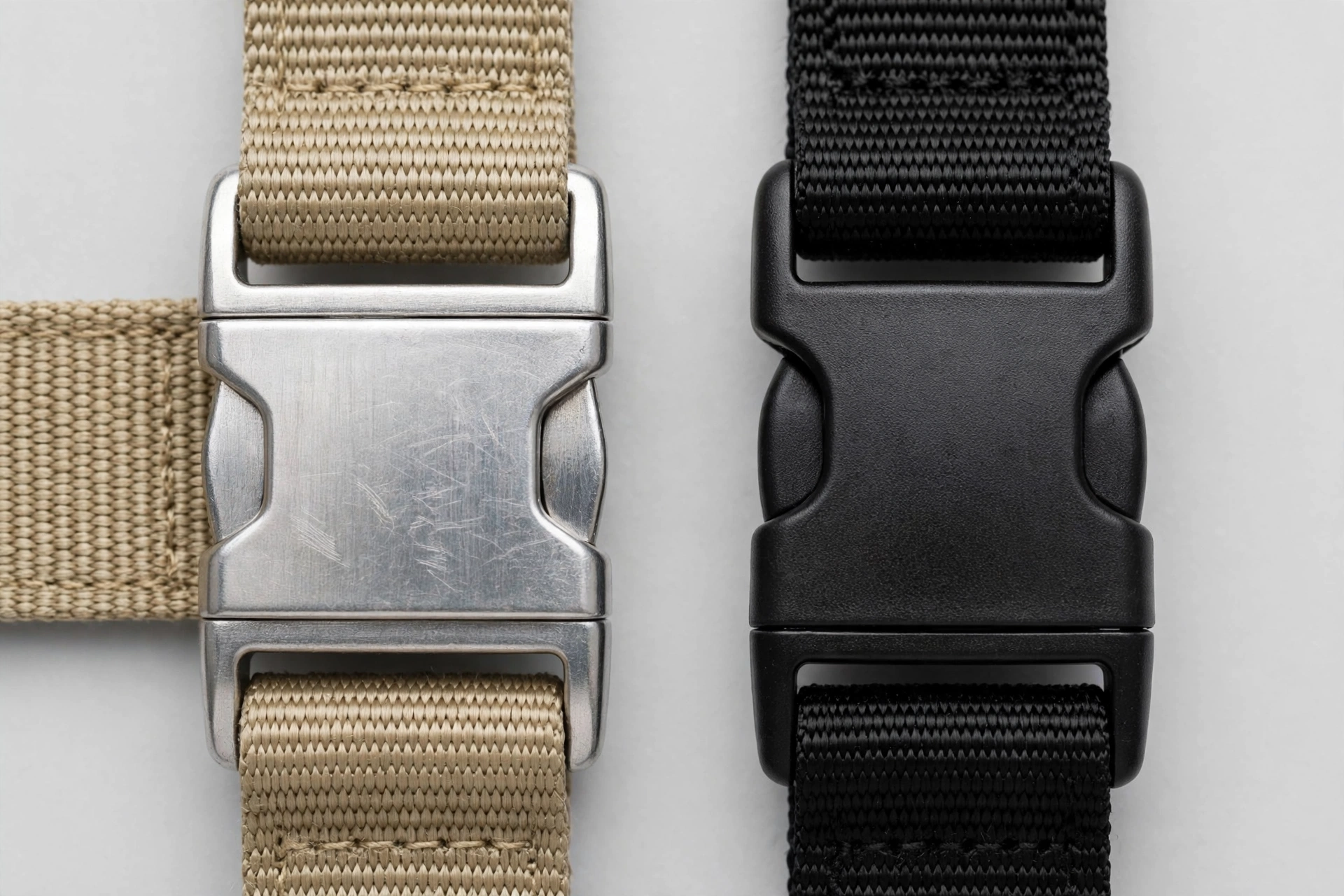
Standard plastic (acetal/POM) side-release buckles are light, cheap, and easy to operate, even with gloves. Their weaknesses are well documented: they can crack in extreme cold, degrade with years of UV exposure, and release if the two side tabs are squeezed accidentally — by another dog’s teeth during play, by a crate door, or by a hard impact. Metal (usually aluminum) side-release buckles, like Country Brook’s, operate the same one-handed way but resist cracking, chewing, and cold-weather brittleness, at the cost of more weight on the neck and a higher price. Match honestly: calm small-to-medium dogs are fine on quality plastic; strong pullers, chewers, and cold-climate dogs deserve metal.
The squeeze test and buckle inspection routine
Before trusting any quick-release collar, work the buckle twenty times: it should snap shut with a crisp click and require a deliberate, centered squeeze of both tabs to open. A buckle that opens with light or one-sided pressure is a return, not a bargain. Then inspect monthly — look for hairline cracks in plastic (flex the buckle gently and check the hinge points), bent release tabs in metal, and worn webbing where it threads through the buckle. Buckles wear out; a collar that was safe at purchase is not automatically safe at year three.
Fit still matters more than the buckle
Quick-release convenience tempts owners to leave collars loose, but the two-finger rule still applies: you should just barely slide two fingers between collar and neck. Too loose and the collar — quick-release or not — slides over the head when the dog pulls backward. Too tight and you get chafing and pressure on the trachea. Adjust the triglide slider so the collar sits mid-neck, and recheck the fit after the first few wears as new webbing stretches slightly.
Sizing a quick-release collar correctly
Measure the dog’s neck with a soft tape at the point where the collar will sit — mid-neck for everyday wear — then add nothing: the two-finger rule does the rest. Most collars adjust across a four-to-six-inch range, so buy the size whose middle covers your measurement rather than one where your dog sits at the extreme end of the slider. A collar maxed out on its adjustment has the triglide slider jammed against the buckle, which weakens the webbing fold and looks sloppy; a collar at its minimum leaves a long tail of loose webbing that can snag. Between sizes, size up for a growing puppy and size to the current measurement for an adult dog.
Cleaning and cold-weather care
Quick-release buckles collect grit, and grit is what makes a buckle stick or fail to latch fully. Rinse the buckle under warm water every few weeks — more often if your dog swims — work the tabs a few times while wet, and let everything air-dry before reassembly. In freezing weather, plastic buckles become brittle: warm a stiff buckle in your hands before forcing it, and consider switching strong or outdoor dogs to a metal-buckle collar for winter. Nylon webbing can go in a mesh laundry bag on gentle cycle, but never machine-dry a collar; heat warps plastic buckles and shrinks webbing unevenly.
Quick release is not breakaway
This distinction matters for safety. A quick-release buckle opens when a human squeezes it; a breakaway buckle opens under the dog’s own struggling force and is designed for cats and for dogs left unsupervised. Do not buy a quick-release collar expecting breakaway protection — if your dog’s collar catches on something, a standard quick-release will hold. For unsupervised wear, remove the collar or choose a purpose-built breakaway design.
When quick release is the wrong choice
Tie-outs, long-line training, and any situation where the dog hits the end of the line at speed put shock loads on the buckle that squeeze-buckles were not designed for — use a belt-buckle or metal hardware collar for those. Likewise, if your dog plays rough with other dogs, consider that a playmate’s jaws can squeeze a plastic buckle open; metal buckles or removing the collar during group play solves this.

Frequently Asked Questions
Are quick release dog collars safe?
Yes, when matched to the dog. A quality quick-release buckle from a reputable brand, inspected regularly and fitted to the two-finger rule, is as safe as any everyday collar closure. The risk cases are predictable: under-specced plastic buckles on strong dogs, worn buckles never inspected, and collars left on unsupervised around snag hazards.
Can a dog open a quick release buckle by itself?
A dog cannot easily squeeze both tabs the way a human thumb and finger do, but buckles do get opened accidentally — most often by another dog mouthing the collar during play, or by the buckle catching and levering against a crate or carabiner. Metal buckles resist this better than plastic.
Plastic or metal quick release buckle — which is better?
Neither is universally better; they optimize different things. Plastic is lighter, cheaper, and rustproof — ideal for small, calm dogs. Metal is stronger, chew-resistant, and cold-proof — better for large, strong, or destructive dogs. When in doubt, choose metal; the weight penalty is small and the strength margin is large.
How often should I replace a quick release collar?
Inspect monthly and replace at the first sign of buckle cracking, tab bending, or webbing fray near the buckle. As a rule of thumb, an everyday collar lasts one to three years depending on the dog, the climate, and how often it gets wet. Sun-bleached, stiff webbing is also past its prime.
Are quick release collars good for puppies?
Yes — the one-handed operation is genuinely useful with a squirming puppy, and lightweight plastic buckles suit small necks. Size carefully, since puppies outgrow collars fast; buy for the current neck measurement with adjustment room rather than sizing far ahead.
What is the difference between quick release and breakaway collars?
A quick-release buckle is opened by a person squeezing it. A breakaway buckle is designed to pop open on its own when the animal struggles against a snag. Breakaway is a strangulation-safety feature (standard on cat collars); quick release is a human-convenience feature. They solve different problems.
Related Buying Guides
The verdict
For most dogs and most owners, the Country Brook Petz collar with its aluminum quick-release buckle is the pick that removes the category’s main worry — buckle strength — while keeping the one-handed convenience that makes quick release worth buying. Choose the 3/4-inch size for small dogs, the If It Barks martingale if you want training control with clip-on ease, and Blueberry Pet’s Essentials line if eco-friendly materials matter to you. Whatever you buy, give the buckle the squeeze test on day one and a quick inspection every month after; a quick-release collar is only as reliable as its buckle.



2 Comments