
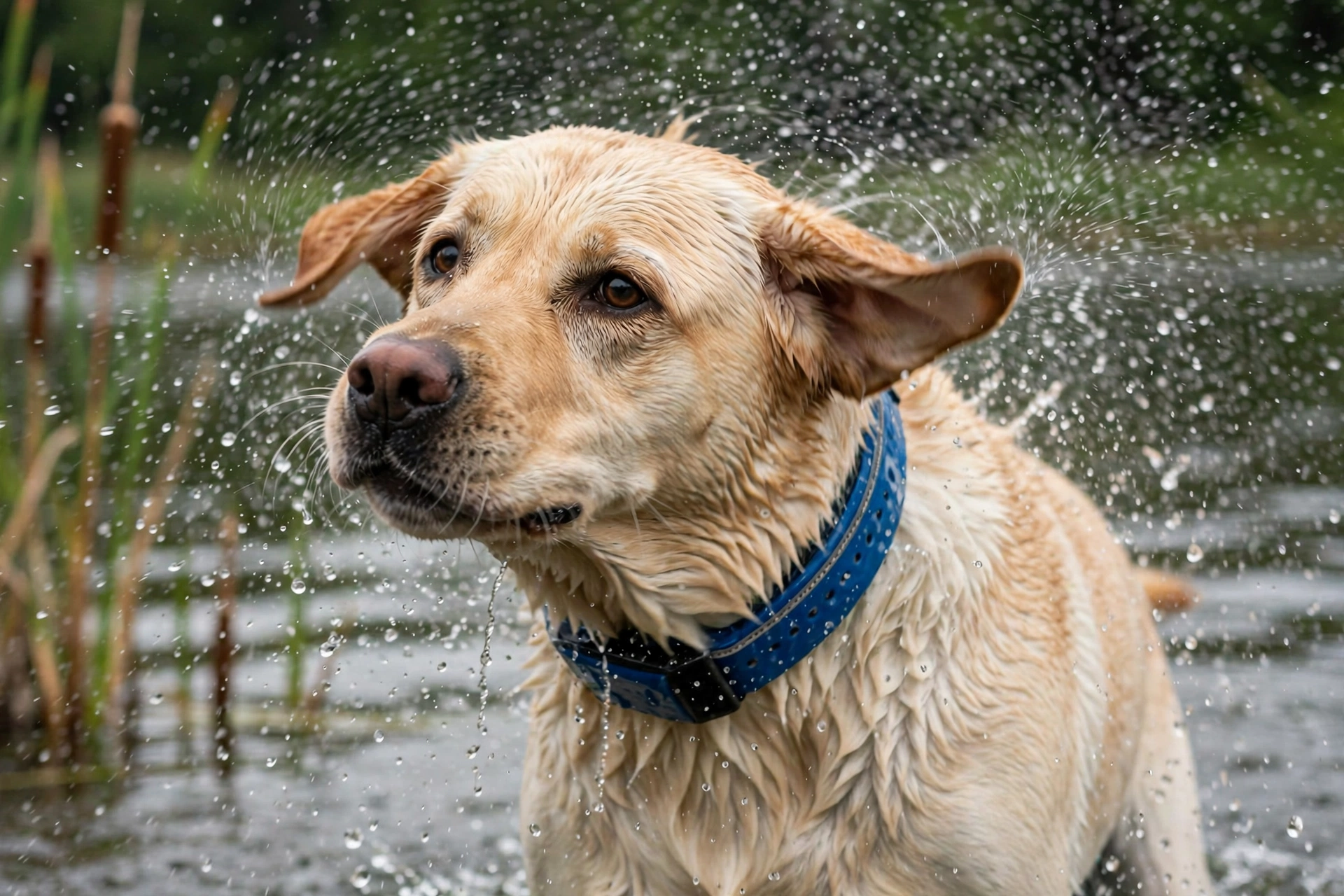
Labrador Retrievers are America’s perennial favorite for a reason — friendly, athletic, endlessly enthusiastic — but they are also 55-80 pounds of muscle with a water obsession, a chewing habit, and pulling power that surprises first-time owners. The best collars for Labrador Retrievers are waterproof (because your Lab will swim), wide and strong (because your Lab will pull), and chew-resistant (because your Lab will try). I have evaluated the durable, water-ready options built for the breed’s lifestyle, and this guide covers five collars that survive Lab life — plus fitting and training notes specific to Retrievers.
Affiliate disclosure
As an Amazon Associate, I earn from qualifying purchases. If you buy through a link on this page, I may earn a commission at no extra cost to you.
⚡ The short answer
🥇Outdoor Dog Supply WaterproofBest overall→🥈rubyloo Waterproof CollarSwimmers→🥉myyAA Waterproof PVCBudget waterproof→
Quick Picks: Best Collars for Labrador Retrievers at a Glance
| Product | Best for | Standout feature |
|---|---|---|
| Outdoor Dog Supply Waterproof | Best overall | Waterproof + brass nameplate |
| rubyloo Waterproof Collar | Swimmers | Quick-dry, stink-proof, Lab-approved |
| myyAA Waterproof PVC | Budget waterproof | 700-lb pull rating, easy clean |
| Furrigo AirTag Waterproof | Wanderers | Built-in AirTag holder, padded |
| Heavy-Duty Wide Collar | Power chewers/pullers | Chew-resistant wide webbing |
5 Collars That Survive Lab Life
Labs test collars in three ways: water, force, and teeth. Every pick below passes at least two of the three — the top picks pass all three.
Outdoor Dog Supply Waterproof Collar
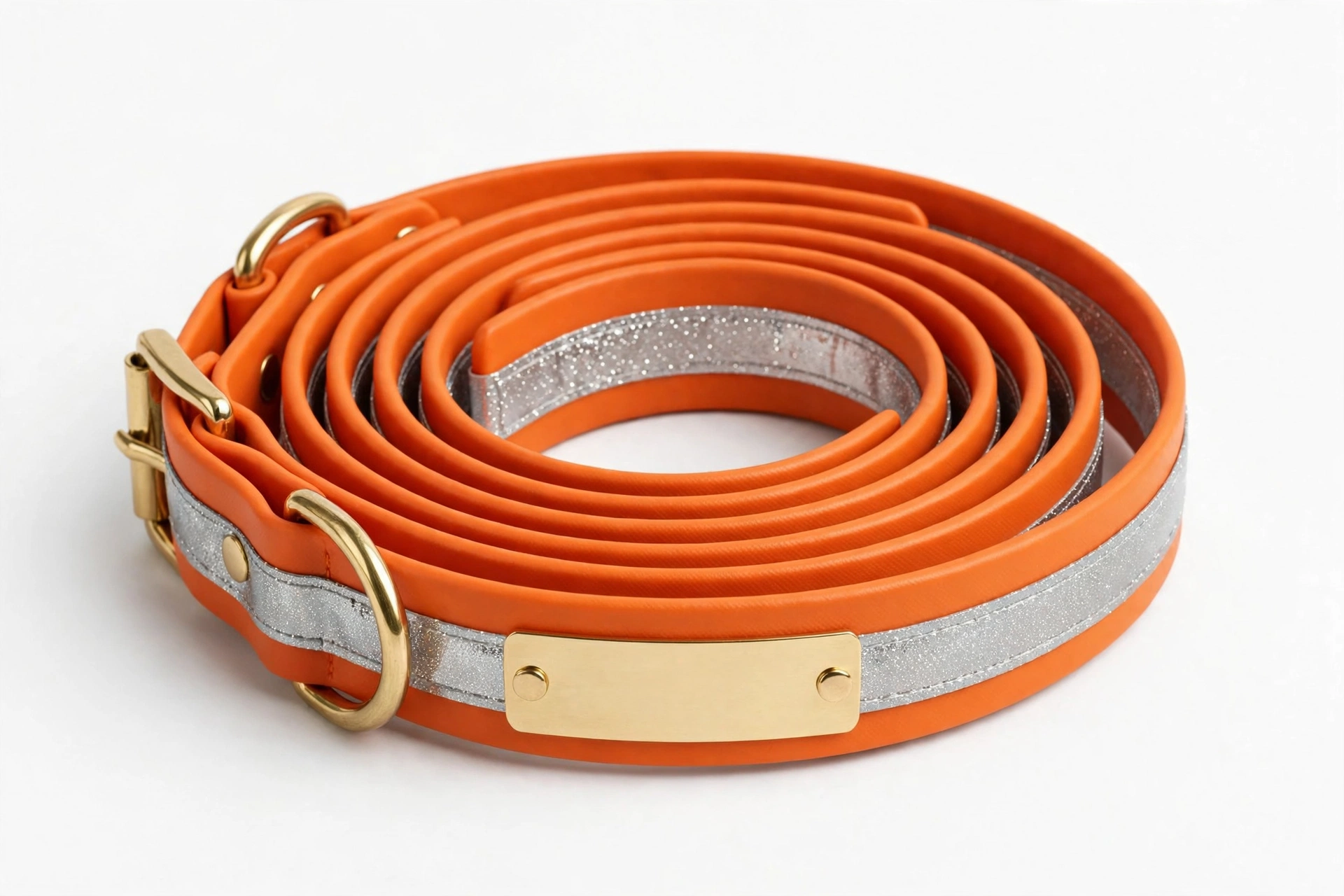
This is the Lab collar I recommend first: 1″ heavy-duty poly-coated nylon that is water and odor resistant (no more wet-dog-collar stink), reflective for night visibility, a D-ring for the leash, and — the standout — a custom brass nameplate with your contact info riveted on. No dangling tags to catch or lose in the brush. The 21″ size fits 14-21″ necks, covering the Labrador 18-24″ range the brand explicitly lists. For the breed that swims daily and ranges far, waterproof plus permanent ID is the correct combination.
rubyloo Waterproof Collar
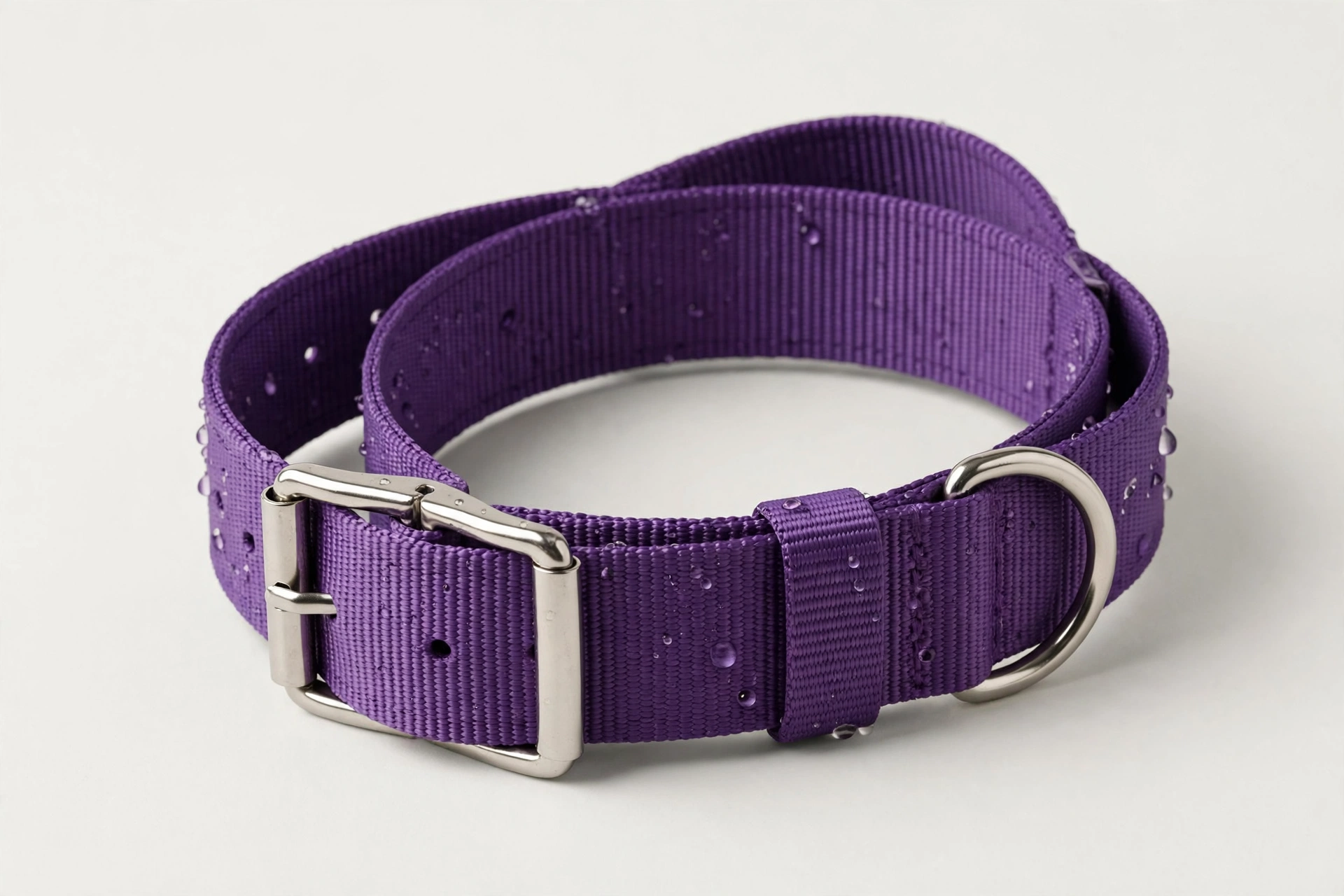
Rubyloo explicitly designs for “active breeds such as Labradors and Golden Retrievers who love outdoors & swimming” — and it shows: a soft coated webbing with waterproof coating that repels dirt and odors, dries instantly (unlike nylon, which stays soggy for hours), and a rust-proof zinc alloy buckle. The Medium fits 16-20″ necks at 1″ wide. If your Lab’s collar is wet more often than dry, this quick-dry design prevents the mildew smell and skin irritation that plague perpetually damp nylon collars.
myyAA Waterproof PVC Collar
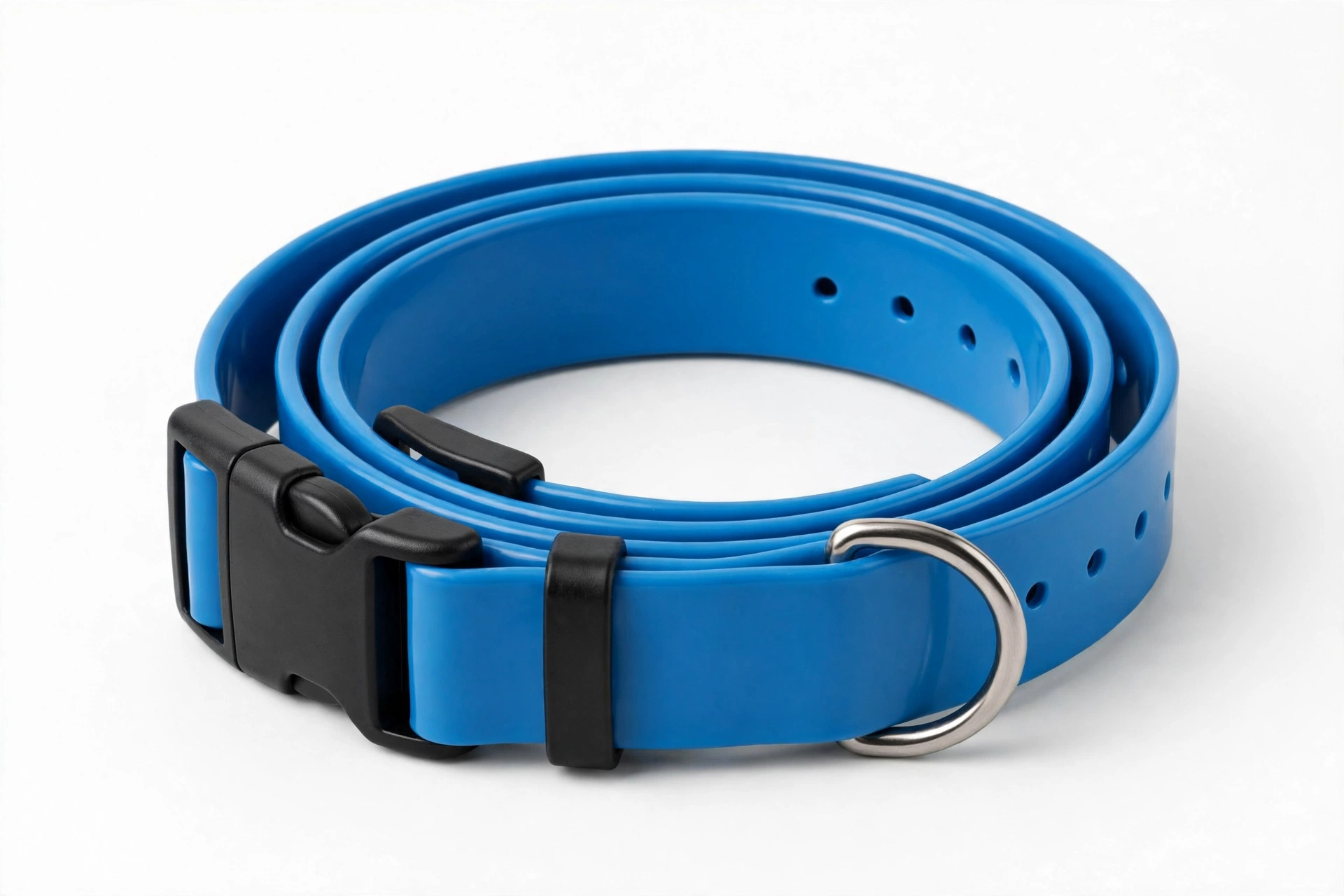
Waterproof performance at a budget price: the myyAA wraps sturdy nylon webbing in a PVC-based coated polyester shell — waterproof, dustproof, wipe-clean — and claims a 700+ pound pull rating for the Large (0.98″ wide, 15.4-24.8″ adjustable). The zinc alloy D-ring is rust-proof; the buckle is synthetic. I recommend this for the cost-conscious Lab owner who needs the waterproof function without the premium price — it does the core job (dry, clean, strong) admirably.
Furrigo AirTag Waterproof Collar
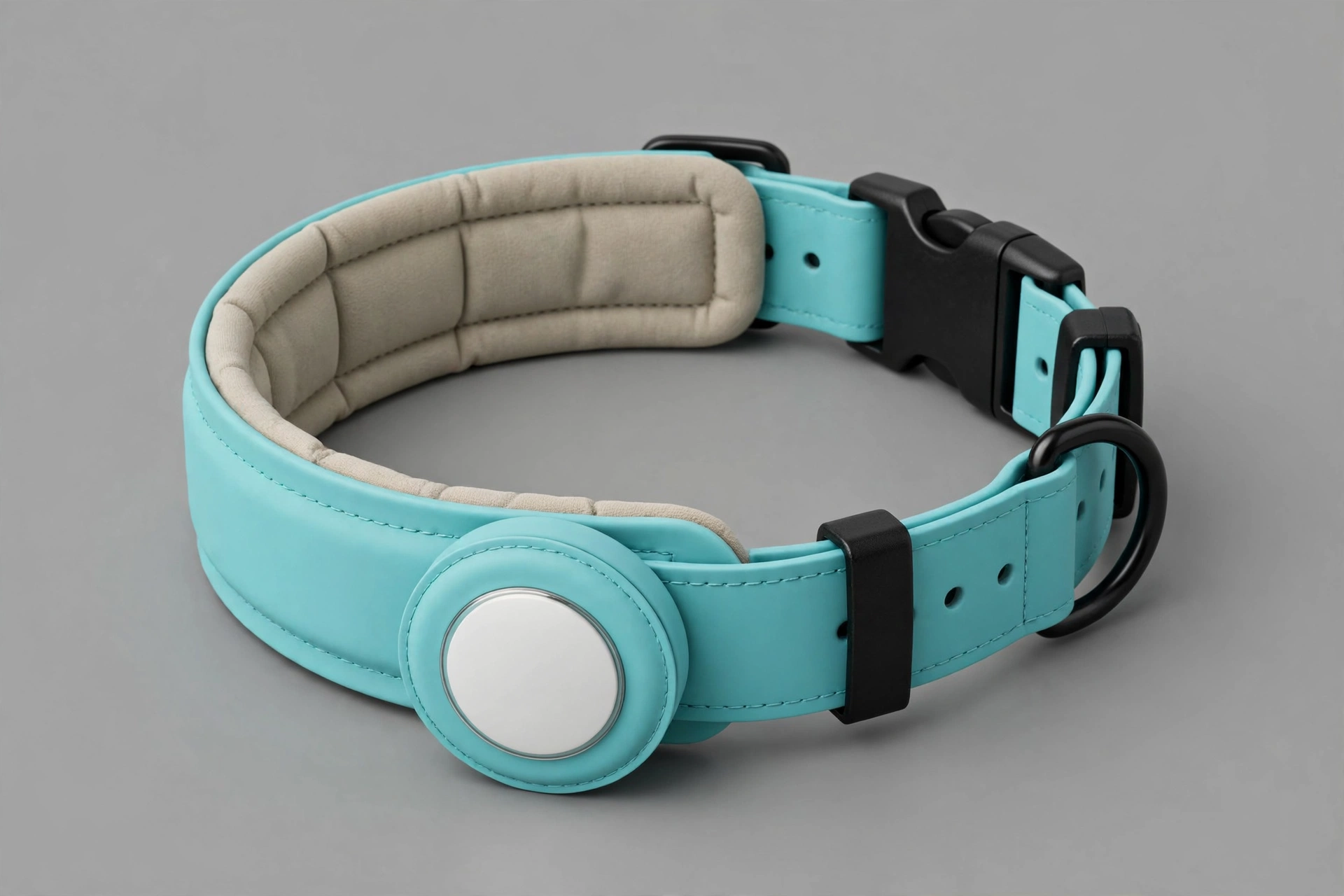
Labs follow their noses — into the woods, after the duck, over the fence — and the Furrigo answers with an IP68 waterproof AirTag holder built into a padded, reflective, heavy-duty collar. The screw-secured tracker pocket survives rough play and swimming, the soft lining keeps it comfortable for all-day wear, and the reflective trim aids night recovery. For the Lab with wanderlust, real-time tracking is worth more than any leash. (AirTag not included; note it needs an iPhone nearby to report location.)
Heavy-Duty Wide Collar
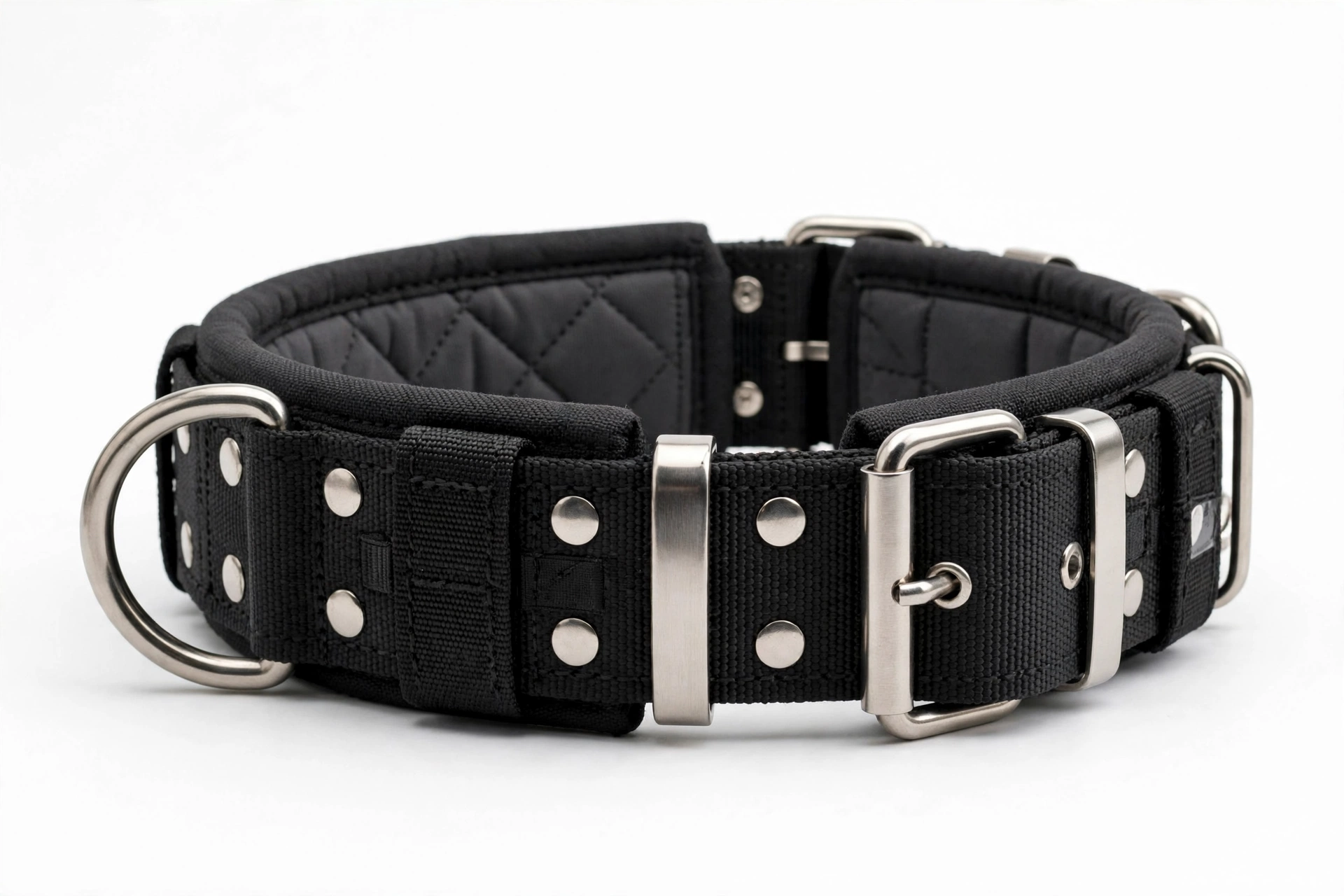
For the Lab that pulls like a sled dog and chews like a beaver, a wide heavy-duty collar with metal hardware is the answer: broad webbing distributes pulling force, tough materials resist teeth, and there is nothing dangling to invite chewing. Check the current heavy-duty wide collar options on the listing and prioritize metal buckles — a chewing Lab will destroy a plastic buckle as a hobby.
Buying Guide: Collars for Labrador Retrievers
Labs are wonderful and destructive in equal measure. Spec the collar for the destruction. Labs that pull need the training approach in my no pull dog collar guide, and Labs sit squarely in the medium dog collar size range.
Waterproof is not optional
I put this first because it is the Lab-specific truth: a water-loving breed needs a water-ready collar. Standard nylon absorbs water, stays damp for hours, develops mildew odor, and can irritate the skin underneath — the classic “wet collar rash.” Waterproof coated collars (poly-coated nylon, PVC-coated, Biothane-style) rinse clean and dry in minutes. If your Lab swims weekly or more, I consider waterproof a requirement, not a feature. Rinse the collar with fresh water after salt or lake swimming regardless of material.
Strength: spec for the lunge
A Lab does not just pull — it lunges: after squirrels, into water, toward friends. That explosive force is what breaks buckles and stitching. I look for wide webbing (1″ minimum for adults), reinforced stitching at stress points, and metal hardware. The myyAA’s 700-lb rating illustrates the right mindset: overbuild, because the Lab will test it. Check D-rings specifically — a bent-wire D-ring on a lunging Lab is a failure waiting to happen.
The chewing problem
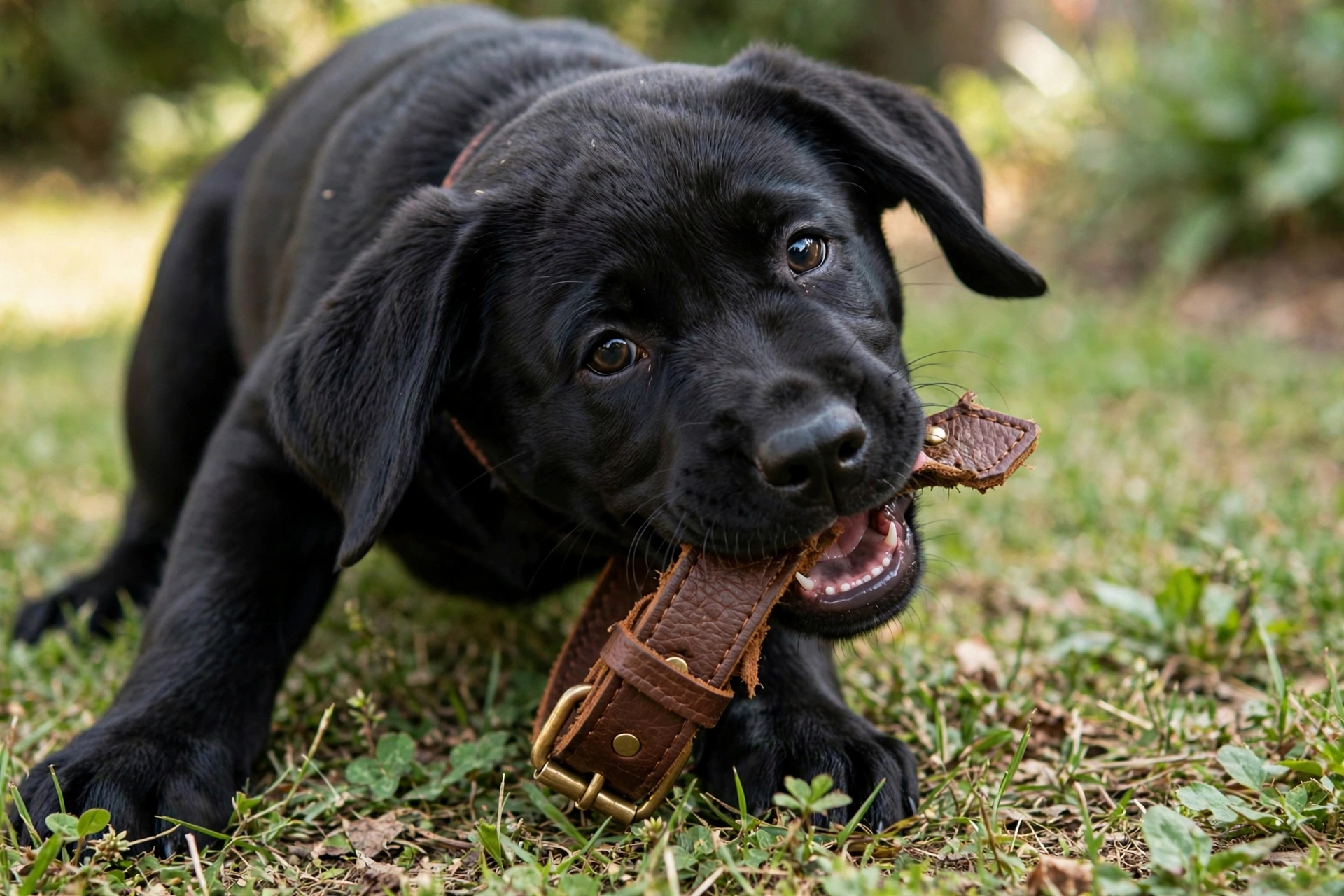
Labs chew collars two ways: their own (scratching at it with teeth, especially puppies) and each other’s (multi-Lab households are collar-destruction cooperatives). Mitigation: metal buckles over plastic, minimal dangling elements (nameplates beat hang tags), bitter-apple spray on the collar during the puppy phase, and removing collars during unsupervised play between dogs. No collar is truly chew-proof against a determined Lab — management plus tough materials is the realistic strategy.
Fit for the Lab neck
Labs run 18-24″ necks typically, thick and muscular with loose skin that makes fit tricky: too loose and the collar rotates and chafes; too tight and it digs into the dewlap folds. I use the two-finger rule at mid-neck and re-check seasonally — Labs’ weight fluctuates with activity and appetite (a Lab’s appetite being the stuff of legend). Puppies grow explosively; check the fit every two weeks during the first year.
Training the pull out
The collar handles the Lab you have; training builds the Lab you want. Labs are food-motivated to a fault, which makes loose-leash training straightforward: reward the heel position generously, stop or redirect when the leash tightens, and exercise the dog before training sessions (a fresh Lab cannot learn). I recommend a front-clip harness as the training tool for committed pullers, with the collar as ID — then graduate to collar-only walking once the habit is built.
Field lines vs. show lines: different builds
Not all Labs are built alike: American field lines run leaner, leggier, and more intensely driven, while English show lines are stockier with thicker necks and calmer temperaments. The field Lab may wear a smaller collar size but test it harder (more lunging, more water, more chaos); the show Lab needs the wider size but may be gentler on gear. I mention this because “Labrador” on a size chart is an average — measure your individual dog, and consider your line’s energy when choosing between standard and heavy-duty builds.
Dock diving and water sports: collar protocol
For Labs competing in dock diving or hunt tests, I recommend a dedicated sport protocol: a simple waterproof collar or no collar on the dock (check your venue’s rules — many require collar removal for jumps), with the everyday waterproof collar going back on immediately after. Rinse with fresh water after every session, especially after salt water or treated pools. And never tie a Lab to anything by a collar near water — a panicked dog in water with a snagged collar is an emergency; use a harness for any water-adjacent tethering.
Senior Labs: adjusting the collar
Aging Labs change shape — muscle wastes, necks thin, skin gets more sensitive — and the collar should change with them. I downsize width if the old tactical collar starts looking disproportionate, switch to padded linings for thin senior skin, and check fit more often as weight fluctuates. Many senior Labs also develop laryngeal or arthritis issues that make pulling uncomfortable; a front-clip harness for walks plus a light ID collar is the kind setup for the golden years.
The Lab nose: recall-proofing your identification
Labs follow scent with legendary single-mindedness, which means your ID system must assume the dog will get lost at some point. My recommended redundancy stack: microchip (registered, details current), brass nameplate or embroidered collar (cannot fall off), a flat hang tag as backup, and for known roamers, a tracker. I have seen too many “friendly Lab, will come back” assumptions end in frantic searching — the breed’s nose overrides its recall training when the scent is good enough. Layer the ID.
Frequently Asked Questions
What size collar does a Labrador Retriever need?
Most adult Labs wear collars fitting 18-24″ necks, 1″ to 1.5″ wide. Measure your individual dog — field lines run leaner than show lines. Puppies need frequent re-sizing; buy adjustable and check every couple of weeks during growth.
Are waterproof collars worth it for Labs?
Absolutely — I consider them essential for the breed. Labs swim, wade, and play in mud as a lifestyle; a standard nylon collar stays damp, stinks, and irritates skin. A waterproof collar dries in minutes and rinses clean. It is the highest-value upgrade a Lab owner can make.
How do I stop my Lab from chewing his collar?
For self-chewing: bitter deterrent spray, a properly fitted collar (loose collars invite chewing), and addressing boredom or anxiety underneath. For multi-dog households: remove collars during unsupervised play. Choose metal buckles and minimal dangles — less to chew, less to break.
Can Labs wear regular nylon collars?
They can, but I do not recommend it as the primary collar for a water-loving Lab — the dampness, odor, and skin issues are predictable. Keep a nylon collar as a backup; make waterproof the daily driver.
What is the best collar for a Lab puppy?
A lightweight adjustable waterproof collar in a small size — puppies outgrow collars in weeks, so do not overspend on the first ones. Focus on fit (check biweekly), light weight, and chew tolerance. Save the premium collar purchase for adulthood.
Do Labs need wide collars?
I recommend 1″ minimum for adults, wider for strong pullers — the broad neck and powerful lunging make narrow collars uncomfortable and less secure. Width distributes force; for a 70-pound dog that hits the end of the leash at speed, that distribution matters.
My Lab’s collar always smells — how do I fix it?
Switch to waterproof coated webbing and the problem largely disappears — the smell comes from nylon absorbing water, oils, and bacteria. Meanwhile, wash the current collar (warm water, mild soap, air dry in sun), and consider keeping two collars in rotation so one is always dry. If the skin under the collar is red or yeasty-smelling, see your vet — chronic dampness under collars can cause skin infections in Labs.
Should I take my Lab’s collar off for swimming?
With a waterproof collar, there is no need — that is the point of waterproof. With a standard nylon collar, I would remove it for long swim sessions to prevent the soggy-collar problem, then put a dry collar back on after. Either way, rinse the collar (and the dog) with fresh water after swimming, especially in salt water or algae-prone lakes.
Related Buying Guides
The verdict
My verdict: the Outdoor Dog Supply waterproof collar with the brass nameplate is the Labrador default I recommend — waterproof for the swimmer, strong for the puller, permanent ID for the wanderer. Add the rubyloo if your Lab is basically aquatic, the Furrigo if yours roams. And train the loose leash with the same enthusiasm your Lab brings to everything else — a Lab that walks nicely is a joy, and the collar is just there to hold the tags while you enjoy it.


One Comment