
The best hemp dog collars draw on one of humanity’s oldest textiles — hemp fiber has clothed and equipped people for millennia, and it brings the same virtues to dog gear: exceptional durability, natural antimicrobial properties, breathability, and a low-impact crop footprint. Hemp collars occupy the sweet spot between eco-idealism and genuine function: they’re among the toughest natural-fiber collars you can buy. I compared the leading options on Amazon on hemp quality, construction, hardware, and how they actually wear over time.
Affiliate disclosure
As an Amazon Associate, Dogslifelearning earns from qualifying purchases. If you buy through links on this page, I may earn a commission at no extra cost to you.
⚡ The short answer
🥇Petfino Fleece-Lined HempSoft fleece lining→🥈Plutus Hemp Collar SetCollar + leash combo→🥉GoTags Personalized Cotton HempEngraved personalization→
Quick Picks
| Product | Best For | Standout Feature |
|---|---|---|
| Petfino Fleece-Lined Hemp | Comfort pick | Soft fleece lining |
| Plutus Hemp Collar Set | Complete set | Collar + leash combo |
| GoTags Personalized Cotton Hemp | Custom ID | Engraved personalization |
| BROUAURPE Hemp Collar | Everyday natural | Classic hemp webbing |
| Pettsie Hemp Bandana Set | Style + bracelet | Bandana + matching bracelet |
The 5 collars, reviewed
Petfino Fleece-Lined Hemp Dog Collar
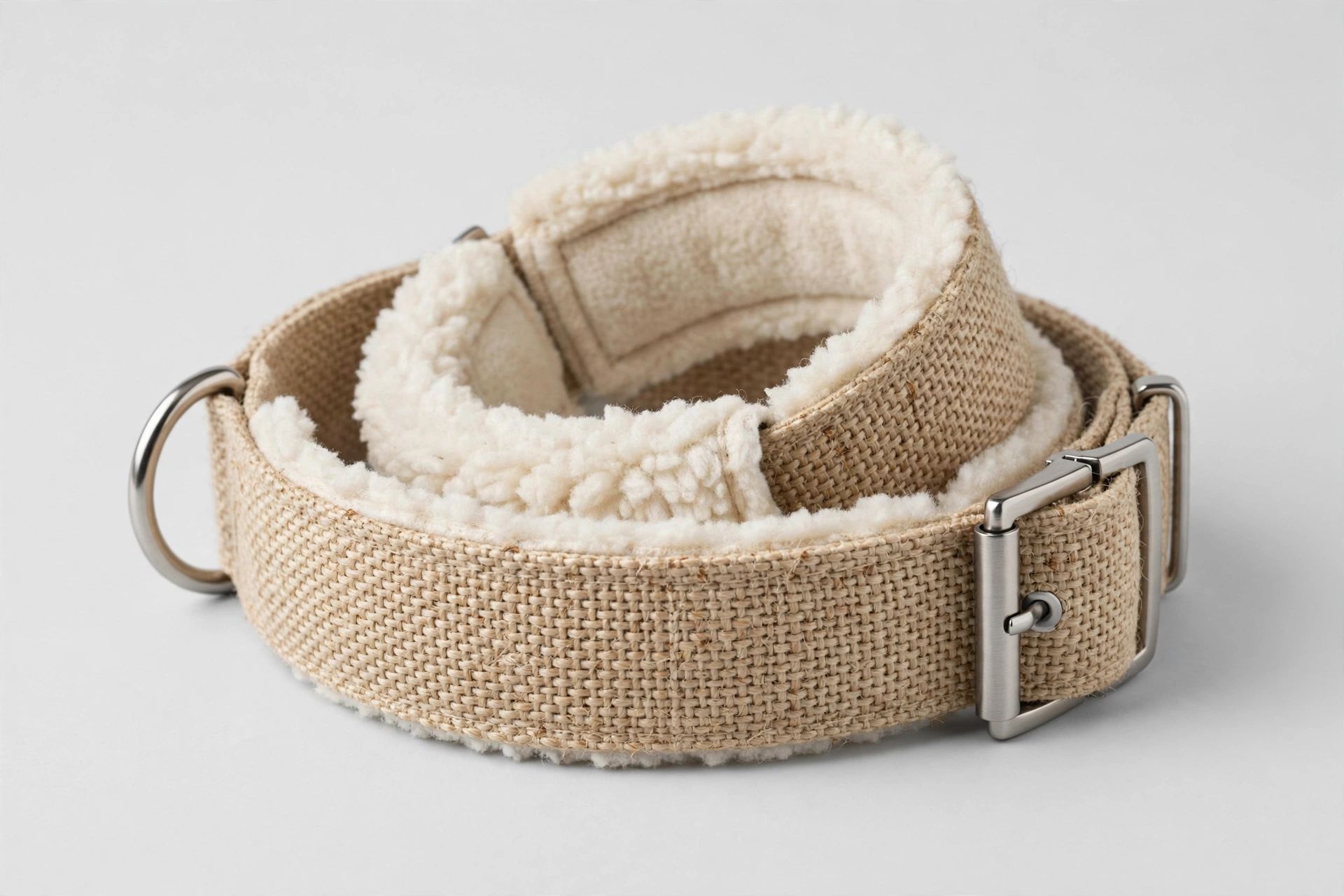
Petfino’s fleece-lined hemp is my comfort pick — the hemp webbing provides the durability and eco-story, while the soft fleece lining eliminates hemp’s one comfort drawback (its initially coarse hand-feel). This combination is ideal for dogs with sensitive necks who still need a tough collar, and for owners who want hemp’s virtues without the break-in period. The fleece also adds a touch of warmth for cool climates. It’s the thoughtful design in a category that sometimes prioritizes material ideology over the dog’s experience.
Plutus Hemp Collar and Leash Set
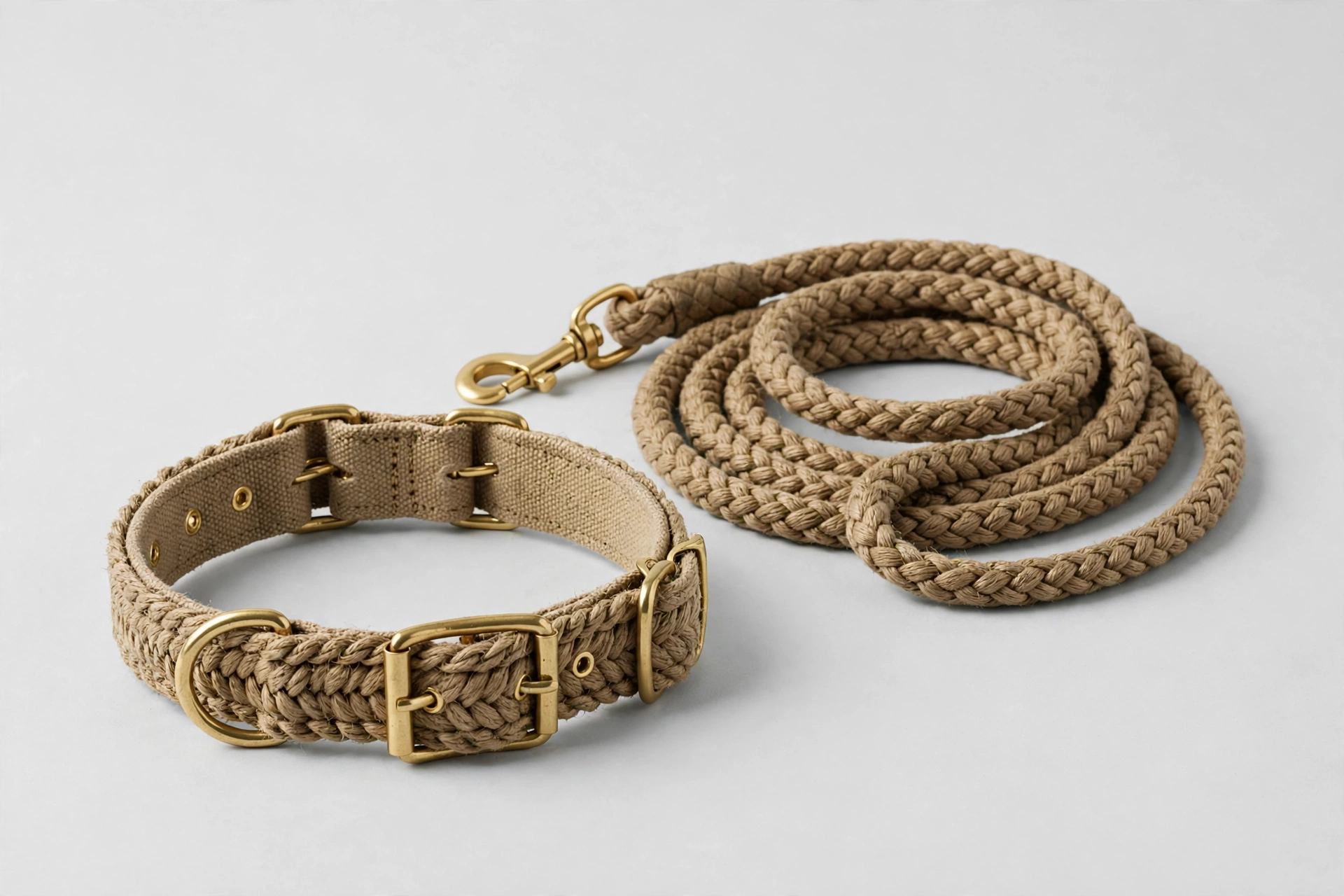
Plutus offers the coordinated set — hemp collar plus matching leash — for owners who want the complete natural look. I appreciate set offerings in material categories because mixing materials (hemp collar, nylon leash) dilutes both the aesthetic and the philosophy. The hemp webbing is honestly constructed, and the set pricing beats buying separately. For the owner committing to the hemp lifestyle, this is the efficient entry: one purchase, matched gear, coherent story.
GoTags Personalized Cotton Hemp Dog Collar
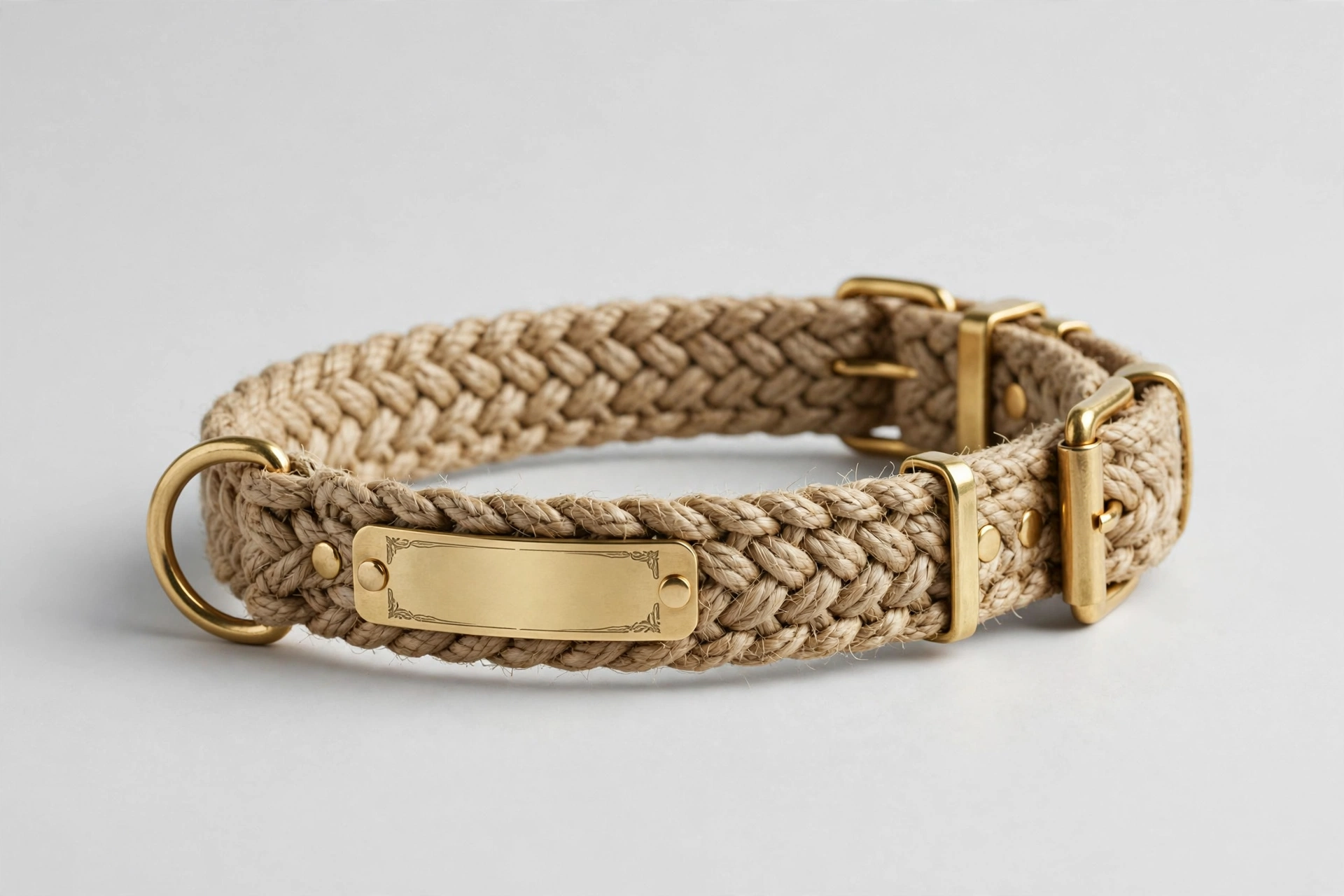
GoTags merges hemp with personalization — a custom engraved nameplate on natural cotton-hemp webbing — solving the ID problem elegantly. A personalized collar means the dog’s name and your number are permanently visible, no dangling tag required. On hemp’s natural tan background, the engraved nameplate reads beautifully. I recommend personalized collars generally (tags fall off; an engraved plate doesn’t), and the hemp version adds eco-credibility to the practicality. Verify your text carefully — custom orders are final sale.
BROUAURPE Hemp Dog Collar
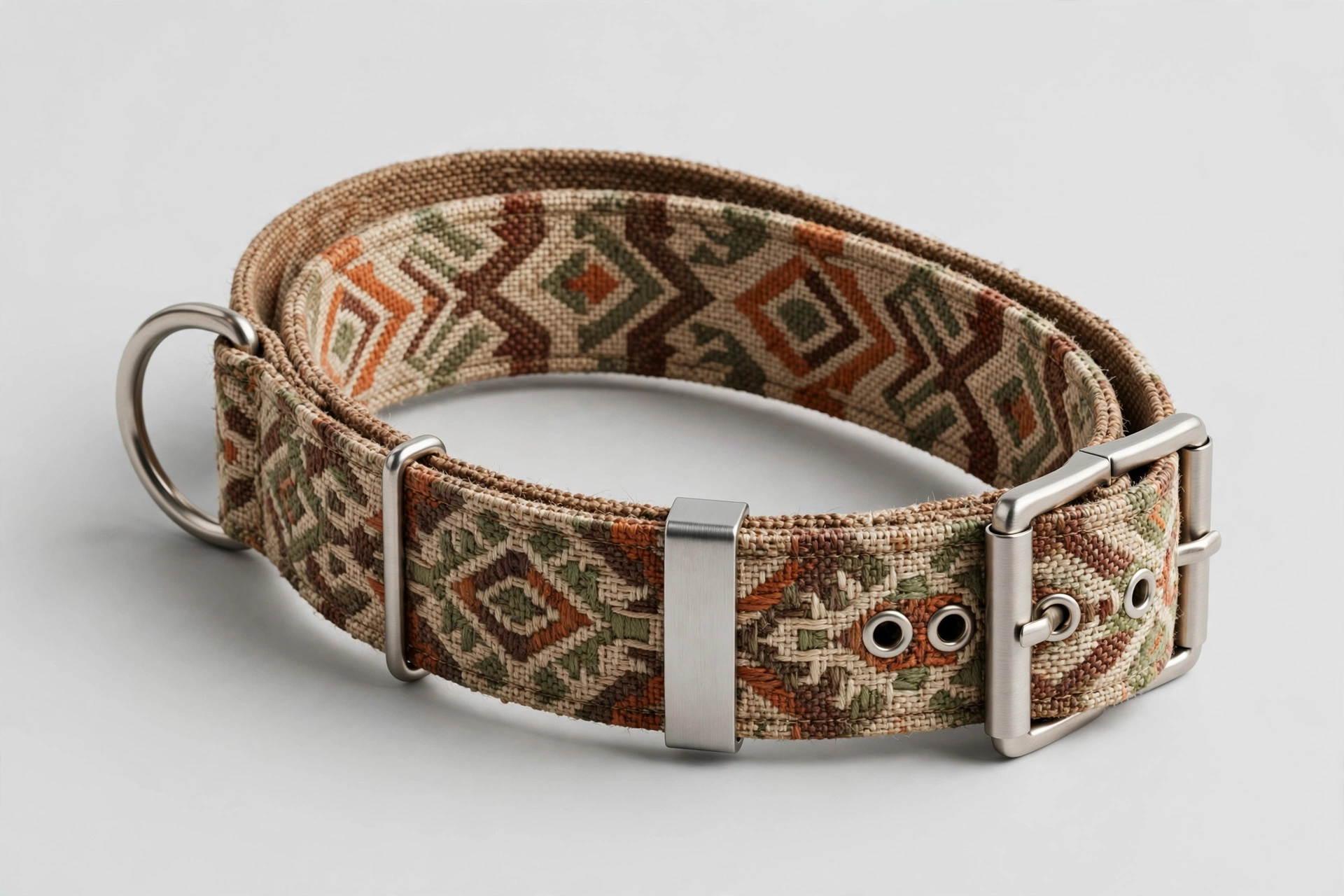
BROUAURPE’s hemp collar is the straightforward classic — honest hemp webbing, functional hardware, no frills. This is the pick for the purist who wants the material without embellishment: the hemp does the talking. Expect the characteristic break-in (hemp softens significantly with wear and washing) and the earthy aesthetic that either appeals to you or doesn’t. For the price, it’s the accessible way to put genuine hemp on your dog and judge the material firsthand.
Pettsie Hemp Bandana Collar Set
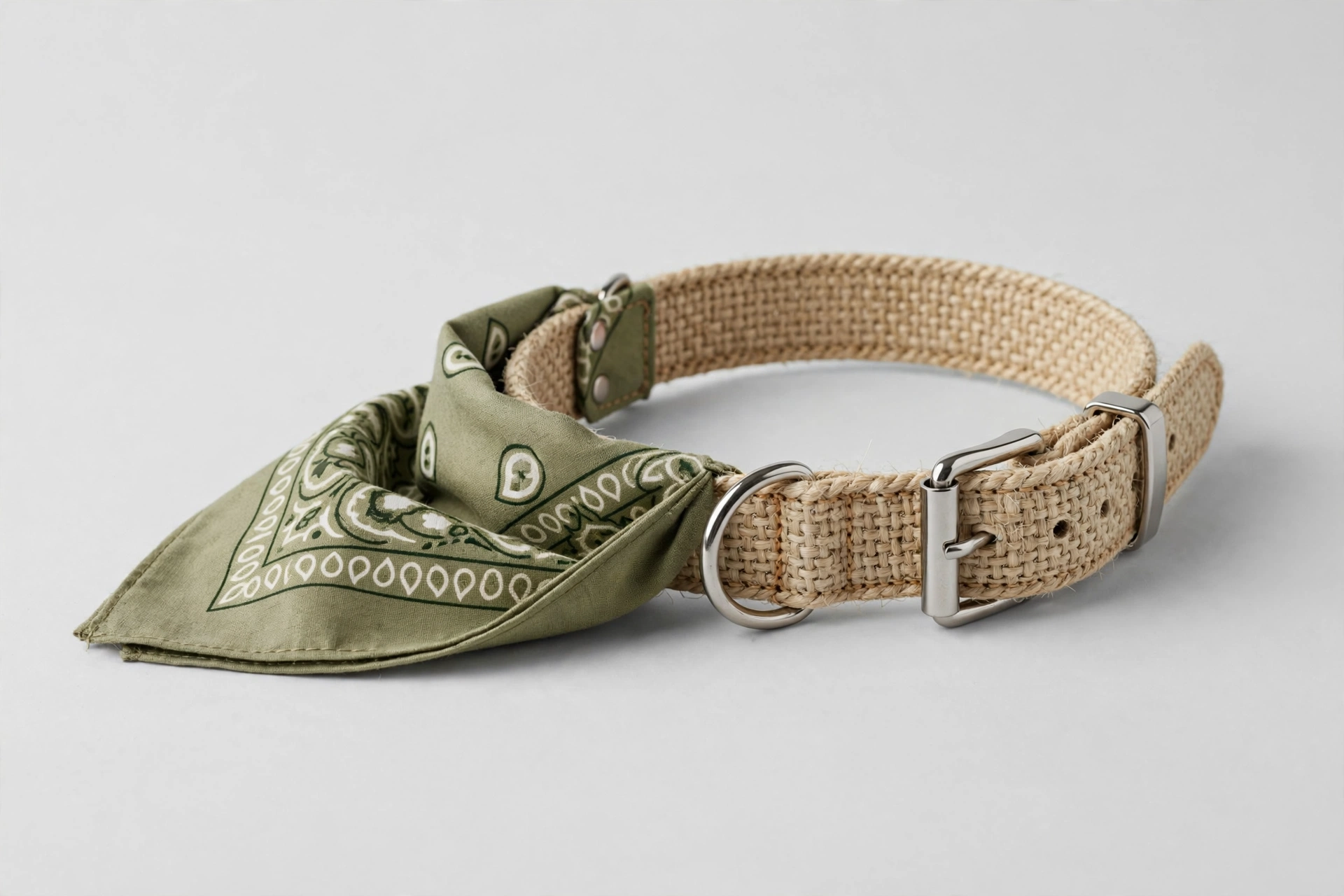
Pettsie’s set pairs a hemp bandana collar with a matching human bracelet — the friendship-bracelet concept extended to the dog-owner bond. It’s charming and giftable, and the hemp bandana itself is a legitimate soft-goods piece. I’ll be honest: you’re partly buying the sentiment, and that’s fine — dog gear is allowed to be joyful. The bandana uses the slide-on style I prefer (secure, no ties), and the bracelet is a nice touch for the owner who coordinates with their dog. A great gift for the hemp-loving dog person.

Buying Guide: Hemp, the Ancient High-Tech Fiber
Why hemp works for collars
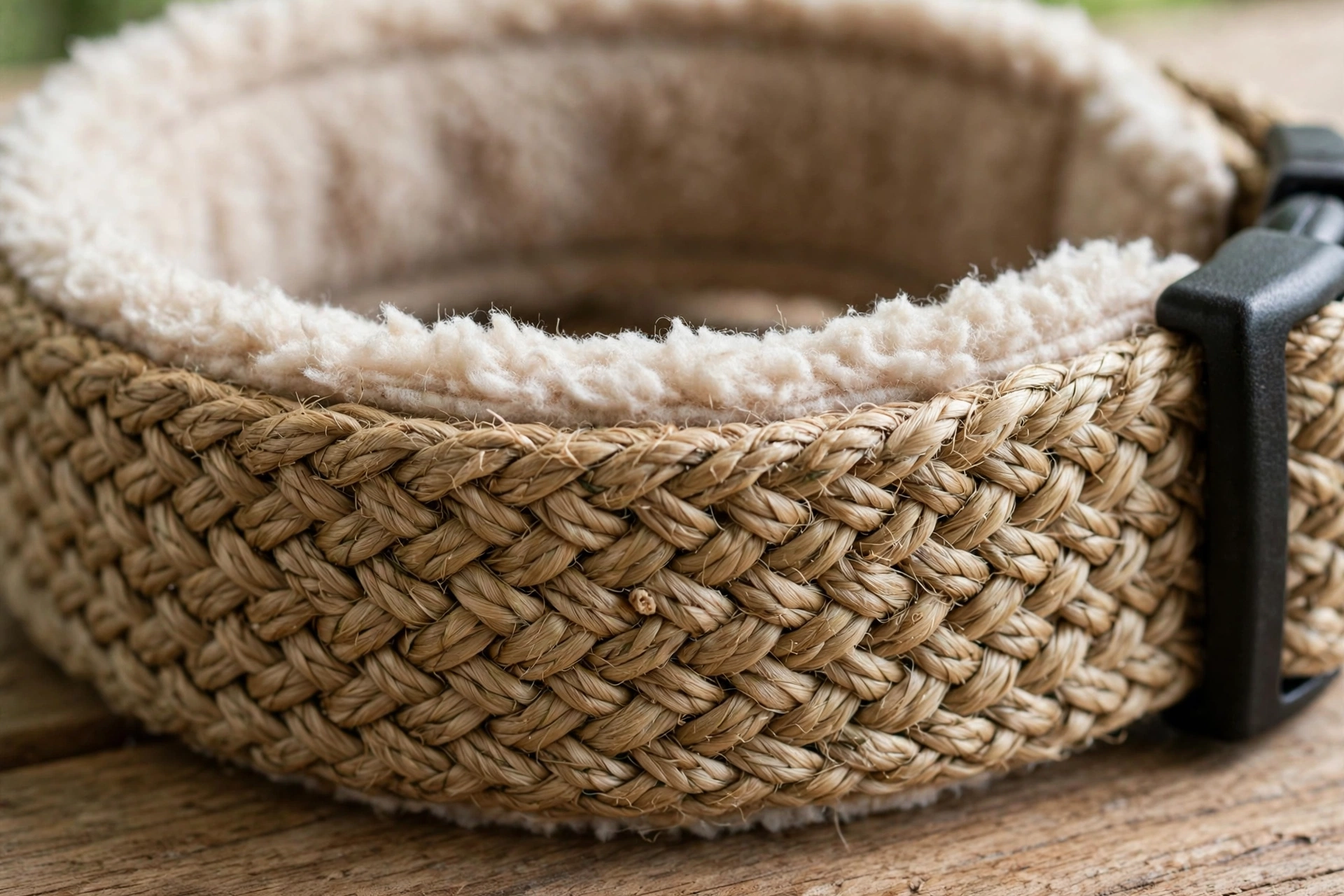
Hemp fiber’s properties read like a collar design brief: tensile strength rivaling synthetic fibers (hemp rope historically rigged sailing ships), natural resistance to mold and mildew, breathability, UV resistance, and softening with age rather than degrading. As a crop, hemp needs little pesticide, modest water, and improves soil — the agronomic story is genuinely strong, not marketing gloss. For collars specifically, hemp webbing offers a rare combination: natural material with synthetic-like toughness. It’s the only plant fiber I’d trust for a strong dog’s daily collar without reservation. Wikipedia’s hemp entry covers the plant’s long history as a fiber crop. For other natural-material collars, see the best waxed canvas dog collars guide, and for a vegan leather alternative, the best faux leather dog collars guide.
The break-in question
New hemp webbing feels coarse — there’s no honest way around it. The fibers are stiff, the weave is crisp, and a fresh hemp collar can feel almost scratchy. This is temporary: hemp softens dramatically with wear, washing, and time, developing a comfortable hand-feel within weeks while retaining its strength. The fleece-lined options (like the Petfino) bypass this entirely for sensitive dogs. My advice: wash a new hemp collar once before first wear (it accelerates softening), expect two to three weeks of break-in, and judge the material at month two, not day one. Patience is part of the hemp contract.
Hemp vs cotton vs bamboo: natural fibers compared
Among natural collar fibers, hemp is the toughness champion — significantly stronger and more abrasion-resistant than cotton or bamboo viscose, with better mold resistance than both. Cotton is softer initially but weaker and slower-drying; bamboo is softest but least durable. Hemp’s weaknesses relative to synthetics: it absorbs water (slower drying than nylon), it’s heavier, and colors are limited to natural earth tones unless dyed. My ranking for hard-use natural collars: hemp first, by a wide margin. For softness-first applications, bamboo; for the middle ground, cotton. Choose the fiber for the job.
What to look for in construction
Hemp webbing quality varies: look for tight, even weave with no slubs or thin spots, finished edges that resist fraying, and bar-tacked stress points. Hardware should be metal (brass or stainless preferred) — hemp’s rustic aesthetic deserves better than plastic buckles, and the material’s longevity warrants hardware that lasts. Dye quality matters if you choose colored hemp: natural/undyed is the purist choice and shows dirt least paradoxically (earth tones hide earth); dyed hemp should be colorfast (test with a damp white cloth on arrival). Stitching should be dense; hemp’s texture can hide sloppy seams, so look closely.
Care and the patina of use
Hemp care is refreshingly low-drama: machine wash cold or hand wash, air dry (hemp’s mold resistance forgives slow drying better than cotton, but air circulation still helps). No special conditioners needed — unlike leather, hemp wants nothing but cleaning. Expect the color to mellow and the texture to soften with age; this patina is desirable, not wear. A well-made hemp collar lasts years — often 2–4 with daily use — and biodegrades at end of life (remove hardware first). The lifecycle story, from low-impact crop to compostable end, is the category’s quiet triumph.
Hemp vs cotton: the natural-fiber showdown
These two get compared constantly as the natural options. Hemp wins on: tensile strength (significantly stronger), UV resistance, mold/mildew resistance, and longevity — it’s the more durable fiber by every measure. Cotton wins on: initial softness (hemp starts rough, cotton starts soft), dye vibrancy (cotton takes brighter colors), and price. For a dog collar — an item that faces friction, moisture, and sun daily — hemp’s durability advantages are decisive. Cotton collars are fine for gentle indoor dogs; hemp is the natural fiber for real-world use. The softening curve means hemp rewards patience: month three’s hemp collar is a better object than day one’s.
Frequently Asked Questions
Are hemp dog collars durable?
Yes — hemp is among the most durable natural collar materials, with tensile strength approaching synthetics and excellent abrasion resistance. A quality hemp collar typically outlasts cotton and bamboo equivalents by a wide margin and competes with nylon on longevity. The break-in softening doesn’t compromise strength; it improves comfort while the fibers remain tough. For a natural-fiber daily driver on an active dog, hemp is the credible choice.
Do hemp collars smell?
Hemp has a mild, earthy, hay-like scent when new that fades with airing — most owners find it pleasant or neutral. In use, hemp’s natural antimicrobial properties and breathability mean it resists the sour funk that plagues synthetic collars; it stays fresher-smelling longer between washes. This odor resistance is a genuine, oft-cited owner benefit, not marketing. Wash when dirty like any collar, but expect less stink between washes.
Is hemp safe for dogs that chew?
Hemp fiber itself is non-toxic, but no collar material is safe to ingest in quantity — chewed fibers can cause digestive irritation or blockage. The real answer for chewers of any material: don’t leave collars on unsupervised chewers, period. Hemp’s toughness actually makes it harder to chew through than cotton, which is a small advantage, but supervision and training are the solutions, not material choice. If your dog destroys collars, address the chewing behavior with your vet or trainer.
Will a hemp collar irritate my dog’s skin?
Broken-in hemp is generally well-tolerated — smooth, breathable, and chemical-free in its natural state. The risk period is the initial coarse phase; dogs with very sensitive skin may find new hemp scratchy. Solutions: pre-wash before use, choose fleece-lined designs, or let the collar break in on short wears. Dyed hemp introduces dye-sensitivity as a (minor) variable; undyed natural is the safest choice for reactive skin. As always, check for redness during the first week.
Can hemp collars get wet?
Yes — hemp handles water better than cotton (mold-resistant, retains strength when wet better than most naturals), but it’s not waterproof and dries slower than synthetics. Rain and splashes are non-issues; swimming regularly means slow drying and eventual wear. For water-loving dogs, I suggest hemp for dry days and Biothane for swim days. After soaking, air-dry thoroughly — hemp forgives dampness better than cotton, but no natural fiber likes staying wet.
Is hemp legal? (The question everyone asks)
Yes — industrial hemp fiber contains negligible THC and is fully legal; hemp textiles have never been restricted in the way hemp cultivation once was. Your dog’s collar has no pharmacological properties whatsoever — it’s rope fiber, not medicine. The confusion comes from the cannabis association; industrially, hemp fiber is as innocuous as flax or jute. Buy and use with complete legal confidence.
Will hemp shrink when washed?
Slightly — natural fibers contract in the wash, and hemp can shrink a few percent on the first wash. Quality makers account for this by pre-shrinking or cutting generously; cheap ones don’t, and you’ll notice the fit tighten. My practice: buy hemp collars with a touch of extra room, wash cold the first time, and air dry. If a hemp collar shrinks enough to matter, contact the maker — reputable ones will make it right, because first-wash shrinkage is a known and manageable property, not a defect you’re expected to absorb silently.
Is hemp really more sustainable than cotton?
By the standard metrics, yes: hemp needs roughly half the water of cotton per pound of fiber, grows densely enough to shade out weeds (reducing herbicide need), requires fewer pesticides, returns nutrients to soil, and produces more fiber per acre. Cotton’s sustainability varies enormously (organic vs conventional is night and day). The honest nuance: processing methods matter for both, and shipping dominates the footprint of any collar. Hemp is the better fiber environmentally, but buying a durable hemp collar you’ll keep for years beats buying “sustainable” items you replace annually — longevity is the deepest green.
Does hemp have a smell?
New hemp has a mild, earthy, hay-like scent that most people find pleasant — it fades with washing and wear. It’s nothing like the strong odor of some natural materials, and it doesn’t develop the sour funk of damp nylon because hemp resists mildew. If the natural scent bothers you, a couple of washes with mild detergent removes most of it. I’d file this under character, not flaw — it’s the smell of a plant fiber, and it dissipates.
Verdict
Among the best hemp dog collars, my top pick is the Petfino fleece-lined for its comfort intelligence, with the GoTags personalized as the smart ID solution and the Plutus set for the complete natural kit. Hemp earns my genuine respect as a material — it’s the rare eco choice that doesn’t ask you to compromise on toughness. Break it in, wash it occasionally, and expect years of earthy, honest service. In a world of disposable pet gear, a hemp collar is a small vote for things that last.


One Comment