
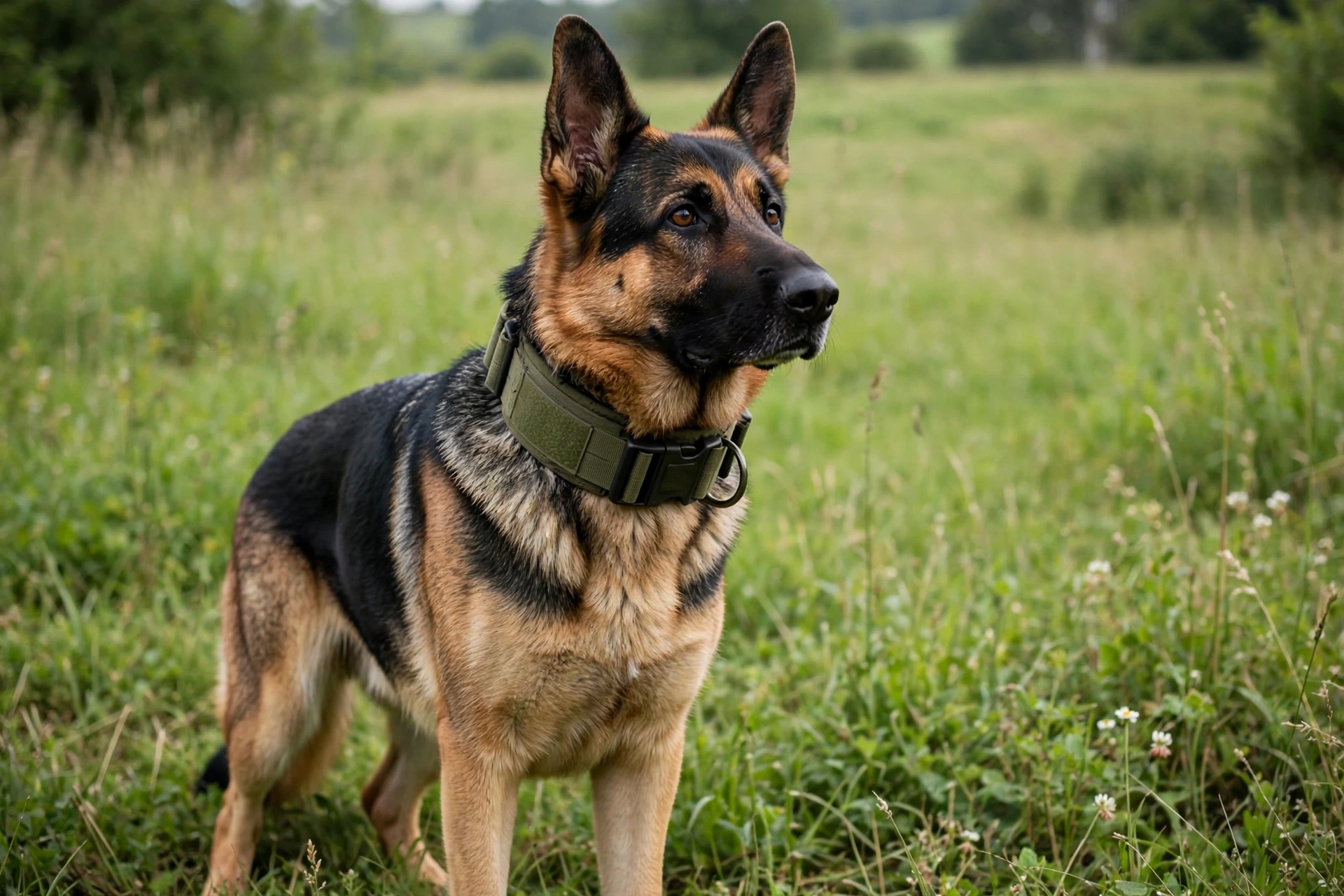
German Shepherds are powerful, intelligent, athletic dogs — typically 18-24 inches around the neck and 65-90 pounds of muscle — and their collars need to match: wide enough to distribute force, strong enough to hold a lunging 85-pounder, and secure enough that no buckle becomes the weak link. The best collars for German Shepherds are wide tactical or martingale designs with metal hardware, control handles for close-quarters management, and sizing that actually fits the breed’s substantial neck. I have evaluated the heavy-duty options built for dogs of this strength, and this guide covers five collars worthy of the breed — plus fitting and training guidance specific to Shepherds.
Affiliate disclosure
As an Amazon Associate, I earn from qualifying purchases. If you buy through a link on this page, I may earn a commission at no extra cost to you.
⚡ The short answer
🥇DEZIZEUSK9 2″ TacticalBest overall→🥈Beirui 2.5″ TacticalMaximum width→🥉Periflowin Military PaddedPadded comfort→
Quick Picks: Best Collars for German Shepherds at a Glance
| Product | Best for | Standout feature |
|---|---|---|
| DEZIZEUSK9 2″ Tactical | Best overall | 2″ wide, metal buckle, name plate |
| Beirui 2.5″ Tactical | Maximum width | 2.5″ wide, reflective, handle |
| Periflowin Military Padded | Padded comfort | 1000D nylon, soft lining |
| 2″ Martingale Collar | Training control | Limited-slip, escape-proof |
| Chain Martingale Collar | Traditional training | Stainless chain, durable |
5 Collars Built for German Shepherds
Every collar below is sized for large, powerful breeds and built around metal hardware — because a German Shepherd will find the weak link in any collar, usually at the worst moment.
DEZIZEUSK9 2″ Tactical Collar
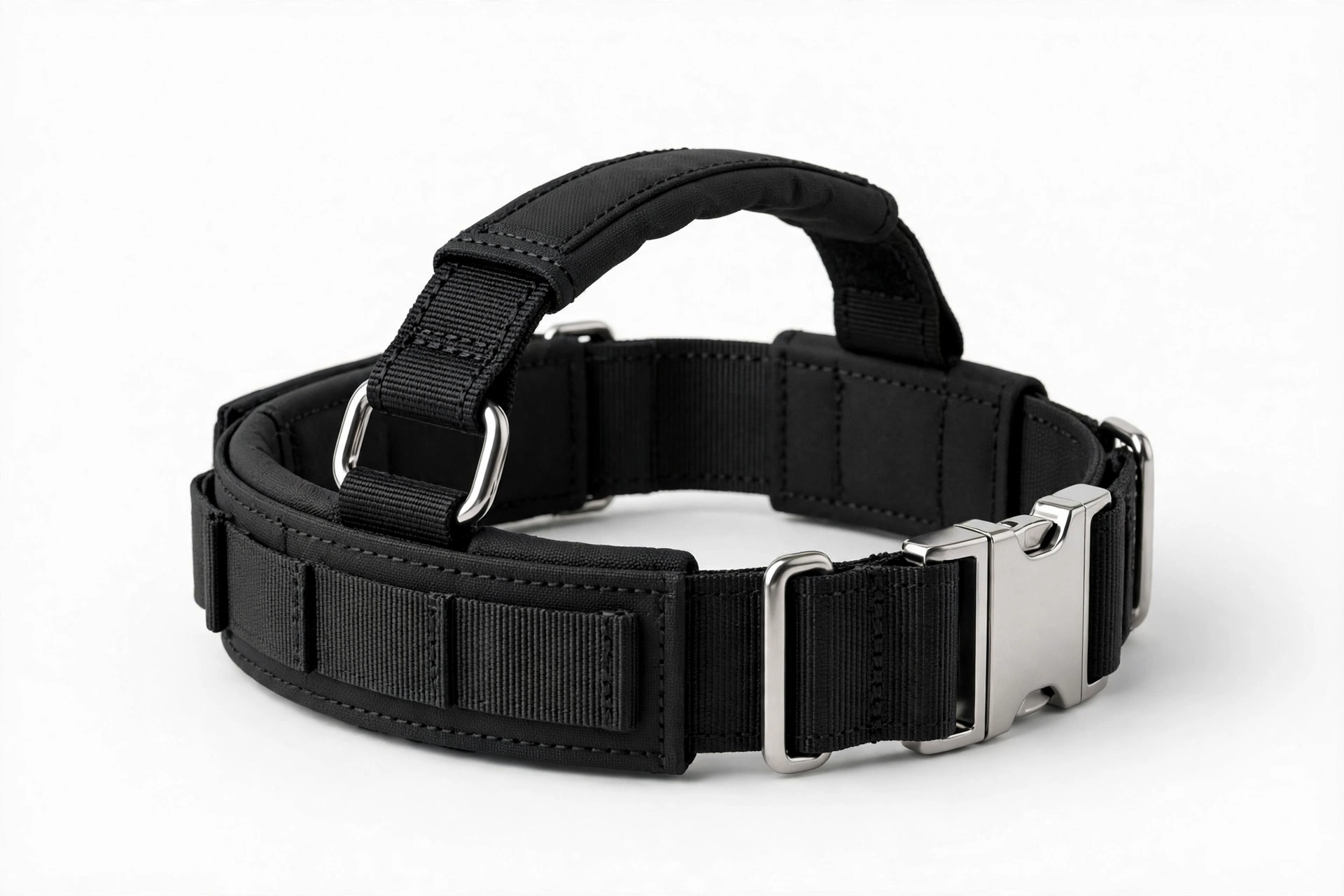
The DEZIZEUSK9 is the complete German Shepherd collar: 2″ wide double-layer heavy-duty nylon webbing that distributes the force of a powerful dog, a professional-grade quick-release metal buckle, an integrated stainless D-ring, a control handle for close management, reflective stitching for night visibility, and a hook-and-loop name plate plus USA flag patch. Sizes cover 16″ to 27″ necks — the full Shepherd range. I recommend this first because it answers every GSD requirement in one package: strength, control, visibility, and identification. This is the working-dog standard for the breed.
Beirui 2.5″ Tactical Collar
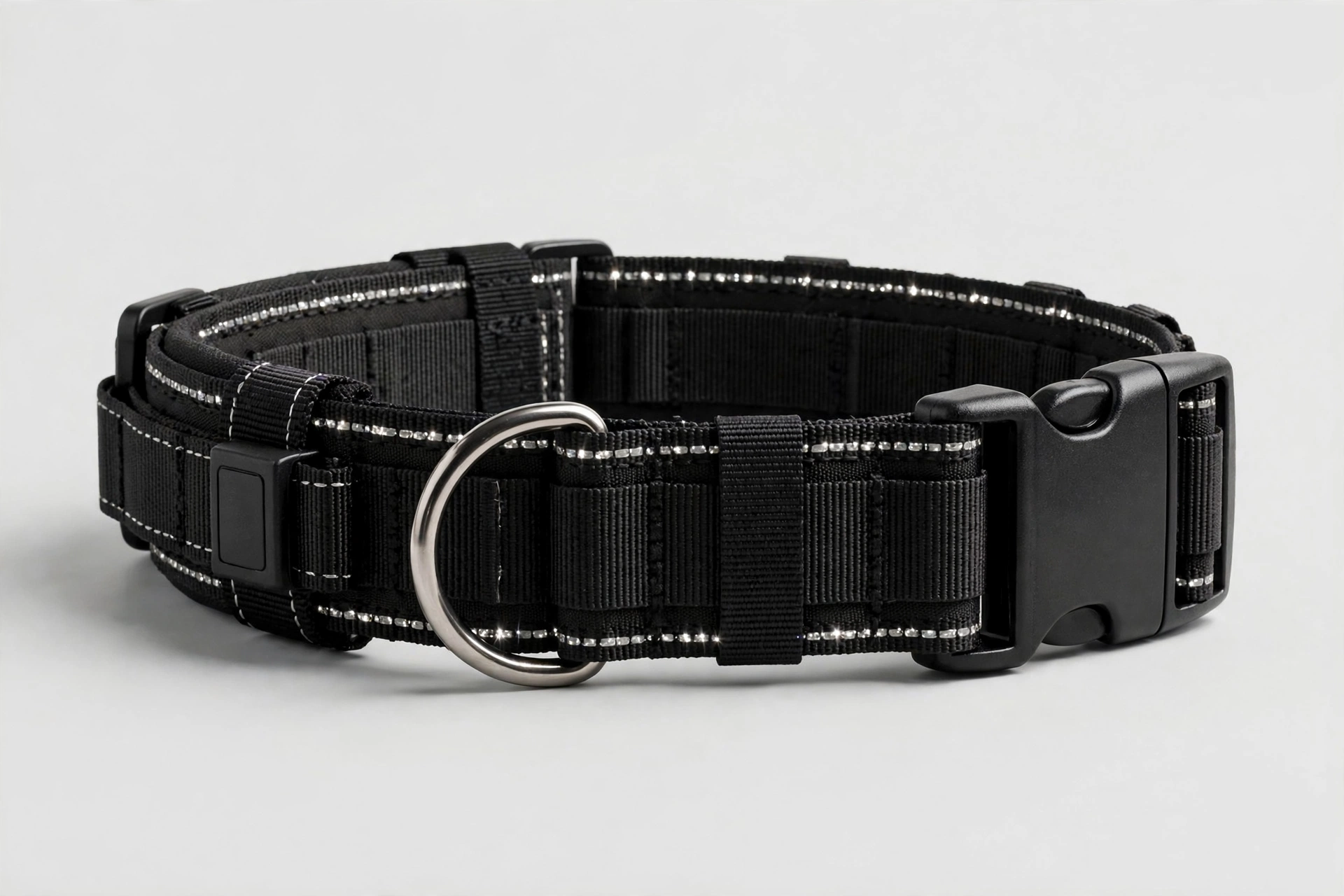
When 2″ is not enough, the Beirui goes to 2.5″ — the widest in this guide, spreading leash force across the maximum neck area for large males and strong pullers. Durable breathable nylon with mesh, a comfortable control handle, double-security quick-release metal clasp, reflective stitching, and included patches. The M size fits 16-19″ necks; size up for bigger Shepherds. I recommend the extra width for dogs over 90 pounds or any Shepherd with a history of pulling hard — width is comfort, and comfort is control.
Periflowin Military Padded Collar
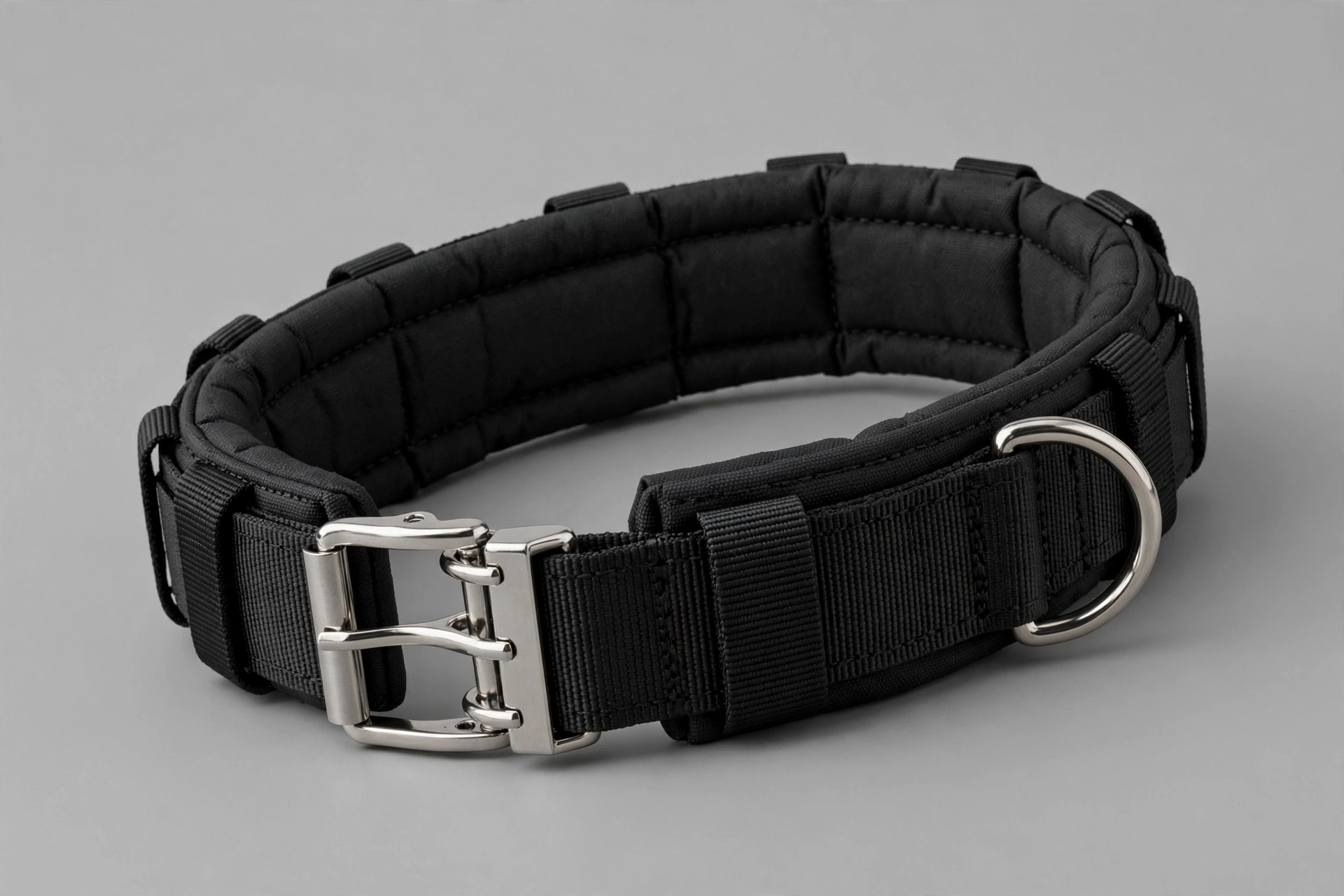
Strength does not have to mean abrasion: the Periflowin military collar pairs 1000D nylon with a soft padded lining that prevents the neck rubbing wide tactical collars can cause on long wear days. Heavy-duty metal D-ring and double-pin buckle with five adjustment points, a patch panel for ID, and sizing from 14.9″ to 24.8″ necks. I like this for Shepherds that wear their collar all day — the padding earns its keep across 12-hour wear, and the military-grade build does not compromise on strength.
2″ Martingale Collar
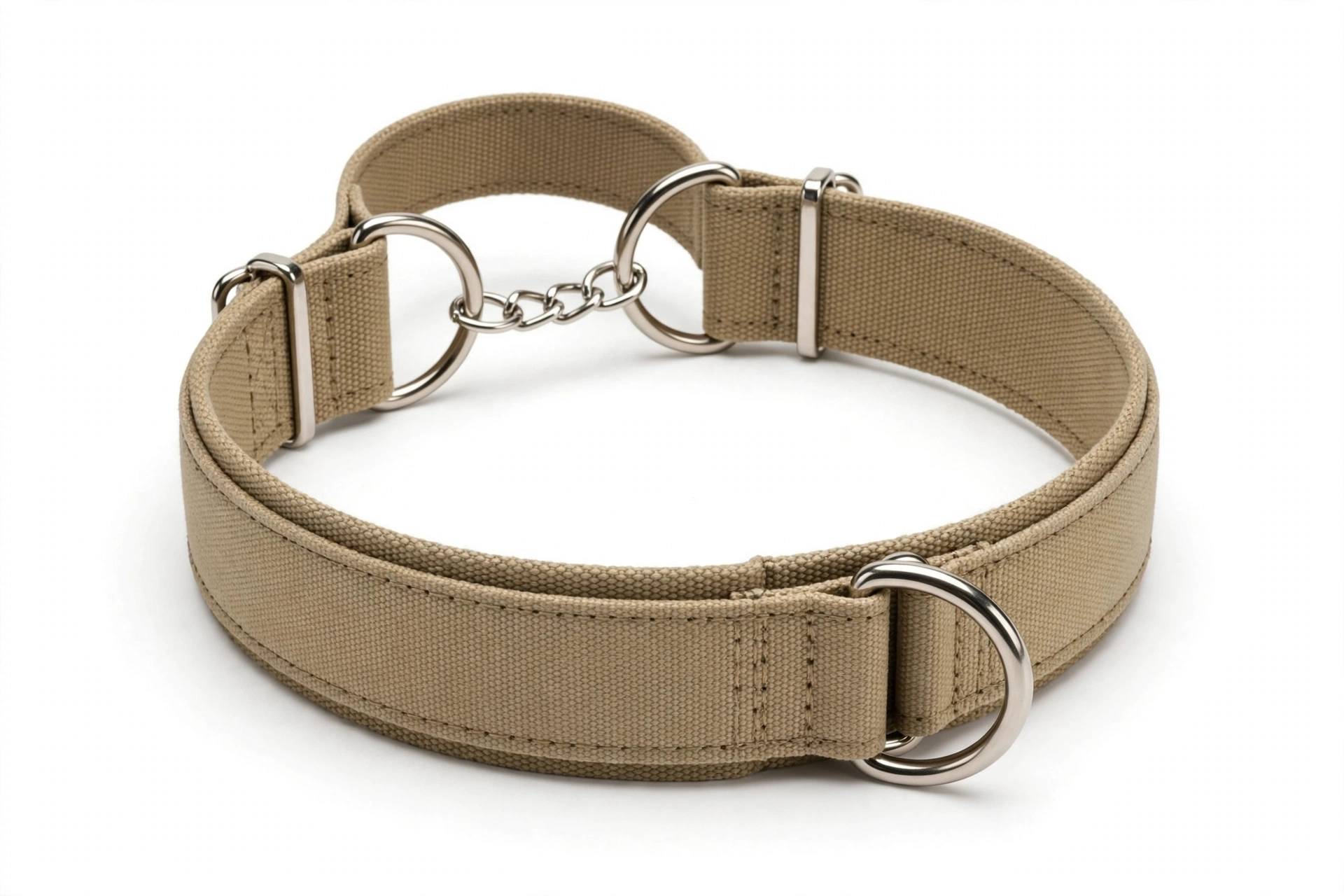
For Shepherds in training — especially adolescents testing boundaries — a wide martingale gives limited-slip control without choking: it tightens just enough to prevent backing out, then releases. The 2″ width suits the breed’s neck, distributing the correction across a broad band. Remember the martingale rules: fitted so it cannot slip over the head when loose, used for walks and training only, never left on unsupervised. Check the current 2″ martingale options on the listing.
Stainless Chain Martingale
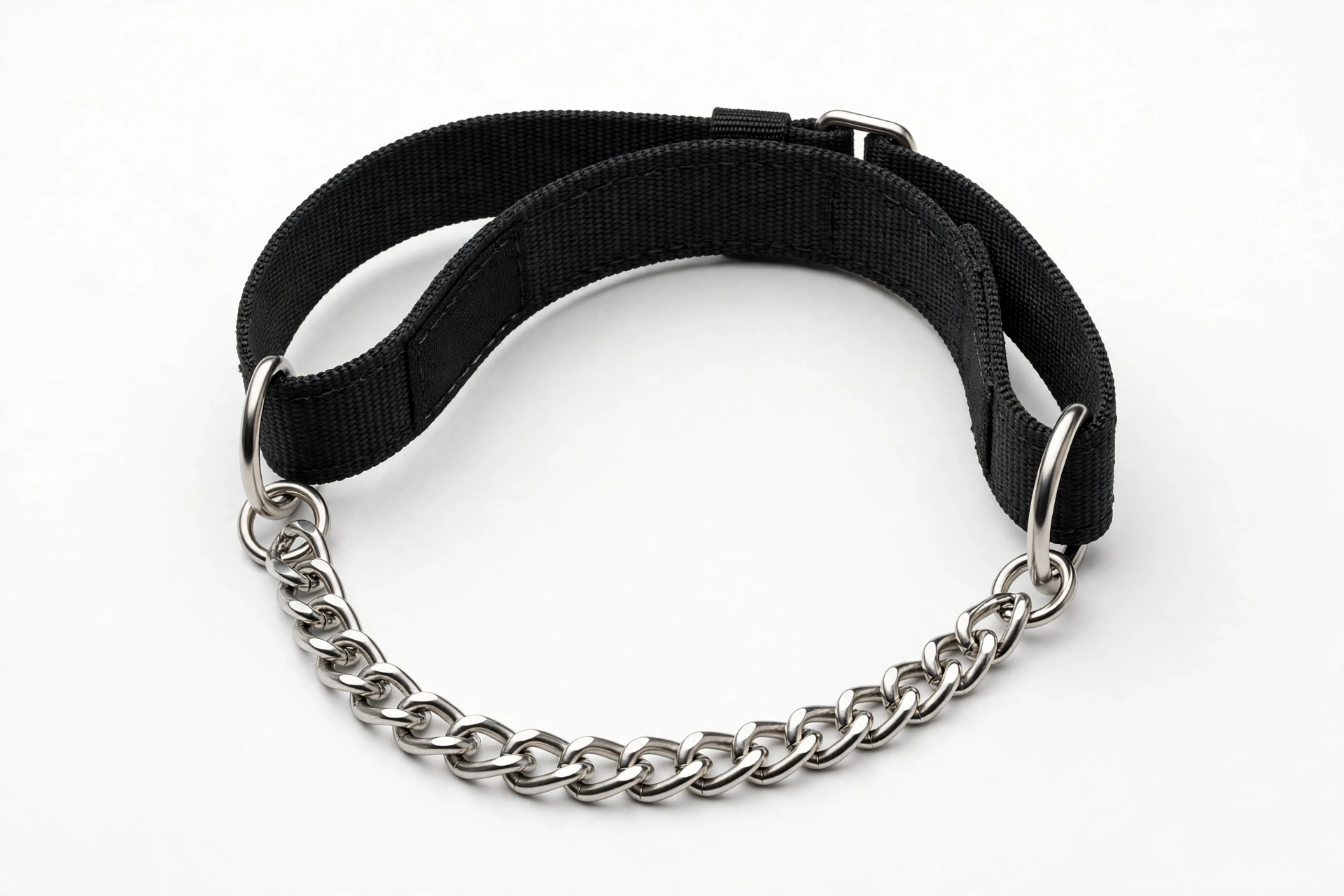
The traditional Schutzhund/IPO training collar: a stainless steel chain martingale that delivers the crisp correction signal working-dog trainers have used for generations. I include it because it remains the standard in protection and sport training circles — but with the standard cautions: proper fitting and skilled timing are non-negotiable, it is a training tool for sessions only, and I recommend learning its use from an experienced trainer before buying. Check the current stainless chain martingale options on the listing.
Buying Guide: Collars for German Shepherds
Shepherds punish weak gear. Here is how I spec a collar for the breed. For training discussions, see my guide to prong collars for dogs, and for sizing, large dog collars cover the breed’s neck range.
Width: 1.5″ minimum, 2″+ preferred
Narrow collars concentrate an 85-pound dog’s force on a thin band of neck — uncomfortable for the dog and harder to hold for you. I consider 1.5″ the floor for adult Shepherds and prefer 2″ to 2.5″ for males and strong pullers. The wider the collar, the more the force spreads, the less the dog feels inclined to fight it. This single dimension does more for walking comfort than any other choice.
Hardware: metal, always
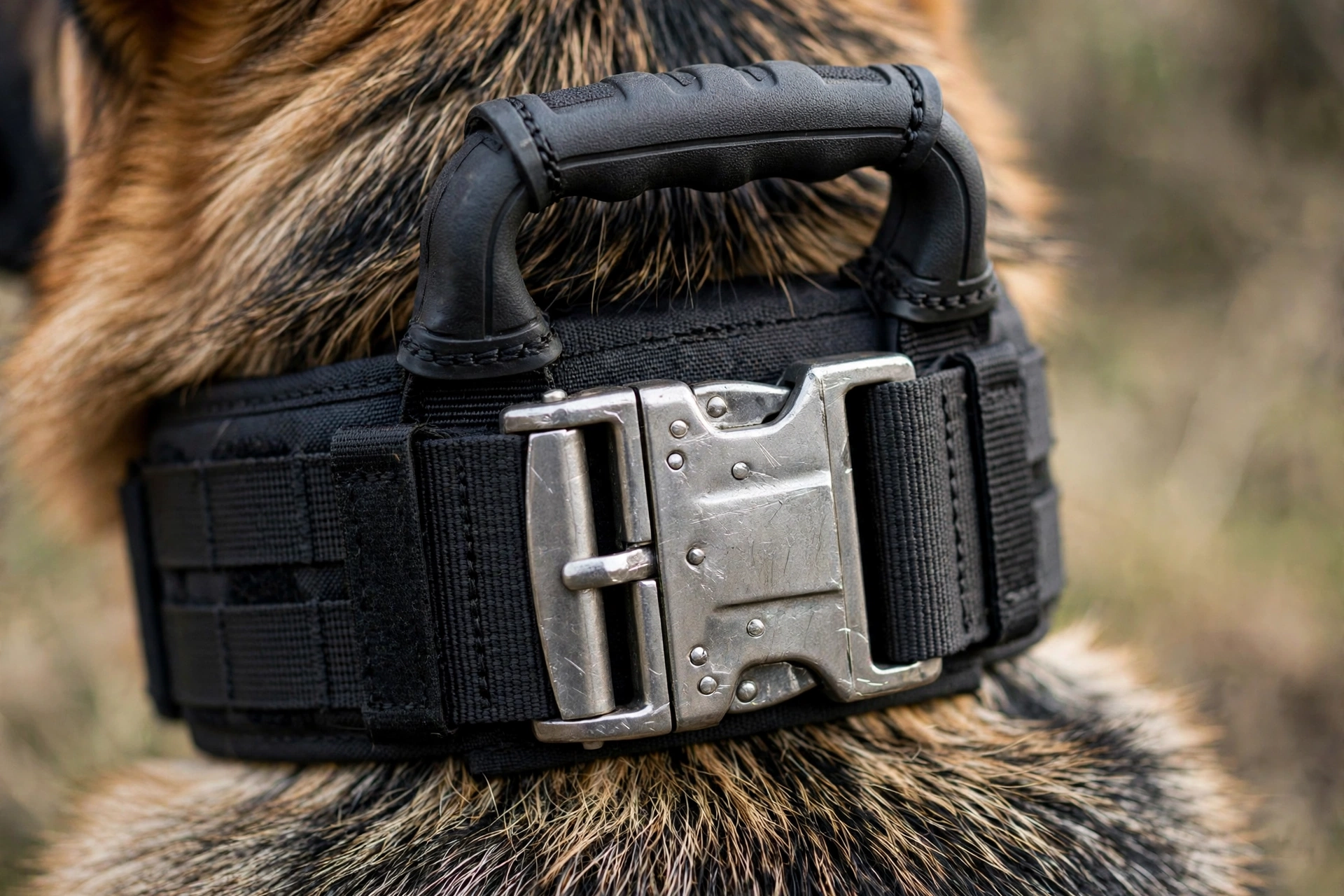
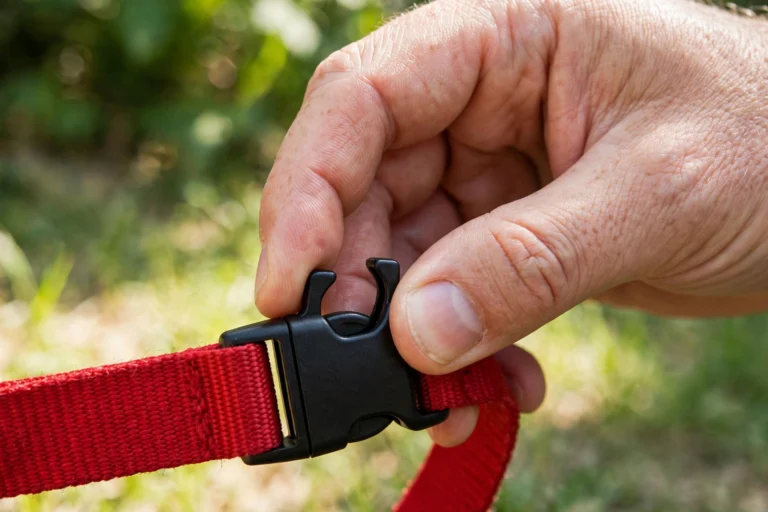
Plastic side-release buckles are the failure point I see most in Shepherd gear — they crack in cold, wear with UV, and pop under sudden load. Every collar I recommend for this breed uses metal buckles (quick-release tactical clasps or double-pin designs) and welded or cast D-rings. Check the buckle’s rating claims skeptically, but the material is non-negotiable: metal for Shepherds, full stop.
The control handle: why it matters for this breed
A Shepherd’s head at your hip height in a crowd, at the vet, or passing another dog is a management moment — and grabbing a flat collar is slow and awkward. The tactical handle gives instant, secure close control without wrapping the leash around your hand. I consider it essential equipment for urban Shepherds and highly useful for all of them. It is also the feature that separates a Shepherd-appropriate collar from a generic large-dog collar.
Sizing the Shepherd neck
Measure with a soft tape at mid-neck, add the two-finger gap, and buy for the actual measurement — not the breed’s reputation. Shepherd necks vary enormously: a petite 65-pound female may take 18″, a 100-pound male 24″. Puppies outgrow collars fast, so I buy adjustable and check monthly. A collar that fit at 8 months will strangle at 14 months if you forget to check — set a calendar reminder during the growth year.
Training over equipment
I will say what every good Shepherd trainer says: the collar manages the dog you have while training builds the dog you want. A tactical collar gives you safe control during the months (or year) of loose-leash training; it does not replace that training. Invest in a trainer experienced with the breed — Shepherds are brilliant and will exploit every inconsistency — and let the collar be the safety net, not the solution.
Working Shepherds: K9, sport, and service
Working-line Shepherds — police K9, Schutzhund/IGP, search and rescue, service work — have gear requirements beyond pet collars: agitation collars for bite work (wide leather, built for extreme force), e-collar compatibility for off-leash reliability (the collar must sit correctly with a receiver), and often agency-specific equipment standards. If your Shepherd works, I recommend consulting your trainer or unit’s equipment officer rather than buying pet-market tactical collars — working gear is a specialty with its own standards, and the wrong collar in bite work or detection is a safety issue, not a fashion choice.
Shedding season and collar care
Shepherds shed famously — the “German Shedder” jokes exist for a reason — and the neck ruff packs with undercoat twice a year. During blow-out season, I remove the collar for daily de-shedding sessions and check underneath for impacted coat, which traps moisture and causes hot spots. Tactical collars themselves need care too: rinse off mud and salt, check stitching at stress points seasonally, and inspect the metal buckle for grit that impedes the release. A collar maintained like working equipment lasts like working equipment.
The two-collar system
Many experienced Shepherd owners run two collars: a lightweight flat collar worn 24/7 for ID tags, and the tactical collar for walks, training, and outings. The logic is sound — the everyday collar stays comfortable and unobtrusive around the house, while the working collar stays clean and ready in the gear bag. It also extends the life of the more expensive tactical collar. I consider this the ideal setup once the dog is past the chewing-everything phase.
Frequently Asked Questions
What size collar does a German Shepherd need?
Most adult German Shepherds wear collars fitting 18-24″ necks, but measure your individual dog — females and smaller lines run smaller, large males bigger. Buy adjustable within that range and re-check during the first two years as the dog fills out.
Are tactical collars good for German Shepherds?
Yes — they are arguably the best match: wide webbing for force distribution, metal hardware for strength, control handles for management, and patch panels for ID. The tactical format was essentially designed around dogs of this size and strength.
Should I use a prong collar on my German Shepherd?
I recommend exhausting training-first options with a qualified trainer before considering any aversive tool — and if a prong collar enters the picture, it should be fitted and introduced by a professional experienced with the breed, used for training sessions only. Most Shepherds never need one with consistent early training.
Can German Shepherd puppies wear tactical collars?
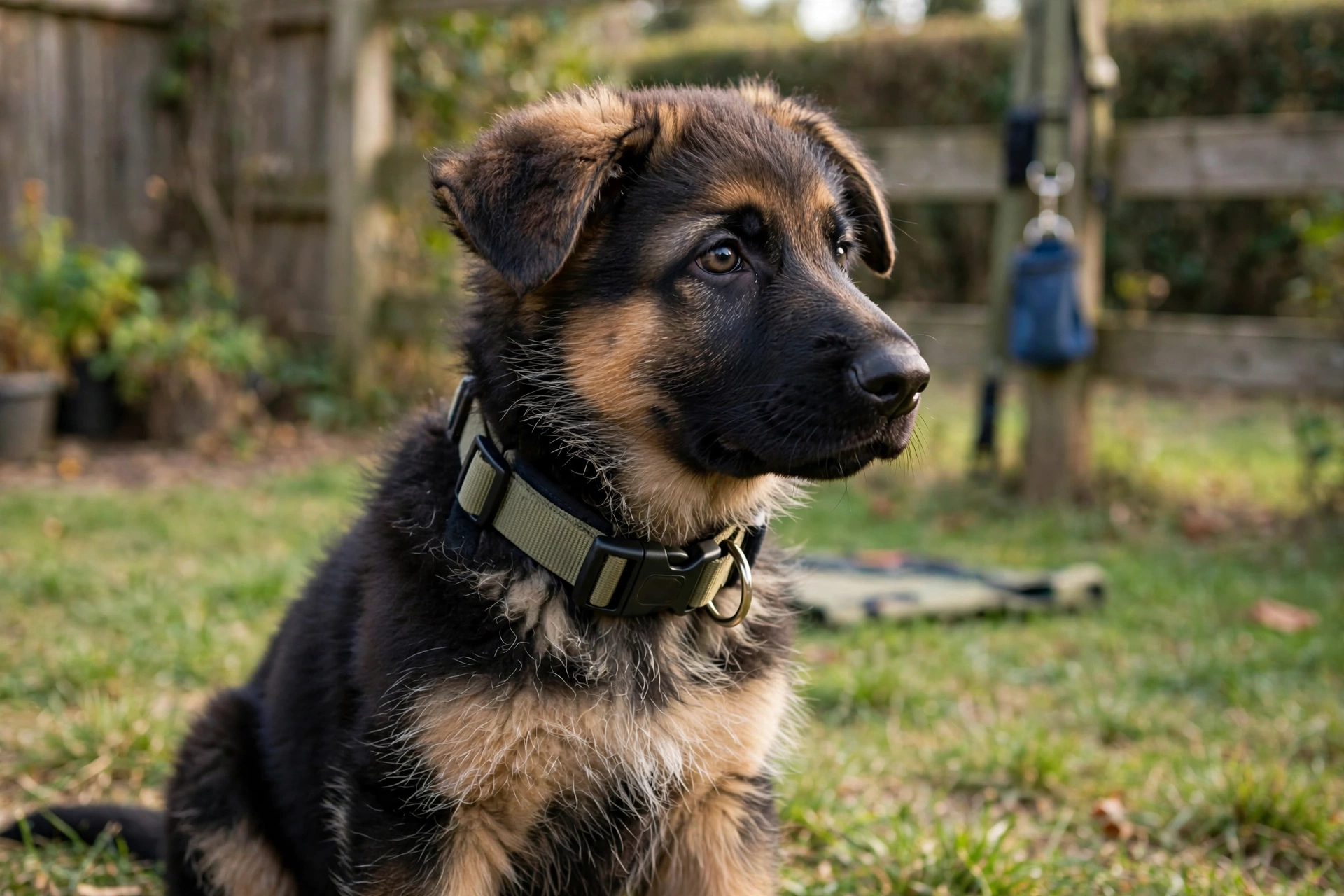
A lightweight adjustable collar is fine for a puppy, but I would not put a heavy 2.5″ tactical collar on a young puppy — the weight is disproportionate. Start light, size up as the dog grows, and move to full tactical width around adolescence when the neck and strength warrant it.
How do I stop my German Shepherd from pulling?
Consistent loose-leash training (reward the position you want, make pulling unrewarding), adequate exercise before training sessions (a tired Shepherd learns better), and the right management gear meanwhile — a wide collar or front-clip harness. I also recommend a breed-experienced trainer; Shepherds learn fast, including learning that pulling works if you let it.
Do German Shepherds need special collars for their double coat?
The dense double coat is a consideration: very wide collars can trap heat and mat the neck ruff, so I check under the collar weekly for matting and hot spots. Breathable mesh-lined tactical collars (like the Beirui) ventilate better than solid webbing. Brush the collar line as part of the regular grooming routine.
What is the best collar for a German Shepherd that escapes?
A properly fitted wide martingale — it tightens just enough to prevent the head from slipping through, then releases. The escape usually happens because the regular collar is too loose or the buckle is weak; fix the fit first (snug two-finger rule, collar cannot pull over the ears), then consider the martingale. I also check escape artists for the real cause: boredom, anxiety, or prey drive need training, not just tighter gear.
Are name patches on collars worth it?
I think so — a hook-and-loop name plate with the dog’s name and your phone number is backup ID that cannot fall off like a hang tag. It is not a substitute for a microchip and a proper ID tag, but it is a useful redundancy, especially for a breed that can cover ground fast if loose. Keep the text large and legible.
Related Buying Guides
The verdict
My verdict: the DEZIZEUSK9 2″ tactical collar is the German Shepherd default I recommend — wide, metal-hardware, handled, and sized for the breed. Go wider with the Beirui for the biggest males, padded with the Periflowin for all-day wear. And remember the trainer’s truth: the collar is the safety net while training does the real work. A well-trained Shepherd on a basic collar out-walks an untrained one on the finest tactical gear ever made — so buy the collar, then put in the training hours every day.
One Comment