
Finding the best bark collars for puppies starts with an uncomfortable truth: most professional trainers and veterinarians advise against using any bark collar on very young puppies. Puppies under about six months are still learning how the world works, and interrupting that learning with an aversive device can create fear and anxiety that lasts far longer than the barking phase. That said, older puppies with persistent nuisance barking — and owners who have already worked through training, exercise, and enrichment — sometimes look for a gentle, no-shock bark collar as a short-term management aid. This guide covers five humane, vibration-and-tone-based bark collars marketed for smaller and younger dogs, explains when (and whether) they are appropriate, and lays out the safety rules that matter far more than the device you choose.
Affiliate disclosure
As an Amazon Associate, I earn from qualifying purchases. If you buy through a link on this page, I may earn a commission at no extra cost to you.

⚡ The short answer
🥇DogRook Rechargeable Bark CollarGentlest overall option→
🥈NBJU Bark Collar (TC-001)Customizable sensitivity→
🥉PatteSage No-Shock Bark Collar (2-Pack)Puppies 6 months and up→
Quick Picks: Best Bark Collars for Puppies at a Glance
If you are short on time, here is how the five collars in this guide compare. Every pick below uses beep, tone, or vibration only — none rely on static shock as the correction method, which is the minimum standard I would consider for a puppy.
| Product | Best For | Standout Feature |
|---|---|---|
| DogRook Rechargeable Bark Collar | Gentlest overall option | No-shock design with 7 sound stages |
| NBJU Bark Collar (TC-001) | Customizable sensitivity | 7 sensitivity levels, beep + vibration modes |
| PatteSage No-Shock Bark Collar (2-Pack) | Puppies 6 months and up | Explicit puppy age guidance, USB-C charging |
| PawPets Anti Bark Collar 2-Pack | Multi-dog homes | Two collars included, simple two-mode operation |
| FAFAFROG Smart Bark Collar | Tech-forward training | Color display, dual-sensor bark detection |
5 Humane Bark Collars Suitable for Puppies
Each collar below was selected because it offers a no-shock operating mode (tone/beep and vibration), an adjustable strap that fits smaller necks, and rechargeable power. Remember: these are training aids, not substitutes for training, and most are marketed for puppies old enough to begin structured learning — generally six months and up.
DogRook Rechargeable Bark Collar
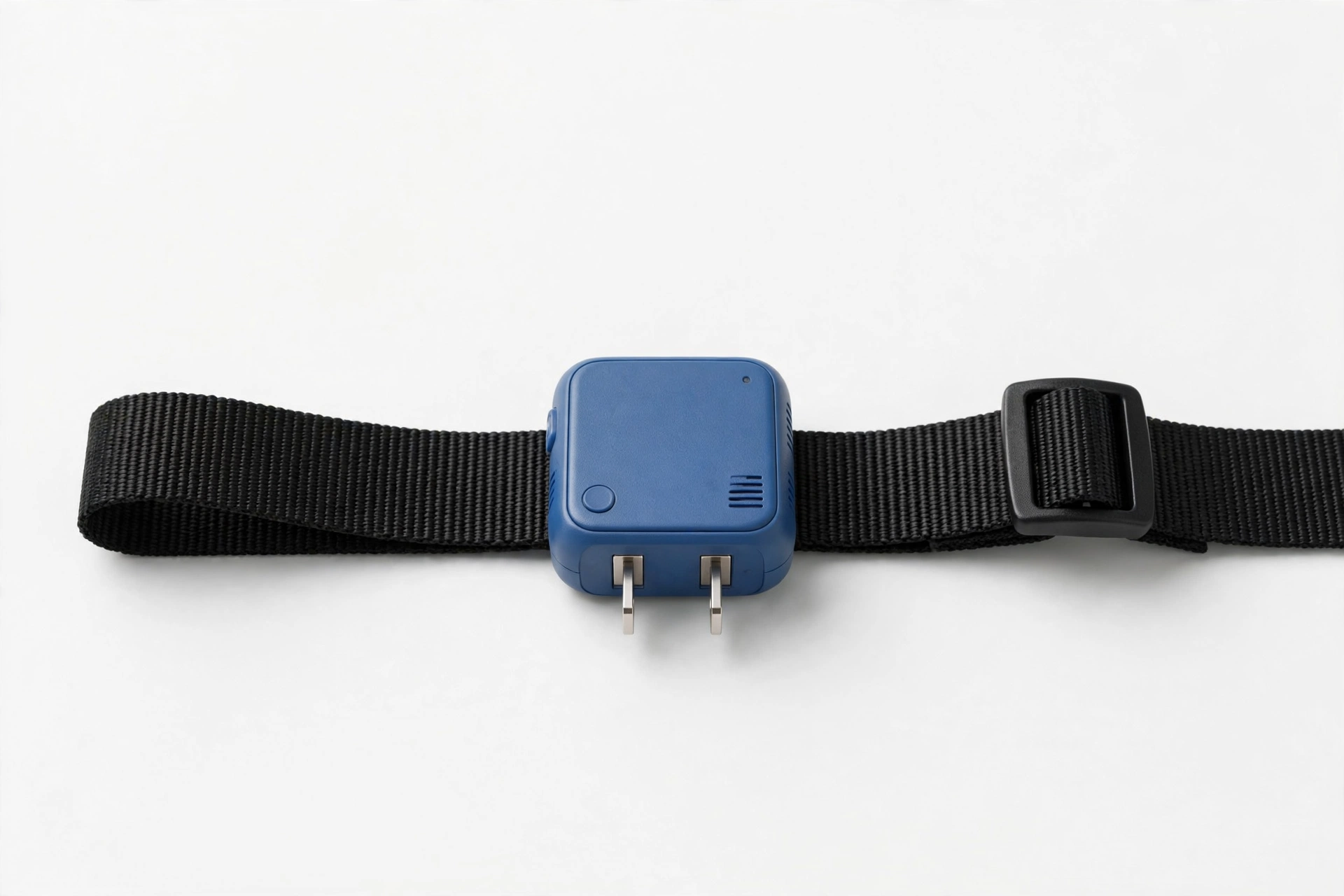
The DogRook Rechargeable Bark Collar is one of the best-known no-shock bark collars on Amazon, and its design philosophy is simple: interrupt barking with sound and vibration, never with static correction. It combines two vibration modes with seven progressive sound stages, so the feedback escalates only as barking continues. A smart microphone aims to respond to your own dog’s bark rather than background noise, with five sensitivity levels to tune. It fits dogs from about 12 to 110 pounds on a strap adjustable up to 22 inches, recharges over USB, and is marketed as rain-, snow-, and splash-proof. For puppy owners who want the mildest widely available option, DogRook is the natural starting point — provided your pup is old enough that a trainer would sign off on collar-based interruption at all.
NBJU Bark Collar (TC-001)
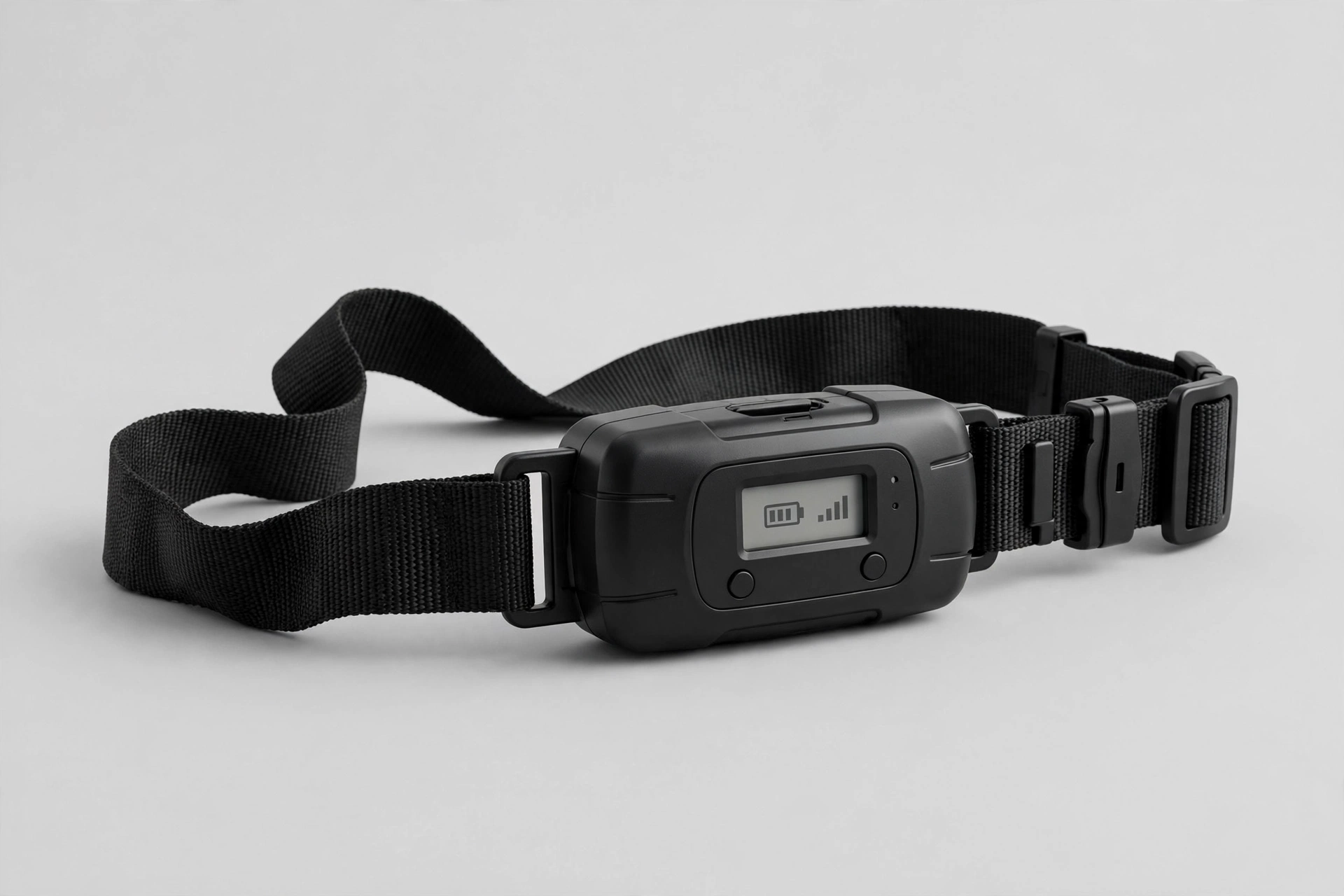
The NBJU Bark Collar gives owners more control over how the correction is delivered. It offers three working modes — beep, vibration, or shock (leave shock off for puppies) — with seven adjustable sensitivity and intensity levels, and it can be run entirely without its static mode engaged, which is how I recommend using it around puppies. A smart sensor triggers within a fraction of a second of barking and is designed to ignore ambient noise, while a built-in protection system pauses the collar if it fires repeatedly in a short window. The strap adjusts to necks from roughly 7.8 to 25 inches (about 8 to 120 pounds), the unit is IP67 waterproof, and a quick charge is advertised to last up to 15 days. If your puppy startles easily, the fine-grained sensitivity settings make it easier to find the lowest effective level.
PatteSage No-Shock Bark Collar
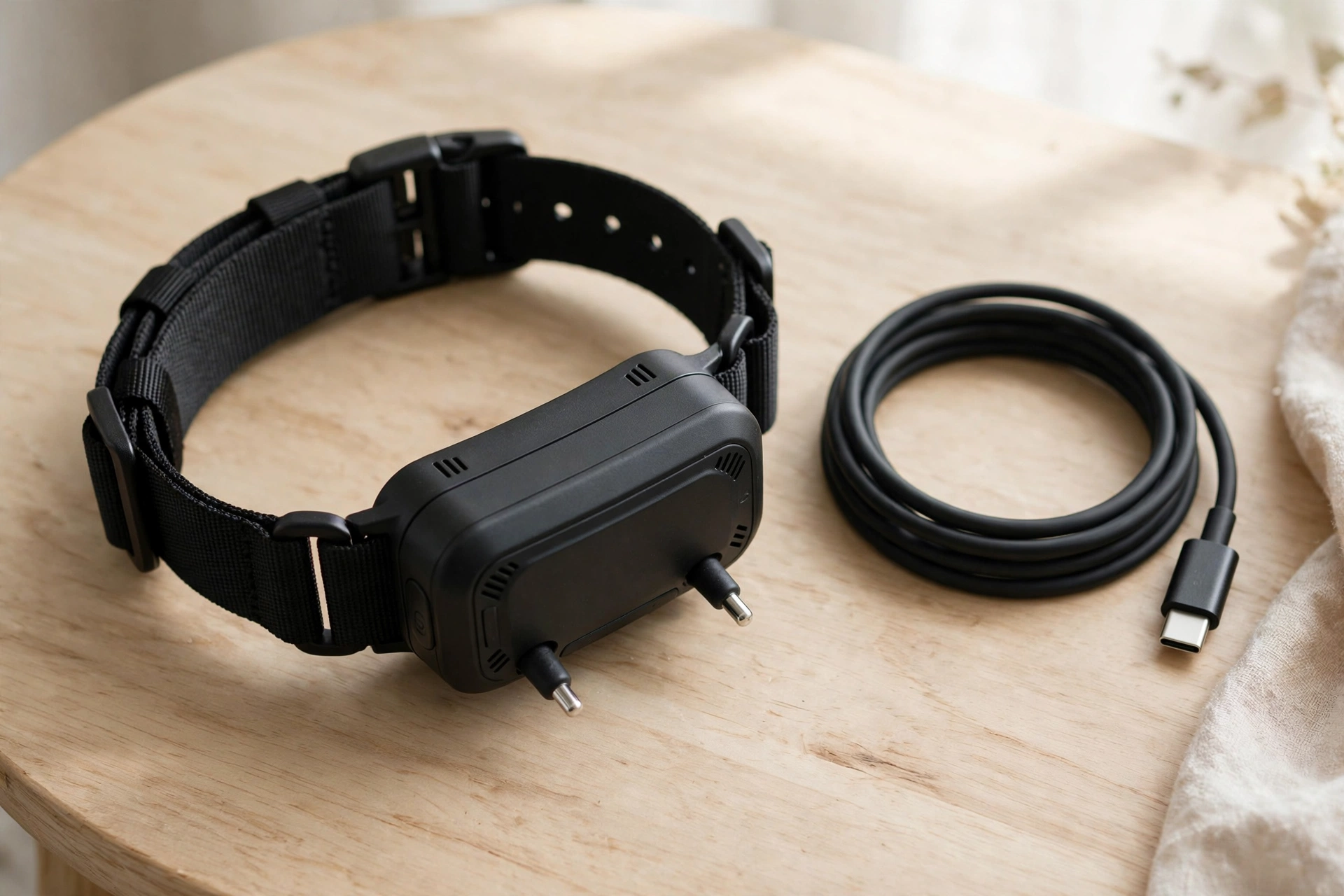
What sets the PatteSage collar apart is transparency about who it is for: the listing recommends it for dogs aged six months and older weighing at least 11 pounds, which lines up with the conservative guidance most trainers give. It is a strictly no-shock device with three modes (beep, vibration, beep plus vibration) and six sensitivity levels, using acoustic recognition to filter out background noise and reduce false triggers. Sold as a two-pack, it has an adjustable nylon strap up to 27 inches, carries an IP67 waterproof rating, and charges via Type-C (USB-C) with up to about 15 days of standby per two-hour charge. For owners who want a product whose own documentation respects puppy-age limits, this is a reassuring choice.
PawPets Anti Bark Collar 2-Pack
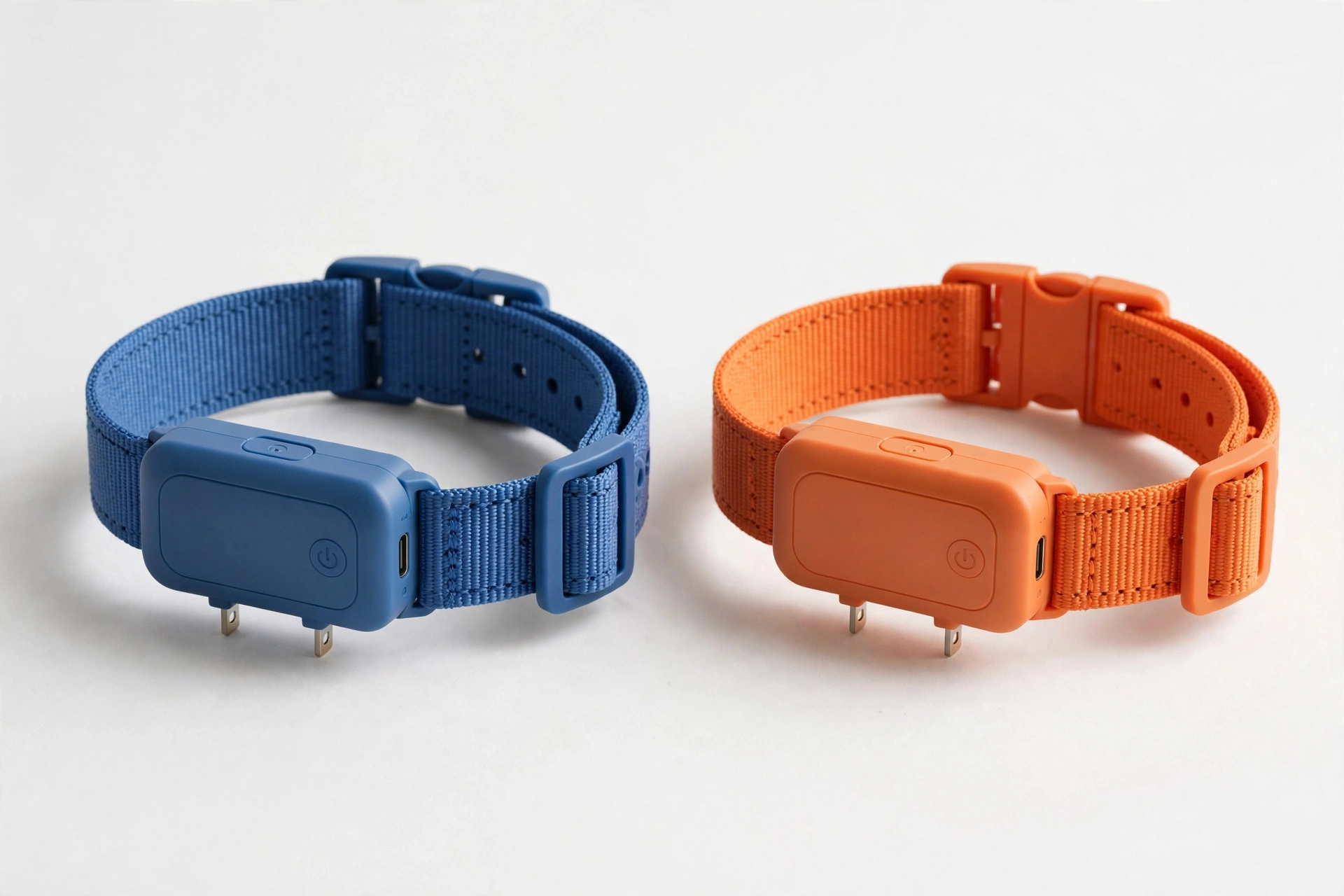
The PawPets Anti Bark Collar comes as a two-pack, which makes it practical for households with more than one vocal dog — a puppy and an older sibling who barks back, for example. Operation is deliberately simple: two modes (beep and seven vibration levels), no remote to manage, and automatic triggering when the dog barks. The strap fits necks from about 9 to 22 inches (roughly 5 to 100 pounds), and the package includes batteries plus two sets of contact prongs. Simplicity is the appeal here, but it is also the limitation: with fewer sensitivity settings than the options above, matching the correction to a timid puppy takes more trial and error.
FAFAFROG Smart Bark Collar
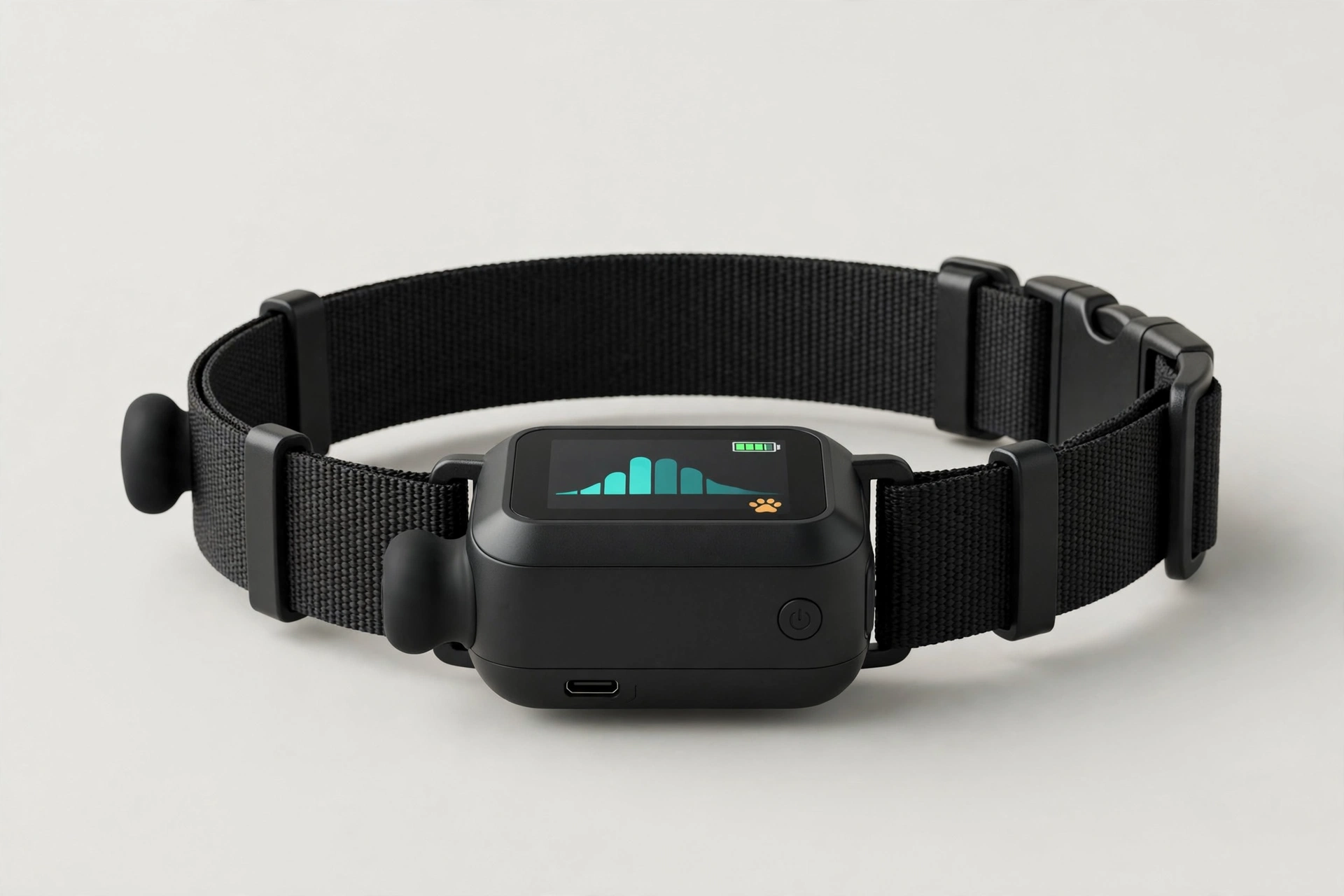
The FAFAFROG Smart Bark Collar leans into technology to reduce the two biggest complaints about bark collars: false triggers and confusing settings. It uses dual-sensor detection — sound plus vocal-cord vibration — so the collar activates on your dog’s actual barking rather than a slamming door, and a color display shows the working mode and battery status at a glance. Four working modes include no-shock combinations of beep and vibration alongside an optional static mode you should leave off for puppies, with five sensitivity levels. The strap fits necks from 8 to 25 inches (about 8 to 150 pounds), it is IP67 waterproof, and magnetic charging reaches full in around two hours for roughly 15–20 days of use. The brand’s own materials describe the collar as designed for dogs over six months old, which matches this guide’s age guidance.
Buying Guide: Bark Collars and Puppies
Bark collars occupy contested ground in dog training. Used thoughtfully on an older puppy alongside positive training, a tone-and-vibration collar can interrupt a barking habit. Used on a very young puppy, or as a substitute for addressing why the dog barks, it can do real harm. This section covers what the products above have in common and what to weigh before buying.
What age is appropriate for a bark collar?
There is no universal legal minimum age, but the consensus among certified trainers and veterinary behaviorists is conservative: most advise waiting until a puppy is at least six months old, and many suggest avoiding bark collars entirely for puppies in favor of training, management, and enrichment. Before six months, puppies are in critical socialization and learning periods; aversive interruptions during this window risk creating fear of normal stimuli. If your puppy is under six months and barking excessively, treat the barking as information — the pup may be under-exercised, anxious, or overstimulated — and consult a certified professional dog trainer (CPDT-KA) or veterinary behaviorist before considering any collar-based tool.
No-shock vs. static: why mode matters
Every collar in this guide can operate without static correction, using beep/tone and vibration only. For puppies, that is the only acceptable configuration. Static correction adds pain to an already stressful experience and is disproportionate for a young dog that is still learning house rules. When comparing products, confirm the collar has a dedicated no-shock mode rather than merely a “low” static level, and verify you can lock or ignore the static option entirely so a curious family member cannot accidentally enable it.
Fit and wear-time safety
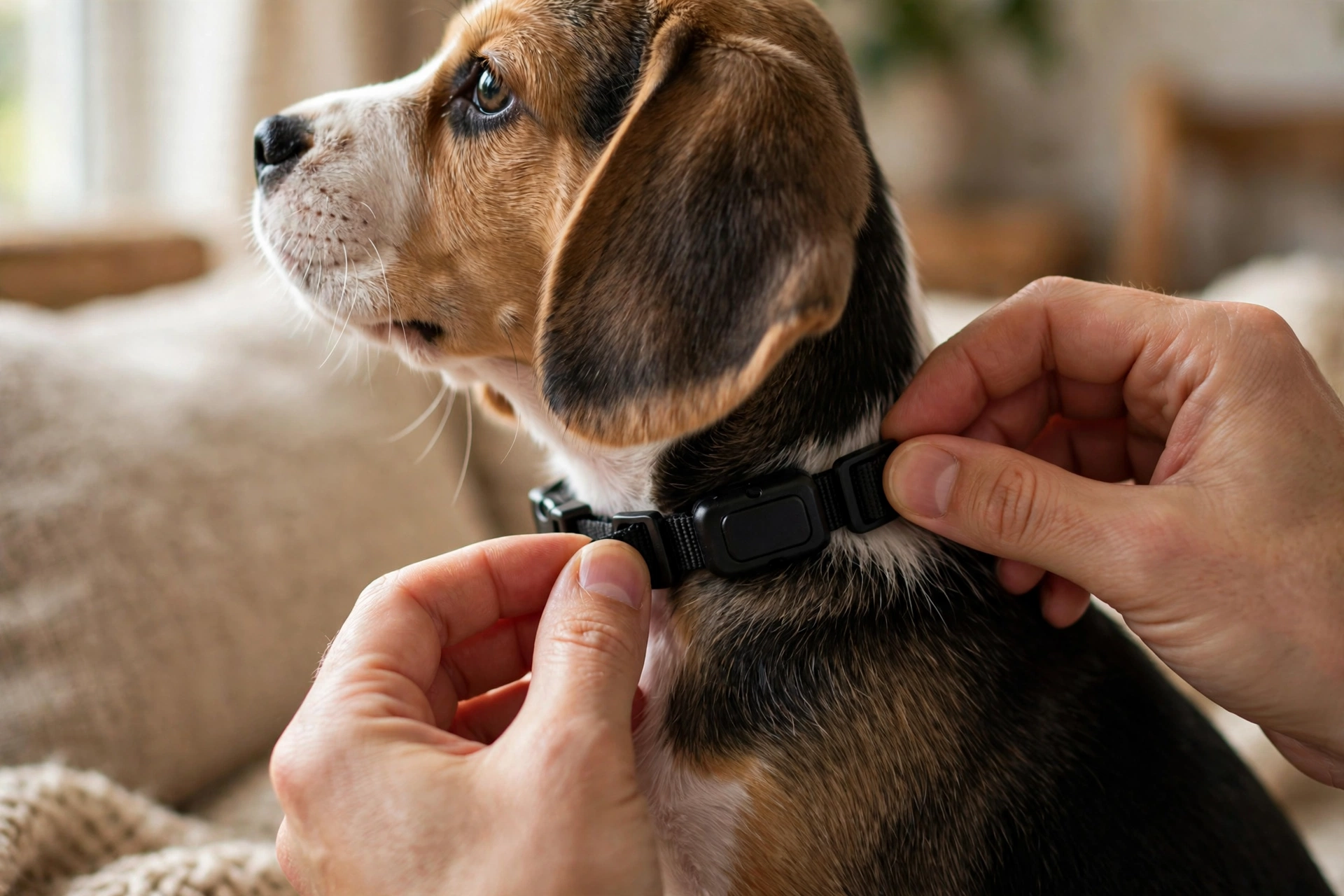
A bark collar must sit high on the neck, snug enough that the contact points touch skin (or the sensor sits against the throat) but loose enough to slide two fingers underneath. Check the fit every time you put it on — puppies grow fast, and a strap that fit last month may be too tight now. Most manufacturers advise against leaving any bark collar on for more than 8 to 12 hours per day and recommend repositioning it every few hours to prevent pressure sores. Never attach a leash to a bark collar, never leave a puppy unsupervised while wearing one, and remove it during crate time. If you notice redness, hair loss, or sores under the contact points, stop using the collar and talk to your veterinarian.
Address the cause, not just the bark
Barking is communication. Puppies bark from boredom, loneliness, fear, barrier frustration, attention-seeking, and alertness — and a collar suppresses the symptom while the cause continues. Before buying, run through the fundamentals: is the puppy getting enough age-appropriate exercise and mental stimulation? Is alone-time introduced gradually? Has basic training (rewarding quiet behavior, teaching a “quiet” cue) been attempted consistently for several weeks? A collar used alongside this work can help break a rehearsed habit; a collar used instead of it tends to produce a quieter but more anxious dog.
What to look for in the product itself
Prioritize adjustable sensitivity (so you can use the lowest effective level), false-trigger filtering (dual sensors or bark-recognition chips reduce corrections for non-barking sounds), a clear no-shock mode, USB rechargeability, and water resistance for outdoor puppies. An adjustable strap that fits your puppy’s current neck size with room to grow avoids buying twice. A visible battery or mode display, like FAFAFROG’s color screen, reduces the chance of running a dead or misconfigured collar.
Frequently Asked Questions
Can I use a bark collar on an 8-week-old puppy?
No — this is not recommended by trainers or veterinarians. At eight weeks a puppy has just left its littermates, is adjusting to a new home, and is in a sensitive developmental period. Barking at this age is normal communication. Focus on socialization, routine, and gentle training instead, and revisit the question with a professional only once the puppy is several months older.
Are vibration bark collars safe for puppies?
Vibration and tone collars are the least aversive type of bark collar, but “least aversive” is not the same as risk-free. A sensitive puppy can still find vibration frightening, and misuse (poor fit, excessive wear time, no accompanying training) can cause stress or skin irritation. If you use one, choose the lowest effective setting, limit wear time, and pair it with reward-based training for quiet behavior.
Will a bark collar stop my puppy barking when left alone?
It may suppress the barking, but separation-related barking usually signals distress, and punishing distress vocalizations can worsen the underlying anxiety. If your puppy barks primarily when alone, work with a trainer on gradual alone-time training and consider whether an anxiety aid is more appropriate than a correction device.
How long should a puppy wear a bark collar each day?
Follow the manufacturer’s guidance — typically no more than 8 to 12 hours, with the collar repositioned every few hours. In practice, shorter is better: use it during the specific periods when barking is a problem (such as when the doorbell rings repeatedly) rather than as all-day wear.
Do bark collars work on all puppies?
No. Some puppies habituate to vibration within days; others become fearful rather than quieter. Effectiveness depends on the individual dog, the cause of the barking, and whether training accompanies the collar. If you see no improvement within one to two weeks — or any sign of fear, shutdown, or skin irritation — discontinue use and consult a certified trainer.
Should I talk to my vet before using a bark collar?
Yes. A quick conversation with your veterinarian rules out medical contributors to barking (pain, hearing changes, cognitive issues in older puppies) and gives you professional input on whether a collar is appropriate for your individual dog. This is especially important for puppies with anxiety, shy temperaments, or any health condition.
Related Buying Guides
The verdict
The honest verdict on the best bark collars for puppies is that the best approach is usually not a collar at all — it is training, exercise, and time, with professional guidance when barking persists. If, for an older puppy (six months and up), you and a trainer decide a bark-interruption aid makes sense, choose a strictly no-shock device with adjustable sensitivity and use it briefly, humanely, and alongside reward-based training. The DogRook Rechargeable Bark Collar is my gentlest overall pick for its shock-free design and progressive sound stages; the PatteSage collar earns mention for stating its puppy age guidance plainly. Whatever you choose, the collar should be the smallest part of your barking plan — the training is the plan.




One Comment