
The best recycled dog collars turn waste into walk gear. — ocean-bound plastic, recycled inner tubes, reclaimed cotton, and post-consumer webbing reborn as the collar your dog wears daily. It’s a category where the environmental story is the product as much as the collar itself. I evaluated the available options on two axes that both matter: genuine recycled content (not greenwashed token percentages) and actual collar quality (because an eco collar that falls apart helps nobody). Here’s what’s worth buying on Amazon.
Affiliate disclosure
As an Amazon Associate, Dogslifelearning earns from qualifying purchases. If you buy through links on this page, I may earn a commission at no extra cost to you.

⚡ The short answer
🥇Pet Passion Recycled RibbonRecycled ribbon designs→🥈Pawtitas Ocean PlasticRecycled ocean plastic→🥉WAUDOG Recycled CottonRecycled cotton build→
Quick Picks
| Product | Best For | Standout Feature |
|---|---|---|
| Pet Passion Recycled Ribbon | Style + eco | Recycled ribbon designs |
| Pawtitas Ocean Plastic | Ocean cleanup story | Recycled ocean plastic |
| WAUDOG Recycled Cotton | Natural fibers | Recycled cotton build |
| Ruffwear Crag (Canyon Oxbow) | Recycled webbing | 18% recycled Tubelok webbing |
| Ruffwear Crag (Seafoam) | Recycled webbing | 18% recycled Tubelok webbing |
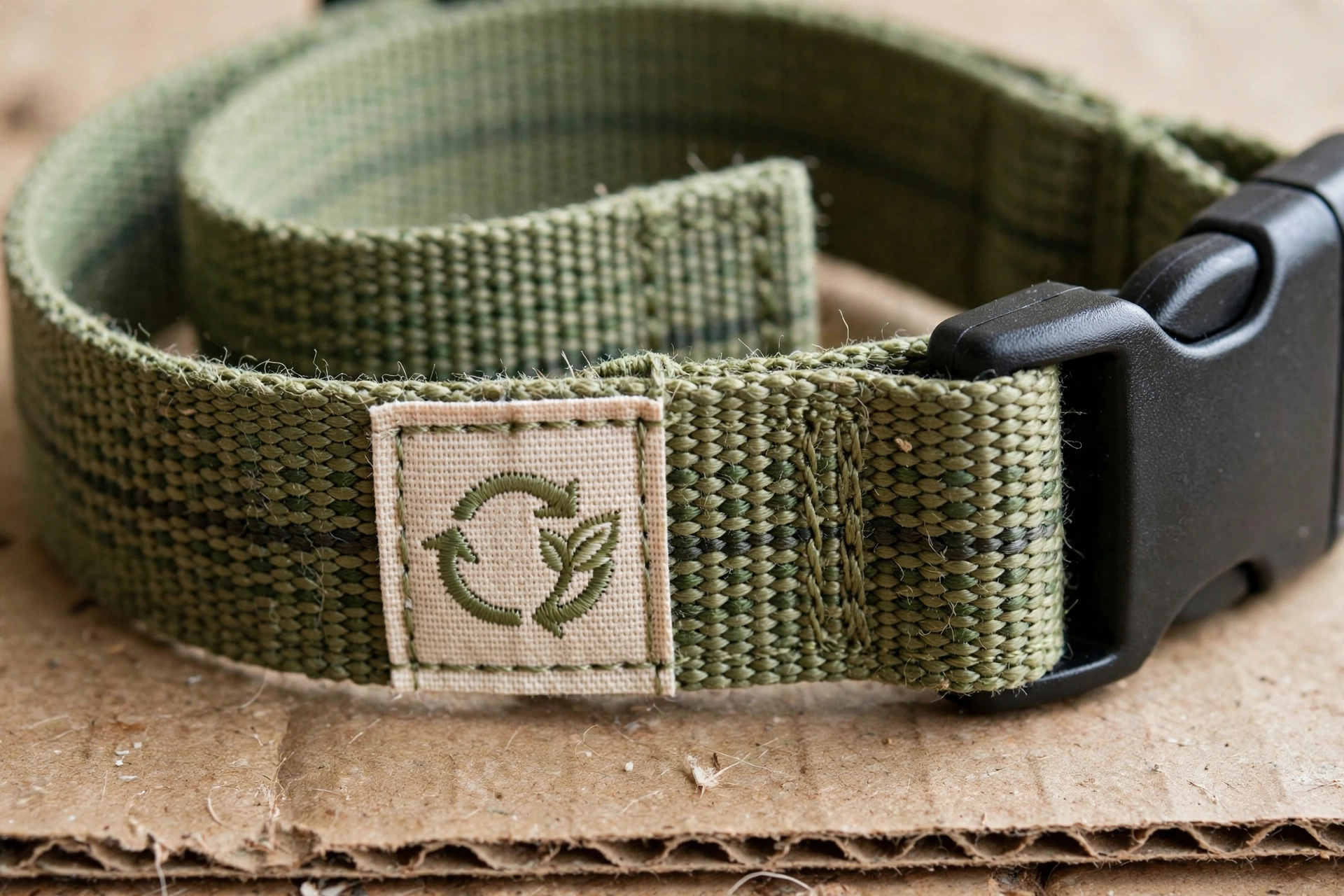
The 5 collars, reviewed
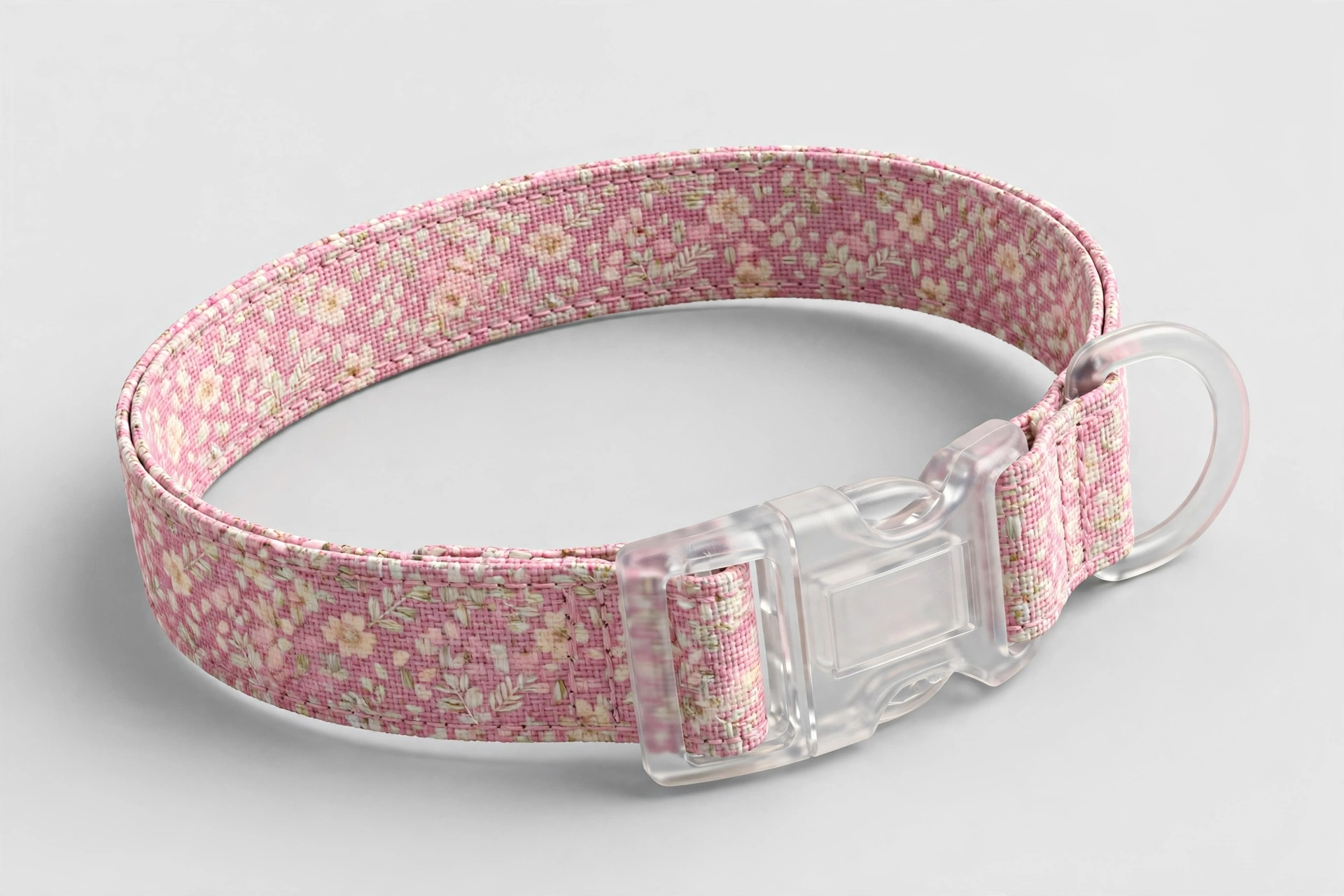
Pet Passion Recycled Ribbon Dog Collar
Pet Passion’s recycled-ribbon collars prove eco doesn’t mean drab — the ribbon patterns are genuinely pretty, and the recycled content is the real story, not an afterthought. I like this pick for owners who want the sustainability credential without the crunchy aesthetic; it looks like a boutique fashion collar that happens to be recycled. The ribbon-over-webbing construction is standard for the style and holds up to normal wear. A strong choice for the style-conscious environmentalist.
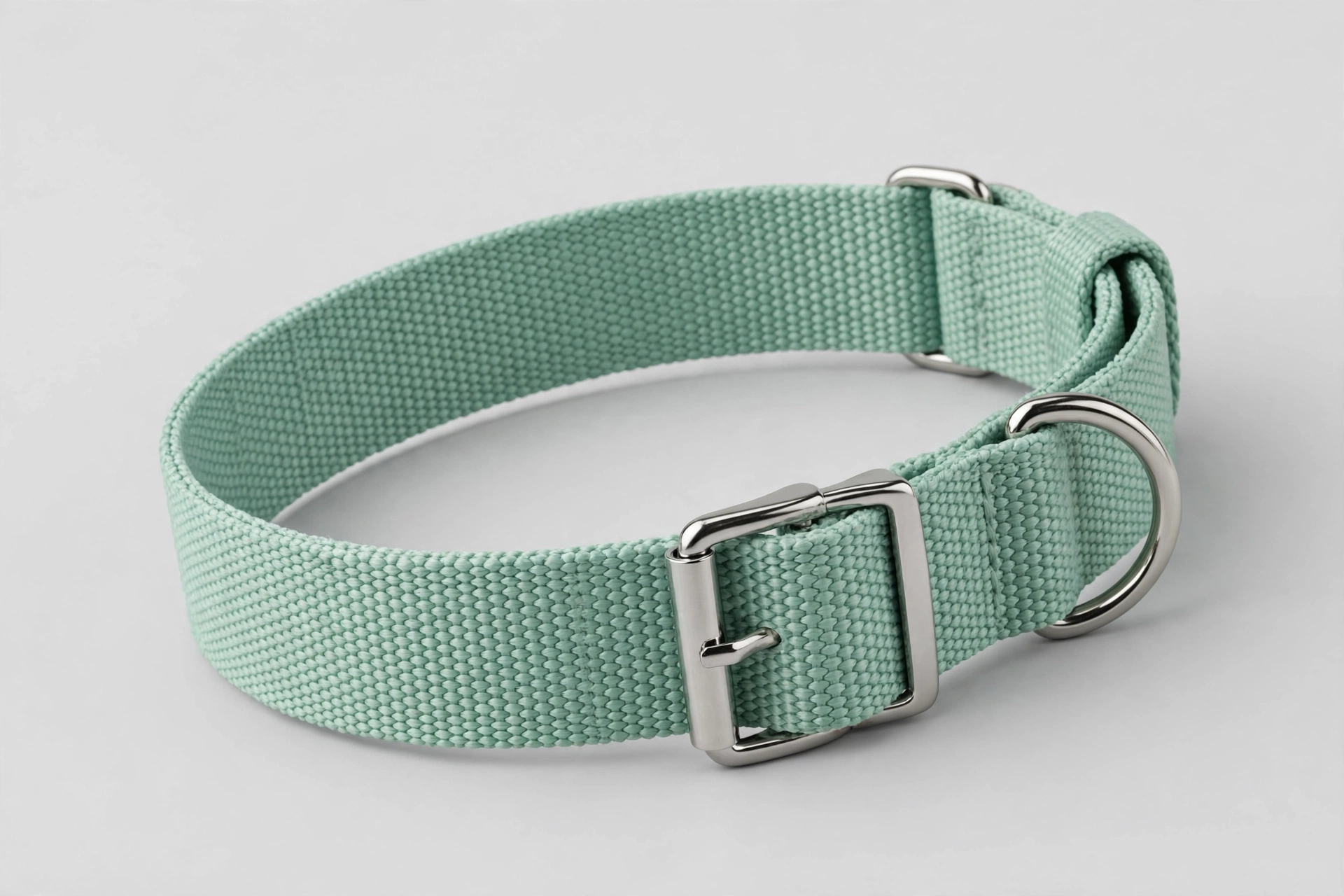
Pawtitas Recycled Ocean Plastic Collar
Pawtitas builds collars from recycled ocean-bound plastic — the material story with the most visceral appeal, turning a pollution crisis into pet gear. The resulting webbing performs like conventional nylon (because chemically, recycled PET webbing essentially is polyester), so you’re not sacrificing function for the story. I appreciate brands that attach their supply chain to cleanup efforts rather than generic “recycled content” claims. For the ocean-minded owner, this is the category’s most meaningful purchase.
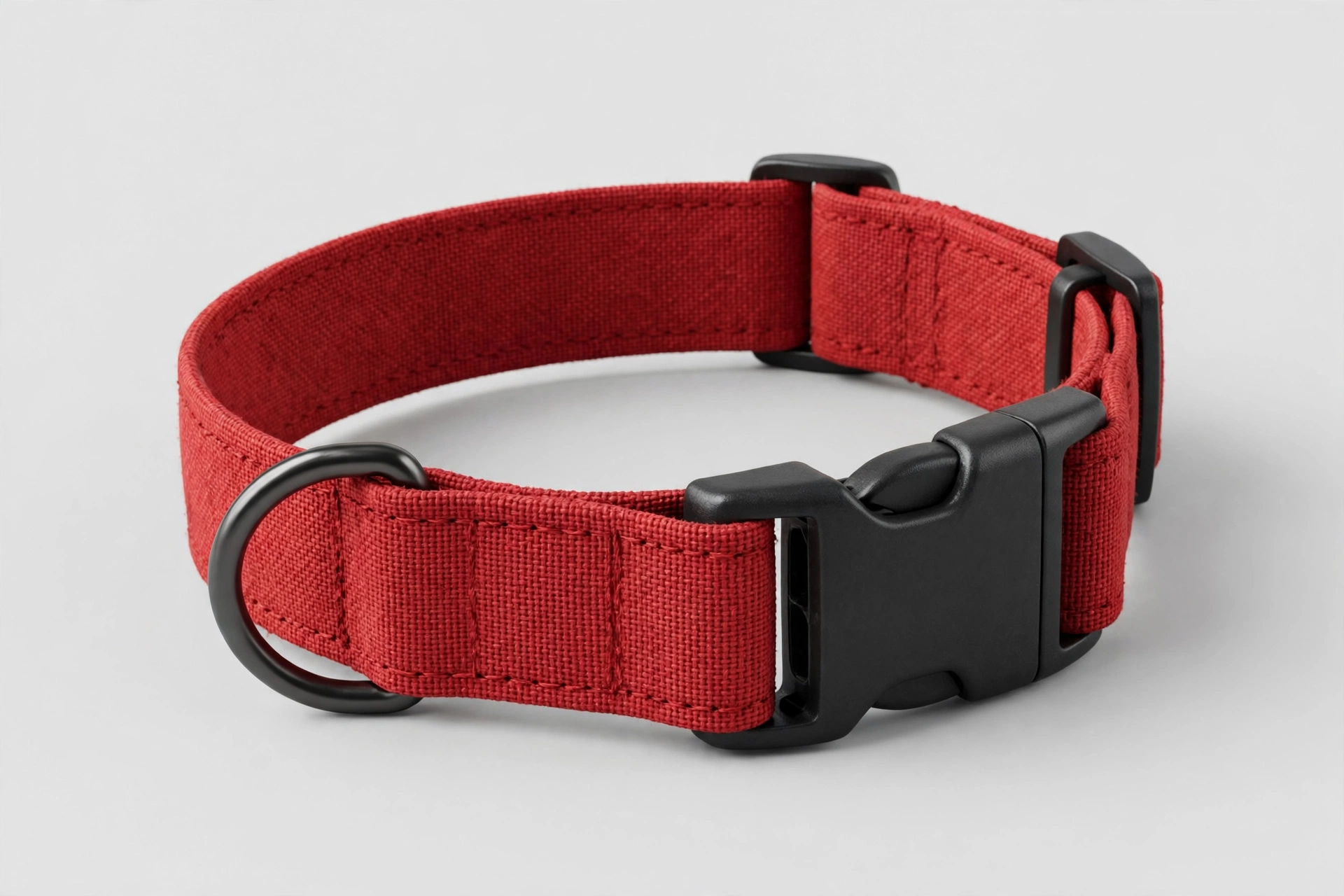
WAUDOG Recycled Cotton Dog Collar
WAUDOG takes the natural-fiber path with recycled cotton — reclaimed textile waste rewoven into collar webbing. The hand-feel differs from synthetics: softer, more textile-like, less plasticky. I recommend it for owners who prefer natural materials but want the recycled credential too — it bridges the hemp/bamboo aesthetic with genuine waste-diversion content. Cotton’s limits apply (absorbs water, slower drying), so it’s a fair-weather favorite rather than a swim collar. The patterns are cheerful and the construction is solid.
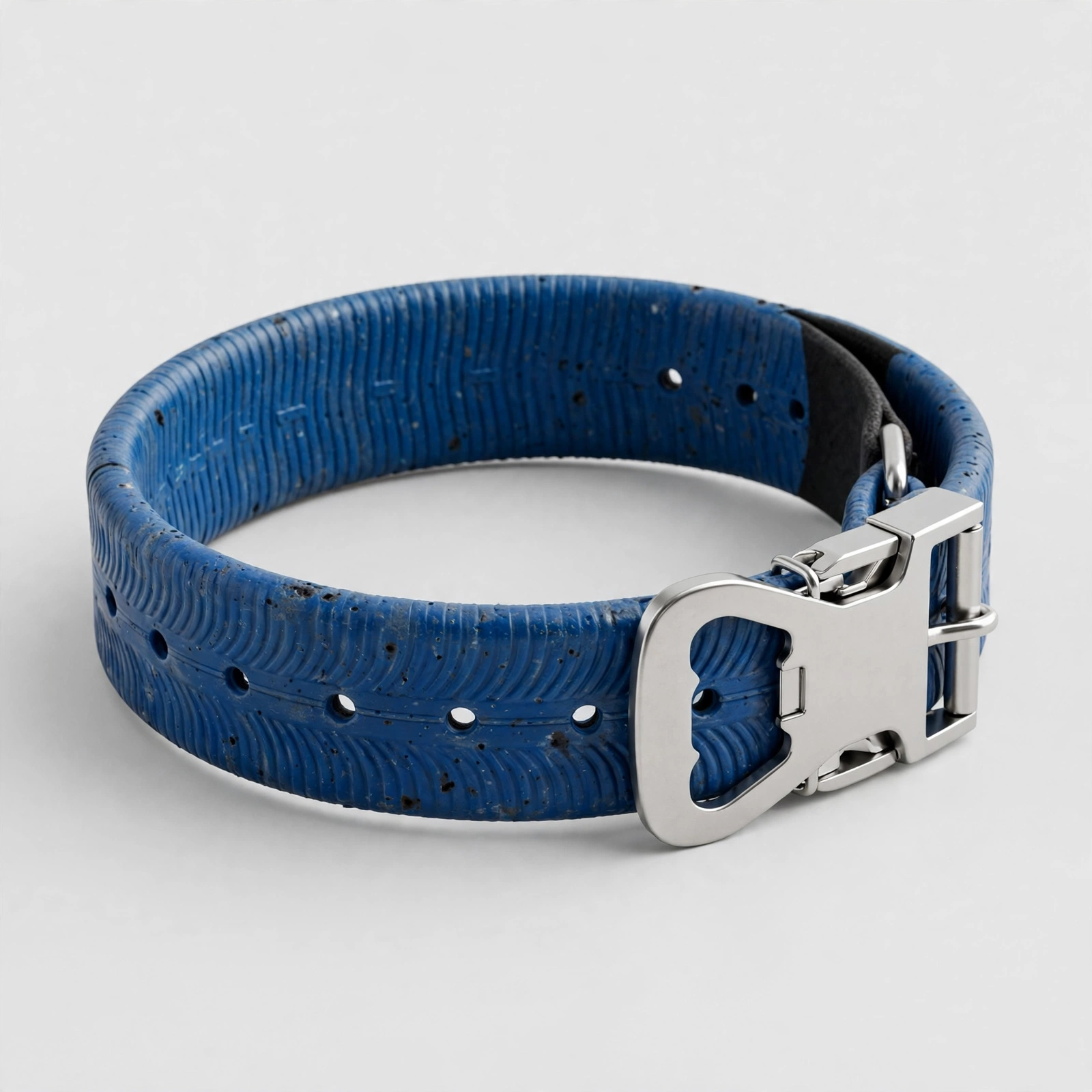
Ruffwear Crag Dog Collar (Canyon Oxbow)
Ruffwear’s Crag is the recycled collar from a brand with real trail credibility — its Tubelok webbing is made with 18% recycled polyester, honestly disclosed rather than oversold. The webbing performs like conventional polyester (because it essentially is), with a secure buckle and reflective trim for visibility. Canyon Oxbow is the earthy colorway. Note the honesty point: this is 18% recycled content, not a fully recycled collar — Ruffwear discloses the percentage, which is exactly the transparency I ask for in this category. My pick for the buyer who wants verified recycled content from a proven maker.
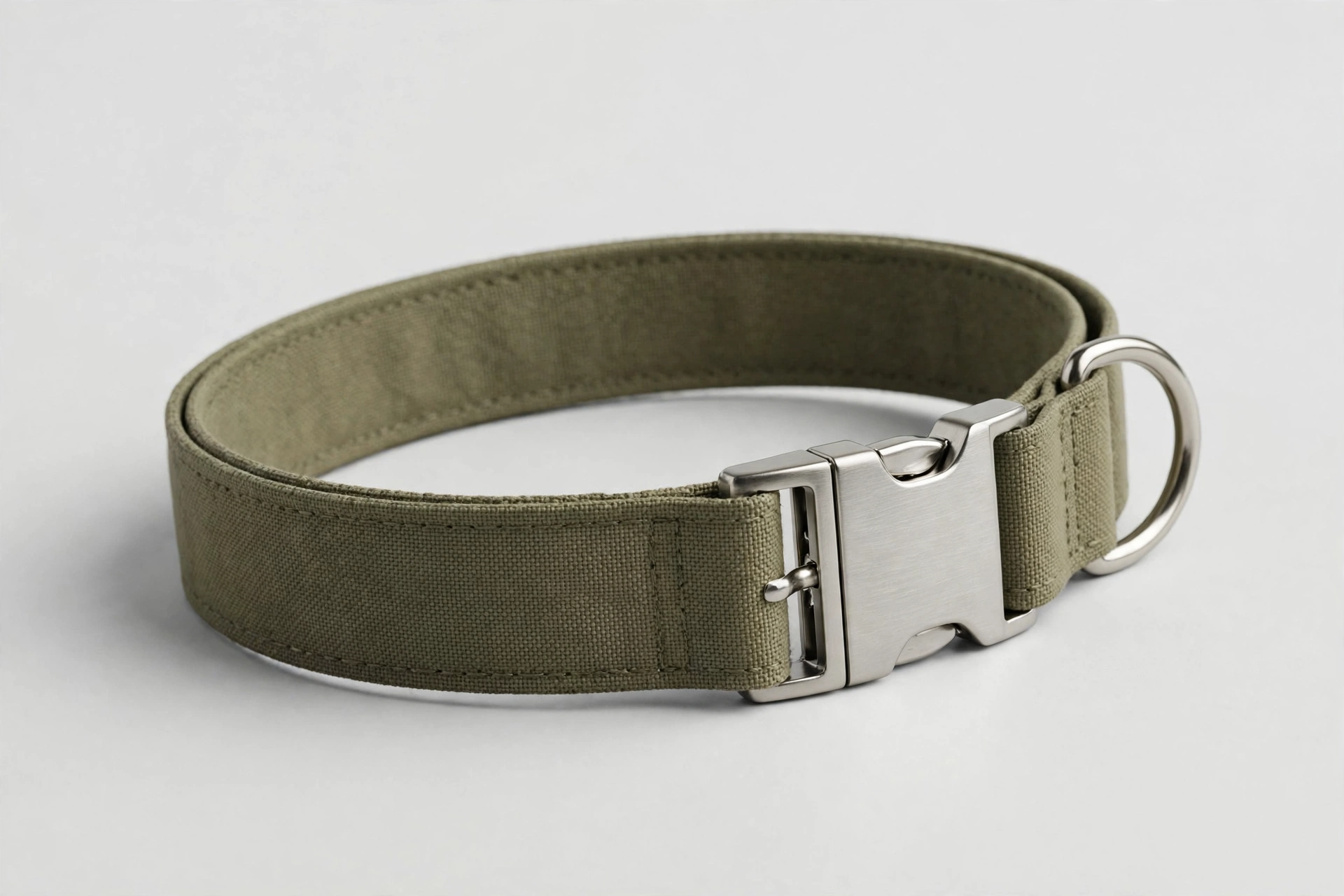
Ruffwear Crag Dog Collar (Seafoam)
The same proven Crag in Seafoam — the 11″–14″ size suits smaller necks, and the pale green reads fresh on light and dark coats alike. Same 18% recycled Tubelok webbing, same Ruffwear build quality, same honest percentage. I include both Crag colorways because the color and size ranges are genuinely different buys, and because Ruffwear’s disclosure sets the standard I want the whole category held to: name the percentage, name the source, let the buyer decide.

Buying Guide: Recycled Collars Without the Greenwash
What “recycled” means in collar marketing
Recycled content in collars comes from several streams: post-consumer PET (plastic bottles → polyester webbing), ocean-bound plastic (same chemistry, better story), recycled nylon (reclaimed fishing nets, carpet fiber — e.g., Econyl-type yarns), reclaimed cotton (textile waste), and upcycled rubber (inner tubes). The honest hierarchy: specific source claims (“made from 12 recycled bottles”) beat vague ones (“eco-friendly materials”); third-party certifications (Global Recycled Standard, OEKO-TEX) beat self-claims; high recycled percentages beat token amounts. I encourage you to read listings skeptically — “recycled” with no further detail is marketing, not information. The broader story of recycling explains where these feedstocks come from. If you like the eco angle but want a heritage material, see the best waxed canvas dog collars guide, and for vegan options, the best faux leather dog collars guide.
Does recycled perform as well?
For synthetics, essentially yes. Recycled PET webbing is chemically polyester — it performs like virgin polyester in strength, UV resistance, and washability. Recycled nylon similarly matches virgin nylon. This is the category’s quiet triumph: unlike some eco-materials that compromise function, recycled synthetics are functionally identical to conventional ones. The performance question applies more to natural-fiber recycling (reclaimed cotton is softer but weaker than virgin) and upcycled novelties (inner-tube linings are tough but add bulk). For recycled-PET collars specifically, expect full conventional performance with a better story.
The lifecycle math that matters
Here’s the environmental analysis I think is most honest: the greenest collar is the one you don’t replace. A recycled collar replaced yearly has a larger footprint than a conventional collar lasting five years — durability dominates the lifecycle math. So my hierarchy is: (1) buy durable, (2) buy recycled/sustainable, (3) buy repairable, (4) dispose responsibly. A recycled-PET collar from a quality maker that lasts years is genuinely excellent. A flimsy “eco” collar that fails in months is greenwashing with extra steps. Judge first on construction quality, second on material story — in that order.
Certifications worth knowing
Three labels carry weight: the Global Recycled Standard (GRS) verifies recycled content percentages and chain of custody — the gold standard for “recycled” claims. OEKO-TEX Standard 100 certifies the textile is free from harmful substances — relevant for something touching your dog’s skin daily. 1% for the Planet membership indicates environmental giving (not a product certification, but a company-values signal). Listings bearing these deserve more trust than those with only adjectives. Their absence isn’t proof of dishonesty — certification costs money small makers may lack — but their presence is meaningful.
End of life: completing the circle
A truly considered recycled purchase includes the exit plan. Nylon and polyester collars (recycled or not) aren’t curbside recyclable — textile recycling programs (TerraCycle, brand take-back schemes) are the responsible route. Some makers (notably in the eco space) run take-back or repair programs; I give extra credit to brands that do. Leather and natural-fiber collars biodegrade eventually but hardware doesn’t — remove metal before composting. And the simplest circular act: buy quality once. Every collar that lasts five years instead of one is four collars that were never manufactured.
Spotting greenwash: a buyer’s field guide
Greenwashing in pet gear follows predictable patterns — learn to spot them. Red flags: “eco-friendly” with zero specifics; nature imagery substituting for material information; recycled claims without percentages or sources; “biodegradable” applied to synthetic blends (they aren’t); and premium pricing justified only by green adjectives. Green flags: named recycled sources and percentages; third-party certifications (GRS, OEKO-TEX); transparent supply-chain descriptions; take-back or repair programs; and durability claims backed by warranties. The thirty seconds you spend reading past the marketing adjectives is the most impactful environmental action in the purchase — an informed buyer is greenwash-proof.
Frequently Asked Questions
Are recycled dog collars as strong as regular collars?
Recycled-synthetic collars (PET, nylon) — yes, functionally identical to virgin equivalents in tensile strength and abrasion resistance. The recycling process restores the polymer; the webbing doesn’t know its history. Recycled natural fibers (cotton) are somewhat weaker than virgin, and upcycled novelties vary. For the mainstream recycled-PET collar, strength is a non-issue; judge on construction (stitching, hardware) exactly as you would any collar.
What is the most eco-friendly dog collar material?
There’s no single winner, but my ranking by lifecycle impact: (1) a durable collar of any material that lasts many years — longevity dominates; (2) recycled synthetics (PET/nylon) with GRS certification; (3) renewable naturals (hemp, cork) from transparent makers; (4) conventional synthetics built to last. The least eco-friendly is any cheap collar replaced frequently, regardless of material claims. Buy once, buy well, maintain it — that’s the whole philosophy.
Do recycled collars cost more?
Sometimes slightly, sometimes not at all — recycled PET webbing is now close to cost-parity with virgin polyester at scale. The premium, where it exists, usually reflects small-batch production, certifications, or brand positioning rather than the recycled material itself. I don’t consider a modest premium unreasonable for verified recycled content from a responsible maker; I do question large premiums backed only by vague green language.
How can I tell if “recycled” claims are real?
Look for specifics: named sources (“post-consumer PET bottles”), percentages (“95% recycled content”), and third-party certifications (GRS, OEKO-TEX). Be skeptical of: “eco-friendly” with no details, nature imagery without substance, and recycled claims attached to components that are obviously virgin (metal hardware can’t be “recycled” meaningfully at this scale). When in doubt, contact the maker — transparent brands answer material questions gladly; evasive ones tell you everything.
Can I recycle my dog’s old collar?
Not curbside — but options exist. TerraCycle’s textile programs accept them; some pet brands run take-back schemes; animal shelters often welcome used collars and leashes (call first — they need specific types). Metal hardware can go in scrap metal recycling if separated. The most impactful choice remains extending the current collar’s life: wash it, repair stitching, replace only the buckle if that’s what failed. A collar’s greenest year is always the extra one.
Are recycled collars safe for puppies?
Material-wise, yes — recycled PET webbing is as safe as conventional nylon. Practically, puppies destroy collars regardless of material virtue, so I’d start them on inexpensive basics and graduate to the nice recycled collar at adult size. The exception is the committed eco household that accepts the replacement cost; no judgment, just economics. Either way, supervise chew-happy puppies with any collar.
What happens to ocean plastic in a collar?
Ocean-bound plastic (bottles, packaging collected near coastlines before it reaches the sea) is cleaned, shredded, melted, and extruded into polyester yarn — chemically identical to virgin polyester. That yarn is woven into webbing indistinguishable in performance from conventional. The environmental win isn’t in the collar’s function but in its feedstock: plastic diverted from marine ecosystems and given a decade of useful life instead of centuries of pollution. It’s a genuine good-news material story, which is why I rate ocean-plastic claims among the most credible in the category — provided the sourcing is verified, not just asserted.
Are recycled collars vegan?
Recycled-synthetic collars (PET, nylon) typically are — no animal products in the webbing. But check the details: some use leather trim, wool felt, or animal-derived adhesives, and “recycled” doesn’t automatically mean “vegan.” If vegan matters to you, verify each component or choose explicitly vegan-labeled products. The cork and hemp categories in this cluster are the most reliably vegan; recycled synthetics are usually vegan but deserve the ingredient-check.
Do eco collars come in good designs?
Increasingly, yes — the era of eco gear meaning beige hemp sacks is over. Recycled-PET webbing takes dye and print beautifully (the Pet Passion ribbon collars prove the point), and eco brands have learned that sustainability sells better in attractive packages. You no longer choose between values and style. That said, the most hardcore upcycled designs (inner-tube linings, visible reclaimed textures) wear their eco-ness visibly — which is either the appeal or the drawback, depending on your aesthetic. The category now spans stealth-eco to statement-eco.
Verdict
Among the best recycled dog collars, my picks are the Pawtitas for the ocean-plastic story with full performance, the Ruffwear Crag for honestly disclosed recycled webbing, and the Pet Passion for eco-meets-style. But my deeper verdict is the hierarchy: durability first, verified recycled content second, vague green claims never. A recycled collar that lasts five years is an environmental win; a flimsy “eco” collar replaced annually is the opposite. Buy the well-made one, verify the claims, maintain it, and let your dog’s daily gear quietly vote for the world you want.






2 Comments