
The best collars for large dogs have one job above all others: holding. When 80–120 pounds of muscle hits the end of a leash — at a squirrel, another dog, or just pure joy — the collar’s webbing, stitching, buckle, and D-ring are the only things between your dog and the street. I have focused this guide on the strength details that actually matter for large breeds — Labradors, German Shepherds, Rottweilers, Huskies, Goldens, and the giant breeds — including webbing width and weave, metal versus plastic buckles, D-ring gauge, stitching patterns, and the wide-collar pressure-distribution advantage. A collar failure on a large dog is not an inconvenience; it is a safety emergency. Buy strength first.
Affiliate disclosure
As an Amazon Associate, Dogslifelearning earns from qualifying purchases. If you buy through a link on this page, Dogslifelearning may earn a commission at no extra cost to you — it helps keep these guides free and independent.
⚡ The short answer
🥇Xqpetlihai Tactical Dog CollarBest overall strength→🥈HQSHNY Heavy-Duty Dog CollarPower pullers→🥉DAGANXI Tactical Dog CollarControl and handling→
Quick Picks: The Best Collars for Large Dogs
| Product | Best For | Standout Feature |
|---|---|---|
| Xqpetlihai Tactical Dog Collar | Best overall strength | Military-grade nylon, metal buckle, handle |
| HQSHNY Heavy-Duty Dog Collar | Power pullers | Extra-wide webbing, reinforced stitching |
| DAGANXI Tactical Dog Collar | Control and handling | Control handle, heavy D-ring, MOLLE |
| Joytale Tactical Dog Collar | Everyday durability | Padded comfort, metal hardware, reflective |
| Carhartt Dog Collar | Work-dog toughness | Duck canvas, heritage build quality |
The 5 collars, reviewed
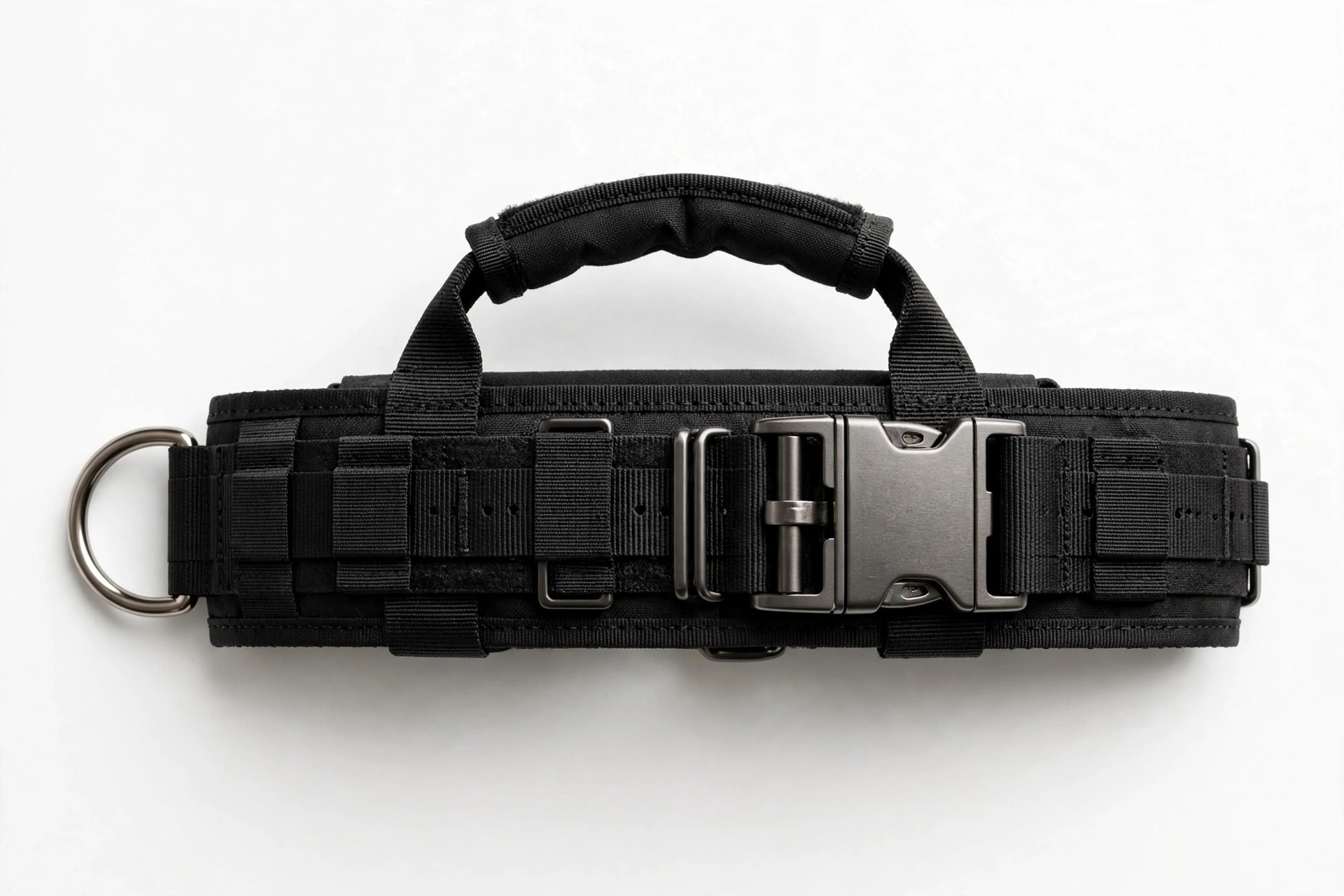
Xqpetlihai Tactical Dog Collar
The Xqpetlihai tactical collar is my overall pick for large dogs because it overbuilds every failure point: 1000D military-grade nylon webbing, a genuine metal quick-release buckle (not plastic), a heavy-gauge welded D-ring, reinforced box stitching at stress points, and an integrated control handle for close-quarters handling. On a large, powerful dog, each of those details is load-bearing — literally. The 1.5″ width distributes pressure across the neck, the handle lets you steady the dog at crosswalks and vet offices without grabbing the collar, and the MOLLE webbing carries ID patches. The honest trade-off: it is unapologetically tactical in looks and heavier than a simple flat collar — overkill for a calm senior Lab, exactly right for a young Rottweiler.
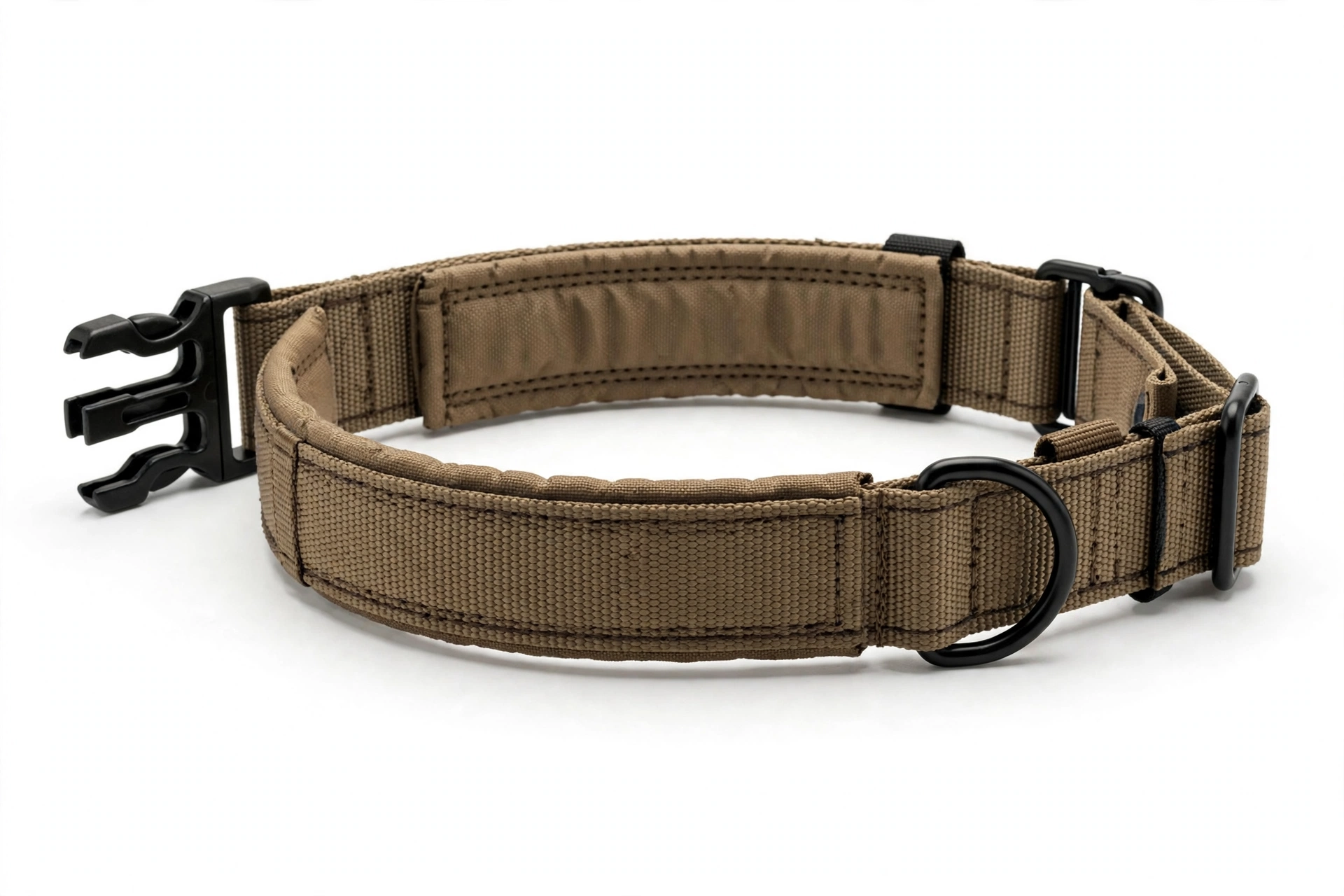
HQSHNY Heavy-Duty Dog Collar
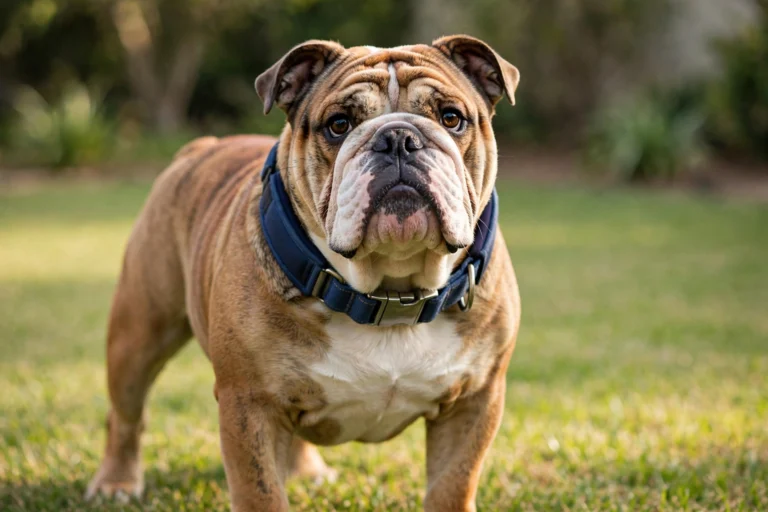
The HQSHNY is built for the specific nightmare scenario of large-dog ownership: the full-speed lunge. Its extra-wide webbing (up to 2″) spreads impact force across more neck surface, the stitching is reinforced at every stress point, and the hardware is metal throughout. I recommend wide collars for power pullers as a matter of physics — the same force distributed over twice the area means half the pressure on the trachea and neck. The collar is substantial and looks it; on a 100-pound dog that reads as appropriate, not bulky. Honest notes: measure carefully, because a 2″ collar on a dog with a short neck (bulldogs, for instance) can restrict head movement; and the break-in period for heavy webbing is real — it softens with use.
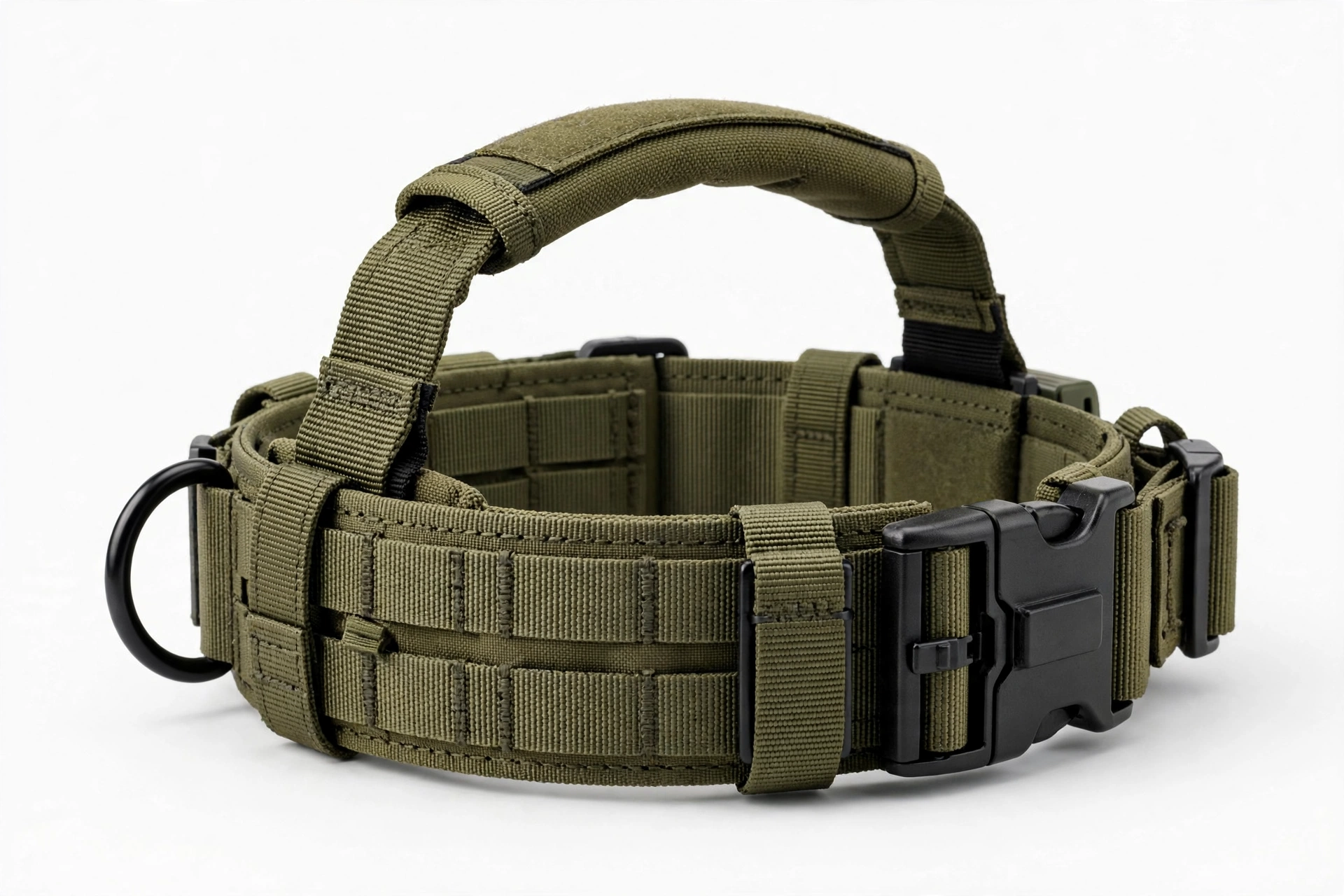
DAGANXI Tactical Dog Collar
The DAGANXI earns its place on the strength of its control handle — the feature I consider most underrated in large-dog collars. The wide, stitched handle sits flat against the collar until you need it, then gives you a secure grip inches from the dog’s neck for navigating doorways, vet waiting rooms, off-leash areas, and reactive-dog encounters. Combined with heavy-duty nylon, a metal buckle, and a robust D-ring, it is a complete large-dog control system. The MOLLE panel takes morale patches and ID panels. The honest assessment: the handle adds bulk that some owners find unnecessary for calm dogs, and like all tactical collars it broadcasts a certain aesthetic. For strong, excitable, or reactive large dogs, the handle is not cosmetic — it is the difference between controlled and chaos.
Joytale Tactical Dog Collar
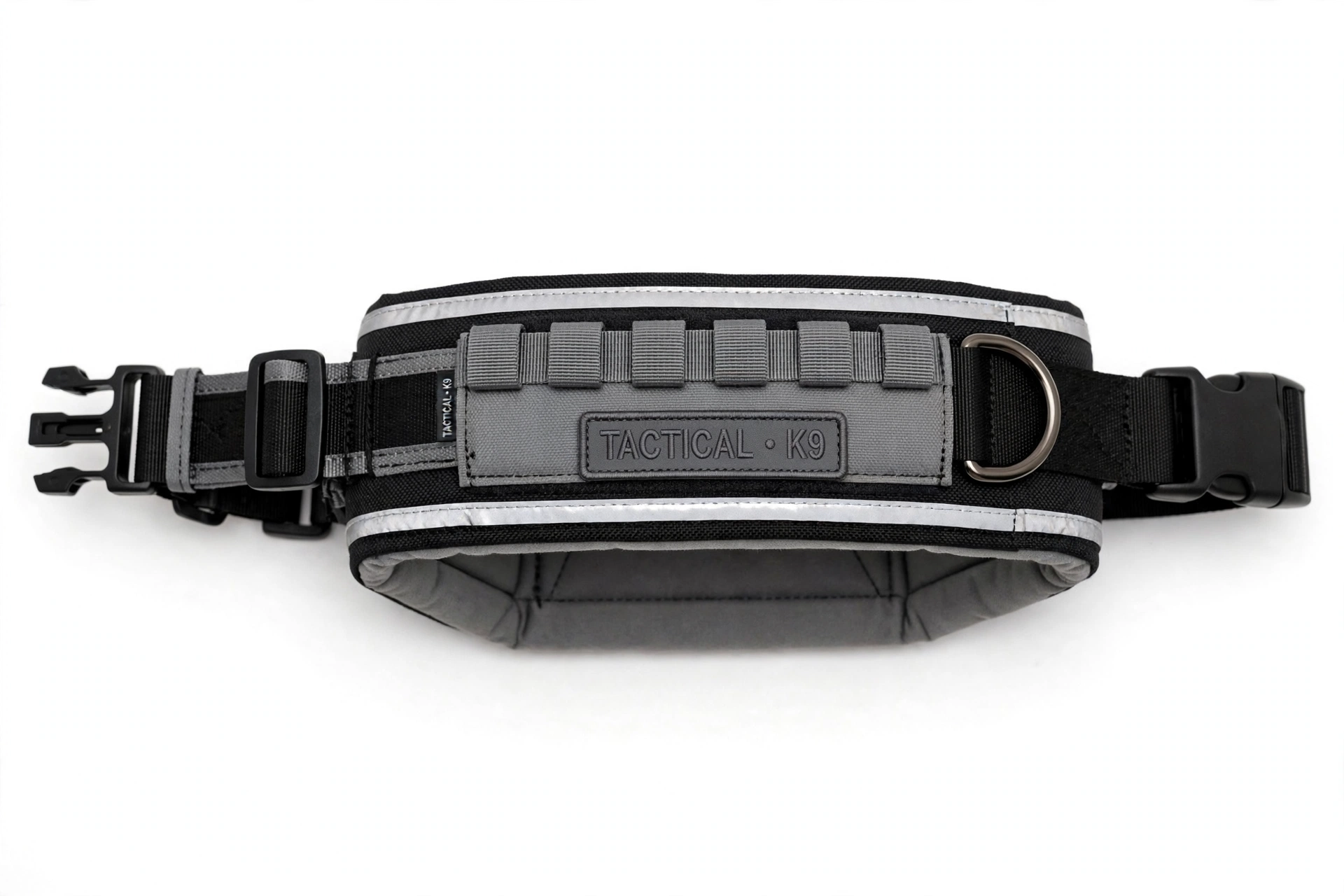
The Joytale tactical collar is my pick for large dogs whose owners want durability without the full military aesthetic: it keeps the important strength features (metal buckle, sturdy D-ring, reinforced nylon) while adding soft padding inside and reflective trim outside. The padding matters on large dogs because a heavy collar worn all day can rub — especially on short-coated breeds like Boxers and Pit Bulls. The reflective trim is a genuine safety bonus for dark-coated large dogs who vanish at night. It is slightly less overbuilt than the pure tactical options, which I consider the right call for the large dog who is strong but not destructive. Honest note: determined chewers can still work at the padding edges — supervise initially if your dog destroys soft goods.
Carhartt Dog Collar
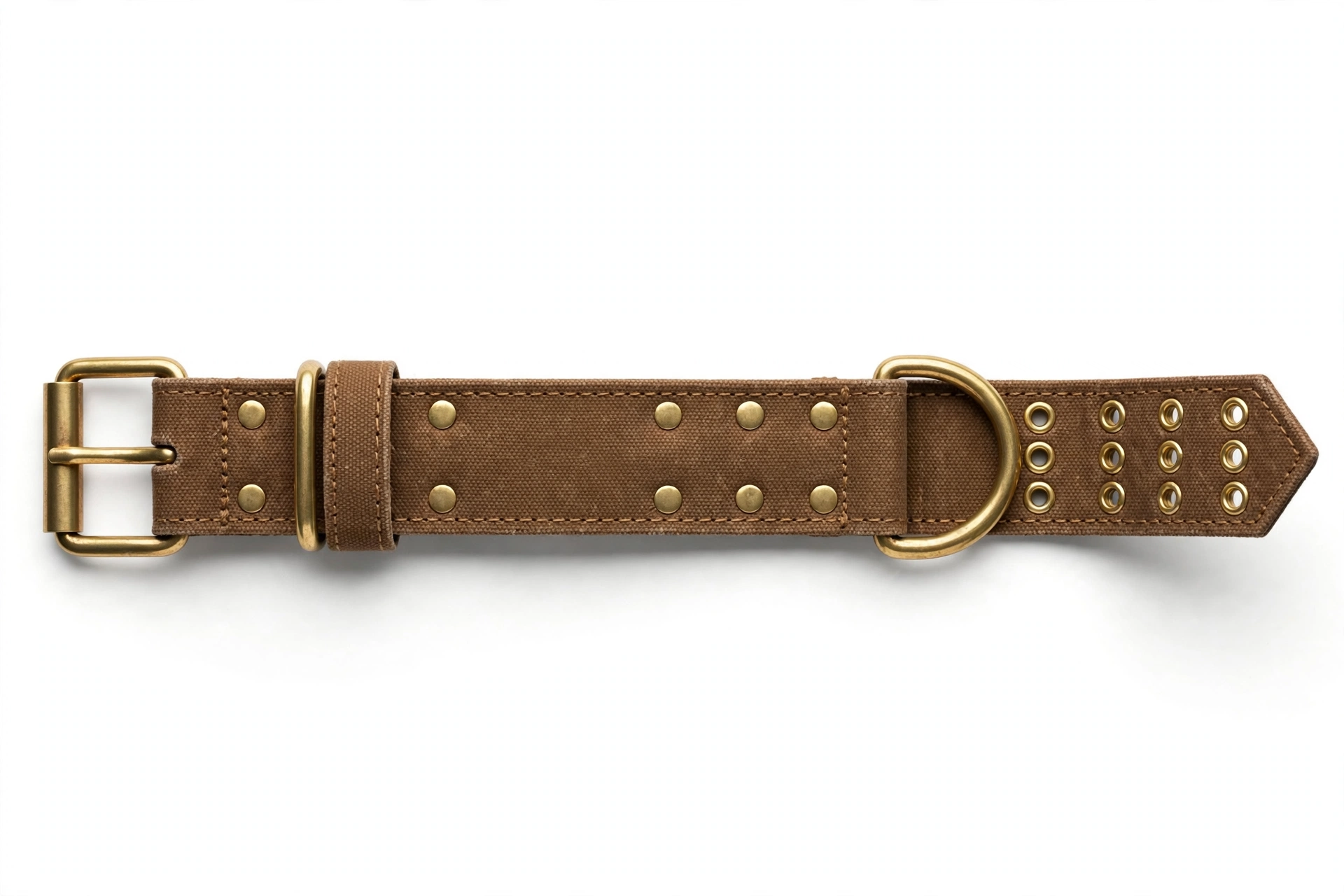
The Carhartt collar brings workwear heritage to dog gear: rugged duck canvas (the same stuff as the jackets), triple-stitched seams, and hardware built for job sites. I include it because large farm dogs, ranch dogs, and outdoor working dogs live a harder life than suburban pets — barbed wire, brush, mud, machinery — and the Carhartt’s canvas construction shrugs off abuse that frays standard nylon. The duck canvas also ages beautifully, developing character rather than just wearing out. The trade-offs: canvas is heavier than nylon when wet and slower to dry, the styling is pure workwear (you either love it or you do not), and it lacks the control handle of tactical designs. For the large dog with a job, it is the authentic choice.
Buying Guide: Strength Engineering for Big Dogs
Webbing width and weave: where strength starts
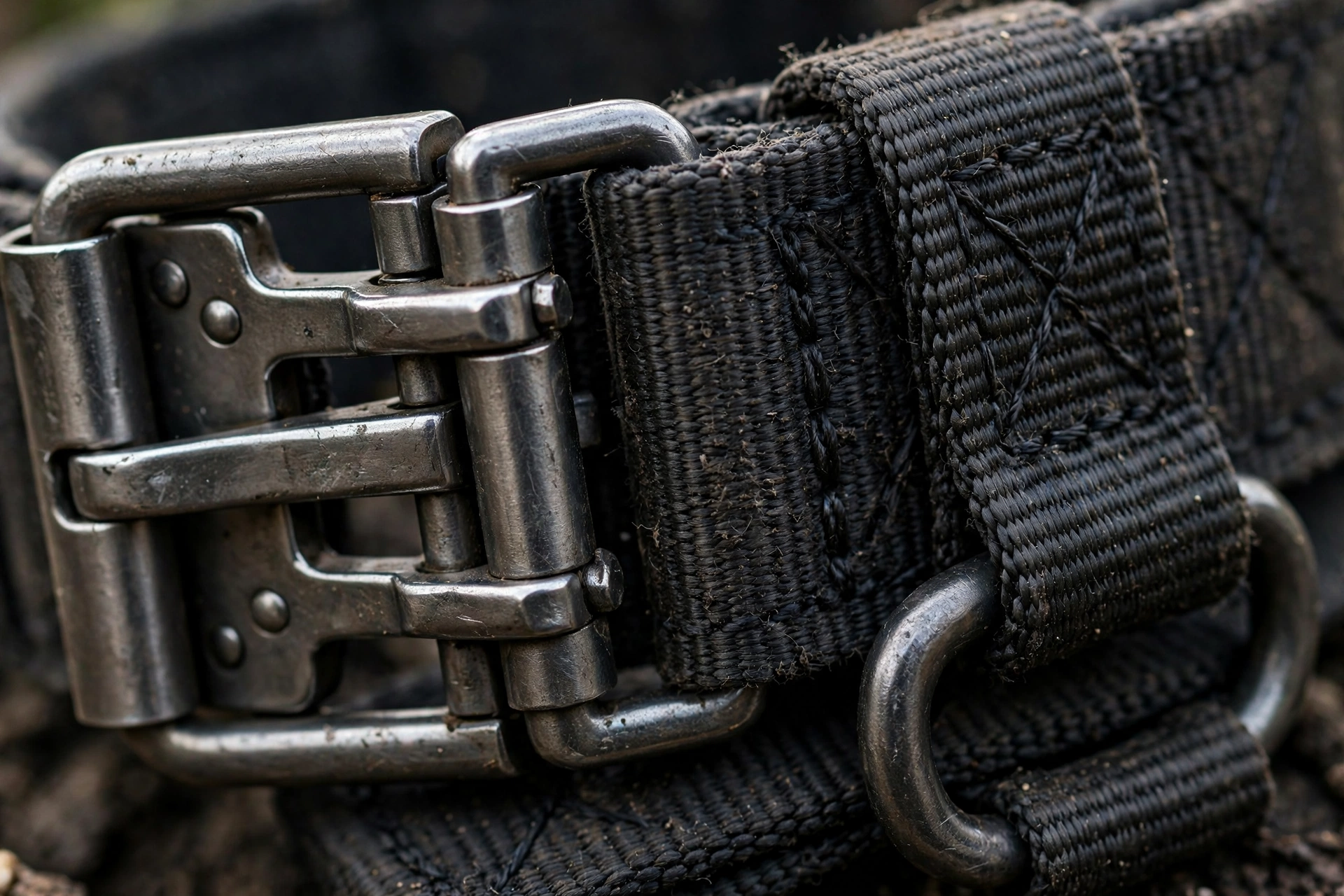
Collar strength begins with the strap. For large dogs, I consider 1.5″ the minimum width and 2″ ideal for dogs over 80 pounds or power pullers — wider webbing is stronger (more material), distributes pressure better, and resists rolling and twisting. The weave matters too: military-spec nylon (1000D) and climbing-grade webbing outlast standard polypropylene, resisting abrasion, UV degradation, and the dreaded fraying at adjustment holes. Check the webbing edges — heat-sealed or bound edges resist unraveling; raw cut edges are a failure point. When comparing collars, flex the webbing: quality nylon is dense and smooth; cheap webbing feels papery and stretches.
Buckles: metal vs. plastic, honestly
The buckle is the most common failure point on large-dog collars, so this decision matters. Metal buckles (aluminum alloy or stainless) are stronger, more chew-resistant, and longer-lasting — my default for dogs over 50 pounds. Plastic side-release buckles are lighter, cheaper, and genuinely convenient, and quality acetal plastic is stronger than most owners assume — but plastic fatigues with UV exposure and age, can crack in extreme cold, and determined chewers destroy it. My rule: metal buckle for strong, young, or destructive large dogs; quality plastic is acceptable for calm seniors and as a secondary collar. Whatever the material, the buckle should operate smoothly with an audible click — a gritty or hesitant buckle is a warning sign.
D-rings, stitching, and the details that hold
Beyond webbing and buckle, three details separate collars that hold from collars that fail. The D-ring should be welded (not bent-wire), heavy gauge, and large enough to clip easily with gloves — it takes the full leash load on every pull. Stitching should be box-stitched or bar-tacked at stress points (where the D-ring and buckle attach), with high-tenacity thread; single-line stitching at the D-ring is a red flag. And adjustment hardware (triglide slides) should be metal and should grip — a collar that loosens itself during a walk is a collar that will eventually slip off. I test every large-dog collar by pulling hard at each joint before trusting it; you should too.
Wide collars and pressure distribution
There is a reason sighthound owners and large-breed handlers favor wide collars: physics. Pressure equals force divided by area, so a 2″ collar exerts half the neck pressure of a 1″ collar under the same lunge. For large dogs that pull, lunge, or have trachea sensitivity, width is protective equipment. The practical limits: the collar must not be so wide it restricts head movement or rubs the ears (an issue for short-necked breeds), and very wide collars need secure adjustment to avoid rotating. For most large dogs, 1.5″–2″ hits the sweet spot of strength, comfort, and practicality.
The two-collar system for large dogs
Experienced large-dog owners rarely rely on a single collar. The system I recommend: a comfortable everyday flat collar (rolled leather or padded nylon) worn 24/7 for ID tags, plus a heavy-duty tactical or wide collar for walks, training, and high-distraction outings. The everyday collar stays light and comfortable; the working collar brings the strength and control handle when it counts. This also extends the life of both — the working collar is not subjected to 24/7 wear, and the everyday collar never faces a full lunge. Keep the working collar by the leash so grabbing it becomes part of the walk routine. Two collars, each doing its job, beats one collar compromising at both.
When a collar is not enough: harnesses and training
Honest talk: for large dogs that pull hard, no collar — however strong — is the complete answer. A front-clip harness gives mechanical advantage against pulling without any neck pressure, and for the strongest pullers, a head halter (introduced with proper conditioning) offers control that no collar can match. The collar remains essential for ID tags and as a backup attachment, but the leash belongs on the harness for pullers. And the long-term fix for lunging is training, not hardware: a strong collar manages the symptom, loose-leash training cures the disease. Buy the strong collar for safety today; invest in training for freedom tomorrow.
Frequently Asked Questions
What is the strongest dog collar for large dogs?
Strength comes from the combination: 1.5″–2″ military-grade nylon webbing, a metal buckle, a welded heavy-gauge D-ring, and box-stitched stress points. Tactical-style collars (like the Xqpetlihai and DAGANXI on this list) bundle all of these by design. No single feature makes a collar strong — it is the absence of weak links.
Should large dogs wear wide collars?
Generally yes. A 1.5″–2″ collar distributes pressure better, is stronger, and resists twisting on large necks. The exceptions are short-necked breeds where very wide collars restrict movement, and dogs that do precision work where a lighter collar is preferred. For the average large pet dog, wider is better.
Are metal buckles better than plastic for big dogs?
For strong or destructive large dogs, yes — metal buckles resist chewing, UV fatigue, and cold-cracking better than plastic. Quality acetal plastic buckles are adequate for calm large dogs and offer lighter weight and lower cost. I default to metal above 50 pounds and consider it mandatory above 80 for powerful breeds.
Can a large dog break a collar?
Yes — collar failures on large dogs happen, usually at the buckle, the D-ring stitching, or the adjustment slide. That is why this guide emphasizes those specific points. Inspect your large dog’s collar monthly: flex the buckle, tug the D-ring stitching, check for fraying and UV fading. Replace at the first sign of weakness, not after the failure.
Should I walk my large dog on a collar or harness?
For calm large dogs that do not pull, a strong collar is fine. For pullers, reactive dogs, or dogs with neck/trachea issues, a front-clip harness is safer and gives you more control — keep the collar on for ID regardless. Many experienced large-dog owners use both: harness for the leash, collar for tags and backup.
How do I stop my large dog from pulling?
The lasting fix is loose-leash training: reward the dog for walking at your side, stop or change direction when the leash tightens, and be relentlessly consistent. Tools (front-clip harnesses, head halters) manage pulling while you train; they do not replace training. For persistent or dangerous pulling, a few sessions with a certified professional trainer pay for themselves many times over.
Related Buying Guides
The verdict
The Xqpetlihai Tactical Dog Collar is my top pick for the best collar for large dogs: military-grade webbing, metal buckle, welded D-ring, reinforced stitching, and a control handle — every failure point overbuilt. Power pullers should consider the extra-wide HQSHNY; working dogs the Carhartt canvas. Whatever you choose, inspect the buckle, D-ring stitching, and adjustment hardware monthly, and remember that the strongest collar is a safety device — pair it with a harness for pullers and training for the long term.
2 Comments