
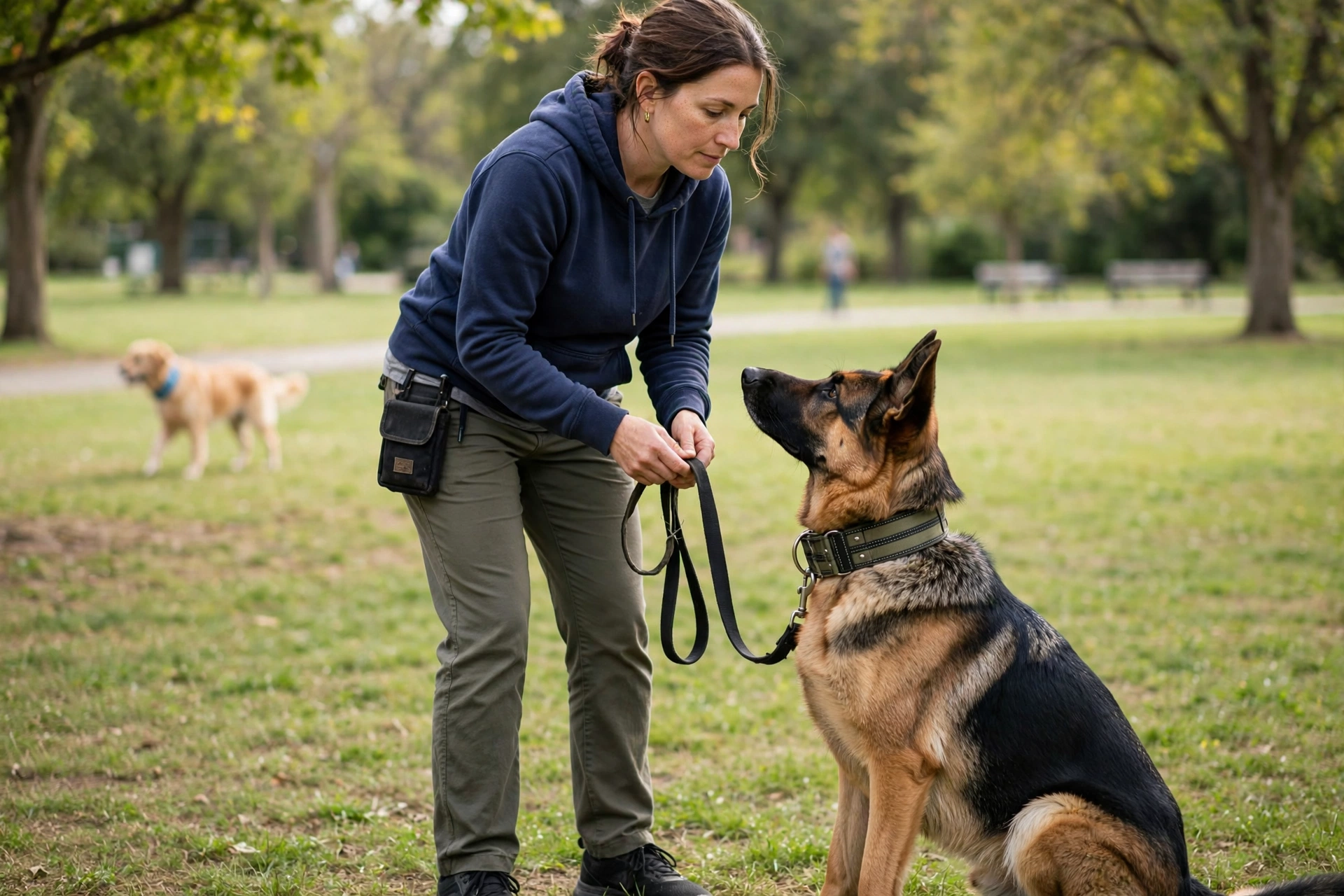
The best dog collars for reactive dogs are not the ones that punish the reaction — they are the ones that keep a lunging, spinning, backing-out-of-the-collar dog safely attached to you while you do the real work. Reactivity (barking, lunging, and snapping at triggers like other dogs, strangers, or bikes) is an emotional response, usually rooted in fear, frustration, or over-arousal. No collar fixes that; only management, distance, and desensitization training do, ideally with a certified trainer or veterinary behaviorist. What the right collar can do is prevent escapes during a reaction, distribute pressure safely across the neck, and give you a secure handle on the situation — literally. This guide covers five collars chosen for escape-proofing, pressure distribution, and control, and explains the equipment philosophy that keeps reactive-dog handling humane.
Affiliate disclosure
As an Amazon Associate, I earn from qualifying purchases. If you buy through a link on this page, I may earn a commission at no extra cost to you.
⚡ The short answer
🥇Mayerzon 2″ Padded MartingaleBest overall→
🥈Caninus 2″ Martingale with BuckleEscape artists→
🥉Mighty Paw Martingale with BuckleTrainer-trusted pick→
Quick Picks: Best Dog Collars for Reactive Dogs at a Glance
| Product | Best For | Standout Feature |
|---|---|---|
| Mayerzon 2″ Padded Martingale | Best overall | Wide padded limited-slip, reflective |
| Caninus 2″ Martingale with Buckle | Escape artists | Wide martingale, easy buckle on/off |
| Mighty Paw Martingale with Buckle | Trainer-trusted pick | Limited cinch, doubles as flat collar |
| If It Barks 1.5″ Martingale | Training crossover | Quick-snap buckle, wide pressure spread |
| KCUCOP Tactical Collar with Handle | Maximum physical control | Grab handle for close management |
5 Collars Built for Reactive-Dog Handling
Every pick below shares three traits: it cannot be backed out of easily, it spreads leash pressure wider than a standard collar, and it avoids aversive mechanisms. None of these collars will train your dog for you — they are safety equipment for the training journey.
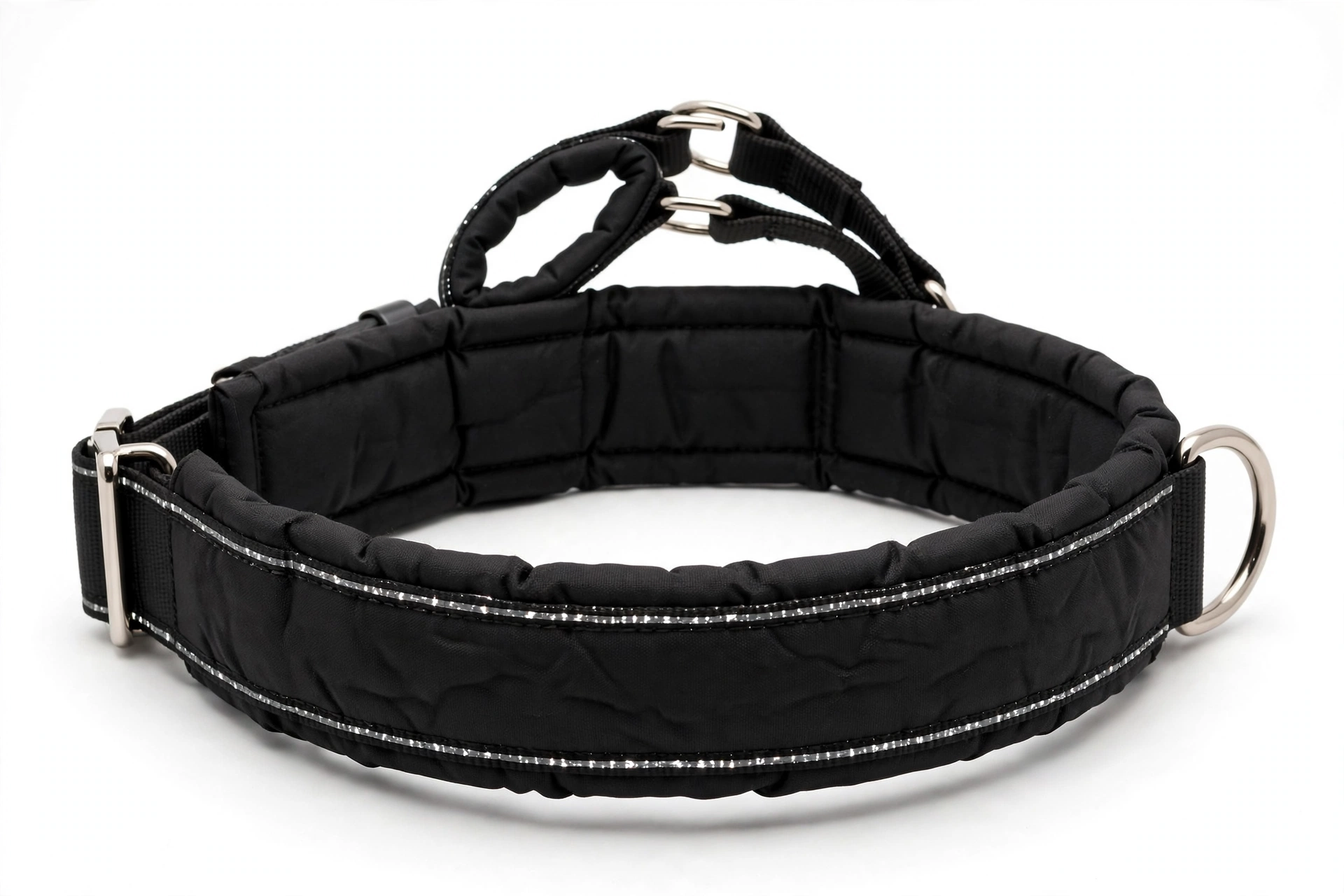
Mayerzon 2″ Wide Padded Martingale
The Mayerzon 2-inch martingale is purpose-built for strong, excitable dogs: a full two inches of width to distribute the force of a lunge, a limited-slip martingale loop that tightens just enough to prevent backing out (then releases), soft neoprene padding against the neck, and reflective stitching for low-light walks. A quick-release buckle makes on-off easy, and a stainless D-ring takes the leash while a second ring holds ID tags. For the classic reactive-dog scenario — a powerful dog that hits the end of the leash hard — the combination of width, padding, and escape-proofing is exactly the right formula.
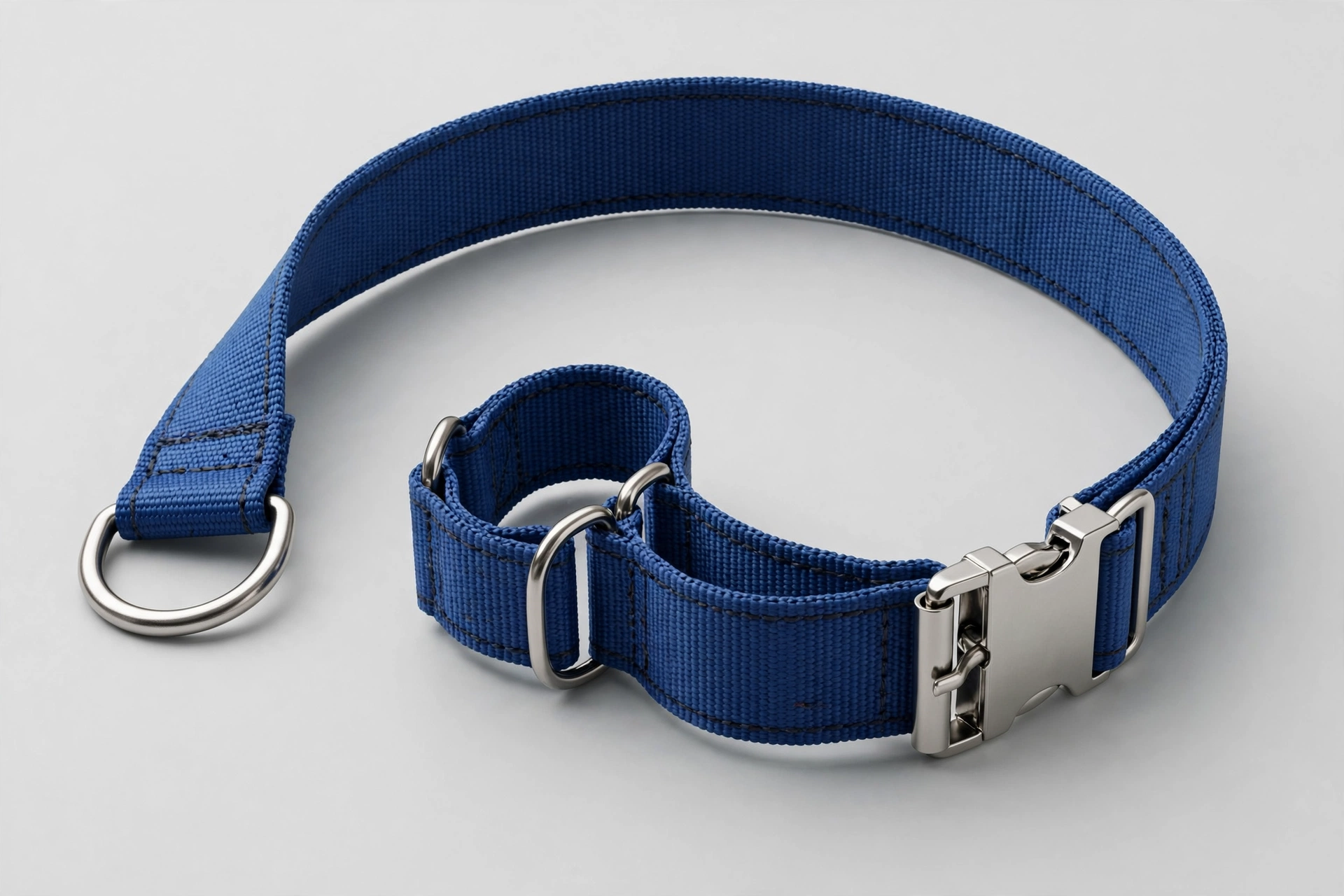
Caninus Collars 2″ Martingale with Buckle
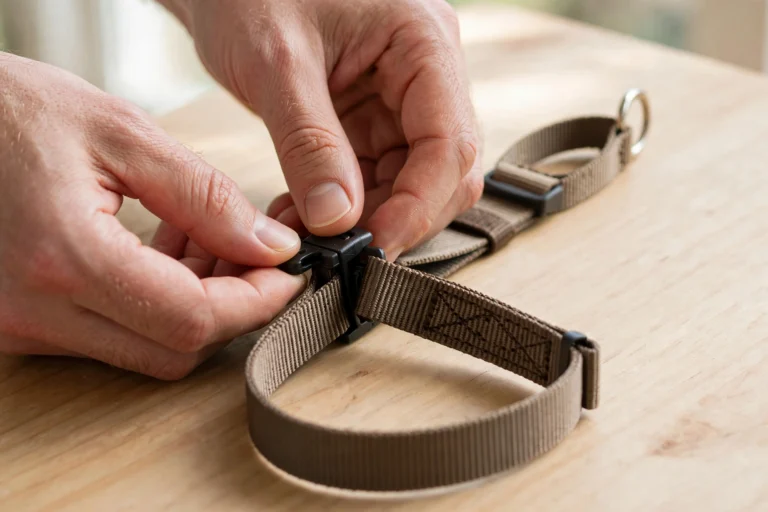
Some reactive dogs do not just lunge — they twist, reverse, and slip their collars mid-reaction. The Caninus 2-inch martingale with buckle is built for those dogs: heavy-duty 2-inch nylon, a true martingale cinch that closes the escape gap when the dog pulls backward, and a side-release buckle so you do not have to wrestle it over the head. The brand’s sizing guidance is unusually detailed (measure both neck and head), which matters because a martingale must open wide enough to don yet cinch small enough to hold. If your dog has ever come out of a flat collar during a reaction, this is the upgrade.
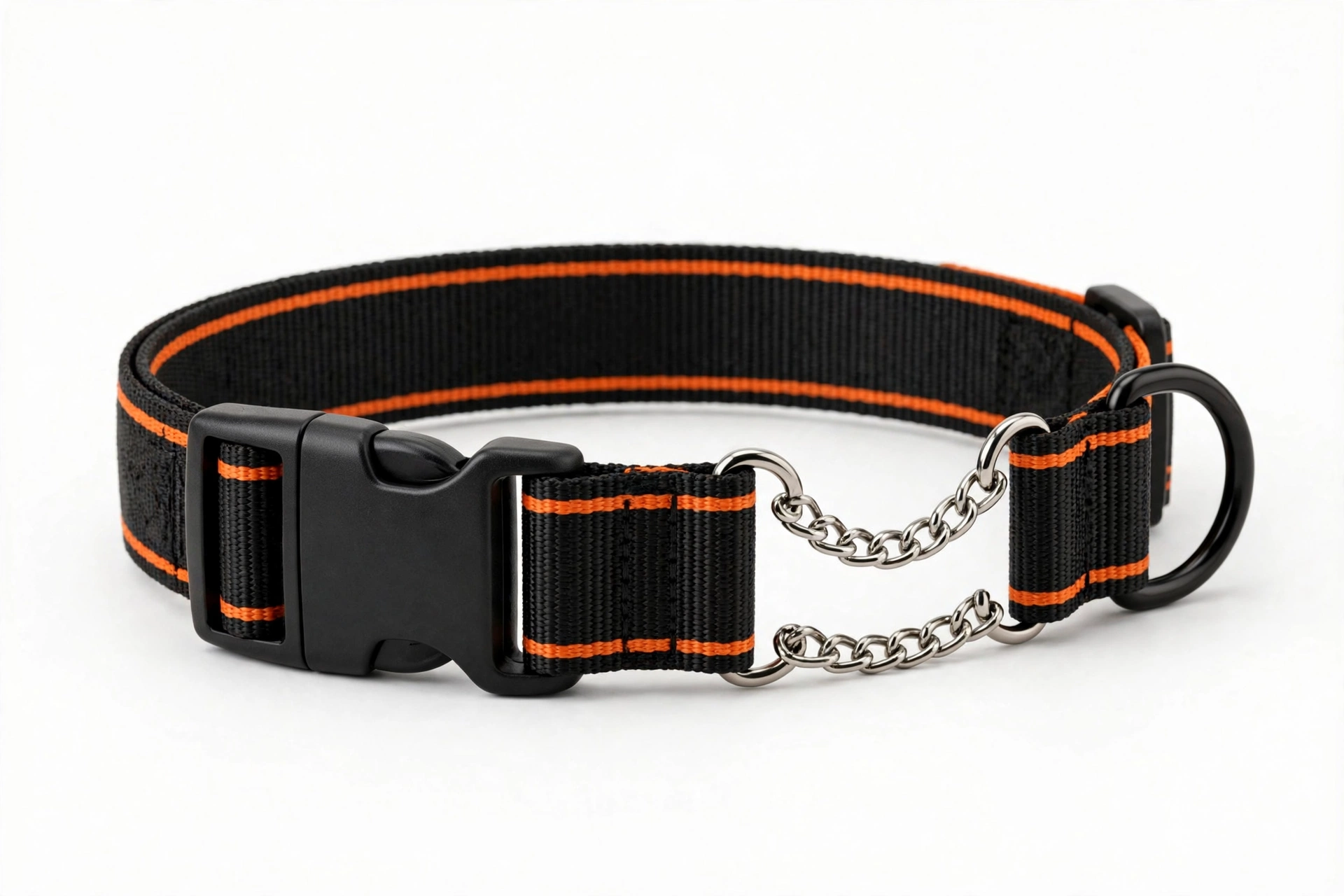
Mighty Paw Martingale with Buckle
Mighty Paw’s martingale is a longtime favorite among trainers for good reason: the limited-cinch chain design tightens under tension for control, a second D-ring lets it double as a standard flat collar when no cinch is wanted, and reflective stitching adds visibility. The family-owned brand backs it with a 90-day return promise, and the design is widely recommended by trainers working with leash-reactive dogs. It is less padded than the Mayerzon, so it suits dogs whose reactions are more barking-and-pulling than full-body lunging — and it pairs well with a front-clip harness for two-point control.
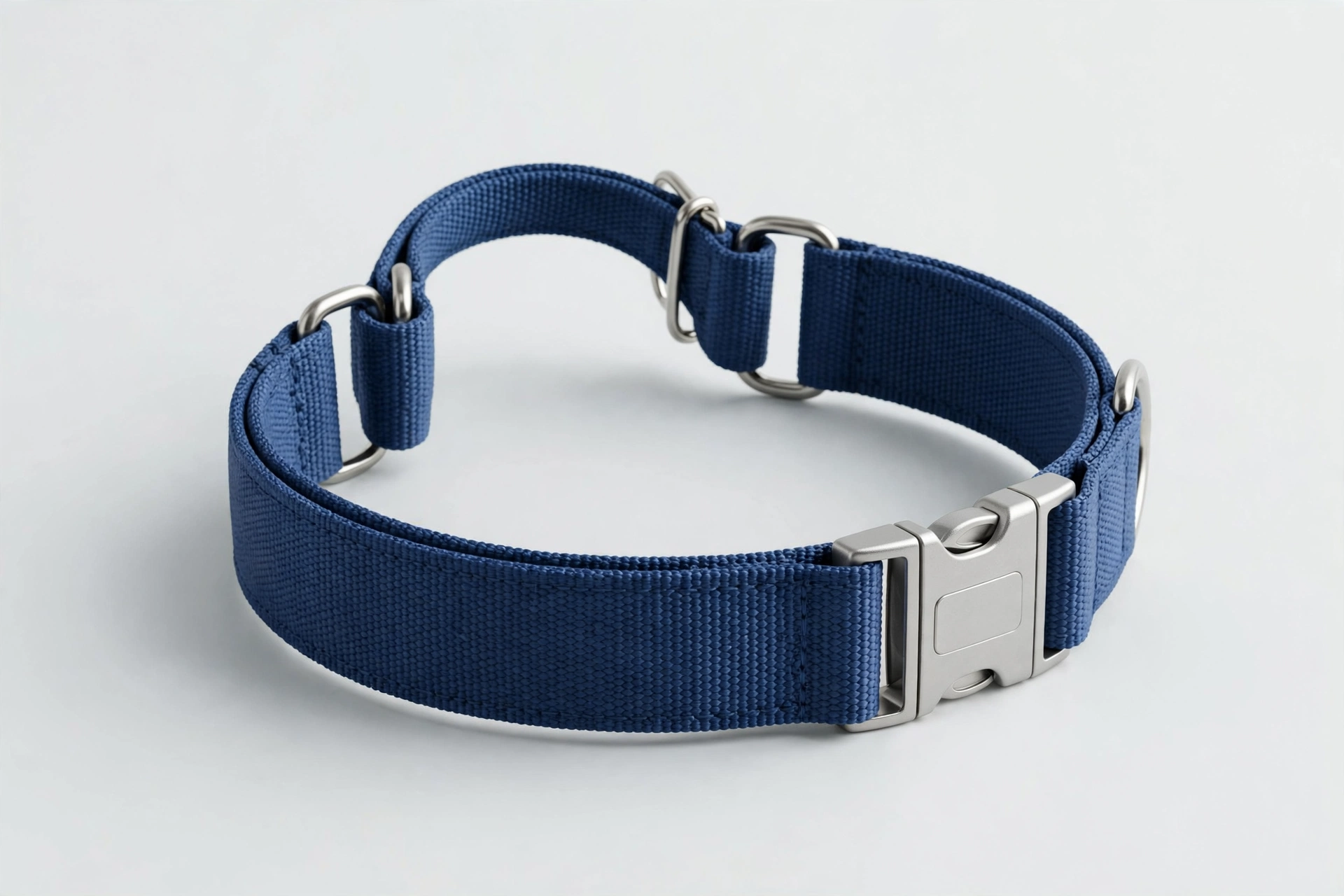
If It Barks 1.5″ Martingale
The If It Barks 1.5-inch martingale brings wide-webbing pressure distribution together with a heavy-duty quick-snap buckle — useful when you need the collar on and off quickly around triggers, such as loading in and out of the car at a training class. The 1.5-inch width suits medium and large dogs, the martingale action prevents backing out, and the maker’s replacement promise on stitching and hardware adds confidence. A solid middle ground for owners working through a reactivity training program who want one collar for both training sessions and daily walks.
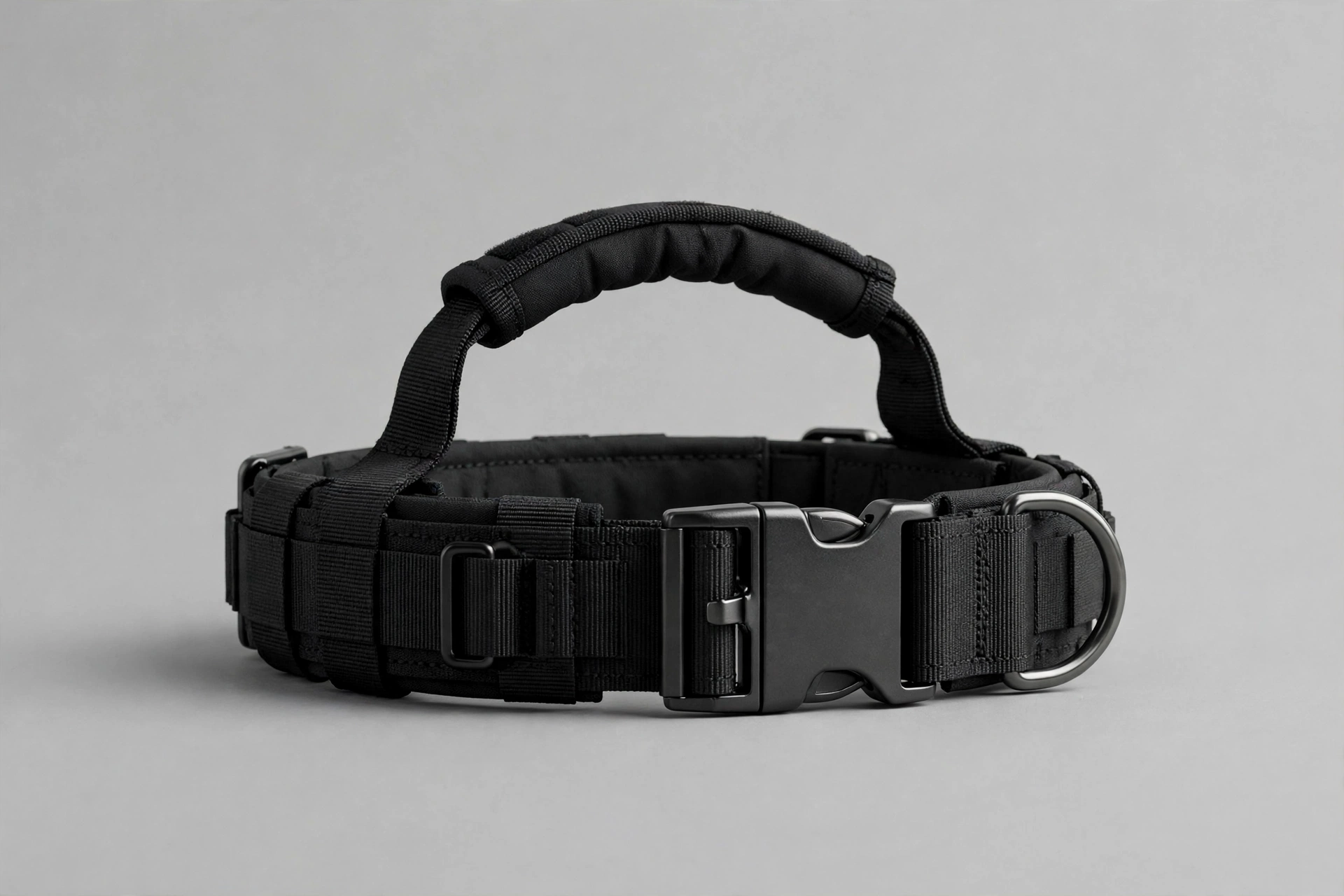
KCUCOP Tactical Collar with Handle
In trigger-stacked environments — narrow trails, crowded sidewalks, vet waiting rooms — sometimes you need to hold your dog close now. The KCUCOP tactical collar’s sewn-in grab handle lets you do that without wrapping your hand around the collar itself, which is safer for both of you during a reaction. The 1680D nylon base, padded lining, and metal quick-release buckle handle strong dogs, and the snug tactical fit resists twisting. Use the handle as an emergency brake, not a steering wheel: grab, create distance from the trigger, then release and reward the recovery.
Buying Guide: Equipment Philosophy for Reactive Dogs
The most important thing this guide can tell you is that equipment is maybe ten percent of reactivity work. The other ninety percent is management (controlling the environment), desensitization and counterconditioning (changing the emotional response), and working with a qualified professional. Choose gear that supports that program — and avoid gear that undermines it.
Why aversive collars backfire on reactivity
Prong collars, choke chains, and shock collars suppress the outward signs of reactivity by adding pain or fear to an already over-threshold moment. The dog may go quiet — and many owners mistake that for success — while the underlying emotional response intensifies, because the dog now associates the trigger plus pain. This is how reactivity escalates into aggression: the warning signals get punished away until the dog skips straight to biting. Certified behavior professionals overwhelmingly recommend against aversive tools for reactive dogs. If a trainer suggests one as the first option, get a second opinion from a CPDT-KA or veterinary behaviorist.
What the collar must do: prevent escape, spread pressure
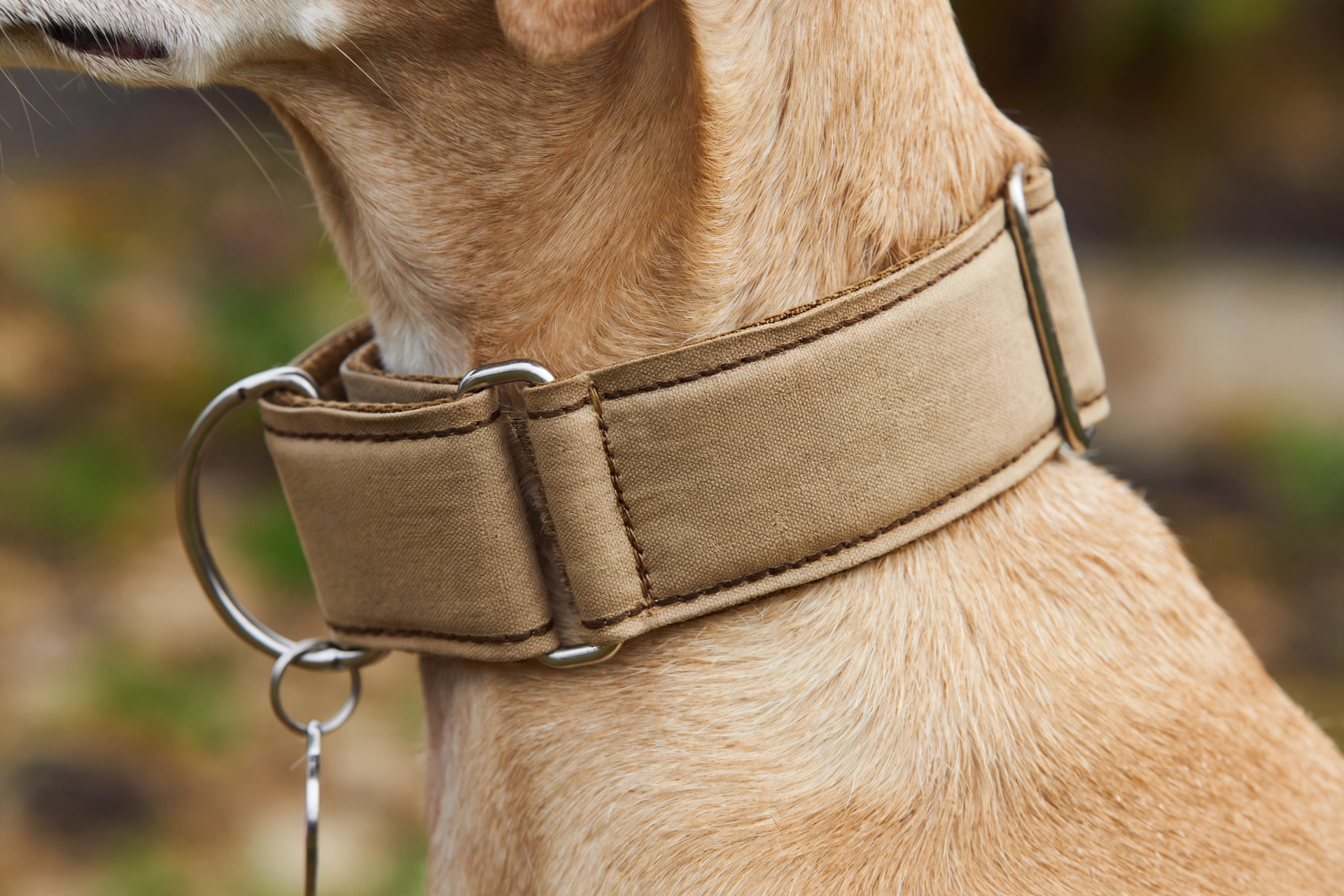
A reactive dog’s two equipment risks are slipping the collar mid-reaction and injuring the neck during lunges. Martingale-style collars solve the first: the limited cinch closes the gap that lets a dog back out, without the unlimited tightening of a slip chain. Wide (1.5 to 2 inch), padded collars solve the second: spreading force across more neck surface reduces peak pressure on the trachea and cervical spine during the inevitable lunge. A flat narrow collar on a lunging dog concentrates the entire force on a one-inch band — exactly what you want to avoid.
Consider pairing with a harness
Many reactivity specialists recommend a well-fitted front-clip or dual-clip harness as the primary leash attachment, with the collar as backup (a two-point leash setup, or a safety connector between collar and harness). Harnesses move attachment off the neck entirely, which matters for dogs that lunge hard and often. The collars in this guide then serve as the escape-proof backup and ID carrier — a role they fill perfectly.
How to set up a two-point safety system
The gold standard for reactive-dog walks is redundancy: leash clipped to the front of a harness, plus a short backup connector from the harness to the martingale collar. If the harness clip fails or the dog wriggles free, the collar catches. Alternatively, use a double-ended leash with one clip on the harness front and one on the collar — this also gives you steering from two points, which is noticeably steadier during a lunge than a single attachment. Keep the backup connector short (six to ten inches) so it never dangles into leg-tangling range, and use locking carabiners or sturdy bolt snaps rather than cheap trigger clips at every connection.
Fit for the worst moment, not the calm moment
Fit a reactive dog’s collar for the reaction, not the living room. Dogs tuck their heads, twist, and throw themselves backward during reactions — test the fit by gently pulling the collar toward the head: if it can slide over the ears, it will come off mid-reaction. Martingales should be adjusted so the two rings nearly (but not quite) meet at full cinch. And use a backup: a short connector from collar to harness means one failure never equals a loose reactive dog.
Work with a professional
Reactivity is one of the highest-value problems to bring to a professional, because the wrong approach actively makes it worse. Look for a certified professional dog trainer (CPDT-KA) experienced with reactivity, or a veterinary behaviorist (DACVB) for severe cases — and be wary of anyone whose program centers on correction-based tools. A good professional will talk about thresholds, trigger stacking, and your dog’s body language before ever discussing equipment.
Frequently Asked Questions
What is the best collar for a reactive dog?
A wide, padded martingale-style collar (or a martingale paired with a harness) is the most commonly recommended setup: it prevents escapes, distributes lunge pressure, and adds no pain to an already stressful moment. Avoid prong, choke, and shock collars, which risk escalating reactivity.
Will a prong collar stop my dog’s reactivity?
It may suppress the visible reaction, but suppression is not resolution — and the added pain during trigger exposure frequently makes the underlying fear or frustration worse over time. Most certified behavior professionals advise against prong collars for reactivity specifically because of this escalation risk.
Should I use a harness or collar for my reactive dog?
Many specialists prefer a harness as the primary attachment (no neck pressure during lunges) with a martingale collar as backup via a two-point leash or safety connector. This gives you the best of both: neck safety plus escape-proofing.
How do I stop my dog lunging at other dogs?
The evidence-based approach is desensitization and counterconditioning: working at a distance where your dog notices triggers without reacting (under threshold), and pairing trigger sightings with high-value rewards to change the emotional response. Management tools — distance, visual barriers, choosing quiet routes and times — support the training. This is genuinely a case for professional guidance.
Can a collar help with leash reactivity at all?
A collar helps with the safety logistics of reactivity — preventing escapes and reducing injury risk during lunges — which gives you the secure foundation to do training. It does not itself reduce reactivity. Think of it as the seatbelt, not the driving lesson.
My dog only reacts on leash. Is that normal?
Very. Leash reactivity is one of the most common behavior complaints, and it often appears in dogs that are perfectly social off leash. The leash removes flight as an option and adds frustration (barrier frustration), so dogs that would calmly avoid a trigger off leash may explode at the end of six feet of nylon. It is normal, common, and workable — with the right program.
What should I do in the moment when my dog reacts?
Do not punish the reaction — yelling or jerking the leash adds stress to a dog already over threshold. Instead, calmly and quickly increase distance from the trigger (cross the street, U-turn, step behind a car), using the collar or harness to guide rather than drag. Once at a comfortable distance, reward your dog for disengaging — even a glance away from the trigger deserves a treat. Every clean disengagement is a training rep; every prolonged explosion is rehearsal of the problem.
Related Buying Guides
The verdict
The Mayerzon 2-inch padded martingale is the best collar foundation for reactive-dog handling: escape-proof cinch, wide pressure distribution, and padding where lunges land. Pair it with a harness for two-point security, fit it for the worst moment rather than the calm one, and put your real energy into the training program — distance, desensitization, and a qualified professional. The collar keeps everyone safe while the training does the actual fixing, and that division of labor is exactly right.




2 Comments