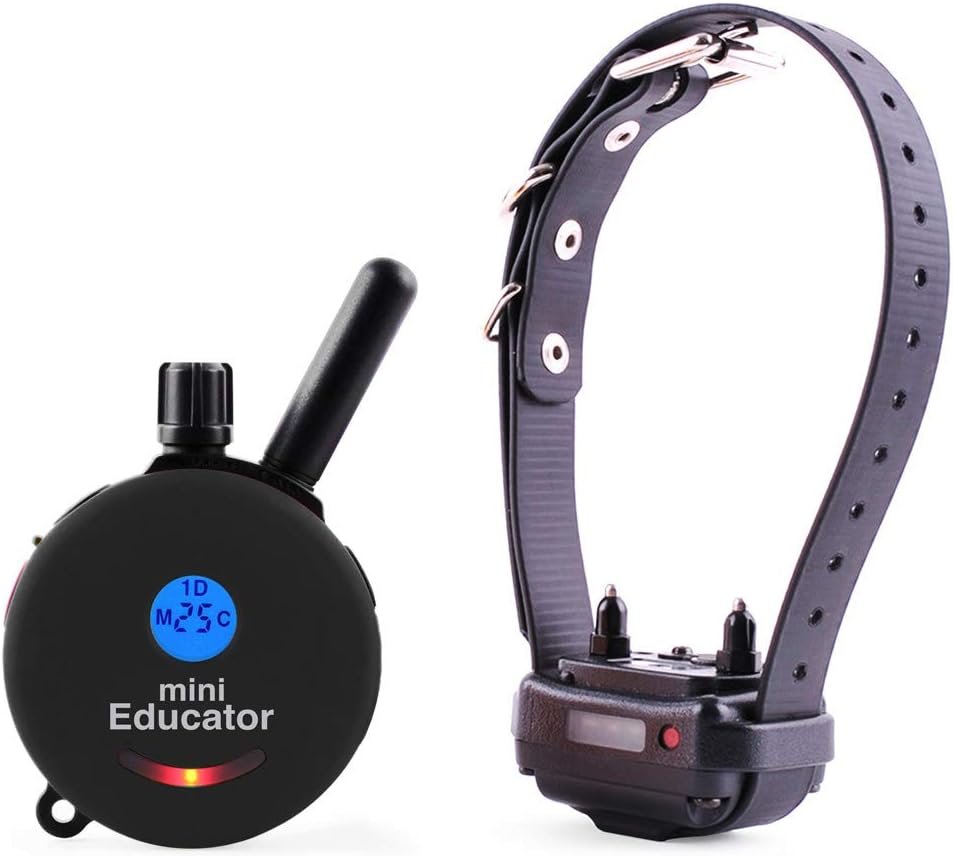
Mini Educator ET-300 Training Collar: 100 Gentle Stim Levels
The Mini Educator is my top recommendation for owners pursuing low-level, humane e-collar conditioning — E-Collar Technologies designed its “blunt sti
As an Amazon Associate, Dogslifelearning earns from qualifying purchases.
Product Description
The Mini Educator ET-300 is my top recommendation for owners pursuing low-level, humane e-collar conditioning. E-Collar Technologies designed its blunt stimulation to feel more like a tap than a sharp nick, which changes the entire training dynamic: instead of startling the dog, you’re getting its attention the way a tap on the shoulder would.
The 100 stimulation levels are the other half of the story. With that many increments, you can find a true working level, the exact point where your dog notices the signal without stress, and stay there. The smaller receiver suits dogs down to about 10 pounds, opening humane e-collar work to small breeds that bulkier units overwhelm, and the stopwatch-style transmitter sits naturally in the hand for precise timing.
Many certified trainers who use e-collars choose this brand specifically, which tells you something: professionals stake their reputations on tools that keep dogs happy and learning. The ET-300 is the rare e-collar that skeptics often change their minds about once they feel the stimulation themselves.
If you’re going to use an e-collar, learn proper conditioning first: find the working level, pair the signal with known commands, and keep sessions upbeat. Fit the compact receiver snugly and rotate it to protect skin. For the most humane approach to remote training available, check it on Amazon.
Frequently Asked Questions
What makes the Mini Educator different from other e-collars?
Its stimulation technology: the ET-300 uses a wide, blunt pulse that trainers describe as a 'tap' rather than the sharper 'poke' of traditional e-collars, and it offers 100 levels for extremely fine adjustment. That combination — gentler sensation plus precise low-end control — is why it's often recommended for sensitive dogs and for owners new to e-collars.
Is the Mini Educator humane?
Used correctly, trainers consider it one of the most humane e-collars available: the low-level stimulation most dogs train on is barely perceptible to humans (test it on your hand — most people feel nothing below level 10-15). The key is education: learn the conditioning protocol (usually from a trainer or the manufacturer's guidance), never use it to punish, and pair it with rewards-based training.
What is the 'boost' feature?
The boost button jumps the stimulation up by a preset amount (adjustable, typically 1-60 levels) for emergency situations — like stopping a dog mid-chase toward a road. It's a safety net, not a training level: you train at low levels day-to-day and the boost is there for the one moment you truly need the dog's instant attention.
How small a dog can wear the Mini Educator?
It's designed for dogs as small as about 5 lbs — the receiver is notably compact and light compared to field collars, which is the other half of its appeal for small-dog owners. The collar strap trims to fit. For toy breeds, ensure the receiver box doesn't hang or swing; a snug fit is essential for consistent contact.
Does it have vibration and tone too?
Yes — vibration, tone, and the 100-level stimulation, plus the boost. Many ET-300 owners train primarily with tone as the cue ('tone means check in with me') and keep stimulation as backup, which is exactly the humane-use pattern trainers recommend.
You May Also Like