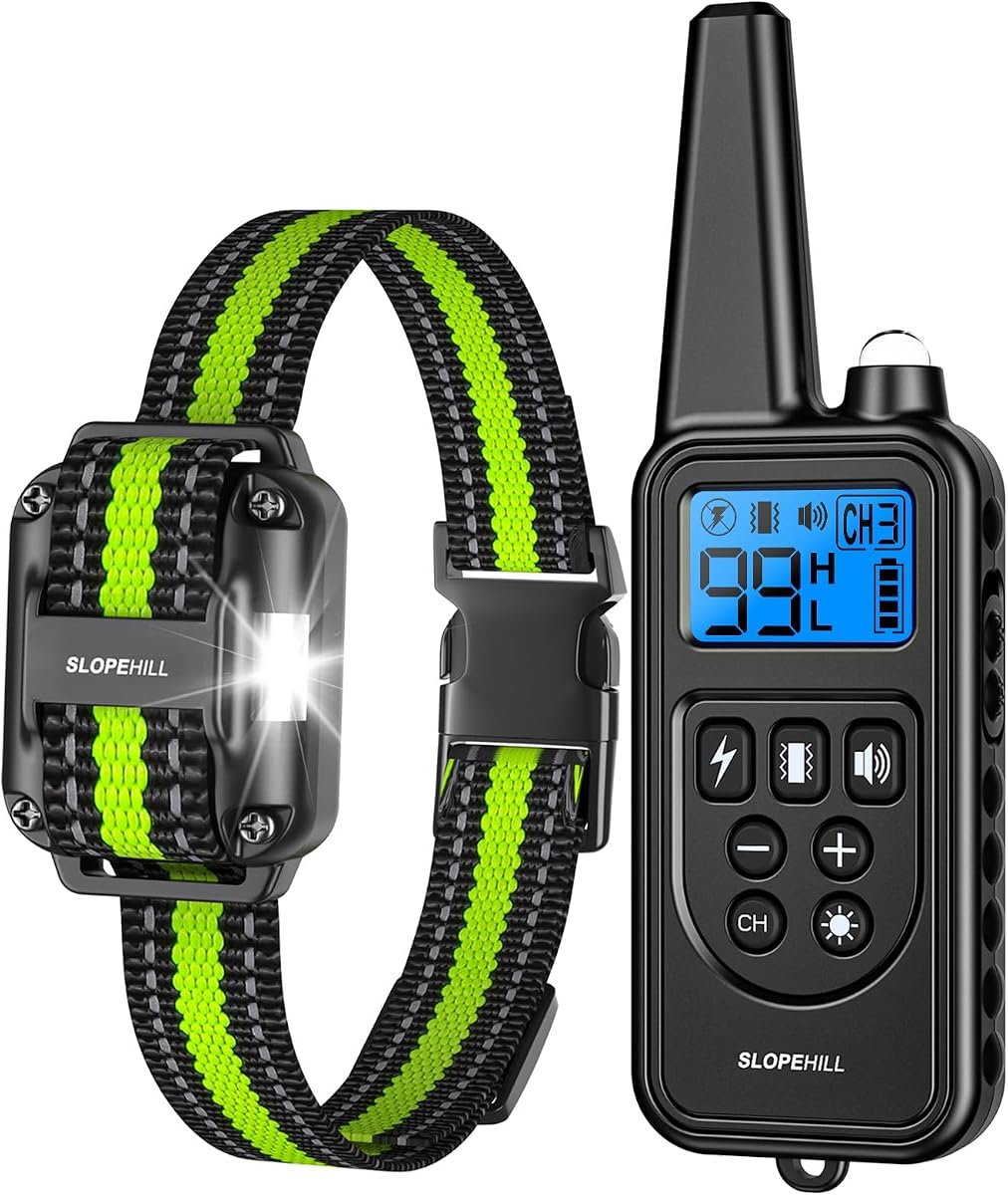
SLOPEHILL ProRemote Training Collar: Easy Beep, Vibe Modes
SLOPEHILL’s ProRemote targets everyday pet owners with a simplified remote — big buttons, clear mode indicators, and beep/vibration/static options wit
As an Amazon Associate, Dogslifelearning earns from qualifying purchases.
Product Description
Not every owner needs a professional field instrument. The SLOPEHILL ProRemote is built for the everyday pet owner who wants a straightforward training aid: a simplified remote with big buttons, clear mode indicators, and beep, vibration, and static options, all without a learning curve. You can unbox it and be training in minutes.
I consider it an entry-level unit for basic obedience reinforcement in the yard: recall, boundary respect, and curbing nuisance barking at the fence. The interface is the selling point here, no nested menus, no cryptic symbols, just press and train.
Be aware of the trade-off. Pair every successful recall with a treat and plenty of praise, and most dogs learn the vibrate cue within just a few short sessions. The stimulation steps are coarser than premium brands, so finding a subtle working level is harder, which is exactly why I recommend leaning on the vibration and tone modes first. Most pet dogs respond beautifully to a vibrate cue once it’s conditioned, and you may never need static at all.
As with any budget unit, verify fit and function carefully before each session, keep the contact points clean, and keep sessions short and positive, ending on a success with a treat. If you want the simplest possible introduction to remote training cues, check it on Amazon.
Frequently Asked Questions
I'm new to training collars — is this a good beginner pick?
Yes, that's its lane. The ProRemote keeps the interface simple — beep, vibration, and static modes with straightforward controls — so you're not decoding a complex remote while handling your dog. Beginners should still learn the basics first: teach commands with treats, then use the collar only to reinforce what the dog knows, starting at the lowest level.
Should I use beep, vibration, or static mode?
Start with beep: train it as a recall cue ('beep = come get a treat') and many dogs never need anything stronger. Step up to vibration if the dog blows off the beep in high distraction. Reserve static for proofing known commands at the lowest level the dog responds to. That escalation ladder — beep, then vibe, then static — is the standard humane protocol.
How do I pair the remote with the collar?
Hold the pairing button on the receiver until it beeps/flashes, then press the corresponding dog-select button on the remote — the standard sequence takes under a minute. If it won't pair, check both are charged and try again; low battery is the #1 pairing failure cause across all budget e-collar brands.
Is this collar suitable for small dogs?
Check the receiver size and weight against your dog — budget collars tend to have bulkier receivers than premium small-dog models like the Mini Educator. For dogs under ~15 lbs, a bulky receiver can hang and lose contact, making the collar inconsistent. For medium and large dogs it's proportioned fine.
How often should I charge the collar and remote?
Rechargeable units like this typically need charging every few days with regular use — get in the habit of charging after each training day, the way you would a phone. Also: don't leave the collar on the dog 24/7. Remove it for a few hours daily and rotate its position slightly to prevent pressure sores on the neck, which can develop under any e-collar worn too long in one spot.
You May Also Like