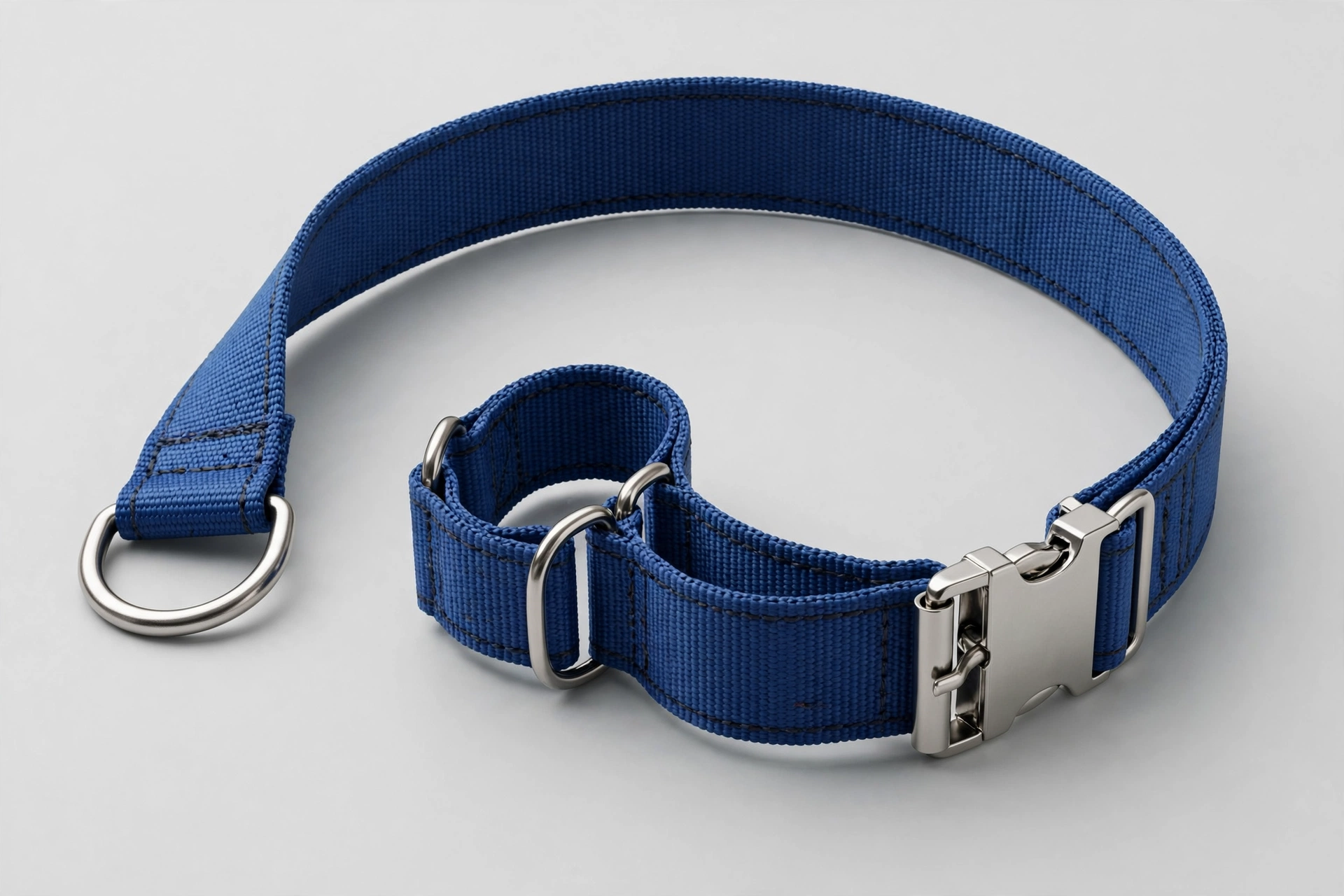
Caninus 2″ Martingale Collar with Buckle – Heavy-Duty Nylon
Some reactive dogs do not just lunge — they twist, reverse, and slip their collars mid-reaction. The Caninus 2-inch martingale with buckle is built fo
As an Amazon Associate, Dogslifelearning earns from qualifying purchases.
Product Description
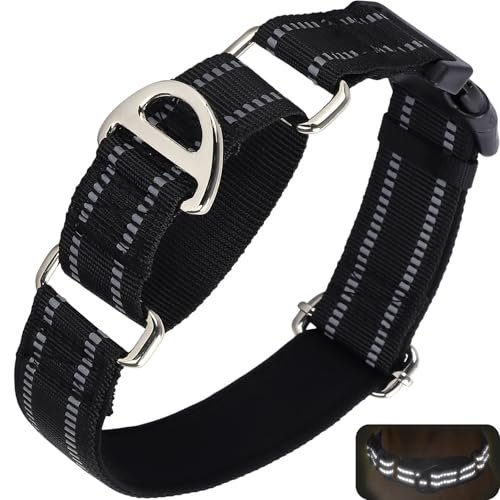
Some reactive dogs do not just lunge — they twist, reverse, and slip their collars mid-reaction, turning a training moment into a loose-dog emergency. The Caninus 2-inch martingale collar with buckle is built for exactly those dogs, and its design priorities show in every detail.
The 2-inch width is the first line of defense. Heavy-duty nylon spread across a broad band distributes pressure far better than a narrow collar when a reactive dog hits the end of the leash, protecting the trachea during the moments that matter most. The true martingale cinch is the second: when the dog pulls backward, the loop tightens to a preset limit that closes the escape gap, then releases cleanly when the dog settles. Escape prevention comes from the mechanism’s geometry, not from choking.
The side-release buckle is the everyday convenience win. Unlike slip-on martingales that must be wrestled over the head, this one opens and closes at the neck — faster on, faster off, and far less stressful for head-shy dogs. Caninus pairs that with unusually detailed sizing guidance: measure both the neck and the head. The head measurement ensures the collar opens wide enough to don comfortably; the neck measurement ensures the cinched loop cannot slide back over the ears.
This is a working collar for owners managing reactivity, not a fashion piece — though the clean, heavy-duty build looks sharp enough for daily wear. It manages escapes and sharpens leash communication; it does not by itself teach loose-leash walking, so pair it with consistent training and the control it gives will make those sessions safer and calmer. Inspect the nylon webbing and stitching regularly, confirm the buckle clicks fully shut before every walk, and hand-wash as needed. If your dog’s reaction includes a reverse gear, check it on Amazon.
Frequently Asked Questions
What's the difference between a buckle martingale and a slip-on martingale?
A buckle martingale has a side-release buckle so you can clip it on and off like a regular collar — no need to slip it over your dog's head. That's a big plus for head-shy dogs or when the head-vs-neck measurement math is tricky. A slip-on (limited-slip) martingale has no buckle and must slide over the head, which some trainers prefer for simplicity and fewer failure points.
How tight should a martingale collar be when it cinches?
When the control loop is fully tightened, you should still be able to slip two fingers between the collar and your dog's neck. If it cinches tighter than that, it's too small — a martingale should limit escape, never choke. Adjust the slider so the two metal rings don't touch when pulled tight.
Is heavy-duty nylon better than standard nylon for martingales?
For strong, reactive, or large dogs, yes. Heavy-duty nylon webbing resists fraying and stretching under sudden lunges, and the hardware (D-rings, sliders) is typically rated for higher loads. For small, gentle dogs, standard nylon is plenty — the heavy-duty version just adds unnecessary bulk.
Can a martingale collar be used for training a dog not to pull?
It helps manage pulling by preventing escape and giving clearer leash feedback than a flat collar, but it doesn't train on its own. Pair it with loose-leash training — reward your dog for walking at your side and the martingale simply becomes a safe, escape-proof connection while they learn.
Do martingale collars work for dogs with thick necks like bulldogs?
They can, but fit is trickier: measure carefully since there's less difference between head and neck size on bulky breeds. The buckle version is usually easier here because you don't have to force it over a wide head. Make sure the cinched fit still allows two fingers — never use a martingale to 'correct' a brachycephalic breed's breathing issues.
You May Also Like